Surgical Removal of the Brain Cyst in Italy — Get 3 Top Clinic Matches with Costs
Bookimed lists 3 surgical removal of the brain cyst clinics in Italy, in Milan and Bologna. These clinics are rated 4.7/5 in 126 verified patient reviews on Bookimed.

Medically reviewed by
Ali Zirh
How Much Does Surgical removal of the brain cyst Cost in Italy?
Surgical removal of the brain cyst in Italy typically ranges from $12,000 to $22,000. The final cost depends on the surgical approach, neurosurgeon expertise, and specific medical hub. Patients save approximately 68% compared to the US, where the average cost is $53,000. Standard private packages usually include preoperative imaging, the surgical procedure, anesthesia, and a hospital stay of 5–10 days.
- Minimally invasive removal: Typically costs around 20-30% less than complex open craniotomy procedures.
- Advanced neuronavigation: Adds a premium for real-time GPS-like tracking during delicate brain surgeries.
- Diagnostic imaging: Pre-surgical MRI scans in Italy generally range from $300 to $550.
- Major medical hubs: Milan and Rome often command higher rates than regional centers.
Bookimed Expert Insight: Choosing a facility accredited by Joint Commission International (JCI) or IRCCS ensures elite standards. Research hospitals like San Raffaele in Milan manage over 52,000 annual operations with high success. For specialized cyst removal, specialists like Dr. Ignazio Borghesi utilize 4K 3D digital microscopy for precision. Patients should prioritize clinics with high neurosurgery volumes to ensure better value and outcomes.
| Italy | Turkey | Austria | |
|---|---|---|---|
| Surgical removal of the brain cyst | ≈ $12,000 | from $8,000 | ≈ $14,500 |
Your Benefits and Guarantees with Bookimed
Transparent Prices & Flexible Installments
No hidden fees – just official clinic prices. Pay at the clinic for Surgical removal of the brain cyst upon arrival and use a flexible installment plan if needed.
Verified Clinics & Doctors Only
Bookimed is committed to your safety. We only work with medical institutions that maintain high international standards in Surgical removal of the brain cyst and have the necessary licenses to serve international patients worldwide.
Free 24/7 Assistance
Bookimed offers free expert assistance. A personal medical coordinator supports you before, during, and after your treatment, solving any issues. You're never alone on your Surgical removal of the brain cyst journey.

Your personal Bookimed medical coordinator
- Supports you at every stage
- Helps choose the right clinic and doctor
- Ensures quick and convenient access to information
Discover the Best Surgical removal of the brain cyst Clinics in Italy: 3 Verified Options and Prices








Surgical removal of the brain cyst Overview in Italy
Day 1
- Arrival in the country.
- Transfer from airport to hotel.
Day 2
- Initial consultation with neurosurgeon.
- Pre-operation tests including CT angiography.
Day 3
- Meetings with anesthesiologist and other specialists.
- Final pre-operation preparations.
Day 4
- Transfer from hotel to clinic.
- Surgical removal of the brain cyst.
- Operation lasts approximately 3-5 hours under general anesthesia.
- Transfer to recovery room post-operation.
Day 5-7
- Post-operation recovery in the clinic.
- Regular check-ups and monitoring.
Week 1-3
- Discharge from clinic and transfer to hotel.
- Rest and recovery at the hotel.
Week 4-6
- Rehabilitation starts with light physical activity.
- Return to work if advised by the doctor.
Week 7-12
- Gradual return to normal activities, including sports.
- Follow-up consultation with neurosurgeon.
Week 13
- Final result can be seen.
- Transfer from hotel to airport for departure.
Please note that the schedule may vary depending on individual circumstances and conditions.
- Bookimed deposit: $200 or €200.
- Clinic deposit: Pay a set percentage in advance.
Our Doctors
View all Doctors
Ignazio Borghesi
Over 4,500 complex neurosurgical procedures performed – Dr. Borghesi leads the Neurosurgery Unit at Maria Cecilia Hospital.
- Specializes in minimally invasive brain tumor removal with 4K 3D imaging
- Expert in colloid cyst removal – a rare and complex condition
- Trained at top institutions like Schulthess Klinik and University of Florida
- Uses advanced video-micro-surgical techniques for precision and faster recovery

Pietro Mortini
Dr. Pietro Mortini is a neurosurgeon at Ospedale San Raffaele in Milan. He leads the Experimental Neurosurgery Unit at San Raffaele Scientific Institute. Dr. Mortini focuses on minimally invasive spine and brain operations. He uses neuronavigation and neuromapping to improve patient recovery and precision. Dr. Mortini is also a Visiting Professor at George Washington University.
- Performs radiosurgery and Gamma Knife procedures for brain tumors and glioblastomas.
- Patented a medical device used for regenerating biological tissues.
- Performed a unique spina bifida surgery on an unborn child.
- Collaborates on research with the Max Planck Institute of Psychiatry in Germany.
- Treats complex conditions like Arnold Chiari syndrome and medulloblastoma.

François Lechanoine
Dr. François Lechanoine is a neurosurgeon at Maria Cecilia Hospital in Italy. He has performed over 2,500 surgeries. This includes 1,600 procedures as the lead surgeon. He specializes in complex brain and spine conditions. Dr. Lechanoine founded the UBE surgical training center at his hospital.
- Holds diplomas from the European Association of Neurosurgical Societies and Eurospine.
- Expert in minimally invasive spine procedures like Unilateral Biportal Endoscopy.
- Treats complex cases including brainstem conditions and pituitary adenomas.
- Works at Maria Cecilia Hospital, a JCI-accredited facility in Italy.
Video Stories from Bookimed Patients
Reviews about Bookimed: Discover Patients' Insights
All reviewsShare this content
 Anna Leonova
Fast Facts about Surgical removal of the brain cyst
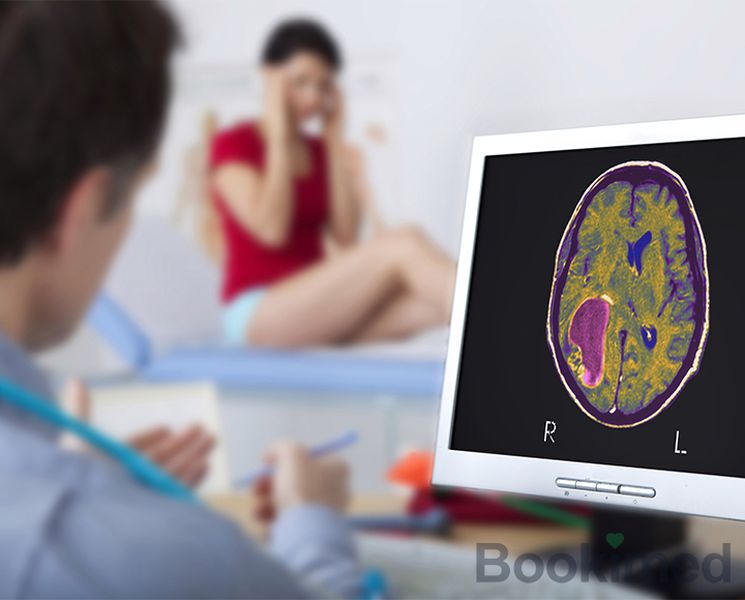
Surgical removal of the brain cyst
Involves a neurosurgical procedure to excise a cystic lesion from the brain, aimed at relieving pressure and symptoms.
FAQ about Surgical removal of the brain cyst in Italy
Is surgical removal of a brain cyst in Italy safe?
Surgical removal of a brain cyst in Italy is highly safe and effective, boasting success rates between 85% and 90%. Italian neurosurgical centers utilize advanced technological frameworks like Joint Commission International (JCI) standards and 4K 3D imaging to ensure patient safety and precision during complex procedures.
- Success rates: Italian clinics maintain an 85–90% efficacy rate for complete cyst removal without recurrence.
- Minimally invasive tools: Surgeon use neuroendoscopy and 3D orbital cameras to reduce brain tissue trauma.
- Accredited facilities: Major centers like Maria Cecilia Hospital hold JCI accreditation for safety and quality.
- Specialized expertise: Surgeons like Dr. Ignazio Borghesi have performed over 4,500 successful complex brain surgeries.
Bookimed Expert Insight: Italian neurosurgery excels because clinics like San Raffaele and Maria Cecilia Hospital function as IRCCS research hubs. This status means they integrate clinical care with experimental research. Patients benefit from early access to technologies that become standard everywhere else years later.
Patient Consensus: Many patients find that high-volume centers provide the best results for symptomatic cysts. They often emphasize the importance of identifying whether surgery is necessary or if monitoring is safer.
What are the surgical options for brain cyst removal in Italy?
Surgical brain cyst removal in Italy utilizes advanced endoscopic and microsurgical techniques to treat colloid, arachnoid, and dermoid cysts. Leading centers in Milan and Bologna employ 4K 3D digital microscopes and intraoperative ultrasound to ensure maximal cyst drainage while preserving surrounding healthy neural tissue.
- Available techniques: Modern approaches include endoscopic removal, minimally invasive microsurgery, and intraoperative ultrasound.
- Advanced technology: Clinics utilize video-micro-surgical tools and high-definition 4K 3D digital microscopes.
- Specialized expertise: Surgeons like Dr. Ignazio Borghesi have performed over 4,500 complex cranial operations.
- Facility standards: Top hospitals hold IRCCS research accreditation or Joint Commission International (JCI) seals.
Bookimed Expert Insight: Italian neurosurgery centers offer a high concentration of research-driven care. San Raffaele and San Donato perform over 60,000 operations annually combined. This high volume often leads to better outcomes in complex cases like colloid cysts. Patients should prioritize clinics with IRCCS status for access to the latest microsurgical trials.
Patient Consensus: Many patients find that private care in Italy significantly reduces wait times compared to public options. Monitoring for persistent headaches after surgery is vital to catch rare fluid leaks early.
What are the main possible complications of brain-cyst surgery?
Common complications of brain-cyst surgery include cerebrospinal fluid (CSF) leaks, memory impairment, and hydrocephalus. While generally safe, procedures like endoscopic or microsurgical removal carry risks of infection, seizures, or neurological deficits. Specialized Italian centers utilize 4K 3D digital imaging to preserve surrounding brain tissue.
- Neurological risks: Damage can cause memory loss, speech difficulties, or limb weakness.
- Fluid imbalances: CSF leaks or hydrocephalus may require secondary shunt placement surgery.
- Surgical side effects: Risks include meningitis, hemorrhage, or new-onset seizures managed with medication.
- Cyst recurrence: Incomplete removal of the cyst wall might lead to eventual reformations.
Bookimed Expert Insight: Italian neurosurgeons like Dr. Ignazio Borghesi emphasize high-volume experience to minimize risks. He has performed over 4,500 complex surgeries. Choosing clinics with IRCCS accreditation ensures access to research-driven protocols. These advanced centers often combine 3D imaging with microsurgery to improve safety.
Patient Consensus: Many patients report lingering brain fog and fatigue for up to one year. They recommend proactively asking about anti-seizure medication and securing physical therapy referrals before surgery.
What kind of recovery and neurological follow-up should I expect?
Recovery after brain cyst removal in Italy typically involves a 3 to 7-day hospital stay with basic activity resuming within 4 to 12 weeks. Patients undergo structured neurological follow-ups, including MRI scans at 6 weeks and 6-month intervals during the first year to monitor structural changes.
- Hospital duration: Surgical teams at San Raffaele typically discharge stable patients after 3 to 7 days.
- Functional timeline: Reach near-full daily function within 3 to 6 months after surgical intervention.
- Neurological monitoring: Clinical checks every 3 to 6 months assess seizure risks and motor coordination.
- Imaging schedule: Annual MRIs are required long-term to detect potential cyst regrowth or fluid changes.
Bookimed Expert Insight: Italian centers like Maria Cecilia Hospital prioritize precision with 4K 3D digital microscopes to minimize brain tissue trauma. Surgeons like Dr. Ignazio Borghesi perform over 1,000 procedures annually, which significantly improves outcomes for complex colloid cyst removals compared to lower-volume centers.
Patient Consensus: Many patients experience heavy fatigue and short-term memory lapses during the first month. Early physical therapy by week 3 is highly recommended to manage balance issues and speed up the return to work.
Will I have visible scars or shaved hair?
Modern brain cyst removal in Italy utilizes minimally invasive craniotomy and 4K 3D video-micro-surgical techniques to minimize visible scarring. While minor hair trimming is often required at the incision site, complete head shaving is generally avoided. Surgeons prioritize placing small incisions within natural skin folds or hair-bearing areas.
- Incision placement: Surgeons strategically position incisions behind the hairline or within natural creases.
- Advanced imaging: 3D digital orbital cameras allow for smaller access points and precision.
- Hair management: Only a narrow strip of hair is typically trimmed near the site.
- Closure techniques: Invisible sutures or skin glue help reduce the final scar profile.
Bookimed Expert Insight: Italian neurosurgeons like Dr. Ignazio Borghesi at Maria Cecilia Hospital leverage 4K 3D microscopy to perform complex removals through micro-incisions. This technological focus means the surgical footprint is significantly smaller than traditional approaches. Patients often find they can completely conceal the site with surrounding hair immediately after the procedure.
How long do I need to stay in Italy and what documents are required?
For brain cyst removal in Italy, non-EU patients typically stay 4 to 8 weeks to cover pre-operative tests, surgery, and recovery. Essential documents include a passport valid for 6 months, a Schengen medical visa, and medical records translated into Italian or English.
- Travel authorization: Most non-EU citizens require a Schengen visa for medical treatment stays under 90 days.
- Financial proof: Verification of sufficient funds and insurance coverage of at least €50,000 are mandatory.
- Medical documentation: Bring recent imaging and a surgical invitation letter from a JCI-accredited facility.
- Local registration: Patients staying long-term may need an Italian tax code called a codice fiscale.
Bookimed Expert Insight: While most clinics like Maria Cecilia Hospital offer transfer services, administrative discharge in Italy often takes longer than expected. We notice patients frequently extend their stay by 3 to 5 days just for final paperwork. Booking flexible flights or a local Airbnb near the clinic helps manage these common administrative delays without stress.
Patient Consensus: Patients emphasize the need to secure housing near the hospital because post-op physiotherapy often requires frequent return trips. Many recommend bringing digital copies of all records, as physical paperwork can take extra days to process before discharge.
Which cities in Italy have high-volume brain-cyst centres?
Milan, Rome, and Bologna are Italys primary hubs for high-volume brain cyst removal. These cities feature IRCCS-accredited research hospitals specializing in neuroendoscopy and 4K 3D microscopy. Facilities like San Raffaele in Milan perform over 52,000 annual operations, maintaining high success rates for complex cranial procedures.
- Milan medical hub: San Raffaele and Carlo Besta lead in complex neurosurgery and rare neurological research.
- Bologna excellence: Maria Cecilia Hospital uses video-microsurgical techniques and advanced 4K 3D digital imaging.
- Specialized expertise: Dr. Ignazio Borghesi near Bologna performs over 1,000 advanced brain procedures annually.
- Rome facilities: San Carlo di Nancy and Cristo Re provide accessible neurosurgical services for various cysts.
Bookimed Expert Insight: While Milan has the highest general surgery volume, Maria Cecilia Hospital in the Bologna area stands out for specialized technology. It was ranked best for neurosurgery by Bookimed patients in 2019. This facility is particularly strong for rare colloid cysts due to their specific 4K 3D imaging equipment.
Patient Consensus: Experts emphasize that surgeon volume is more critical than hospital size for avoiding post-op hydrocephalus. Many advise using telemedicine first to confirm if a surgeon completes at least 50 cyst cases yearly.