Foraminotomy in Thailand: costs, clinics and reviews
Bookimed lists 2 foraminotomy clinics in Thailand, all in Bangkok, including JCI-accredited clinics. These clinics are rated 4.6/5 in 134 verified patient reviews on Bookimed.

Last updated: 11/11/2026

Medically reviewed by
Ali Zirh
How it works
Bookimed is free for patients – clinics pay us a commission, and you pay the clinic its own price with no markup. Five steps to your foraminotomy in Thailand:
Share your case
Tell us about your condition and share your latest scans and medical reports.
Get treatment plans
Your coordinator finds clinics that match your needs and helps you choose. Your preferred clinics then send personalized treatment plans and quotes for you to compare.
Plan your trip
We set treatment dates that work for you and help arrange your flights and accommodation. If needed, we request a visa support letter from the clinic.
Visit the clinic
The clinic team performs your foraminotomy on the agreed dates. We support you throughout your trip.
Recover at home
You can fly home 7–10 days after surgery, and results develop over 3–12 months. Your coordinator stays in touch and helps arrange a follow-up if you need one.
Some clinics ask for a deposit. A $200 or €200 deposit paid through Bookimed comes off your clinic bill and is refundable up to 10 calendar days before your visit. A deposit paid to the clinic follows its own terms.
Foraminotomy Prices by Clinic in Thailand









Get matched with the best doctors for Foraminotomy
Tell us about your needs — and get 3 tailored offers from top doctors for you.
Do you have any chronic conditions or prior surgeries?
Direct prices from clinics
Free evaluation of your medical case
Free personal assistance 24/7
Thailand Foraminotomy overview
Cost and clinics
| Typical foraminotomy price in Thailand | Clinics | Accreditations | Cities |
|---|---|---|---|
| $4,500 / ฿153,000–$8,500 / ฿289,000 | 2 clinics | JCI (2 clinics), ISO (1), GHA (1) | Bangkok (0 clinics) |
The procedure
| Before the trip | Time in Thailand | Operation time | Anesthesia | Back to desk work | Final result |
|---|---|---|---|---|---|
| Have neurological exam and imaging, stop smoking, arrange home help | 7–10 days, including up to 2 nights in hospital | 1–2.5 hours | General | 2–6 weeks | 3–12 months |
How much does a Foraminotomy cost in Thailand?
Foraminotomy in Thailand is estimated from $4,500 / ฿153,000 to $8,500 / ฿289,000. The final estimate depends on the surgical approach, hospital tier, treated spinal levels, and location.
| Thailand | Turkey | Austria | |
|---|---|---|---|
| Foraminotomy | ≈ $4,500 / ฿153,000 | from $6,000 / ฿204,000 | ≈ $6,800 / ฿231,200 |
| Kyphoplasty | ≈ $5,500 / ฿187,000 | from $9,000 / ฿306,000 | ≈ $6,500 / ฿221,000 |
How to choose a Foraminotomy clinic in Thailand
For foraminotomy in Thailand, compare clinic locations, meet the surgeon, confirm the facility and qualifications, then arrange follow-up before booking.
What to check
City shortlist
Bookimed lists 2 clinics for foraminotomy in Thailand – the top-ranked options are all in Bangkok.Surgeon match
At consultation, confirm you meet the person who will perform the procedure, that your full history is reviewed, and ask about experience with the same surgery.Credentials and setting
Ask whether the doctor is licensed by the Medical Council of Thailand. Confirm the facility and team provide an appropriate spinal surgery service.Follow-up plan
Clarify who handles follow-up after you return home, including complications and urgent questions – ask for open disclosure of skills, fees, and conflicts before committing.
Discover Foraminotomy Clinics in Thailand
| Clinic Name | Patient Rating | About | Accreditations | Lead Doctor | Techniques |
|---|---|---|---|---|---|
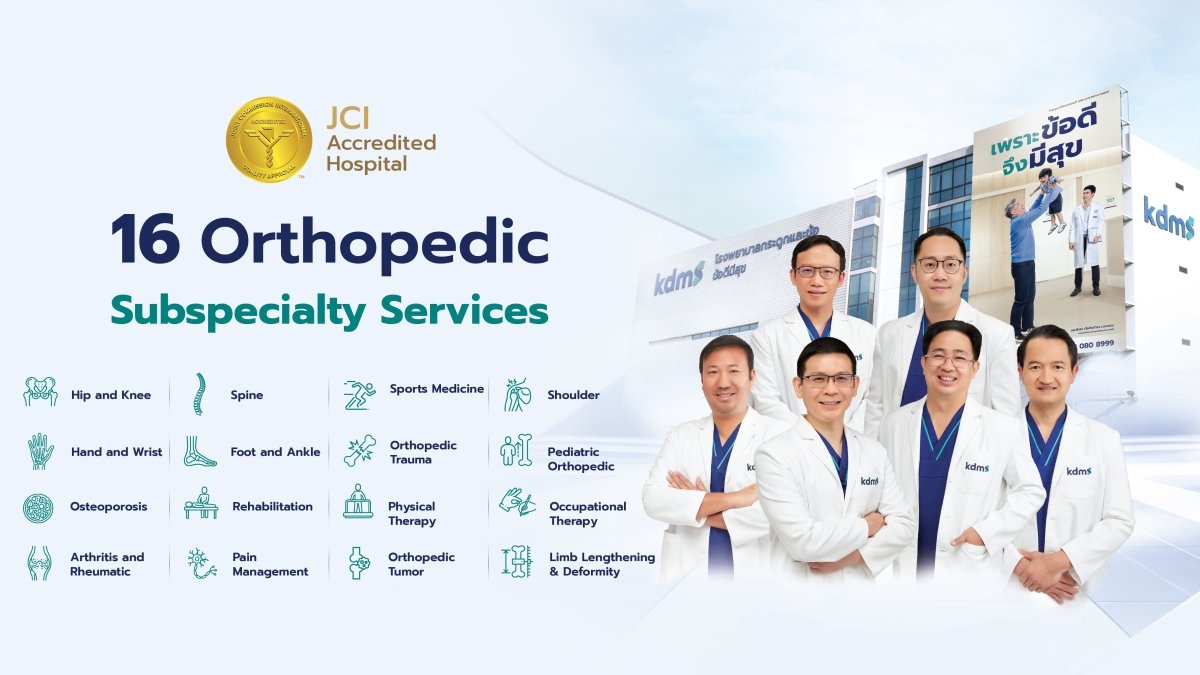
| kdms Orthopedic Hospital Bangkok | 5.0 (3 reviews) | kdms Orthopedic Hospital is Thailand's first dedicated orthopedic-only hospital. It specializes in hip and knee, spine, and sports medicine. The 1st orthopedic hospital in Thailand holds JCI accreditation. Robotic surgery assistant technology enables more precise and accurate operations. Uses minimally invasive surgery for less pain, smaller incisions, and faster recovery. Designed as a one-stop service center with specialized co-treatment spaces. Advanced imaging equipment includes on-site X-ray, MRI, and CT scan. | JCI | — | Foraminotomy, kyphoplasty, minimally invasive surgery, robotic surgery assistance |
| Bumrungrad International Hospital Bangkok | 4.6 (131 reviews) | Bumrungrad International Hospital is a JCI-accredited neurosurgery center treating patients from over 190 countries. Assist. Prof. Dr. Peerapong Montriwiwatchai specializes in spine surgery with of experience, having trained at Temple University Hospital. The facility operates advanced neurosurgical suites with international patient support services. | ISO, JCI, GHA | CT (computer tomography), Brain MRI |
Our Doctors
View all Doctors
Peerapong Montriwiwatchai
Dr. Peerapong Montriwiwatchai is an Assistant Professor of Neurosurgery at Bumrungrad International Hospital. He focuses on complex spine surgery and neurological interventions. Dr. Montriwiwatchai completed a fellowship in neurological surgery at Temple University Hospital in Philadelphia. He treats patients at a facility ranked among the top 10 best hospitals globally.
- Specializes in treating scoliosis, spondylolisthesis, and spinal cord abscesses.
- Performs surgical procedures including discectomy and vertebral plastic surgery.
- Holds a diploma from the Thai Board of Neurosurgery.
- Practices at a JCI-accredited center that serves over 1 million patients annually.
Why choose Thailand for a Foraminotomy
Access to JCI-accredited orthopedic care and on-site imaging
| Typical price | vs Thailand | |
|---|---|---|
| Thailand (this page) | $4,500 – $8,500 | – |
| US | from $14,000 | +211% |
| Turkey | from $6,000 | +33% |
Foraminotomy recovery timeline: what to expect week by week
You can usually fly home 7–10 days after surgery, after a wound check and once you can walk comfortably. Desk work may resume after about 2 weeks, while manual or heavy work may take 14–42 days, depending on spinal level and decompression extent. You can gradually resume light exercise at 6–12 weeks, with strenuous exercise and lifting waiting until your surgeon clears you. Your final result may develop over 3–12 months, with nerve-related pain often improving early while numbness or weakness may continue recovering for months.
First days
You’ll start walking, care for your wound, and manage moderate incision and muscle pain with oral medicine. Discharge may be the same day or after 1–2 nights. Avoid heavy lifting, prolonged sitting, or driving until cleared.
Weeks 2–6
After a wound check and once you can walk comfortably, you can usually fly home 7–10 days after surgery. You can gradually return to walking and light activity or desk work. Avoid bending, twisting, and lifting more than light weights.
Weeks 6–12
You can gradually strengthen and return to normal activity as your surgeon or physiotherapist clears you. Wait for clearance before high-impact activity or heavy loading.
When to contact your clinic: Contact your clinic for fever, worsening pain, or new numbness or weakness. Seek emergency help for loss of bladder or bowel control. For chest pain or sudden breathlessness after a long flight, seek emergency help locally.
Traveling to Thailand for a Foraminotomy
Foraminotomy in Thailand: Video Reviews from Bookimed Patients
Thailand Foraminotomy Reviews at Bookimed: Discover Patients' Insights
View all

Share this content
 Anna Leonova

FAQ about Foraminotomy in Thailand
What exactly is a foraminotomy and how is it performed in Thailand?
Foraminotomy is a spinal surgery that relieves nerve pressure by enlarging the foramen, the bony exit for nerve roots. In Thailand, specialists perform this using advanced minimally invasive techniques (MISS), such as endoscopic or microscopic decompression, through small 1–3 centimeter incisions to minimize muscle damage.
- Surgical approach: Surgeons use tubular retractors to gently separate muscles instead of cutting tissue.
- Visualization tools: High-magnification microscopes or endoscopes provide clear views of pinched nerve roots.
- Decompression method: Micro-instruments or high-speed drills precisely remove bone spurs or disc material.
- Rapid recovery: Procedures typically last 45 minutes, often allowing for same-day hospital discharge.
Bookimed Expert Insight: While many global facilities offer spine surgery, Thai centers like KDMS Specialized Orthopedic Hospital focus exclusively on musculoskeletal health. This hyper-specialization often leads to higher procedural volumes. For example, Bumrungrad International serves over 1 million patients annually. Data suggests that clinics with such high volumes often maintain lower infection rates and more refined endoscopic protocols.
Patient Consensus: Patients report that while surgical pain often disappears within 2 weeks, minor numbness may linger for up to 3 months. Most emphasize the importance of having a post-operative physical therapy plan to prevent compensation injuries during the first month.
Am I a candidate for foraminotomy, and what conditions does it treat?
Candidates for foraminotomy include patients with nerve root compression from foraminal stenosis who have failed conservative treatments. This procedure treats radiculopathy, herniated discs, and bone spurs by widening vertebral openings. Accurate diagnosis via MRI or CT imaging is essential before considering minimally invasive spinal surgery.
- Treatment failure: Requires at least 3 to 6 months of unsuccessful physical therapy or injections.
- Neurological symptoms: Addresses persistent weakness, numbness, or tingling radiating into arms or legs.
- Specific conditions: Relieves pressure caused by spondylolisthesis, thickened ligaments, or degenerative disc disease.
- Imaging confirmation: Surgeons require clear scans showing physical obstruction of the exit foramen.
Bookimed Expert Insight: Thai orthopedic centers like KDMS Specialized Orthopedic Hospital focus exclusively on musculoskeletal conditions. This specialization often leads to better outcomes for single-level compressions. Clinics like Bumrungrad International Hospital utilize AI and robotic systems, which are ideal for complex cases involving multi-level stenosis. Always confirm if your surgery is single-level, as this significantly impacts the 4–6 week recovery success rate.
Patient Consensus: Patients emphasize that surgeons will not operate without clear imaging showing nerve pinching. Most survivors recommend getting 2–3 independent reviews of your MRI before committing to the procedure.
What are the safety statistics and complication risks of foraminotomy in Thailand?
Foraminotomy in Thailand is highly safe, with clinical success rates for symptom relief ranging from 85% to 95%. Joint Commission International (JCI) accredited facilities like Bumrungrad International Hospital report surgical site infection rates as low as 0.83%. Outcomes for endoscopic procedures show good to excellent results in up to 91% of cases.
- Infection control: Specialized Thai hospitals maintain low infection rates between 0.22% and 0.83%.
- Neurological risks: Transient numbness or weakness occurs in approximately 3% of foraminotomy cases.
- Mobility timeline: Patients at accredited facilities typically begin walking within 16 to 24 hours.
- Structural safety: Risks include dural tears or spinal instability if significant bone is removed.
Bookimed Expert Insight: While many equate safety with accreditation, surgeon volume is the true differentiator. At leading centers like KDMS Specialized Orthopedic Hospital, which focuses exclusively on musculoskeletal care, the 50-doctor staff manages 1,000 patients annually. This high concentration of orthopedic expertise often leads to more refined surgical techniques compared to general hospitals.
Patient Consensus: Patients emphasize verifying individual surgeon case volumes and arranging local follow-up care. Many recommend allowing 2–3 weeks in Thailand before flying to monitor for rare complications like hematomas.
How long is the hospital stay, and what does the recovery timeline look like?
Foraminotomy in Thailand typically requires a hospital stay of 1 to 2 days. Minimally invasive endoscopic techniques often allow same-day discharge or a 23-hour observation. Most patients return to desk work within 2 to 4 weeks, with full recovery reaching 90% symptom relief by 12 weeks.
- Hospital stay duration: Stay is 1 to 2 days for monitoring and initial pain management.
- Initial mobility: Gentle walking and physical therapy exercises begin on day 1 post-op.
- Return to activity: Driving and sedentary work usually resume between weeks 2 and 4.
- Physical restrictions: Avoid lifting over 10 pounds and strenuous exercise for 6 weeks.
- Full healing: Extensive nerve recovery and tissue strengthening conclude within 6 to 12 weeks.
Bookimed Expert Insight: Choosing a specialized facility like KDMS Specialized Orthopedic Hospital in Bangkok provides focused postoperative care. Their dedicated orthopedic focus often leads to standardized 1-day stays. This efficiency allows international patients to transition to hotel-based recovery faster while maintaining high safety standards.
Patient Consensus: Patients report feeling 50% relief from nerve pain by the fourth week. Consistent walking and early physical therapy are frequently cited as the most helpful factors for preventing stiffness.
Which hospitals and surgeons in Thailand are most reputable for foraminotomy?
Thailand conducts world-class foraminotomy through Joint Commission International accredited facilities like Bumrungrad International Hospital and specialized centers like KDMS. Renowned surgeons including Dr. Verapan Kuansongtham and Dr. Tayard Buranakarl lead these institutes, utilizing advanced endoscopic and minimally invasive techniques for spinal decompression.
- Top-tier facility: Bumrungrad treats 12,000 spine patients annually with Global Healthcare Accreditation.
- Surgical leadership: Dr. Verapan Kuansongtham serves as director, pioneering endoscopic spine surgery.
- Specialized care: KDMS Hospital focuses exclusively on musculoskeletal conditions, managing 1,000 yearly cases.
- Technological precision: Bangkok International Hospital utilizes O-ARM navigation for high-accuracy spinal decompression.
Bookimed Expert Insight: While general hospitals offer broad care, choosing a dedicated orthopedic facility like KDMS provides a significant advantage. These specialized centers maintain a singular focus on musculoskeletal health. This streamlined approach often results in higher precision for specific procedures like foraminotomy.
Patient Consensus: Patients frequently recommend Bumrungrad for its dedicated neuro-spine unit and efficient JCI-accredited protocols. Many advise selecting surgeons with over 500 cases to ensure the best outcomes.
What is included in a foraminotomy package for international patients?
Foraminotomy packages in Thailand typically include surgeon fees, anesthesia, operating room use, and 1–4 nights in a private hospital room. These all-inclusive bundles also cover pre-operative diagnostics like MRIs, airport transfers, and dedicated international patient coordination to simplify the surgical journey for overseas patients.
- Surgical team: Covers primary neurosurgeon fees, anesthesiology, and full nursing support.
- Diagnostic imaging: Includes pre-operative blood work, X-rays, or MRI scans upon arrival.
- Logistical support: Standard inclusions are VIP airport transfers and professional language translation.
- Administrative care: Packages provide visa extension assistance and digital medical record transfers.
Bookimed Expert Insight: While many think of general hospitals first, Thailand's KDMS Specialized Orthopedic Hospital focuses exclusively on musculoskeletal care. Specialized facilities often provide more streamlined recovery protocols for spine patients compared to large multi-disciplinary centers. Always check if your package includes the post-op brace, as many Thai clinics consider this an out-of-pocket add-on.
Patient Consensus: Patients value the comprehensive nature of Thai packages, especially the inclusion of private rooms. Many suggest bringing your own supportive gear and budgeting extra for specialized physical therapy sessions.
How long should I plan to stay in Thailand for travel and follow-up?
Plan a total stay of 14 to 21 days in Thailand for a foraminotomy. This timeframe covers 2 to 3 days for pre-operative consultations, the spinal procedure, and 7 to 10 days for post-operative monitoring and critical travel clearance from your surgeon.
- Post-operative clearance: Surgeons typically require 5 to 7 days before authorizing long-haul flights.
- Hospital discharge: Patients at Bumrungrad International Hospital often discharge within 1 to 2 days.
- Symptom monitoring: Stay at least 12 days if minor swelling or numbness occurs post-surgery.
- Location strategy: Book initial accommodation in Bangkok's Asoke area near JCI-accredited facilities.
Bookimed Expert Insight: While specialized centers like KDMS Hospital focus exclusively on orthopedics, larger facilities like Bumrungrad serve over 500,000 international patients annually. This high volume often means faster diagnostic-to-surgery pipelines. If your case is complex, choose these multi-disciplinary hubs. They offer integrated neurosurgery and orthopedic teams for better outcomes.
Patient Consensus: Travelers strongly advise booking flexible flight tickets. Most recommend upgrading to business class for the return journey to ensure proper spinal support and comfort.
Last review: 11/11/2026
Ali Zirh — Neurosurgeon
Have a question about Foraminotomy in Thailand?
Ask a Bookimed medical coordinator about prices, clinics, techniques or your case. Write to us in the messenger you already use.
- Direct prices from clinics
- Free evaluation of your medical case
- Free personal assistance 24/7
Ask your question in a messenger
Tap a messenger to open a chat with a Bookimed medical coordinator.
Free and without obligation · Terms of use · Privacy policy