

Labiaplasty costs $4,000–$7,000 in the United States and $3,500–$6,500 in the United Kingdom. Affordable labiaplasty abroad starts at about $1,000 in Poland and $2,000 in Thailand or Mexico. The Czech Republic starts at $2,500 and Turkey at $2,700. That is up to 85% less for the same operation.
Board-certified surgeons perform the operation in clinics that belong to the International Society of Aesthetic Plastic Surgery (ISAPS). Those clinics follow its patient-safety guidance. A Bookimed coordinator confirms surgeon credentials, facility accreditation, and itemized pricing with the clinic before you travel.
Key Takeaways
- Poland. The lowest price on this page, under European Union safety rules.
- Turkey. All-inclusive packages in hospitals accredited by Joint Commission International (JCI).
- Czech Republic. Fixed, published pricing under EU medical rules.
- Mexico. Short flights from the United States and Canada, with bilingual surgical teams.
- Thailand. English-speaking teams and packages that include transfers.
Table of Contents:
- Most Affordable Countries for Labiaplasty: Cost by Country
- Top 5 Labiaplasty Destinations: Prices and What to Check
- What Influences the Cost of Labiaplasty?
- What's Included in Labiaplasty Packages?
- Edge vs Wedge vs Laser: Labiaplasty Techniques Compared
- What is the Safest Country to Do a Labiaplasty?
- How to Vet Your Labiaplasty Surgeon
- How to Pay for Labiaplasty
- Cost Planning Before and After Surgery
- The Bottom Line
- FAQ: Common Questions About Affordable Labiaplasty
Most Affordable Countries for Labiaplasty: Cost by Country
Affordable labiaplasty starts near $1,000 in Poland. At the top of the range, it reaches $4,500 in the Czech Republic and $4,200 in Turkey. The same operation costs $4,000–$7,000 in the United States, $3,500–$6,500 in the United Kingdom, and $3,800–$6,500 in Canada. For identical surgery, that is a saving of up to 85%.
The price gap comes from what a clinic pays for staff, premises, and equipment in each country. Aesthetic surgery is an established industry in all five destinations. Turkish clinics alone performed about 1.2 million aesthetic procedures, according to the 2023 ISAPS global survey, roughly half of them surgical.
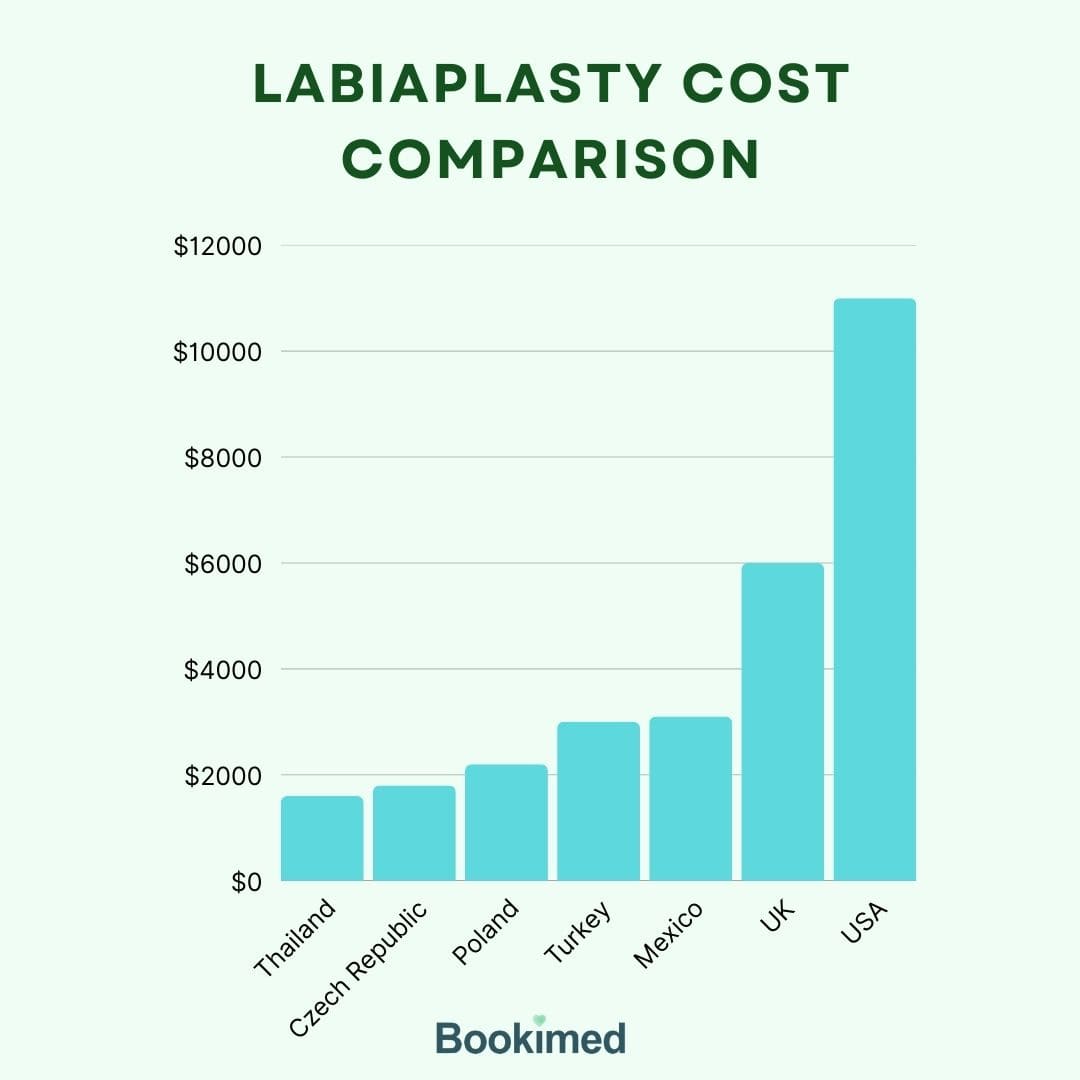
Each row gives the price at partner clinics and the savings against the US price.
| Country | Labiaplasty cost (USD) | Savings vs US | Key advantage |
|---|---|---|---|
| Poland | $1,000–$2,800 | up to 85% | EU safety rules; physician-only certification |
| Thailand | $2,000–$3,100 | up to 71% | English-speaking teams; all-inclusive packages |
| Mexico | $2,000–$3,100 | up to 71% | Short flights from North America; bilingual teams |
| Czech Republic | $2,500–$4,500 | up to 64% | EU medical standards; national hospital accreditation |
| Turkey | $2,700–$4,200 | up to 61% | JCI-accredited hospitals; Ministry of Health licensing |
The coordinator can request an itemized quote from any clinic on this page. The same items then appear in every quote you compare.
Top 5 Labiaplasty Destinations: Prices and What to Check
Each destination has a different strength. Turkey pairs JCI-accredited hospitals with all-inclusive packages, Mexico offers the shortest flights from North America, and Poland the lowest price. The Czech Republic offers EU regulation, and Thailand English-speaking, all-inclusive care. The snapshots below pair pricing and clinic data with the credentials that matter.
Labiaplasty in Turkey: from $2,700 in JCI-accredited hospitals
Labiaplasty costs $2,700–$4,200 in Turkey. All-inclusive packages often start near $2,700 and bundle the surgery, hospital stay, hotel, airport transfers, and an interpreter into one quoted price.
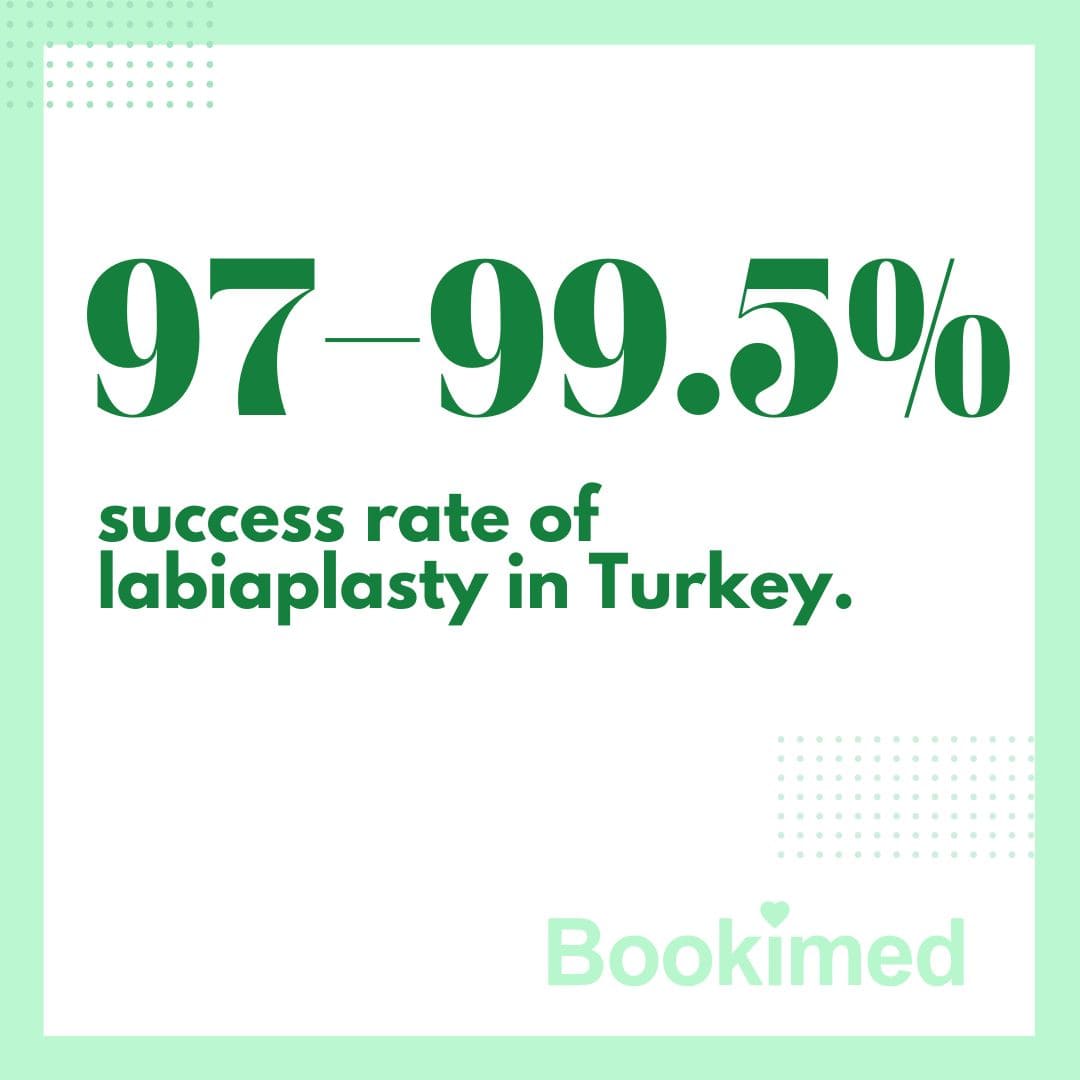
A 2024 multicenter study of 2,594 Turkish patients found that 97% to 99.5% of cases came through without a complication. Facilities operate under Ministry of Health licensing, and the network includes hospitals accredited by JCI. Two partner clinics show the range: Dr. Esra Cabuk Comert's Clinic in Ankara, accredited by the Turkish Medical Association, and Quartz Hospital in Istanbul, where an ISAPS-member surgeon performs the procedure.
Complication insurance is worth settling before the deposit. Turkish clinics either include it in the package or add it as a separate line, so the quote is the place to ask which applies. One thing worth considering is scale. Istanbul is a busy medical travel hub, while smaller Turkish cities have quieter clinics.
Labiaplasty in Mexico: from $2,000 with short flights from North America
Labiaplasty costs $2,000–$3,100 in Mexico. For US and Canadian patients, the appeal is practical: short flights, bilingual surgical teams, and immediate scheduling without long waiting lists. The José Cortés Institute in Mexico City holds ISAPS membership. It is also certified by the Mexican Council of Plastic, Aesthetic and Reconstructive Surgery. The council certifies plastic surgeons in Mexico and renews that status every five years.
The national professional body for the specialty is the Mexican Association of Plastic, Aesthetic and Reconstructive Surgery. Clinics are registered with COFEPRIS, Mexico's health regulator, which warns patients against unauthorized providers.
- Short travel and bilingual teams suit patients in the United States and Canada.
- Immediate scheduling without long waiting lists.
- An established medical-tourism infrastructure in the larger cities.
One consideration: standards vary more between facilities than in tightly regulated EU markets. Council certification and COFEPRIS registration carry more weight than the lowest price available.
Labiaplasty in Thailand: from $2,000 with English-speaking teams
Labiaplasty costs $2,000–$3,100 in Thailand. Private hospitals there are licensed by the Ministry of Public Health. Wansiri Hospital in Bangkok is accredited by the Royal College of Surgeons of Thailand. It has English-speaking teams and full packages that include airport transfers and interpreters, which removes most of the language friction that worries first-time medical travelers. Sikarin Hospital, also in Bangkok, is JCI-accredited. Bangkok has the largest concentration of private hospitals in Thailand, making it the natural starting point for treatment and early recovery.
- English-speaking teams in established Bangkok facilities.
- Ministry of Public Health licensing for private hospitals.
- All-inclusive packages that cover airport transfers and interpreters.
Distance is the main practical consideration. Long-haul travel is the main hurdle for Western patients, and post-op follow-up has to be arranged locally or by telemedicine once you have left. Bangkok clinics often handle routine checks virtually rather than asking for a second appointment. Plan for extra days in-country before you fly home.
Labiaplasty in Poland: from $1,000, the lowest price on this page
Labiaplasty costs $1,000–$2,800 in Poland, the lowest price on this page, and it comes with EU safety protocols. Polish rules classify aesthetic-corrective medicine as a medical activity. Only licensed physicians with additional certification may perform it. Cosmetologists and cosmeticians are excluded. Facilities in Warsaw and Krakow are modern and schedule efficiently. KCM Clinic in Jelenia Góra holds ISO certification and treats around 2,500 patients a year.
Two things are worth planning around. English proficiency varies outside the major private clinics, so a coordinator on site matters. There are few direct flights from North America, which means a connection and extra travel time.
Labiaplasty in the Czech Republic: from $2,500 under EU medical rules
Labiaplasty costs $2,500–$4,500 in the Czech Republic. The draw is predictability. Two techniques are common: trimming the labial edge, and de-epithelialization, which removes only the surface layer of skin. Clinics tend to publish fixed prices rather than open-ended quotes, and surgeons work under strict EU regulation. Surprise add-ons are rare at Czech facilities. ABClinic Art & Beauty is a Prague clinic for aesthetic medicine and plastic surgery, with 12 physicians across seven departments.
The Czech network also includes Beroun Rehabilitation Hospital near Prague. It is accredited by the Czech Joint Accreditation Commission (SAK), the national assessor of hospital quality and safety.
- EU medical standards and certified operating rooms.
- Fixed, published pricing with fewer surprise add-ons.
- Short flights and EU consumer protections for European patients.
Worth noting: direct flights from North America are rare, and extended recovery monitoring may call for a few nights of accommodation near the clinic.
What Influences the Cost of Labiaplasty?
The same procedure costs $1,000 in one country and up to $7,000 in another. Seven factors explain most of that difference.
- Location. Local wages, facility rents, malpractice cover, and insurance costs set the price floor. Poland starts at $1,000 and the United States at $4,000–$7,000, while the surgeon's training is comparable.
- Surgical technique. Edge (trim) resection is the simplest method and sits at the lower end of the range. Wedge resection and laser-assisted techniques take more operating time and equipment, so they add to the fee. The right technique depends on your anatomy, and the cheapest option is not necessarily the one that fits.
- Surgeon credentials. A surgeon's fee reflects training, case numbers, and documented outcomes. A 2024 meta-analysis of 86 studies reported 94% patient satisfaction across labiaplasty techniques.
- Facility accreditation. Accredited operating rooms and hospitals cost more to run, and the difference buys verified sterility, anesthesia safety, and emergency readiness. International hospital accreditation and national health ministry licensing are the credentials that count, rather than a clinic's own marketing claims.
- Package inclusions. An all-inclusive quote covers anesthesia, hospital time, medications, transfers, and an interpreter. It looks higher on paper, yet usually costs less overall than a low base fee with everything billed separately.
- How many international patients a destination treats. Countries such as Turkey and Mexico negotiate lower rates with hospitals and suppliers and pass much of those savings on. Surgeons in those clinics also perform the procedure often, which supports consistent results.
- Regulatory compliance. Countries with strict licensing and documented surgical protocols fold the cost of compliance into the price. That is what pays for safe care.
A lower price abroad usually reflects bundled costs and currency differences. The useful comparison is what each quote includes, the surgeon's credentials, and the full total rather than the starting price. Asking two clinics in the same country for itemized quotes is a useful habit. The line-by-line breakdown shows quickly whether a low quoted price simply moves charges into anesthesia, follow-ups, or garments.
What's Included in Labiaplasty Packages?
A labiaplasty package abroad combines surgery, hospital fees, and essential recovery care in one quoted price. The savings against the US price start at roughly 60% and reach about 85%, depending on the destination. Here is what a complete package covers:
- Surgical fees. Your labiaplasty procedure performed by a board-certified plastic surgeon or gynecologist.
- Anesthesia. Local or general anesthesia for your safety and comfort during surgery.
- Operating room and facility charges. All clinical costs and surgical suite usage for your procedure.
- Preoperative consultation. Initial specialist assessment to review your health status and set realistic expectations.
- Postoperative follow-up visits. Routine checks and wound assessments after surgery.
- Medications. Standard pain relief, antibiotics, and other necessary drugs provided during your stay.
- Transfers between the airport, hotel, and clinic. Clinics provide complimentary ground transportation for international patients.
- Translation services. Professional assistance with language barriers and paperwork for medical travelers.
- Compression garments or post-op care supplies. Aftercare kits for healing, at selected clinics.
Clinics in Turkey and Mexico often add personalized aftercare plans and specialized recovery garments. A package usually leaves out flights and any extra nights of accommodation beyond the included stay, so those are worth budgeting for separately.
Edge vs Wedge vs Laser: Labiaplasty Techniques Compared
The technique your surgeon uses shapes both the result and the recovery. It is one of the choices driven by your anatomy and goals rather than by price. Most labiaplasty falls into one of three approaches, and knowing how they differ makes the consultation a useful conversation.
Edge (trim) resection
The most common method removes excess tissue along the labial edge and closes it with fine sutures. It is quick, predictable, and technically straightforward, so recovery is relatively smooth and the cost lower. One consideration is cosmetic. It leaves a longer suture line and removes the naturally darker border that some patients want to keep. It suits people whose main concern is reducing overall size.
Wedge resection
Here, the surgeon removes a V-shaped section and rejoins the edges. That preserves the natural border and pigmentation for a more natural-looking result. More than 90% of wedge patients heal without any separation of the wound edges. Doctors call that separation dehiscence.
Careful suturing and disciplined aftercare keep it low. Keeping the area clean and resting matter more with a wedge than with a simple trim. The aftercare plan is worth discussing with your surgeon first.
Laser (carbon dioxide or erbium)
Laser techniques use focused energy, from a carbon dioxide or erbium laser, to cut and seal tissue at the same time. That reduces bleeding during surgery and can help avoid sutures altogether, which is why patients who want a quicker recovery often ask about it first. A retrospective analysis of 60 patients treated with a carbon dioxide laser found that 92% reported significant improvement. Not every clinic offers it, and the equipment makes it more expensive.
Choosing what fits you
Patients often choose surgery for functional reasons as well as appearance: discomfort during exercise and intimacy, chronic irritation, and hygiene difficulties. Those goals point toward different techniques. Preserving the natural edge may matter more for some, while maximum tissue reduction matters more for others.
The surgery suits adults who have that discomfort or irritation, or difficulty with fitted clothing. Childbirth and a large change in weight can alter the area again, so a surgeon may suggest waiting until those are behind you. Where the driver is distress about appearance rather than physical discomfort, an operation rarely resolves it. Reputable clinics screen for body dysmorphic disorder before operating.
A good surgeon will examine you, explain why a particular method suits your tissue, and show before-and-after examples of that exact technique. It is fair to ask which approach they recommend for your anatomy, what recovery looks like with it, and what their revision rate is. A technique recommended mainly because it is cheaper to perform is worth questioning.
What is the Safest Country to Do a Labiaplasty?
Turkey, the Czech Republic, and Poland stand out for their safety records. Each of the three runs a national licensing or accreditation system for the facility and requires board certification for the surgeon. The sections below give the specifics.
Labiaplasty safety in Turkey: Ministry of Health licensing
Turkish facilities that treat international patients operate under Ministry of Health licensing, and their surgeons hold board certification. Memorial Şişli Hospital holds JCI accreditation and ISO certification. Complication insurance may be a part of a Turkish package, so the quote is the place to check whether it is included or billed separately.
Labiaplasty safety in the Czech Republic: EU rules and national hospital accreditation
The Czech Republic operates under strict EU medical regulations, and its hospitals are assessed for quality and safety by the national accreditation system. Czech surgeons tend to prefer wedge resection, which preserves the natural border.
Labiaplasty safety in Poland: physician-only certification
Poland pairs EU safety standards with a physician-only rule. Only a licensed doctor with additional certification in aesthetic-corrective medicine may perform the procedure, which sets a clear qualification floor. Clinics such as Surgery in Poland work to that standard. The Polish Society of Plastic, Reconstructive and Aesthetic Surgery follows ISAPS recommendations for standardized safety protocols.
Risks and side effects worth knowing
In a long-term outcomes review of nine studies and 748 patients, more than 83% reported no complications at all. Every patient was followed for at least a year after surgery. Within that group, about 94% had no asymmetry, about 94% needed no revision surgery, and about 98% had no scarring. Swelling and tenderness in the first days are expected temporary side effects rather than a sign that something has gone wrong.
Five things mark a clinic set up for international patients:
- International accreditation for the hospital, alongside authorization from the national health ministry.
- Board certification for the surgeon and active membership in a national plastic surgery society.
- Before-and-after photos of previous patients from that clinic and that surgeon.
- Patient testimonials specific to the facility, with detail on the recovery.
- Clear aftercare protocols and communication in your language throughout treatment.
How to Vet Your Labiaplasty Surgeon
Once you have narrowed your destination, the next step is checking the surgeon and the facility.
The credential that marks a legitimate provider in each country
Each country has its own marker of a legitimate provider:
- In Turkey, a clinic treating foreign patients is licensed for international health tourism by the national health ministry.
- In Mexico, the marker is certification by the Mexican Council of Plastic, Aesthetic and Reconstructive Surgery.
- In Poland, only a licensed doctor with additional certification in aesthetic-corrective medicine may perform the procedure.
- In the Czech Republic, the facility is registered as a medical establishment under EU regulation.
Active membership in a recognized professional body such as ISAPS is a further sign that the surgeon is held to international standards.
Questions that reveal real experience
Credentials show that a surgeon is allowed to operate. A few questions show how good they are at this specific procedure:
- How many labiaplasties they perform each year, and what share of their practice that represents. A focused caseload is a strong signal.
- Their revision rate.
- Their plan if a hematoma or an infection develops while you are still in the country, or after you fly home.
A confident surgeon answers all three plainly.
The photos and paperwork worth seeing
Consistent before-and-after photos, taken under similar lighting and angles, tell you the most. Photos from patients whose anatomy resembles yours, and from recent cases, are the most useful of all.
It is also fair to ask what happens if you need a follow-up after you return home. Whether revisions are covered, for how long, and how aftercare instructions are documented all belong in that conversation. Gaps in paperwork are a common, avoidable frustration. Written confirmation of the total price, what it includes, and the refund terms if surgery is postponed leaves nothing to a verbal promise.
If checking a specific clinic feels daunting, a Bookimed coordinator can confirm credentials, licensing, and accreditation for you.
How to Pay for Labiaplasty
Most patients pay for labiaplasty abroad by credit card, bank transfer, or cash. Installment plans and staged payments exist too, though not everywhere, and the mix varies by country and by clinic.
Paying a Turkish clinic: card, transfer, or cash before surgery
Clinics licensed for international health tourism typically take credit cards, wire transfers, and cash. Full payment is usually due before surgery, though larger hospitals may offer installments to international patients.
Paying a Mexican clinic: US dollars in cash accepted at border facilities
Border-city clinics often take US dollars in cash alongside standard credit cards and bank transfers, which is convenient for patients in the United States. Some facilities also offer in-house or staged payment plans for international patients.
Paying a Polish clinic: bank transfer for the deposit, the rest before surgery
Clinics generally prefer bank transfers for the deposit, with the final payment by transfer, card, or cash before surgery. Financing plans for foreign patients are uncommon, so an upfront payment or a deposit arrangement is the norm.
Paying a Thai clinic: wire deposit to hold the date, card or cash on arrival
Licensed private hospitals take major credit cards, and some also handle PayPal. A wire-transfer deposit secures the surgery date, and the rest of the payment is usually due before the procedure by card or in cash.
Paying a Czech clinic: deposit to hold the date, the rest before the procedure
Clinics in Prague and other major cities take credit cards, bank transfers, and cash.
- An upfront deposit is common to secure a date, with the rest due before the procedure.
- Financing and installment options are less common for foreign patients, so full payment is usually arranged in advance.
Payment methods and terms are worth confirming directly with the clinic. Get every fee in writing before traveling so there are no surprise costs.
Cost Planning Before and After Surgery
Beyond the procedure price, a few extra expenses should be factored into the budget. Pre-op and post-op costs are straightforward to plan once you know what to look for. The single most useful step is asking each clinic for an itemized quote, which shows exactly which of the costs below are already covered.
Preoperative costs to expect
Five costs can come up before the operation itself:
- Initial consultation: a clinic may charge separately for the specialist consultation, while Turkish hospitals usually include it in bundled packages.
- Pre-operative tests: blood work and health screenings may add modest charges if they are not already in your treatment package.
- Travel arrangements: flights and accommodation, with flexible fares in case your surgery date shifts.
- Prescription medications: a clinic may ask you to buy antibiotics or pain relief in advance.
- Comfort items: loose clothing and sanitary pads for recovery are minimal costs and easy to buy locally.
Top clinics in Turkey offer all-inclusive packages from $2,700, typically covering surgery, anesthesia, hospital stays, and transfers. Facilities may bundle diagnostics with treatment. That is why an all-inclusive quote often works out cheaper than a low base fee with extras billed on top.
Post-surgery costs to keep in mind
Another five belong in the budget for after surgery:
- Recovery medications: post-surgical pain relief and antibiotics, if these are not in your package.
- Follow-up appointments: some packages include virtual or in-person follow-ups, while others charge separately, which is worth confirming in advance.
- Extended accommodation: you may need extra hotel nights, and knowing local rates helps you avoid surprises during healing.
- Compression garments: clinics often provide these, though some patients buy extras for added comfort.
- Additional transportation: private transport or companion accommodation may be needed if clinic transfers do not cover every need.
Time matters here as much as money. The clinic sets the date you are cleared to fly, based on how your recovery is going. You will usually need to wait longer before taking a long-haul flight than a short-haul one. Those extra nights of accommodation and meals are easy to overlook, so factor them into your budget from the start.
How patients usually pay and finance it
Financing from home, such as an installment plan or medical credit, is worth arranging before you travel. If the clinic offers no installments, you must pay the full amount before the surgery date, and any credit card fees must be clearly stated in your written quote.
Most-picked offers for Labiaplasty
- Technique:
- Dr. Leyla Arvas studied microsurgery in Taiwan and laser treatments in Tokyo.
- Quartz Clinique serves 6,500 patients annually, with a significant international patient flow from Europe, Arab League States, and CIS.
- Included Services: Video or text consultation, sedation, follow-up examination, consultation with an anesthesiologist, language assistance, follow-up visit, 4-star hotel, VIP transfer.
- Stay Info: 3 days stay in a 4-star hotel included in the price.
- Labiaplasty
- Video or text consultation
- Sedation
- Follow-up examination
- Consultation with an anesthesiologist
- Language assistance
- Follow-up visit
- 4* Hotel
- VIP transfer (premium vehicle service, all transfers between airport, hotel and clinic)
- Technique: Premium labiaplasty with G spot augmentation and O shot (PRP)
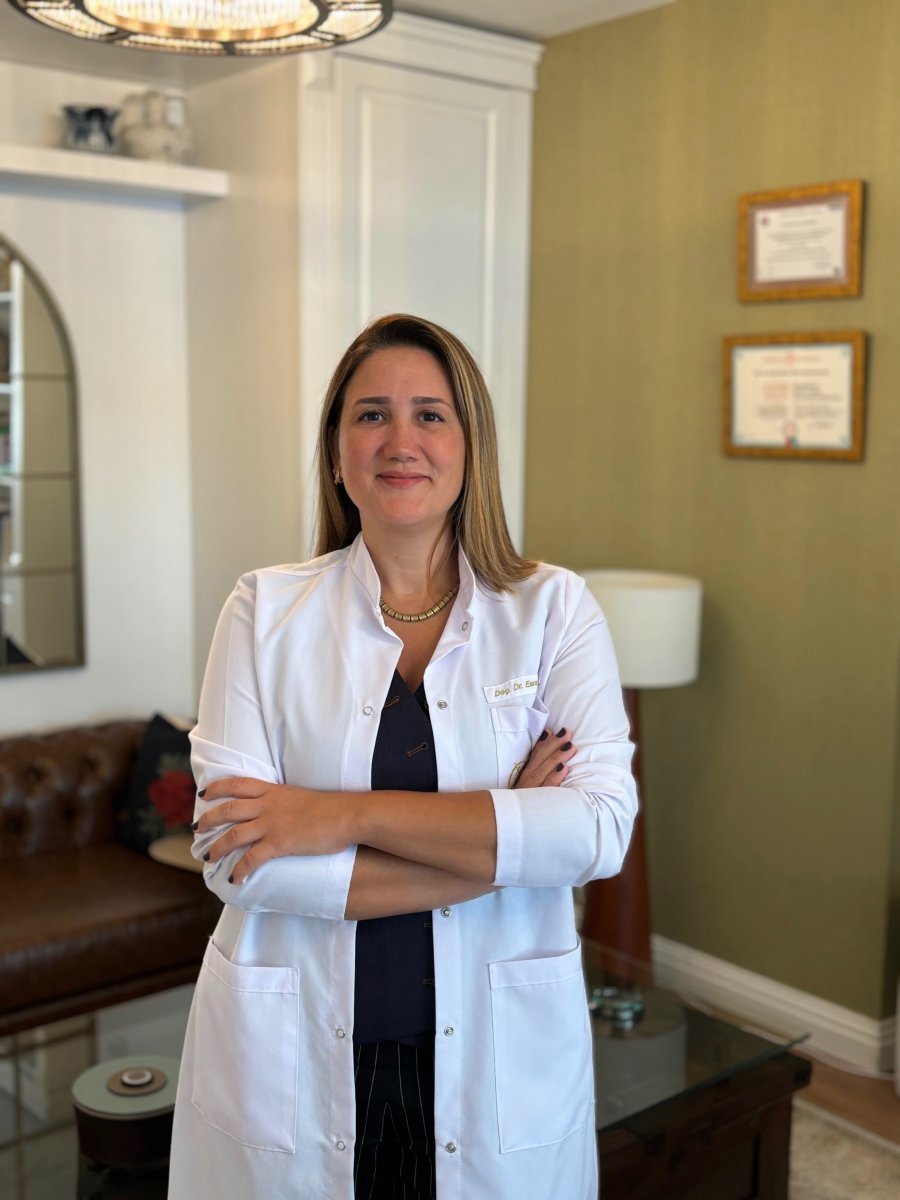
- Esra Ozbasli is a board-certified OB-GYN and genital cosmetic surgeon with over 21 years of experience.
- Assoc. Prof. Dr. Esra Özbaşlı OBGYN & Genital Aesthetics is located in Nişantaşı, the heart of Istanbul.
- Included Services: Preoperative tests, general anesthesia, consultation with an anesthesiologist, 5* hotel, VIP transfer.
- Stay Info: 1-day stay in the hospital, 1-day stay in the hotel, both included in the price.
- Labiaplasty
- Genital PRP
- G-spot augmentation
- Preoperative tests
- Method: Total vulvar rejuvenation (labioplasty, clitoral hood reduction, vulvar lipofilling of hyaluronic acid filling, vaginal hyaluronic acid rejuvenation)
- Esra Ozbasli is a board-certified OB-GYN and Genital Cosmetic Surgeon with advanced training in genital aesthetics.
- Assoc. Prof. Dr. Esra Özbaşlı OBGYN & Genital Aesthetics is located in Nişantaşı, the heart of Istanbul.
- Included Services: Complete blood count (CBC), consultation with an anesthesiologist, general anesthesia, preoperative tests, post-op medications, 5* hotel, VIP transfer.
- Stay Info: 1-day stay in the hospital, 2-day stay in the hotel, included in the price.
- Labiaplasty
- Genital PRP
- Clitoral Hood Reduction
- Perineoplasty
- G-spot augmentation
- Labia Majora Augmentation With Hyaluronic Acid Filler
- Preoperative tests
- Post-op medications
- Complete blood count (CBC)

- Technique: Standard labiaplasty
- Rafal Kuzlik is the author of internationally recognized original surgical techniques in labiaplasty and reconstructive gynecology.
- Klinika Saska Med is founded and led by Rafal Kuzlik, offering interdisciplinary and holistic women's healthcare.
- Included Services: Post-operative care, coffee zone, medical examination for pre-operation, video or text consultation, follow-up visit, consultation with a gynecologist.
- Stay Info: No hospital or hotel stay required; accommodation is not included in the price.
- Biochemical blood analysis
- Labiaplasty
- Red Light Therapy
- Post-operative care
- Coffee Zone
- Medical Examination for pre-operation
- Video or text consultation
- Follow-up visit
- Consultation with a gynecologist
- Dr. Karolina Venslauskaite is a co-author of scientific articles referenced in international databases and publications.
- SV plastic surgery clinic serves 1,000 patients annually, with major international flow from Europe and Arab League States.
- Included services: Consultation with a plastic surgeon, follow-up visit, language assistance, consultation with an anesthesiologist, electrocardiogram (ECG), post-op medications, medications, blood tests, preoperative tests, general anesthesia, video or text consultation, hospitalization, transfer airport-hotel-clinic-airport.
- Stay info: 1 day stay in the hospital, 3 days stay in the hotel, included in the price.
- Labiaplasty
- Electrocardiogram (ECG)
- Video or text consultation
- General anesthesia
- Preoperative tests
- Blood tests
- Medications
- Post-op medications
- Consultation with an anesthesiologist
- Language assistance
- Follow-up visit
- Consultation with a plastic surgeron
- Hospitalization
- Transfer airport-hotel-clinic-airport
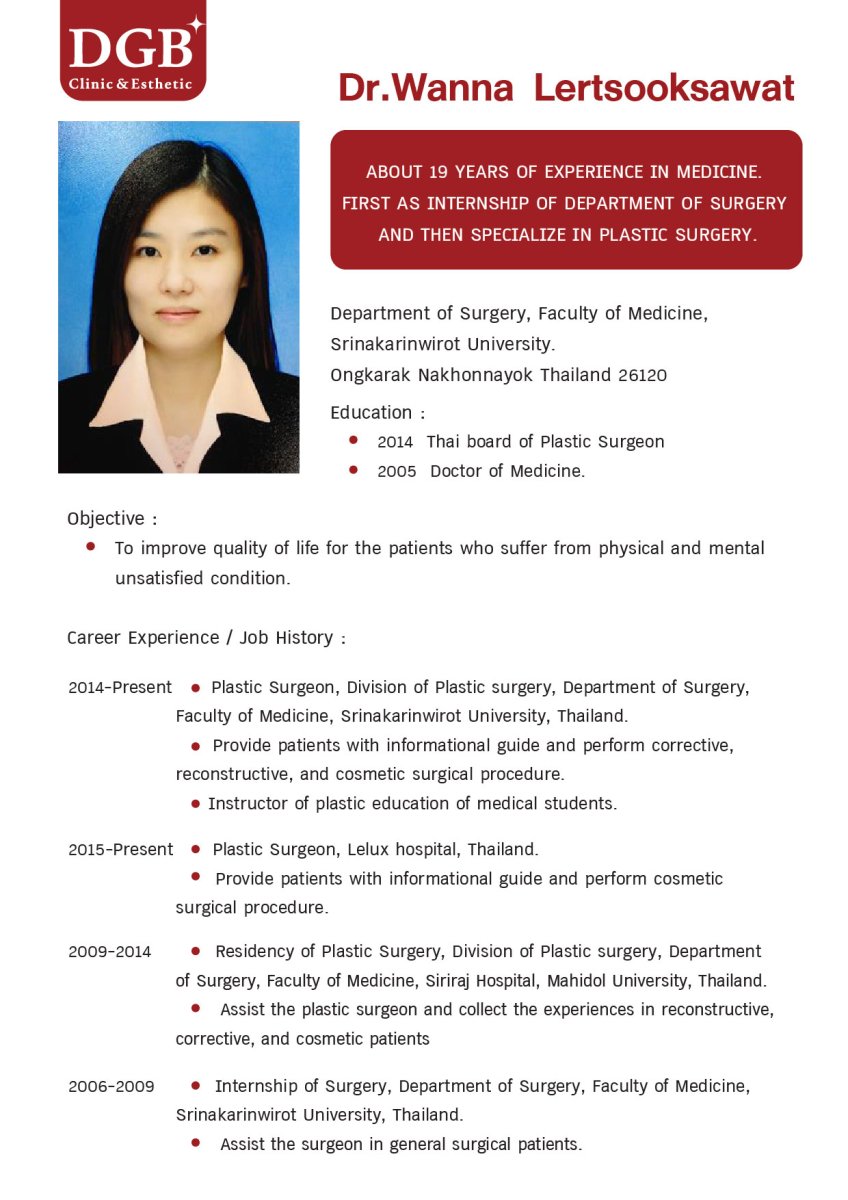
- Wanna Lertsooksawat is an instructor of plastic surgery education for medical students and performs corrective, reconstructive, and cosmetic procedures.
- DGB Clinic serves around 1,000 adult plastic surgery patients annually, attracting visitors from Europe, the USA, Canada, and Australia.
- Included Services: Wound dressing set, video or text consultation, medications, hospitalization, transfer to the clinic.
- Stay Info: 1 day stay in the hospital room is included; no hotel stay is included in the price.
- Labiaplasty
- Wound dressing set
- Video or text consultation
- Medications
- Hospitalization
- Transfer to the clinic
- Rafal Kuzlik is the founder of Klinika Saska Med and developed internationally recognized labiaplasty techniques like the One Cut Technique.
- Klinika Saska Med is known for combining gynecology, surgery, physiotherapy, and psychological support in holistic women’s care.
- Included Services: Consultation with a gynecologist, post-operative care, follow-up examination, follow-up visit, blood tests.
- Stay Info: No accommodation or transfer included; zero days required in the hospital or hotel.
- Labiaplasty
- Vaginoplasty
- Red Light Therapy
- Post-operative care
- Blood tests
- Follow-up examination
- Follow-up visit
- Consultation with a gynecologist
- Gulcan Albayrak has completed advanced genital aesthetics training at the International Cosmetic Congress and specialized courses in labiaplasty techniques.
- Atlas University Hospital serves patients from 160 countries and treats 565,000 patients annually across multiple specialties.
- Included Services: 24-hour nurse services, three meals per day by a nutritionist, blood tests, language assistance, 5-star hotel, VIP transfer (all transfers between airport, hotel, and hospital).
- Stay Info: 2 days stay in the hospital, 0 days in the hotel; 5-star hotel accommodation included in the price.
- Labiaplasty
- Labia Reduction
- 24-hr nurse services
- 3 meals per day by nutritionist
- Blood tests
- Language assistance
- 5* Hotel
- VIP transfer (premium vehicle service, all transfers between airport, hotel and clinic)
- Technique: 100% suture-free laser 3D labiaplasty
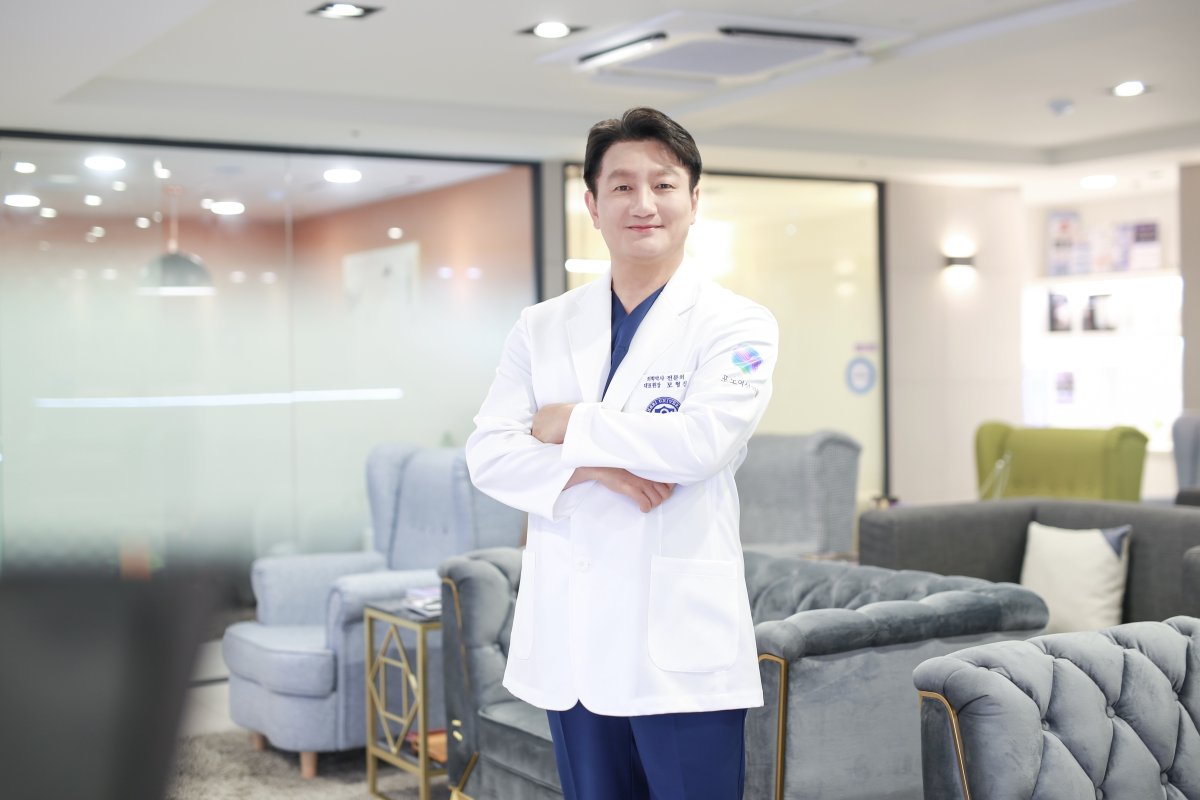
- Mo Hyung-jin developed the 100% suture-free laser 3D labiaplasty technique for precise, individualized care.
- Podo Woman Clinic treats about 6,000 patients annually using ISO 9001-certified protocols and advanced laser technologies.
- Included Services: Parking, consultation with a doctor, language assistance, consultation with a gynecologist.
- Stay Info: No hospital or hotel stay required; accommodation is not included in the price.
- Labiaplasty
- Parking
- Consultation with a doctor
- Language assistance
- Consultation with a gynecologist

- Technique: Premium "Return 14" labiaplasty: artisan aesthetic design
- Yang Ki Yeol is globally recognized as a high-tech pioneer in minimally invasive, uterus-preserving gynecology.
- Trinity Women's Clinic is led by a certified menopause specialist, offering advanced, customized women's health procedures.
- Included Services: Parking, consultation with a doctor, consultation with a gynecologist, language assistance.
- Stay Info: No hotel stay included; accommodation is not provided in the price.
- Labiaplasty
- Parking
- Consultation with a doctor
- Language assistance
- Consultation with a gynecologist
The Bottom Line
Labiaplasty in Poland starts at $1,000–$2,800, the lowest price on this page. At the other end it is $2,500–$4,500 in the Czech Republic and $2,700–$4,200 in Turkey. Against a US price of $4,000–$7,000, that is savings of up to 85%.
Which destination fits depends on more than price. Mexico is closest for patients in the United States and Canada. Thailand pairs its price with English-speaking care and all-inclusive packages. Poland and the Czech Republic follow EU medical guidelines, a short flight away for European patients. Turkey bundles the surgery, hospital stay, hotel, and transfers into one quoted price.
Three things are worth having in writing before any deposit:
- The surgeon's board certification.
- The facility's accreditation.
- An itemized quote showing exactly what the price covers.
FAQ: Common Questions About Affordable Labiaplasty
How painful is labiaplasty?
Most patients describe mild to moderate discomfort rather than sharp pain, controlled with over-the-counter relief. What to expect, and when:
- Days 1 to 3: the most swelling and tenderness.
- The first week: a dull soreness that eases day by day.
- Within a few days: light daily activity is realistic for most people.
- Longer: cycling and long periods of sitting stay uncomfortable.
Loose cotton clothing, cool compresses, and the gentle hygiene routine the clinic recommends all make the early days easier. Discomfort that grows rather than fades is worth reporting to the surgeon promptly, as is fever or unusual discharge. Both can signal an infection, which is simple to treat when caught early.
Does labiaplasty leave scars?
Scarring is uncommon and usually hard to see. In a long-term outcomes review of 9 studies and 748 patients followed for at least a year, about 98% had no scarring. The incisions sit along natural folds and borders, where healing lines tend to fade and blend over the months that follow.
Technique plays a part. Edge (trim) resection leaves a line along the labial border, while wedge resection hides its closure within a V-shaped repair that keeps the natural rim. How you heal also matters. Following the aftercare instructions, keeping the area clean, and avoiding tension on the sutures all help the result settle.
A surgeon who shows before-and-after photos of their own patients, taken well after surgery rather than in the first weeks, gives the most honest picture.
Does labiaplasty make you tighter?
No. Labiaplasty reshapes and reduces the labia minora, the inner folds of skin, and does not change the vaginal canal or its tightness. What patients usually notice is less friction and pulling during exercise, cycling, or intimacy, and more comfort in fitted clothing. That is the goal of the procedure rather than any internal change.
If the aim is to address laxity of the vaginal canal itself, that is a different operation. A surgeon would typically discuss vaginoplasty, which tightens the vaginal walls, or a combined plan where both concerns are treated together. The two procedures are sometimes confused because they sit close together anatomically, but they solve different problems and have different recovery timelines. A consultation is the place to match the plan to your actual goal.
What are the restrictions after labiaplasty?
Recovery asks for a gradual return to normal activity rather than a long shutdown. Surgeons usually set out five limits:
- Rest: the first 24 to 48 hours.
- Exercise: off for roughly three weeks.
- Sexual activity: about six weeks, so the incisions heal fully.
- Heavy lifting and tampons: four to six weeks.
- Flying home: 7 to 14 days in the country, until the clinic clears you as fit to fly.
Gentle hygiene with loose cotton underwear keeps the area comfortable while it settles. Staying near your clinic for the first week or two ensures you avoid flying during the peak swelling period and allows your surgeon to monitor your progress. These are general guidelines that a surgeon adapts to your case and the technique used. The limits are temporary, and most patients are back to their usual routine well within a couple of months.
How long is the labiaplasty recovery?
Most patients return to everyday activities within about a week, though full healing takes longer.
- Two to four weeks: swelling and bruising improve steadily.
- The following months: the tissue continues to settle and soften.
- Two to three months: complete recovery, including the final maturation of any scar line.
That is why strenuous exercise and high-impact activity stay off the calendar for the first few weeks. Comfort tends to return well before the result looks final, so the way things feel at three weeks is not the finished outcome. Desk work is realistic early on, while jobs that involve heavy lifting or long hours on your feet may need a little more time. Following the clinic's aftercare routine and keeping follow-up checks are what keep the recovery smooth.
Are labiaplasty results permanent?
Yes, for most patients, the result is long-lasting. Once the tissue has been reshaped and healed, the change holds for years. Across 86 studies, 94% of patients were satisfied with the result.
The body does keep changing over a lifetime. Childbirth, a major weight change, or an injury can alter the area again, as they do other soft tissue. Normal aging brings gradual, minor changes rather than a reversal of the surgery.
Because the result is durable, the decision is worth making for your own reasons rather than a passing trend. A consultation is the place to set realistic expectations. Revision surgery is possible if the result ever needs adjusting, though it is the exception rather than the rule.
Will labiaplasty improve my confidence and sex life?
For most patients, yes, though realistic expectations matter. A 2025 study on self-perception found sustained improvement in satisfaction with genital appearance and in sexual self-esteem after labiaplasty.
Much of the benefit comes from relief of physical discomfort, less self-consciousness in fitted clothing, and more ease during intimacy and exercise. Surgery on its own does not change general wellbeing or the quality of a relationship. It works best when the motivation is your own comfort rather than someone else's opinion.
Reputable clinics screen for body dysmorphic disorder before operating, because when underlying distress about appearance is the real driver, an operation rarely resolves it. If appearance concerns feel overwhelming or constant, raising that openly at the consultation lets the surgeon guide you toward the right path.
Can I fly home after labiaplasty?
Yes, but not immediately, and the clinic sets the timing. Surgeons usually ask international patients to stay in the country for roughly 7 to 14 days. That lets them check healing and clear you as fit to fly.
You will usually need to wait longer before taking a long-haul flight, because sitting still for many hours can increase the risk of a blood clot. The surgeon weighs your recovery against the length of the journey. On the flight itself, staying hydrated, moving your legs, and getting up to walk when you can all help.
Those extra nights of accommodation and meals are easy to overlook when comparing prices. Building them into the budget from the start keeps the total realistic.
What countries offer the most affordable labiaplasty options?
Poland is the lowest-priced destination for labiaplasty, with prices starting at around $1,000. Despite the cost, patients benefit from European Union safety standards and physician-only certification requirements. Turkey pairs JCI-accredited hospitals with all-inclusive packages, which is why patients often weigh it against the cheaper European options. Beyond the starting price, the bigger difference is what each destination includes and how far you travel:
- Turkey and Thailand often bundle the hospital stay, post-operative garments, and airport transfers into a single package, which suits patients who want one quoted price.
- Poland and the Czech Republic suit European travelers who want shorter flights and European Union medical oversight.
- Mexico is the practical choice for North American patients.
The right answer depends less on the cheapest quote than on the fit. Travel distance, the language you want your care in, and the accreditation you can confirm beforehand all matter.
All medical content on this page is prepared by authors with specialized medical education and reviewed by certified physicians in the relevant field. Medical review by Ergin Er, Plastic surgeon.
Last updated: October, 2026.
- Statistics: Figures are based on Bookimed’s internal database October 2026, which includes analysis of 12,450 patient requests across accredited clinics in .
- Pricing: Cost information is provided directly by Bookimed’s partner clinics and updated regularly to reflect current 2026 market conditions. Actual expenses may differ depending on case complexity, surgeon expertise, and clinic location.
- Clinical Data: Treatment outcomes and patient satisfaction figures are collected from Bookimed’s verified clinic database and supported by data from peer-reviewed medical sources such as PubMed, The Lancet, JAMA, and NEJM (2023–2026).
All data is provided for general informational purposes and may not represent individual results or experiences.