Developmental Dysplasia of the Hip (DDH) Treatment in China — Get 3 Personalized Clinic Matches


Medically reviewed by
Kayhan Turan
What's the Cost of Developmental dysplasia of the hip (DDH) Diagnosis and Treatment in China?
Developmental dysplasia of the hip (DDH) treatment cost in China typically ranges from $11,000 to $18,500 for specialized surgical intervention. Total hip replacement for more complex cases generally runs $9,500 to $18,000. Final expenses depend on the hospital tier, chosen implant materials, and the need for robotic-assisted technology. Patients often save approximately 50-70% compared to US medical costs. Shanghai and Beijing are the primary cities for these orthopedic procedures.
Typical Developmental Dysplasia of the Hip (DDH) Treatment Costs in China
- Total hip replacement for developmental dysplasia of the hip: $11,000 – $18,500
- Total hip replacement: $9,500 – $18,000
- Revision hip arthroplasty: $14,000 – $23,000
- Revision knee arthroplasty: $12,500 – $21,000
Bookimed Expert Insight: For complex DDH cases, seeking JD-accredited Class A level III facilities ensures the highest clinical standards in China. Experts like Dr. Wei Li at Beijing Amcare Hospital, with over 10,000 procedures, specialize in hip and knee joint replacements. Patients requiring post-operative recovery benefit from centers like Yanda International Hospital. This facility combines surgical excellence with dedicated rehabilitation wings for adult patients.
| China | Turkey | Austria | |
|---|---|---|---|
| Total hip replacement for developmental dysplasia of the hip | ≈ $11,000 | from $6,700 | ≈ $16,500 |
| Total hip replacement | ≈ $9,500 | from $11,800 | ≈ $15,500 |
| Revision knee arthroplasty | ≈ $12,500 | from $6,000 | ≈ $16,500 |
| Revision hip arthroplasty | ≈ $14,000 | from $10,000 | ≈ $17,500 |
| Hip Resurfacing Surgery | ≈ $14,000 | ≈ $8,500 | ≈ $11,500 |
Your Benefits and Guarantees with Bookimed
Transparent Prices & Flexible Installments
No hidden fees – just official clinic prices. Pay at the clinic for Developmental dysplasia of the hip (DDH) treatment and use a flexible installment plan if needed.
Verified Clinics & Doctors Only
Bookimed is committed to your safety. We only work with medical institutions that maintain high international standards in Developmental dysplasia of the hip (DDH) treatment and have the necessary licenses to serve international patients worldwide.
Free 24/7 Assistance
Bookimed offers free expert assistance. A personal medical coordinator supports you before, during, and after your treatment, solving any issues. You're never alone on your Developmental dysplasia of the hip (DDH) treatment journey.

Your personal Bookimed medical coordinator
- Supports you at every stage
- Helps choose the right clinic and doctor
- Ensures quick and convenient access to information
Best Developmental dysplasia of the hip (DDH) Treatment Centers in China: 5 Verified Options and Prices



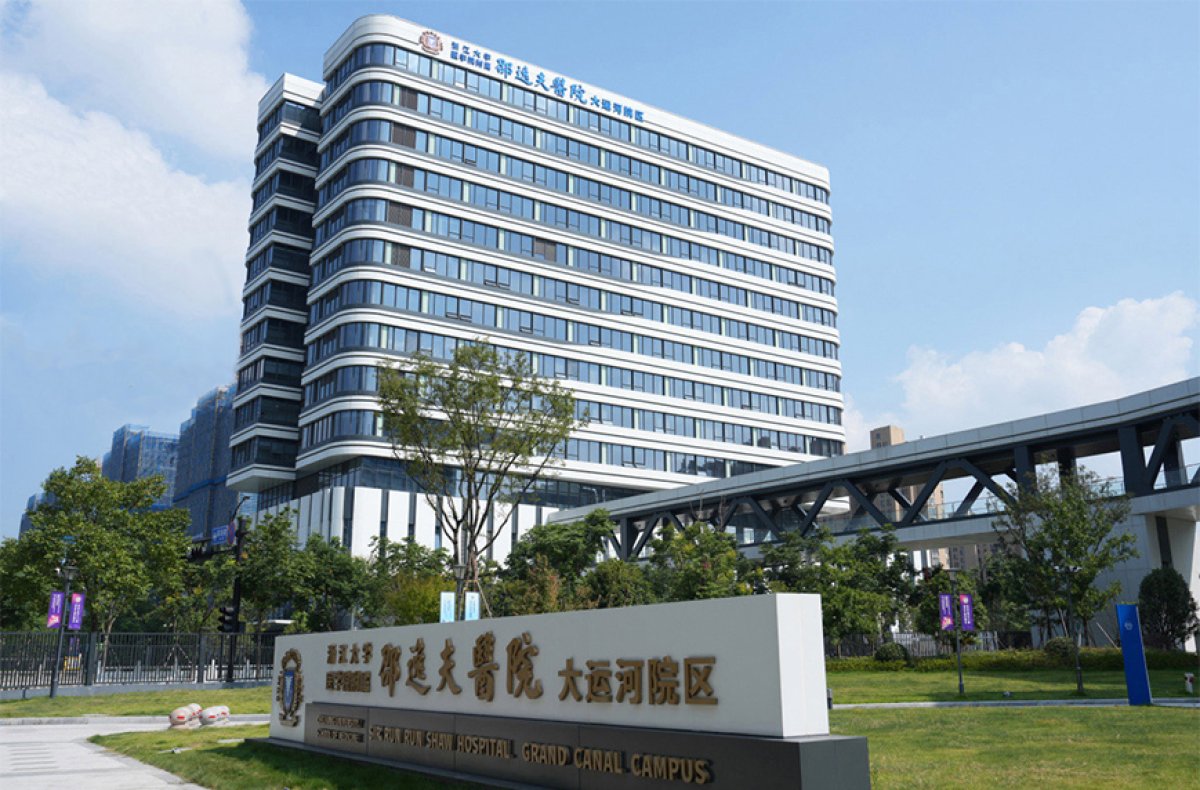




Shanghai Pubin Children’s Hospital
Get a Medical Assessment for Developmental dysplasia of the hip (DDH) in China: Consult with Experienced Doctors Now
View all Doctors
Chen Biao
Professor Cheng Biao is Chief Physician, Professor, and Doctoral Supervisor of Orthopedics at Shanghai Tongji Hospital. He specializes in complex joint disease and sports trauma. His focus areas are arthroplasty and arthroscopy.
Scope includes knee and hip arthroplasty, meniscectomy, and rotator cuff, ACL, and Bankart repair. He also treats DDH, patellar and shoulder instability, axial spondyloarthritis, Kashin–Beck disease, and major‑joint osteoarthritis.
He is Deputy Head of the Arthroscopy Group, Shanghai Medical Doctor Association, and a founding member of the Chinese Shoulder & Elbow Collaborative. His awards include the Shanghai Medical Science & Technology Award (Third Prize) and the Shanghai Science & Technology Progress Award. He also serves as an international medical expert at the Shanghai World International Medical Center.
Peng Hao

Liang Xiao Mu
Dr. Liang Xiao Mu is the head of rehabilitation technologies at Yanda International Hospital in Beijing. He specializes in restorative medicine for stroke, spinal cord, and brain injuries. Dr. Liang holds the medical specialist of the highest category designation. He is a member of the Chinese Association of Rehabilitation Medicine.
- Specializes in recovery for hemiplegia, aphasia, and cognitive dysfunction.
- Treats degenerative musculoskeletal conditions including arthritis and ankylosing spondylitis.
- Member of the China Association for Rehabilitation of the Disabled.
- Authored over 10 scientific papers on restorative medical technologies.
Share this content
Video Stories from Bookimed Patients
 Anna Leonova
Expert Overview about Developmental dysplasia of the hip (DDH) Treatment in China
How is DDH screened and diagnosed in Chinese hospitals?
China diagnoses Developmental Dysplasia of the Hip through age-linked protocols combining physical exams and imaging. Infants under 4 months receive B-mode ultrasound. Hospitals transition to pelvic X-rays after 6 months as bones ossify. Specialized centers use the Graf method and AI-driven diagnostics for accuracy.
- Early screening: Ultrasound is the gold standard for infants under 4 months.
- Ossification transition: X-rays become primary diagnostic tools after the 6-month mark.
- Physical markers: Doctors check for uneven skin folds and limited hip abduction.
- Mechanical tests: Surgeons perform Ortolani and Barlow maneuvers to detect joint instability.
- Graf classification: Radiologists use specific alpha and beta angles to categorize hip maturity.
Bookimed Expert Insight: While many facilities offer screening, reaching a Class A Level III hospital like Yanda International is vital for complex cases. These top-tier facilities serve 2,500,000 patients annually and combine international JCI standards with massive surgical volumes. Expert surgeons like Dr. Wei Li at Beijing Amcare bring 40+ years of experience and 10,000+ procedures to ensure precise deformity correction that smaller clinics may lack.
Patient Consensus: Parents emphasize that early timing is critical because ultrasound is only effective in the first few months. Many advise seeking a specialist immediately if risk factors like breech birth or stiffness are present, as early intervention avoids more invasive surgery later.
What is the standard non-surgical treatment for newborns in China?
Standard non-surgical treatment for newborns in China focuses on early screening and bracing. Pediatric specialists use the Pavlik harness to stabilize developmental dysplasia of the hip. This method guides joint development during the first six weeks of life. Success rates reach 95% for early-stage corrections.
- Early bracing: Abduction braces like the Pavlik harness hold hips in optimal positions.
- Routine screening: Universal neonatal checks facilitate immediate detection and early intervention protocols.
- Ultrasound monitoring: Clinics use frequent imaging to track hip development without radiation exposure.
- Integrated therapy: Specialized pediatric massage may be used alongside orthotics to improve mobility.
Bookimed Expert Insight: Quality of neonatal care in China is highly concentrated in Level 3 centers. Professors like Dr. Wei Li at Beijing Amcare Hospital have performed over 10,000 orthopedic procedures. These specialists prioritize conservative methods for infants to avoid future surgical releases. Seeking experts with extensive academic backgrounds helps ensure precise brace fitting for newborns.
Patient Consensus: Parents find that starting the brace early is the most critical success factor. They note that while initial sleep disruption is common, infants adapt quickly to the harness.
What happens if initial harness treatment fails or diagnosis is delayed past infancy?
Failed harness treatment or delayed diagnosis shifts care from bracing to surgical reduction and bony realignment. Outcomes depend on the patient age. Delayed management increases the risk of early osteoarthritis and avascular necrosis. Surgeons may perform open reductions or osteotomies to stabilize the joint.
- Treatment transition: Harnesses are rarely used after 6 months due to low success.
- Surgical intervention: Open reduction clears tissue blocking the socket to seat the bone.
- Bony realignment: Osteotomies reshape the pelvis or thighbone for better joint coverage.
- Casting requirements: Post-surgical spica casts hold the hip immobile for about 3 months.
Bookimed Expert Insight: Expert surgeons in China like Dr. Wei Li at Beijing Amcare Hospital bring over 40 years of experience to complex cases. High-volume specialists often utilize dynamic imaging during closed reductions to avoid unnecessary open surgery. This precision is vital for minimizing the risk of avascular necrosis in older infants.
Patient Consensus: Parents find the transition to spica casting challenging for daily tasks like diapering. Many note that clear imaging updates help reduce the stress of switching from bracing to surgery.
How do parents care for a baby in a Pavlik harness 24/7?
Parents manage a Pavlik harness by maintaining the device 24/7 to ensure proper hip alignment. You must adapt hygiene and dressing routines without ever removing the straps. Careful skin monitoring is vital. Specialized diapering techniques prevent messes while protecting the hips in their splayed position.
- Skin hygiene: Use sponge baths with mild soap to clean skin folds without wetting straps.
- Diapering method: Slide larger diapers under straps from the back without lifting the baby's legs.
- Clothing choice: Use oversized, snap-front rompers or the bottom half of sleepers to minimize restriction.
- Sleep positioning: Ensure a firm, flat mattress where the baby's legs can spread naturally outward.
Bookimed Expert Insight: Expert surgeons in China like Dr. Wei Li at Beijing Amcare Hospital emphasize specialized care for complex hip dysplasia cases. While general care is standard, our data shows that clinics performing over 10,000 orthopedic procedures often use customized padding for better car seat fit. This practical adjustment helps maintain the necessary hip angle during transport without compromising safety.
Patient Consensus: Parents find that babies usually adapt to the harness within days even if they fuss initially. Expect a learning curve with diaper leaks and try angling the diaper higher in the back to help.
Once a closed or open reduction is done, what is a hip spica cast and how is it cared for?
A hip spica cast is a rigid fiberglass or plaster mold used to immobilize the pelvis and legs after developmental dysplasia of the hip reduction. It maintains the corrected hip position for permanent healing. Proper care focuses on keeping the cast dry and monitoring skin health.
- Structure and coverage: Extends from the mid-chest to one or both knees or ankles.
- Hygiene management: Use the double-diaper method to prevent moisture from entering the cast.
- Positioning needs: Reposition the patient every 2 to 4 hours to prevent pressure sores.
- Circulation monitoring: Check that toes remain pink, warm, and can wiggle freely daily.
Bookimed Expert Insight: While many think spica casts require specialized mobility equipment, Dr. Wei Li at Beijing Amcare Hospital has treated over 10,000 orthopedic cases, showing that simple home modifications like wedge pillows and oversized clothing are often more effective. This matches data from top Chinese Level III clinics where patient volume exceeds 2,500,000 annually.
Patient Consensus: Parents find that kids adapt quickly but emphasize that managing diaper blowouts is the hardest part. They suggest keeping sponges and a hairdryer on a cool setting ready for any accidental leaks.
What are the treatment options for young adults with symptomatic DDH in China?
Young adults in China treat symptomatic developmental dysplasia of the hip through conservative care or joint-preserving surgeries like periacetabular osteotomy. Advanced cases require total hip arthroplasty. Chinese tertiary centers often use 3D preoperative planning and robotic navigation to address complex structural failures and secondary osteoarthritis.
- Conservative therapy: Includes activity modification and physical therapy for 3 to 6 months.
- Periacetabular osteotomy: Preferred bone-reorienting surgery used to reposition the shallow socket over the femoral head.
- Hip arthroscopy: Targets labral tears or impingement in patients with borderline hip dysplasia.
- Total hip replacement: Definitive reconstructive surgery for severe joint deformity or advanced cartilage loss.
Bookimed Expert Insight: Top Chinese surgeons like Dr. Wei Li at Beijing Amcare Hospital have performed over 10,000 procedures. This high volume is common in Class A Level III clinics like Yanda International Hospital. Patients should prioritize these elite facilities. They offer specialized expertise in complex DDH cases that smaller local hospitals cannot match.
Patient Consensus: Patients emphasize that non-surgical options only manage pain rather than fixing the underlying socket shape. They note that choosing a high-volume surgeon is vital because timing is critical for saving the natural joint.