Deep brain stimulation (DBS) surgery in Italy — get 3 personalized clinic matches
Bookimed lists 5 deep brain stimulation surgery clinics in Italy, in Milan, Bologna, and Turin. These clinics are rated 4.7/5 in 143 verified patient reviews on Bookimed.

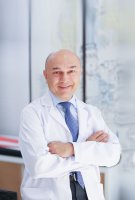
Medically reviewed by
Ali Zirh
How it works
How Much Does Deep brain stimulation (DBS) surgery Cost in Italy?
Deep brain stimulation (DBS) surgery in Italy typically costs from $38,000 to $55,000. Prices are influenced by the choice of neurostimulator, the specific neurological condition, and the clinical facility grade. Patients in the US usually pay $87,500 on average for this procedure. Choosing Italy offers significant savings of approximately 47%. This cost generally includes the surgical implantation, the pulse generator device, and initial neurostimulator programming.
- Pulse generator type: Rechargeable systems generally cost about 40% more than non-rechargeable models in Italy.
- Medication treatment for Parkinson's disease: $900 to $2,300 for pharmacological management.
- Medical hub location: Top-tier surgical centers are primarily located in Milan, Turin, and Bologna.
- Facility research status: Centers with IRCCS accreditation often have higher pricing due to advanced research integration.
Bookimed Expert Insight: Choosing a research-focused hospital like San Raffaele or IRCCS Ospedale Galeazzi - Sant'Ambrogio in Milan provides exceptional value. These facilities hold IRCCS accreditation from the Italian Ministry of Health and Newsweek rankings. While specialized units like Santa Caterina da Siena in Turin offer competitive pricing, the major Milanese hubs perform tens of thousands of operations annually. This high volume often ensures access to the latest neurosurgical technologies and highly experienced multidisciplinary teams.
| Italy | Turkey | Austria | |
|---|---|---|---|
| Deep brain stimulation (DBS) surgery | ≈ $38,000 | from $15,000 | ≈ $38,000 |
| Medication treatment for Parkinson's disease | ≈ $900 | ≈ $900 | ≈ $2,200 |
Discover the Best Deep brain stimulation (DBS) surgery Clinics in Italy: 5 Verified Options and Prices








Deep brain stimulation (DBS) surgery Overview in Italy
Day 1
- Arrive in the country and settle in your accommodation.
- Visit the clinic for initial consultation with a neurologist.
- Undergo necessary medical tests as advised by the doctor.
Day 2-3
- Receive the results of your medical tests.
- Meet with a neurosurgeon to discuss DBS surgery procedure.
- Pre-operative preparations include fasting and medication adjustments.
Day 4
- Admission to the hospital for DBS surgery.
- The surgery is performed under general anesthesia.
- DBS surgery lasts approximately 3-4 hours.
Day 5-7
- Post-operative care in the hospital under medical supervision.
- Adjustment of the neurostimulator settings by a neurologist.
- Discharge from the hospital after doctor"s approval.
Weeks 1-2
- Continue recovery at home with regular follow-up visits.
- Gradually return to regular activities as advised by the doctor.
Weeks 3-4
- Return to work, based on the level of physical exertion required.
- Start rehabilitation program, if advised by your doctor.
Weeks 5-6
- Resume sports activities, based on your doctor"s advice.
- Experience noticeable improvements in your condition.
Please note that each patient"s recovery timeline varies based on individual circumstances and the specifics of their DBS surgery. Always consult your doctor for personalized advice.
- Bookimed deposit: $200 or €200.
- Clinic deposit: Pay a set percentage in advance.
Our Doctors
View all Doctors
François Lechanoine
Dr. François Lechanoine is a neurosurgeon at Maria Cecilia Hospital in Italy. He has performed over 2,500 surgeries. This includes 1,600 procedures as the lead surgeon. He specializes in complex brain and spine conditions. Dr. Lechanoine founded the UBE surgical training center at his hospital.
- Holds diplomas from the European Association of Neurosurgical Societies and Eurospine.
- Expert in minimally invasive spine procedures like Unilateral Biportal Endoscopy.
- Treats complex cases including brainstem conditions and pituitary adenomas.
- Works at Maria Cecilia Hospital, a JCI-accredited facility in Italy.
Video Stories from Bookimed Patients
Reviews about Bookimed: Discover Patients' Insights
All reviewsRelated Articles

Deep Brain Stimulation Cost by Country: Prices, Savings & Packages
Written by Kateryna Zamkovska

How much does DBS cost in 2019?
Written by Veronika Kazina
Share this content
 Anna Leonova
FAQ about Deep brain stimulation (DBS) surgery in Italy
What conditions are commonly treated with DBS surgery in Italy?
Deep brain stimulation surgery in Italy treats Parkinson’s disease, essential tremor, and dystonia. Italian neurosurgical centers also apply this therapy for treatment-resistant obsessive-compulsive disorder. Specialist clinics use techniques like Subthalamic Nucleus or Globus Pallidus internus targeting to control motor fluctuations, dyskinesias, and involuntary muscle contractions.
- Parkinson’s disease: Manages advanced symptoms like tremors and dyskinesia when medications fail.
- Essential tremor: Treats debilitating hand or voice tremors to restore daily function.
- Dystonia: Controls painful muscle contractions and abnormal postures through targeted electrode placement.
- Obsessive-compulsive disorder: Used for chronic, treatment-refractory cases alongside cognitive behavioral therapy.
Bookimed Expert Insight: While basic medical care starts at lower costs, DBS surgery in Italy ranges from $38,000 to $55,000. This price reflects the high standard of IRCCS-accredited research hospitals like Ospedale San Raffaele. These centers integrate clinical research directly into surgery, providing access to emerging psychiatric applications before they become standard care.
Patient Consensus: Patients report that while surgery significantly improves tremors and limb spasms, it does not stop condition progression. Choosing between Subthalamic Nucleus or Globus Pallidus internus targets is vital for managing specific motor issues.
How long is the typical hospital stay after undergoing bilateral DBS surgery in Italy?
A typical hospital stay for bilateral deep brain stimulation in Italy usually lasts 1 to 3 days. Patients often spend 1 night in the hospital for monitoring after the lead-placement stage. Some specialized neurology centers require 72 to 96 hours of inpatient observation to manage post-surgical recovery.
- Inpatient observation: Standard recovery typically requires 1 to 3 nights for surgical monitoring.
- Intensive care: Specialized centers often require 1 night of ICU monitoring after lead placement.
- Device activation: Second-stage generator connection is often performed as a same-day or outpatient procedure.
- Local recovery: Medical teams recommend staying in Italy for 7 to 14 days before flying.
Bookimed Expert Insight: Italian neurosurgery centers like Ospedale San Raffaele and Maria Cecilia Hospital utilize IRCCS (Istituto di Ricovero e Cura a Carattere Scientifico) standards. This accreditation signals that the facility combines clinical care with advanced research. Patients benefit from protocols that often allow discharge within 24 hours for uncomplicated single-stage procedures.
Patient Consensus: Many advise bringing a personal supply of Parkinson’s medications as hospitals might not stock specific types. Recovery at home feels longer than the brief hospital stay, and showering must wait until staples are removed at 2 weeks.
Which medical centers or cities in Italy are well-known for DBS procedures?
Italy hosts specialized centers for deep brain stimulation in Milan, Rome, and Bologna. Top research hospitals hold Scientific Institute for Research, Hospitalization and Health Care accreditation. These institutions use neuro-navigation technology to manage Parkinson's disease and complex movement disorders.
- Milan research hubs: San Raffaele and San Donato hospitals provide dedicated functional neurosurgery and stereotactic mapping.
- Rome clinical leadership: Policlinico Gemelli provides adaptive neurostimulation and directional lead tracking for precise brain targeting.
- Regional medical centers: Specialized surgical boards manage care in Bologna, Turin, Pavia, Bergamo, and Florence.
- Advanced imaging workflows: Large university centers combine neuro-navigation with high-resolution mapping systems for electrode placement.
Bookimed Expert Insight: Milan serves as the primary cluster for this care. Three major accredited hospitals sit within the city limits. San Donato, San Raffaele, and Galeazzi each treat over 300,000 patients annually. This massive scale correlates with high success rates. It also provides access to tools like Gamma Knife.
Patient Consensus: Patients emphasize choosing trial-linked university centers rather than smaller regional clinics. Travel to hubs like Florence or Milan pays off because of superior neuro-navigation equipment.