How Do You Verify a Board-Certified Dermatologist in South Korea?
In Seoul, where cosmetic clinics are common, the title “skin doctor” is not the same as being a dermatologist. Knowing the difference protects your skin and your budget. Here is how to tell a fully trained specialist from a general doctor running an aesthetic clinic.
The specialist bar
In South Korea, becoming a board-certified dermatologist requires a four-year dermatology residency followed by a national board exam (“dermatology specialist”). Only a small fraction of graduates complete this specialist pathway. Many aesthetic clinics in Gangnam and Myeongdong are staffed instead by family-medicine or general doctors. They can legally call themselves skin doctors without it.
The distinction affects your treatment. A board-certified dermatologist sets the correct laser depth and energy for your skin type. They also manage any reaction in-house. According to a survey of board-certified Korean dermatologists, formal eye protection and infection control are routine during laser work.
The official specialist plaque
Korean dermatology clinics display an official red board-certification plaque reading 피부과 전문의 (“dermatology specialist”) near the reception desk. Look for it. It indicates that a trained dermatology specialist is registered at the practice.
| Trusted signals | Worth a closer look |
|---|
| Red dermatology-specialist plaque on display | "Skin doctor" title with no residency named |
| Completed dermatology residency | General-practitioner-run aesthetic clinic |
| Named specialist who treats you directly | Only a coordinator explains your plan |
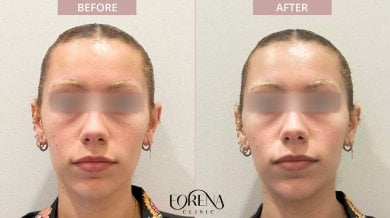
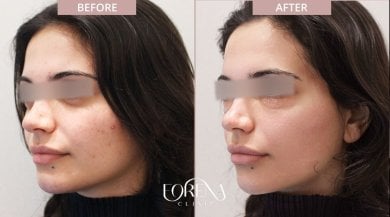
The partner dermatologists we work with in Korea already carry confirmed credentials. For example, Dr. Ro Youngwoo, Director at Oracle Dermatology Cheongdam, is a board-certified dermatologist and member of the Korean Academy of Dermatology. Dr. Yeom Jihye at Forena Clinic is a member of the American Academy of Dermatology with 14,000+ aesthetic procedures and a UCLA clinical observership.
Factory-Style vs. Boutique Clinics: Which Model Fits You
Seoul's skin clinics fall into two very different business models. One is built for speed and volume. The other is built for one-on-one attention. Neither is "better" – they simply suit different patients and treatments.
Two business models, side by side
| Feature | Factory-style clinic | Boutique clinic |
|---|
| Consultation | Coordinator-led, brief rotating-doctor time | 60–90 minutes, private |
| Doctor continuity | Rotating doctors | Same doctor each visit |
| Pricing | Lower | Roughly 1.5x higher |
| Best for | Standardized low-risk treatments | Personalized plans, sensitive skin |
Established multi-branch groups like Lienjang run branches in Gangnam, Myeongdong, and Hongdae. They see around 2,000 patients a day, with CCTV in treatment rooms and English translators on site. For basic laser work and standard skin boosters, this model is cost-effective and safe.
The benefits of consultation time
Korea is known for very short consultation times. That is why the consultation setting matters so much. A boutique practice such as Lalian Cheongdam works appointment-only, with 1:1 continuity under Dr. Jiyoun Kang and 3D MetaView skin mapping. The plan fits your face and skin. At a factory-style clinic, you can still discuss exactly how you want the treatment performed. Ask the doctor to inject densely and evenly so the coverage and depth match your goals.
Verifying authentic devices
Authenticity matters in either model, and confirming it takes seconds:
- ask staff to open device tips and injectable vials in front of you;
- check the serial numbers on cartridges and boxes;
- match the device label to its MFDS (Korea's medical-device regulator) approval;
- confirm the treating doctor, not only a coordinator, sets your plan.
The "Big Three" Skin Boosters: Rejuran, Juvelook, Chanel Injection
Skin boosters are a popular part of Korean skin rejuvenation. They are micro-injections placed into the dermis to improve skin quality – hydration, texture, and firmness. They are not volumizing fillers that add shape. Three names dominate Seoul clinics, and they work in very different ways.
How each booster works
| Booster | Active molecule | What it does | How long it lasts | Downtime |
|---|
| Rejuran Healer | Salmon-DNA polynucleotide (PN) | Repairs the skin barrier, softens fine lines | Often several months; repeat sessions are commonly used | Tiny raised bumps for 24–48 hours |
| Juvelook | PDLLA microspheres + non-crosslinked HA | Stimulates the skin's own collagen | Develops over 8–12 weeks, lasts a year or more | Mild swelling, redness, or bruising for a few hours to a few days |
| Chanel Injection (NCTF 135HA) | Non-crosslinked HA + revitalizing cocktail | Instant "glass-skin" glow | Fades in 3–6 months | Pinpoint redness resolves within 2–6 hours; minimal downtime |
Evidence and downtime
Rejuran uses purified polynucleotide from salmon DNA to help repair the skin barrier. In a phase III clinical trial, polynucleotide injections worked as well as or better than hyaluronic acid for smoothing crow's feet. The small raised papules that look like tiny mosquito bites are normal. They usually settle within 24–48 hours.
Juvelook takes a different route. Its PDLLA microspheres prompt your skin to build new collagen over about two to three months. Imaging studies confirm this collagen-building effect. Pairing it with microneedling further improves pore size and texture.
Chanel Injection, by contrast, delivers hydration and radiance now. It does not remodel collagen for the long term.
A fourth option is gaining ground fast: exosome skin boosters. These calm inflammation and support skin repair, often paired with a laser or microneedling session. Clinics we coordinate with in Seoul increasingly offer them too.
The under-eye safety rule
For the delicate under-eye area, dermatologists avoid Juvelook (PDLLA). They use a gentler booster made for the skin around the eye instead. The thin skin there raises the risk of small lumps. A trained specialist chooses the right molecule for each zone of your face.
Boosters through partner clinics in Korea run about $200–$300 a session, against roughly $1,000–$1,900 in the US – about 70% less. Forena Clinic, for example, lists a Signature Triple Toning package with Dr. Yeom Jihye at about $450.
Darker & Sensitive Skin: Device Calibration and Preventing Dark Spots
For darker or more sensitive skin, device settings need to be carefully adjusted to your skin type to reduce the risk of dark spots. Melanin-rich skin with a thinner subdermis reacts differently to the same laser and lifting settings. Careful calibration helps tailor the treatment to your skin.
Why settings must change for darker skin
Running high-energy settings meant for lighter skin on deeper tones (Fitzpatrick types III–V) can trigger long-lasting dark spots. This is known as post-inflammatory hyperpigmentation, or PIH. Clinics experienced with Fitzpatrick III–V skin dial the device energy down to reduce that pigmentation risk while still delivering results. Clinics equipped for this, such as Forena, use FDA- and KFDA-approved systems including Ultherapy Prime and Thermage FLX.
What actually prevents dark spots
Sunscreen alone is not enough. A systematic review found that sunscreen on its own did not reliably prevent laser-related dark spots. The most effective steps, started right after treatment, were:
- intradermal tranexamic acid, a skin-lightening injection;
- short-term topical corticosteroids.
Matching the device to your skin is the core of a good outcome. The American Society for Dermatologic Surgery makes the same point for laser resurfacing. Ask your dermatologist about dark-spot precautions before a laser session.
Korean "Skin Botox" (Dermotoxin): Smaller Pores Without a Frozen Look
Korean "Skin Botox," also called Dermotoxin, worries some patients who fear losing their expressions. The treatment uses botulinum toxin differently from conventional Botox, mainly through its dose, distribution, and injection depth.
- It uses highly diluted botulinum toxin spread evenly across the treatment area.
- It is injected superficially into the dermis, not deep into facial muscle.
- It targets the tiny oil and sweat glands and the muscles attached to hair follicles, rather than your expression muscles.
- The result is smaller-looking pores, less oil, and calmer redness, while normal facial movement stays intact.
Research on intradermal microdoses of botulinum toxin supports this pore-shrinking, oil-controlling effect when the toxin is placed shallowly. Some clinics blend micro-dosed toxin with a micro-hyaluronic-acid booster for an added glass-skin finish. That mix has been studied as "HydroToxin".
South Korea’s Medical VAT Refund Has Ended: What It Means for Your Budget
South Korea ended its medical VAT refund for foreign cosmetic and dermatology patients on January 1, 2026. The provision that once returned 7–10% expired and was not renewed.
What changed
Cosmetic and dermatology treatments now carry a final, non-refundable VAT of about 10%. Make sure your budget is based on the VAT-inclusive treatment price. The standard tourist tax refund on retail skincare bought tax-free is untouched.
Even with the tax, skin treatment in Korea stays well below Western pricing. A broad range of non-surgical skin-rejuvenation treatments runs about $400–$600 here, against $2,500–$6,000 in the US and $2,100–$3,500 in the UK. Guidance from ISAPS recommends confirming full, transparent costs before you travel. If an unexpected medical issue or care dispute arises, foreign patients can bring the case to K-MEDI, Korea's medical dispute mediation body. For a wider view of costs and clinics, see the guide to plastic surgery in Korea.
Your pre-arrival checklist
- Get a VAT-inclusive quote for every procedure.
- Include the roughly 10% VAT in your total treatment budget.
- If you do not hold a valid K-ETA, submit the online e-Arrival Card within three days before you land.