Aneurysm Coiling in Spain — Get 3 Top Clinic Matches with Costs

Medically reviewed by
Hasim Ustunsoy
How Much Does Aneurysm coiling Cost in Spain?
The cost of aneurysm coiling in Spain typically ranges from $25,000 to $40,000. Prices vary depending on the complexity of the aneurysm, the experience of the neurointerventional team, and the clinic’s technology. In the United States, the average cost is $62,500 (per AHA data). This means aneurysm coiling in Spain can be about 48% less than in the U.S.
Spanish clinics usually include the initial consultation, pre-op blood tests, post-op medication, follow-up visits, English-speaking staff, and 24/7 patient support. Meals during clinic stays and detailed care instructions are also covered. In the U.S., the listed price often includes only the procedure, with pre-op tests, medications, and follow-ups billed separately. Always confirm exactly what’s included with your chosen clinic.
| Turkey | Austria | Spain | |
|---|---|---|---|
| Aneurysm coiling | from $17,500 | ≈ $17,500 | ≈ $25,000 |
Your Benefits and Guarantees with Bookimed
Transparent Prices & Flexible Installments
No hidden fees – just official clinic prices. Pay at the clinic for Aneurysm coiling upon arrival and use a flexible installment plan if needed.
Verified Clinics & Doctors Only
Bookimed is committed to your safety. We only work with medical institutions that maintain high international standards in Aneurysm coiling and have the necessary licenses to serve international patients worldwide.
Free 24/7 Assistance
Bookimed offers free expert assistance. A personal medical coordinator supports you before, during, and after your treatment, solving any issues. You're never alone on your Aneurysm coiling journey.

Your personal Bookimed medical coordinator
- Supports you at every stage
- Helps choose the right clinic and doctor
- Ensures quick and convenient access to information
Discover the Best Aneurysm coiling Clinics in Spain: 1 Verified Option and Prices


Aneurysm coiling Overview in Spain
- Aortic aneurysm surgery - from $49,600The operation mends enlarged aortic spots, preventing life-threatening ruptures. It"s typically open or endovascular with high success rates.
Day 1 - Arrival
- Arrive at the hospital for admission.
- Complete necessary paperwork and insurance details.
Day 2 - Pre-Operation Consultation
- Meet with the neurologist for a consultation.
- Undergo thorough medical examination.
- Do blood tests and imaging studies like CT or MRI.
- Receive detailed explanation about the procedure.
Day 3 - Aneurysm Coiling
- Receive general anesthesia for the procedure.
- Undergo Aneurysm coiling, a 2 to 3-hour procedure.
- The surgeon guides a catheter into the aneurysm.
- Coils are placed to promote blood clotting.
- Remain in recovery for a few hours post-surgery.
Day 4 to Day 7 - Post-Operation
- Stay in the hospital for observation.
- Have regular check-ups by the neurologist.
- Start light physical therapy as advised.
Week 2 to Week 6 - Rehabilitation
- Continue with physical therapy at home.
- Gradually return to daily activities.
- By week 4, return to work if job is not strenuous.
- By week 6, return to sport and other vigorous activities.
Please note, every individual"s recovery process can vary based on their overall health and the complexity of the procedure.
- Bookimed deposit: $200 or €200.
- Clinic deposit: Pay a set percentage in advance.
Our Doctors
View all Doctors
José Ángel Cabrera Rodríguez
Head of Cardiology at Quironsalud Madrid since 2006 – Dr. Cabrera specializes in complex cardiac procedures including aneurysm coiling.
- Trained in interventional cardiology at Jiménez Díaz Foundation
- Senior Research Fellow at Royal Brompton in London
- Professor at European University of Madrid
- Member of European Society of Cardiology
- Published reviewer for leading cardiology journals

Francisco Javier Alzueta Rodriguez
Dr. Alzueta Rodriguez specializes in cardiac arrhythmia treatments at Quirónsalud Marbella, with over 100 scientific publications and extensive teaching experience.
- Expert in pacemaker implantation and catheter ablation
- Senior Lecturer at Malaga University, teaching circulatory diseases
- Author of 23 books and chapters in cardiology
- Member of European Society of Cardiology and Heart Rhythm Association
- Head of Arrhythmia Unit at Clínica Puerta de Hierro

Gallardo Pedrajas
Head of Angiology and Vascular Surgery at Quirónsalud Marbella – specializes in minimally-invasive endovascular treatments for aneurysms.
- Certified in vascular laboratory and X-ray management by Medical Physics Spanish Association
- Assistant professor at Malaga University and European Society of Vascular Surgery
- Published numerous research papers in international scientific journals
- Member of Board of Directors for American Cardiology JACC Journal
- Secretary of Andalusian Vascular Society and member of SEACV Committee

Angel Pinto Gonzalez
Dr. Angel Pinto Gonzalez is an interventional cardiologist at Hospital Universitario HM Montepríncipe in Madrid. He treats coronary artery disease, atherosclerosis, and heart valve disorders. Dr. Pinto Gonzalez performs stent placement, radiofrequency ablation, and pacemaker installation. He works at an ISO-accredited hospital that treats 500,000 patients annually.
- Performs carotid angioplasty and stenting to prevent strokes.
- Treats mitral valve prolapse and aortic insufficiency.
- Manages pulmonary hypertension and arrhythmias.
- Works at a facility holding EFQM and TÜV NORD quality certifications.
Video Stories from Bookimed Patients
Reviews about Bookimed: Discover Patients' Insights
All reviewsShare this content
 Anna Leonova
FAQ about Aneurysm coiling in Spain
What is aneurysm coiling and how is it done in Spain?
Aneurysm coiling in Spain is a minimally invasive endovascular procedure where specialists insert flexible platinum coils into a brain aneurysm to trigger clotting and prevent rupture. Performed in JCI-accredited facilities using live X-ray guidance, this technique provides a safer, faster-recovery alternative to traditional open-skull clipping surgery.
- Procedure access: Surgeons navigate catheters via the femoral artery or wrist to the brain.
- Treatment mechanism: Platinum coils pack the aneurysm sac to block dangerous blood flow.
- Hospital stay: Most patients spend 1 night in the ICU for close neurological monitoring.
- Recovery timeline: Full recovery allows returning to work within 2 weeks of the procedure.
Bookimed Expert Insight: While average costs in Spain range from $25,000 to $40,000, the real value lies in the specialized infrastructure. Top-tier centers like Hospital Ruber Internacional integrate 3-Tesla MRI and advanced neurointerventional suites, providing diagnostic precision that often helps patients save up to 48% compared to US surgical costs.
Patient Consensus: Patients value the significantly shorter recovery time compared to clipping, though many emphasize the importance of hydration to flush out the contrast dye used during imaging.
What is the success rate for aneurysm coiling?
Aneurysm coiling success rates generally reach 92% for favorable patient outcomes. Medical data indicates a 98.3% technical success rate for placing coils. Long-term stability remains high at 80% to 85% despite a 23% lower mortality risk compared to traditional surgical clipping methods.
- Technical success rate: Surgeons successfully place coils in 98.3% of endovascular procedures.
- Long-term stability: Endovascular coiling maintains successful aneurysm occlusion in 80% to 85% of cases.
- Large aneurysm risk: Aneurysms over 10 mm show a 39% chance of reopening (recanalization).
- Mortality reduction: Coiling reduces five-year death risks by 23% compared to open surgical clipping.
Bookimed Expert Insight: Spain’s top neurosurgery centers like Hospital Ruber Internacional integrate advanced 3-Tesla MRI and Gamma Knife technology. This allows for superior precision during endovascular approaches. Choosing a facility with JCI accreditation ensures that these specialized devices meet international safety standards for complex vascular interventions.
Patient Consensus: Many patients find the recovery from coiling significantly easier than clipping with fewer side effects. They frequently emphasize that staying well-hydrated post-surgery helps clear anesthesia faster and improves mood.
What is the recovery time and post-treatment care after aneurysm coiling?
Recovery depends on whether the aneurysm was unruptured or ruptured. Patients with unruptured aneurysms typically return to work within 1 to 2 weeks. Ruptured cases require intensive care and 9 to 18 months for baseline recovery. Minimally invasive endovascular coiling ensures faster healing than open surgery.
- Hospital stay: Expect 1–2 days for unruptured cases or weeks for ruptured ones.
- Activity limits: Avoid heavy lifting or strenuous exercise for at least 1 week.
- Wound care: Keep the groin or wrist incision dry and watch for infection signs.
- Medication protocol: Stent-assisted coiling requires dual antiplatelet therapy for at least 6 months.
Bookimed Expert Insight: Spanish clinics like Hospital Ruber Internacional use advanced 3-Tesla MRI for precise follow-up monitoring. Data shows that radial wrist access is becoming the preferred approach over femoral leg access. This specific technique reduces the required time lying flat and speeds up initial mobilization.
Patient Consensus: Many patients find that persistent fatigue is the biggest challenge during the first month. They recommend prioritizing extra sleep and planning for a full 14 days off work to manage mental exhaustion.
Which are the top hospitals for aneurysm coiling in Spain?
Top hospitals for aneurysm coiling in Spain include Centro Medico Teknon, Clinica Universidad de Navarra, and Hospital Ruber Internacional. These JCI-accredited centers specialize in endovascular coiling and cerebral angiography. They provide minimally invasive groin or wrist access via highly experienced neurosurgery teams.
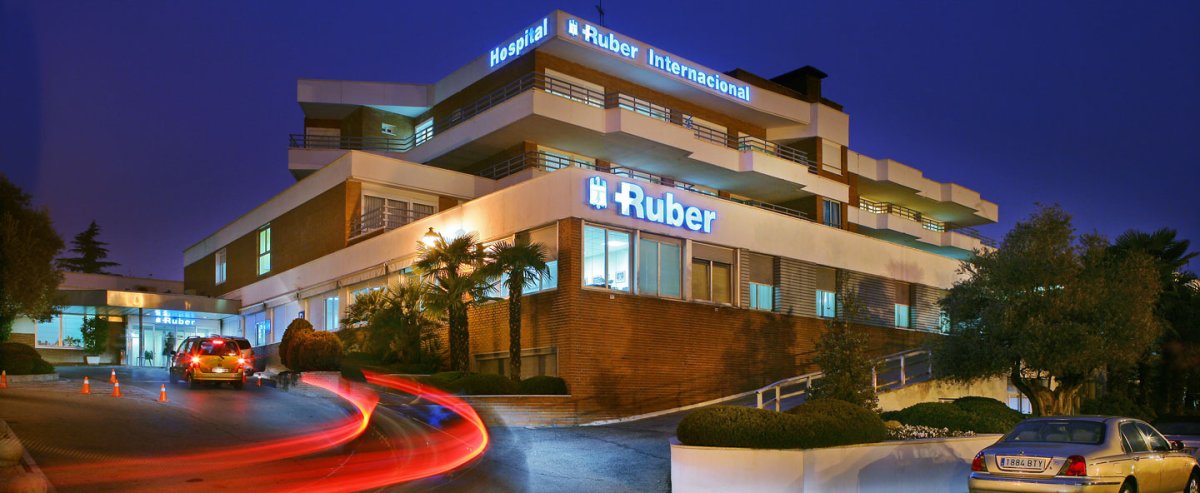
- Hospital Ruber Internacional: Ranked among top 6 Spanish hospitals with JCI and ISO certifications.
- Clinica Universidad de Navarra: Features specialized neurovascular teams across Madrid and Pamplona locations.
- Centro Medico Teknon: Known for advanced vascular care within its specialized heart institute.
- Technological standards: Facilities utilize 3-Tesla MRI and advanced angiography for precise coil placement.
Bookimed Expert Insight: Ruber Internacional stands out due to high surgical volume. They performed over 6,000 surgeries in 2022 alone. This high frequency often correlates with better patient outcomes for complex neural procedures. Choose centers with multiple certifications like ISO and JCI to ensure rigorous safety standards.
Patient Consensus: Patients prioritize centers offering multiple techniques like flow diversion and WEB devices. They also emphasize selecting hospitals equipped for multi-week recoveries after formal neurosurgical interventions.
Who are the best specialists for aneurysm coiling in Spain?
The best specialists for aneurysm coiling in Spain include neurosurgeons and vascular experts at JCI-accredited centers like Hospital Ruber Internacional and HM Monteprincipe in Madrid. Top-tier doctors or facilities like Centro Médico Teknon in Barcelona utilize minimally invasive endovascular techniques to achieve high success rates.
- Expert surgeons: Dr. Jesus Lafuente and Dr. Pablo Clavel lead premier neurosurgical departments in Barcelona.
- Advanced facilities: Hospital Ruber Internacional is ranked among the top 6 hospitals in Spain by Forbes.
- Specialized care: Experts like Gallardo Pedrajas at Quirónsalud Marbella specialize in complex endovascular aneurysm treatments.
- Safety protocols: Leading clinics maintain transparency regarding the 4% standard procedural risk for long-term health.
Bookimed Expert Insight: While many seek neurosurgeons, the most successful outcomes often come from specialists with dual training in neuroradiology. Data shows Hospital Ruber Internacional performs over 6,000 surgeries annually. This high volume across their 800-doctor staff suggests a deep infrastructure for managing the complex imaging required for microscopic coiling.
Patient Consensus: Patients emphasize choosing major teaching hospitals for better access to alternative techniques like WEB devices or clipping. They also highlight that long-term monitoring via annual MRA scans is preferred over CTs to avoid interference from metallic coils.