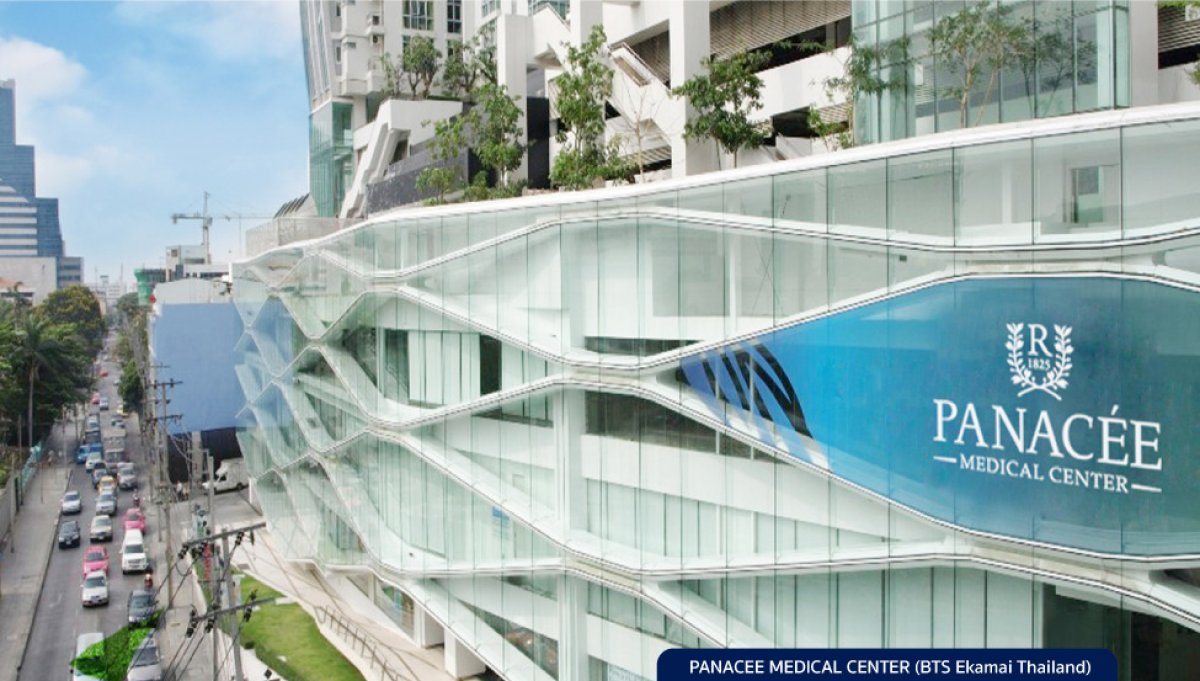
Panacee Medical Center – Stem Cell & Cell Therapy Center
Thailand, Bangkok
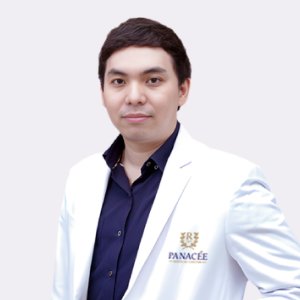
Peerapat Tangjai
10 years of experience

Last updated: Nov 24, 2026

Medically reviewed by
Fahad Mawlood
Bookimed is free for patients – clinics pay us a commission, and you pay the clinic its own price with no markup. Five steps to your stem cell therapy for retina in Thailand:
Tell us about your retinal condition and share your latest retinal scans and medical reports.
Your coordinator finds clinics that match your needs and helps you choose. Your preferred clinics then send personalized treatment plans and quotes for you to compare.
We set treatment dates that work for you and help arrange your flights and accommodation.
The clinic team performs your stem cell therapy for retina on the agreed dates. We support you throughout your trip.
You can fly home 5–10 days after injection, and vision may change over 3–12 months. Your coordinator stays in touch and helps arrange a follow-up if you need one.
Some clinics ask for a deposit. A $200 or €200 deposit paid through Bookimed comes off your clinic bill and is refundable up to 10 calendar days before your visit. A deposit paid to the clinic follows its own terms.
Cost and clinics
| Typical retinal stem cell therapy price in Thailand | Clinics | Cities | Retinal stem cell therapy ophthalmologists |
|---|---|---|---|
| $11,800 / ฿401,200–$12,000 / ฿408,000 | 1 clinic | Bangkok | 4 ophthalmologists |
The procedure
| Before the trip | Time in Thailand | Operation time | Anesthesia | Back to desk work | Final result |
|---|---|---|---|---|---|
| Get eye exam and retinal imaging, review medical history, stop blood thinners if advised, use antibiotic eye drops if prescribed | 5–10 days, including up to 1 night in hospital | 30–120 minutes | Local sedation | 2–7 days | 3–12 months, benefit unproven |
Stem cell therapy for retina in Thailand typically costs from $11,800 / ฿401,200 to $12,000 / ฿408,000 . The price varies depending on the clinic, the ophthalmologist’s experience, the type of stem cells used (autologous or allogeneic), and the complexity of the retinal condition.
Stem cell therapy for retina in Thailand typically costs from $11,800 / ฿401,200 to $12,000 / ฿408,000. The price varies depending on the clinic, the ophthalmologist’s experience, the type of stem cells used (autologous or allogeneic), and the complexity of the retinal condition. In the United States, the average cost is $13,000 / ฿442,000 (per AAO). This means stem cell therapy for retina in Thailand can be up to 9% less than in the U.S.
Thai clinics generally include the initial consultation, pre-treatment diagnostic imaging (OCT, fundus photography), the stem cell procedure, anesthesia, post-treatment medications, and follow-up visits in their packages. In the U.S., many of these services—especially imaging, anesthesia, and follow-up—are often billed separately from the procedure itself. Always confirm exactly what’s included in your package before booking.
| Thailand | Turkey | Austria | |
|---|---|---|---|
| Stem cell therapy for retina | from $11,800 / ฿401,200 | from $7,500 / ฿255,000 | ≈ $4,800 / ฿163,200 |
For stem cell therapy for retina in Thailand, consult the doctor, compare similar-case evidence, confirm credentials, and arrange follow-up before booking.
Doctor consultation
Similar-case evidence
Professional credentials
Return-home care
| Clinic Name | Patient Rating | About | Accreditations | Lead Doctor | Techniques |
|---|---|---|---|---|---|
| Panacee Medical Center – Stem Cell & Cell Therapy Center Bangkok | 4.6 | Panacee Medical Center Cell Therapy is a private multi-specialty center in Bangkok. Its main specialties are cardiology, therapy, medical check-ups, and wellness retreats. The clinic treats 5,000 patients each year from across Asia, the USA, Canada, and Australia. Treats both adults and children, from check-ups to cardiac care. Wellness retreat programs available alongside standard medical services. Patients come from Arab League States, Asia, the USA, Canada, and Australia. | — | Peerapat Tangjai 10 years | Stem cell therapy for retina |

Dr. Bee Thamonwan is an aesthetic and regenerative medicine specialist at Plenary Wellness in Phuket. She focus on natural rejuvenation using stem cells and collagen-boosting biostimulators. Dr. Thamonwan earned her medical degree from the Medical University of Lublin in Poland. She speaks Thai, English, and Chinese fluently.
Dr. Peerapat Tangjai is a wellness specialist at Panacee Medical Center in Bangkok. He earned First-Class Honors and a Gold Medal from Srinakharinwirot University. Dr. Tangjai focuses on cell therapy, anti-aging, and metabolic health. He is a former manager of diabetic wound care at Thonburi Bumrungmuang Hospital.

Dr. Sean Hu is a leader in biotechnology and stem cell therapy. He earned a PhD in biochemistry and molecular biology from the University of Gothenburg and Chalmers University of Technology in Sweden. He is the founder, chairman, and CEO of Shenzhen Beike Biotechnology Co., Ltd. He also serves as director of the Shenzhen Beike Cell Engineering Institute.
He was among the first experts recognized by China’s Thousand Talents Program. At Beike, he leads the development and commercialization of adult stem cell therapies. His work focuses on conditions of the brain and spinal cord, and on neurodegenerative and autoimmune disorders. His goal is to make high-quality care more accessible.

You may be able to fly home 5–10 days after injection, after eye-pressure and inflammation checks, depending on your route and with your ophthalmologist’s approval. You may return to desk work in 2–7 days, depending on your work, eye comfort, and blurred vision. Strenuous exercise and heavy lifting usually resume after 2–4 weeks, once your clinician confirms your eye is stable. Any vision change is gradual, and a final result may take 3–12 months, although benefit is unproven and varies by disease and cell product.
Your eye may be red or irritated, with blurred vision or floaters, and antibiotic and anti-inflammatory drops are used. Do not rub your eye, keep water and dust out, and avoid driving until cleared.
Symptoms may settle while follow-up exams check eye pressure and inflammation, and you may fly home after 5–10 days once your ophthalmologist approves. Avoid swimming, heavy lifting, and eye makeup, and resume strenuous activity after 2–4 weeks only when your clinician confirms your eye is stable.
Periodic imaging and vision tests monitor any changes.
When to contact your clinic: Contact your clinic promptly for sudden new flashes or floaters, or eye pain with fever. Seek emergency care for sudden reduced or blurred vision. For chest pain or sudden breathlessness after a long flight, seek emergency help locally.
 Anna Leonova

Visas for travel to Thailand require a number of documents. The necessary papers can be submitted 90 days before the planned departure. The list of documents includes:
Healthcare is the key development sector of the Thai government. The Thai authorities are convinced that care for the citizens' health should be an absolute priority of state policy and spend about 25 billion baht for healthcare annually.
As a result, 36,673 medical facilities provide excellent medical care in the country. 64 centers in the Kingdom have certificate of JCI (Joint Commission International), the international improver of healthcare quality and safety across the globe. The index of certificates obtained is the largest. To compare, Israel has 20 JCI-accredited facilities, and Germany — only 10 clinics of this type.
The main advantage of Thai resorts is the long beach season. On the east coast and west coast the climate features are different, so take it into account when planning the trip. The best time to travel is during the cool and dry season between November and early April. A large influx of tourists is in March-May, when the air temperature is +30°C.
Official name | The Kingdom of Thailand |
Currency | Thai Baht (you also can pay for services in dollars) |
Best period for the trip | November-early April |
Language | Thai (most of medical staff speaks English fluently) |
Visa | is required for a trip of 3-6 months |
Time difference with Europe | 7 hours |
Time difference with the USA | 12 hours |
Capital | Bangkok |
Medical tourism center | Bangkok |
Popular resorts | Koh Samui, Phuket, Chiang Mai, Koh Chang, Hua Hin |
In the Kingdom of Thailand, hotels of different price ranges and service levels are presented. The level of Thai hotels is comparable to hotels in Tunisia, Morocco or Egypt. Most tourists choose 4 and 5 star hotels with all-inclusive meals. Such hotels have everything for a comfortable stay: varied food, a large well-groomed territory, animation for children and adults. Some hotels have their own water park, which guests can use for free. Budget travelers can afford to book an economical 3-star hotel with half board or no meals at all.
For now, the Kingdom of Thailand requires different visa regimens for diverse states. Some foreigners can stay in the country 60 days without visa control, some of them — only 14 days.
How long you can stay in Thailand and what countries can cross the border easy read here.
Last review: Nov 24, 2026
Fahad Mawlood — General practitioner. Winner of 4 scientific awards. Served in Western Asia. Former Team Leader of a medical team supporting Arabic-speaking patients. Now responsible for data processing and medical content accuracy.
Ask a Bookimed medical coordinator about prices, clinics, techniques or your case. Write to us in the messenger you already use.
Tap a messenger to open a chat with a Bookimed medical coordinator.
Free and without obligation · Terms of use · Privacy policy