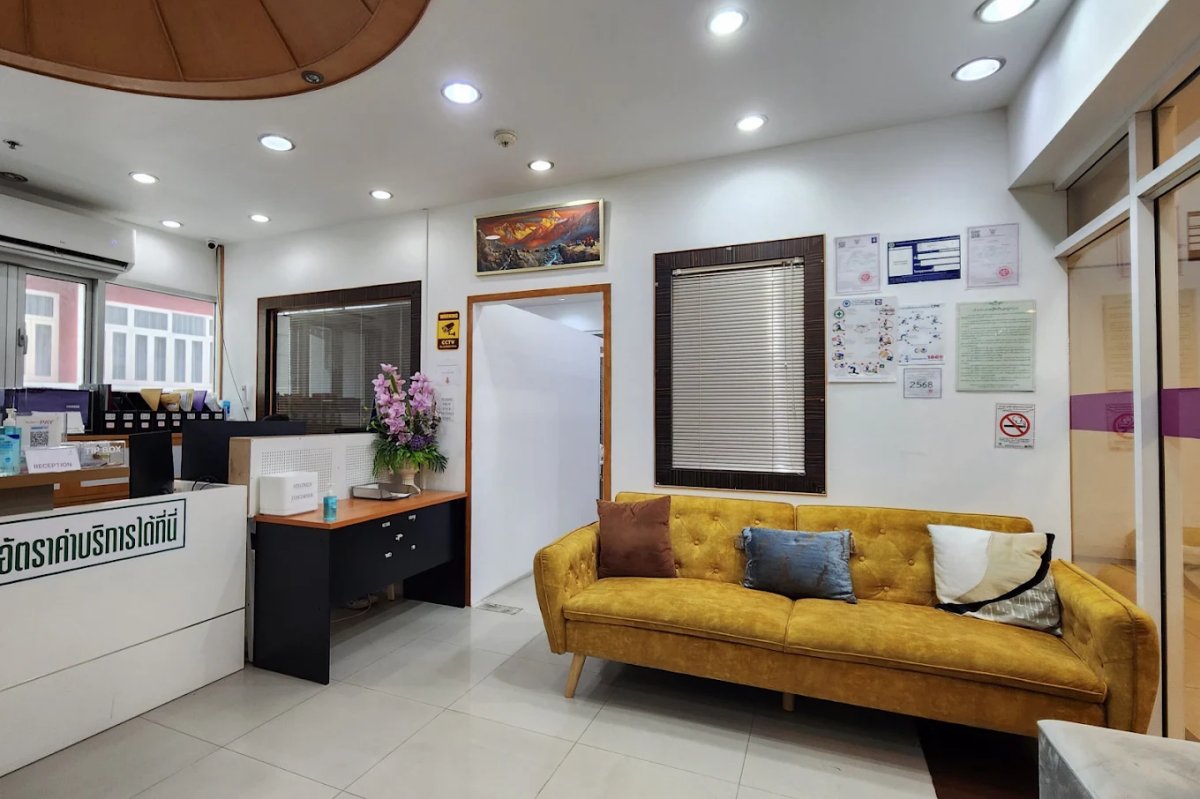
MedEx Neo Clinic (Asoke – Nana Main Branch)
Thailand, Bangkok


Medically reviewed by
Fahad Mawlood
In Thailand, a stool test typically costs from $30 / ฿1,000 to $60 / ฿2,000. The final amount depends on the test type and facility. A doctor consultation or hospital service fee may add to the total. In the US, similar stool testing costs $190 / ฿6,500 on average. Compared with the US, Thailand offers savings of around 76%.
Bookimed Expert Insight: Checking where the sample gets processed can clarify the booking steps and fees. In Bangkok, MedEx Neo Clinic lists diagnostic services and referrals to partner hospitals and diagnostic centers across Thailand and Asia. It reports 112,500 patients each year. Its profile does not specify stool-test availability or lab charges, so patients should confirm both before booking.
| Thailand | Turkey | Austria | |
|---|---|---|---|
| Stool Test | ≈ $30 / ฿1,000 | from $300 / ฿10,200 | ≈ $40 / ฿1,400 |
No hidden fees – just official clinic prices. Pay at the clinic for Stool Test upon arrival and use a flexible installment plan if needed.
Bookimed is committed to your safety. We only work with medical institutions that maintain high international standards in Stool Test and have the necessary licenses to serve international patients worldwide.
Bookimed offers free expert assistance. A personal medical coordinator supports you before, during, and after your treatment, solving any issues. You're never alone on your Stool Test journey.

 Anna Leonova

Visas for travel to Thailand require a number of documents. The necessary papers can be submitted 90 days before the planned departure. The list of documents includes:
Healthcare is the key development sector of the Thai government. The Thai authorities are convinced that care for the citizens' health should be an absolute priority of state policy and spend about 25 billion baht for healthcare annually.
As a result, 36,673 medical facilities provide excellent medical care in the country. 64 centers in the Kingdom have certificate of JCI (Joint Commission International), the international improver of healthcare quality and safety across the globe. The index of certificates obtained is the largest. To compare, Israel has 20 JCI-accredited facilities, and Germany — only 10 clinics of this type.
The main advantage of Thai resorts is the long beach season. On the east coast and west coast the climate features are different, so take it into account when planning the trip. The best time to travel is during the cool and dry season between November and early April. A large influx of tourists is in March-May, when the air temperature is +30°C.
Official name | The Kingdom of Thailand |
Currency | Thai Baht (you also can pay for services in dollars) |
Best period for the trip | November-early April |
Language | Thai (most of medical staff speaks English fluently) |
Visa | is required for a trip of 3-6 months |
Time difference with Europe | 7 hours |
Time difference with the USA | 12 hours |
Capital | Bangkok |
Medical tourism center | Bangkok |
Popular resorts | Koh Samui, Phuket, Chiang Mai, Koh Chang, Hua Hin |
In the Kingdom of Thailand, hotels of different price ranges and service levels are presented. The level of Thai hotels is comparable to hotels in Tunisia, Morocco or Egypt. Most tourists choose 4 and 5 star hotels with all-inclusive meals. Such hotels have everything for a comfortable stay: varied food, a large well-groomed territory, animation for children and adults. Some hotels have their own water park, which guests can use for free. Budget travelers can afford to book an economical 3-star hotel with half board or no meals at all.
For now, the Kingdom of Thailand requires different visa regimens for diverse states. Some foreigners can stay in the country 60 days without visa control, some of them — only 14 days.
How long you can stay in Thailand and what countries can cross the border easy read here.