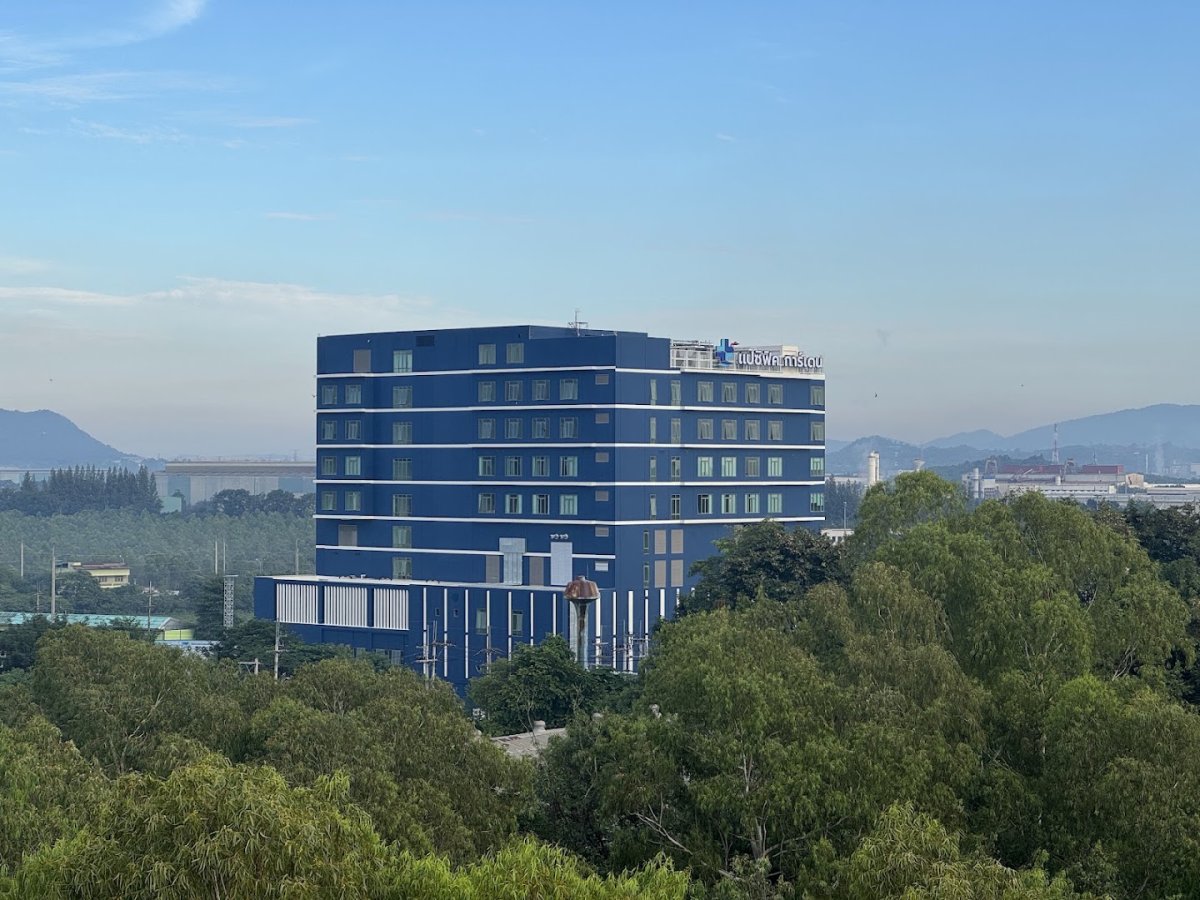
Pacific Garden Hospital
Thailand, Si Racha District

Last updated: 11/15/2026

Medically reviewed by
Fahad Mawlood
Bookimed is free for patients – clinics pay us a commission, and you pay the clinic its own price with no markup. Five steps to your suspension therapy in Thailand:
Tell us about your condition and share your latest scans and medical reports.
Your coordinator finds clinics that match your needs and helps you choose. Your preferred clinics then send personalized treatment plans and quotes for you to compare.
We set treatment dates that work for you and help arrange your flights and accommodation.
The clinic team starts your suspension therapy on the agreed dates. We support you throughout your trip.
You fly home after a 14–21-day course, with improvement building over 1–3 months. Your coordinator stays in touch and helps arrange a follow-up if you need one.
Some clinics ask for a deposit. A $200 or €200 deposit paid through Bookimed comes off your clinic bill and is refundable up to 10 calendar days before your visit. A deposit paid to the clinic follows its own terms.
Tell us about your needs — and get 3 tailored offers from top doctors for you.
Do you have any chronic conditions or prior surgeries?
Direct prices from clinics
Free evaluation of your medical case
Free personal assistance 24/7
Cost and clinics
| Typical suspension therapy price in Thailand | Clinics | Suspension therapy specialists |
|---|---|---|
| $550 / ฿18,700–$1,300 / ฿44,200 | 1 clinic | 1 specialist |
The procedure
| Before the trip | Time in Thailand | Operation time per session | Anesthesia | Back to desk work | Final result per course |
|---|---|---|---|---|---|
| Bring recent imaging and medical reports, wear comfortable sportswear, report pain level, avoid heavy exercise before first session | 10–15 visits, usually daily on weekdays (first trip 2–3 weeks, including 14–21 nights in hospital) | 45–60 minutes | None | Same or next day | 1–3 months |
Suspension therapy in Thailand typically costs from $550 / ฿18,700 to $1,300 / ฿44,200. Prices depend on the clinic tier and session frequency.
| Thailand | Turkey | Austria | |
|---|---|---|---|
| Suspension therapy | ≈ $550 / ฿18,700 | from $120 / ฿4,100 | ≈ $800 / ฿27,200 |
For suspension therapy in Thailand, first identify who will perform the technique, then review that person’s experience, discuss realistic expectations, assess the facility and credentials, and confirm aftercare.
Match the provider
Examine prior work
Discuss likely outcomes
Assess clinic standards
Arrange follow-up
| Clinic Name | Patient Rating | About | Accreditations | Lead Doctor | Techniques |
|---|---|---|---|---|---|
| Pacific Garden Hospital Si Racha District | 5.0 | Pacific Garden Hospital is a private multi-specialty medical center in Si Racha, Thailand. The facility offers care in surgery, orthopedics, obstetrics, and pediatrics. It has a dedicated Occupational Medicine Center for employee healthcare. The medical team includes 26 physicians across six departments. Pediatric care covers children from birth through adolescence. The diagnostic unit runs CT, ultrasound, and mammography with tomosynthesis.The surgery department performs both traditional and non-invasive procedures. A separate Aesthetic Surgery Department offers rhinoplasty and facelifts. Physical therapy uses PMS technology for chronic mobility conditions. Rehabilitation is available after accidents, surgery, or neurological disorders. Radiology services follow strict radiation safety standards. International patients are supported through English-language coordination. | — | — | — |
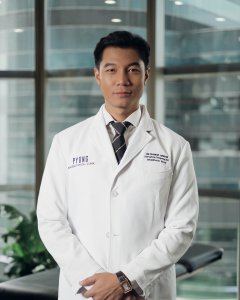
Dr. PYONG specializes in advanced rehabilitation techniques, integrating robotics and non-invasive technologies for improved patient outcomes.
Neurological and chronic mobility rehabilitation
| Typical price | vs Thailand | |
|---|---|---|
| Thailand (this page) | $550 – $1,300 | – |
| US | from $1,000 | +82% |
| Turkey | from $120 | −78% |
You can usually fly home after a 14–21-day course, with your doctor's approval. You can usually return to desk work the same or next day. Light activity continues, and your therapist guides your return to full sport. Strength and pain improvement build over 1–3 months.
You’ll attend daily or near-daily supervised sling sessions with graded exercises. Mild muscle fatigue or soreness is common, so avoid heavy lifting and exercises outside your therapist’s plan.
You continue your home exercise program to build strength and support pain relief, increasing the load gradually. You can usually fly home after your 14–21-day course, with your doctor's approval.
When to contact your clinic: Contact your clinic for heavy vaginal bleeding that soaks a pad hourly, fever, or bad-smelling vaginal discharge. Seek clinic advice for severe pain that medicine does not relieve. For chest pain or sudden breathlessness after a long flight, seek emergency help locally.
 Anna Leonova

Visas for travel to Thailand require a number of documents. The necessary papers can be submitted 90 days before the planned departure. The list of documents includes:
Healthcare is the key development sector of the Thai government. The Thai authorities are convinced that care for the citizens' health should be an absolute priority of state policy and spend about 25 billion baht for healthcare annually.
As a result, 36,673 medical facilities provide excellent medical care in the country. 64 centers in the Kingdom have certificate of JCI (Joint Commission International), the international improver of healthcare quality and safety across the globe. The index of certificates obtained is the largest. To compare, Israel has 20 JCI-accredited facilities, and Germany — only 10 clinics of this type.
The main advantage of Thai resorts is the long beach season. On the east coast and west coast the climate features are different, so take it into account when planning the trip. The best time to travel is during the cool and dry season between November and early April. A large influx of tourists is in March-May, when the air temperature is +30°C.
Official name | The Kingdom of Thailand |
Currency | Thai Baht (you also can pay for services in dollars) |
Best period for the trip | November-early April |
Language | Thai (most of medical staff speaks English fluently) |
Visa | is required for a trip of 3-6 months |
Time difference with Europe | 7 hours |
Time difference with the USA | 12 hours |
Capital | Bangkok |
Medical tourism center | Bangkok |
Popular resorts | Koh Samui, Phuket, Chiang Mai, Koh Chang, Hua Hin |
In the Kingdom of Thailand, hotels of different price ranges and service levels are presented. The level of Thai hotels is comparable to hotels in Tunisia, Morocco or Egypt. Most tourists choose 4 and 5 star hotels with all-inclusive meals. Such hotels have everything for a comfortable stay: varied food, a large well-groomed territory, animation for children and adults. Some hotels have their own water park, which guests can use for free. Budget travelers can afford to book an economical 3-star hotel with half board or no meals at all.
For now, the Kingdom of Thailand requires different visa regimens for diverse states. Some foreigners can stay in the country 60 days without visa control, some of them — only 14 days.
How long you can stay in Thailand and what countries can cross the border easy read here.
Last review: 11/15/2026
Fahad Mawlood — General practitioner. Winner of 4 scientific awards. Served in Western Asia. Former Team Leader of a medical team supporting Arabic-speaking patients. Now responsible for data processing and medical content accuracy.
Ask a Bookimed medical coordinator about prices, clinics, techniques or your case. Write to us in the messenger you already use.
Tap a messenger to open a chat with a Bookimed medical coordinator.
Free and without obligation · Terms of use · Privacy policy