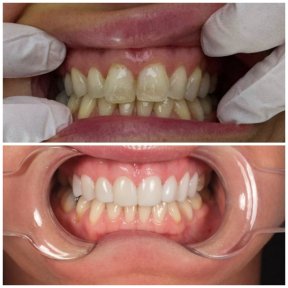
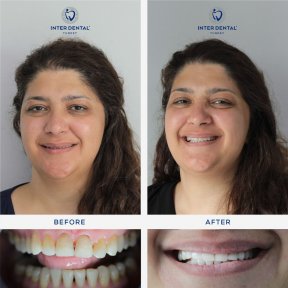
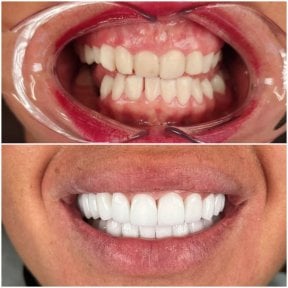
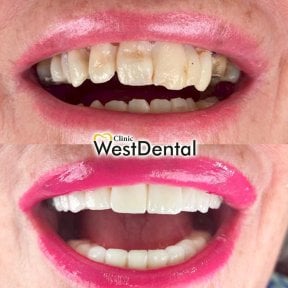
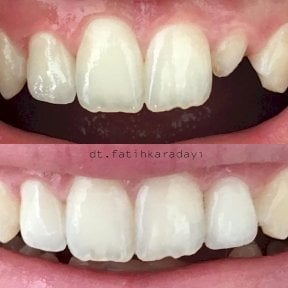
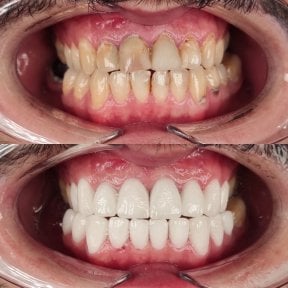
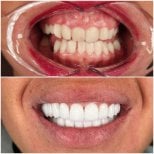
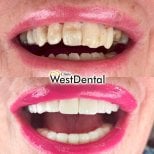
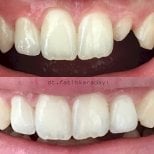
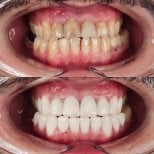
About 97 in every 100 composite repairs on front teeth are still in place 10 years later. One tooth takes 30–60 minutes to bond, in a single visit. Once you have compared clinics, the next question is whether composite bonding will work on your teeth.
Is composite bonding right for your teeth?
Composite bonding works best on healthy teeth with minor chips, small gaps, or surface stains. These are small changes that improve a smile without a bigger procedure. It is not the right fix for every smile. The resin bonds best to teeth that are free of decay and have healthy gums. If there is active decay or gum inflammation, a dentist treats that first, before any cosmetic bonding.
One draw of bonding is that you keep most of your own tooth. So it fits people who want a smaller change and want to avoid heavier dental work. It works tooth by tooth. From a single chip to a full upper and lower smile.
Some cases call for a night guard, braces, or another option first. Bonding is less suitable in these situations:
- Heavy grinding. Grinding wears and chips composite faster unless you wear a night guard.
- Moderate or severe crowding. A dentist can reshape a tooth with bonding but cannot straighten a crowded one.
- Deep internal staining. Slightly see-through resin cannot fully cover a stain set deep in the tooth.
For the right teeth, composite bonding closes a gap, fixes a chip, or brightens a tooth without shaving it down.
How long does composite bonding last?
A review of the clinical evidence rates front-tooth composite a viable option in the short to medium term. In practice, bonded front teeth look good for years, with only small touch-ups along the way. Front teeth take less chewing force than back teeth, which helps bonding there last. A smooth, well-polished surface resists stain. The shade stays stable for longer. That record is why bonding is a dependable choice for the front of the smile.
How it ages matters as much as how long it lasts. Composite fades gently: the surface roughens, the edges pick up stain, and the shade can drift over years. This gradual wear stays on the surface. A bonded tooth stays usable as it ages. When the edge chips, fresh resin is added and blended to match the existing bonding. So the change you notice over the years is gradual, and it is easy to correct.
Bonding, veneers, or crowns: how much tooth each removes
Composite bonding removes less tooth than a veneer or a crown. It adds resin to the surface and takes away little or no enamel. A porcelain veneer removes a thin front layer, about 0.3–0.5 mm. A crown removes far more of the tooth, all the way around.
This matters because the less enamel a dentist removes, the more of your own tooth you keep. Enamel is also the surface bonding grips best. Bonding is largely reversible because it only adds material. Removed enamel does not grow back, so a veneer or crown is a permanent change. With each option, a different amount of your own tooth remains. Dentists build the plan around how much tooth is preserved.
The table below compares the three options on what each does to your tooth.
| Option | How much tooth is removed | Reversible? | If it chips | Best for |
|---|
| Composite bonding | Little or none; resin is added to the surface | Largely reversible | Patched and polished in one chairside visit | Small cosmetic fixes on healthy teeth |
| Porcelain veneer | A thin front layer, about 0.3–0.5 mm | Not reversible; the enamel does not return | Usually replaced with a new veneer from a lab | Wider shape or color changes across front teeth |
| Crown | Far more of the tooth, all the way around | Not reversible | Usually replaced with a new crown from a lab | A tooth that is badly broken down or has had a root canal |
You may have seen stories about "Turkey teeth" going wrong. Those stories usually involve full crowns fitted where a more tooth-preserving option would have worked well. Preparing a front tooth for a crown removes about 63–72% of the visible tooth, against 3–30% for a veneer and little or none for bonding. Where bonding is enough, choosing it over a crown keeps that risk low.
How to check your dentist and clinic are licensed
A Turkish clinic can treat international patients once it holds a government health-tourism license. The treating dentist should also be on Turkey's national dental register. Both are things you can confirm before you travel. These two checks are the clearest signs that a clinic works to recognized standards.
Check the clinic's health-tourism license
Ask the clinic for its Ministry of Health International Health Tourism Authorization. A licensed clinic can show this certificate on request. The license means the government has cleared the clinic to treat patients from abroad. For example, Inter Dental Turkey holds this government certificate and runs its own on-site dental lab. Soraca Med, another partner, is registered with the Turkish Medical Association and holds the same certificate.
Check the dentist's registration
Ask for the treating dentist's full name and their registration number with the Turkish Dental Association. A registered dentist can provide both. Every clinic and dentist in Bookimed's network is verified before listing.
Get consent and materials in writing
Ask for the treatment plan and consent form in your own language before you travel. That way you know exactly what is planned for each tooth.
Also ask which surface preparation the dentist uses on the enamel. The stronger method cleans the enamel with an acid gel, then rinses it before the resin goes on. This etch-and-rinse step forms a stronger, longer-lasting bond than a faster one-step method. Ask for a written note of the exact resin brand and shade. A dentist at home can then match a future touch-up.
You may also hear questions about BPA, a chemical found in some plastics. In a study of 172 patients, BPA in saliva rose within an hour of a new composite restoration and was back to pre-treatment levels within eight hours. Most of what is released comes from the thin surface layer that does not set, so rinsing well right after the appointment helps.
Caring for composite bonding once you're home
One reason bonding works well for patients traveling from abroad is repair close to home. Almost any general dentist can mend a chipped bonded tooth in a single visit. Composite can be repaired and re-bonded after it ages, so a chip never means flying back to Turkey. You keep the same simple routine you would for your natural teeth. Just a few extras early on.
A few simple habits protect the result:
- First 48 hours. Fresh resin picks up color easily, so skip tobacco, coffee, black tea, red wine, and deeply colored foods.
- Every day. Use a soft brush and a non-abrasive fluoride toothpaste, and avoid abrasive whitening or smoker's pastes.
- About every 6 months. A routine dental polish restores the shine and smooths the edges at your normal check-up.
With regular check-ups and small touch-ups, the result looks fresh for years. Composite bonding is one of the easier smile treatments to live with once you are back home.