Nageonyoub
- 21 years of experience
- Location: Republic of Korea, Seoul
- Clinic:samsungbalance clinic
Compare top Meniscus tear doctors and prices in Republic of Korea. Find your best match here.
We'll hand-pick the best doctors based on your needs and budget.
Meet the experts behind this page
Medically reviewed by Fahad Mawlood
Medical Editor & Data ScientistTop doctors
9
Republic of Korea
Reviews
14,000+
From real patients
Get free personalized treatment plans and choose the best option. No commitment · No payments for our services
Dr. Ahn Tae Hoon specializes in cardiovascular interventional procedures, with leadership roles in cardiology societies and extensive training at prestigious institutions.
Director of the Joint Center with specialized expertise in knee joint disorders and arthroscopic surgery. Dr. Yang focuses on minimally invasive techniques for meniscus repair.
Dr. Lee Kyung Hoon is an orthopedic specialist and department head. He treats degenerative arthritis and knee and hip disorders. He performs knee arthroscopy and arthroplasty. He also treats foot and ankle conditions, shoulder problems such as frozen shoulder and rotator cuff tears, osteoporosis, and fractures and other extremity injuries.
He earned his MD from The Catholic University of Korea. He completed his orthopedic residency at The Catholic Medical Center. He finished a fellowship and served as a clinical instructor at Bucheon St. Mary’s Hospital.
He has served as department head at Nasarath International and Himchan General Hospital Incheon. He was also director at Himchan Hospital Incheon and Medrex Hospital. He is a full member of the Korean Orthopedic Association, the Korean Knee Society, the Korean Fracture Society, the Korean Hip Society, the Korean Arthroscopy Society, and the Catholic University Knee Research Society. He completed TPI training and a microsurgery workshop.
Dr. Jang Hyo Kim is an orthopedic surgeon focused on joint preservation and complex reconstruction. He specializes in arthroscopy of the shoulder, knee, ankle, elbow, and wrist. He performs joint replacement of the shoulder, knee, ankle, elbow, and hip. His spine work includes cervical and lumbar instrumentation and fusion. He also performs discectomy, laminectomy, neuroplasty, and vertebroplasty. His practice includes fracture care and muscle and ligament repair.
He is an Adjunct Professor at Kyung Hee University. He serves as Director of the Joint Center at Very Good Hospital. He previously served as chief or director at Yeonggwang General, Songjeong Sarang, Sewoori–Daejeon, Seoul Welfare, and The Barun hospitals. He was an advisory member of the Gwangju–Jeonnam Workers’ Compensation Board. He is a full member of the Korean Orthopaedic Association (KOA) and the Korean Societies of Arthroscopy, Knee, Sports Medicine, Hip, Pain, and Obesity. He holds TPI therapy certification. He completed an Ilizarov fellowship in Kurgan, Russia. He also completed training in shoulder arthroscopy.
Dr. Woo Kyung Kwak is an orthopedic surgeon. He specializes in minimally invasive foot and ankle surgery (MICA for hallux valgus). He also treats sports injuries and performs total knee arthroplasty, as well as advanced shoulder and knee arthroscopy.
He earned his MD and MS at Chonnam National University. He completed a fellowship at Chonnam National University Hospital. He served as Chief of Orthopedic Surgery at the Armed Forces Daejeon Hospital. He was a senior committee member of the Medical Investigation Committee at the Ministry of National Defense.
He is a full member of the Korean Orthopaedic, Arthroscopy, Knee, Foot and Ankle, Sports Medicine, and Fracture societies. He is a lifetime member of the Korean Shoulder and Elbow Society. He reviews for Springer Nature journals. He completed Arthrex advanced training, the AO Trauma course, TPI therapy certification, and the FIFA Diploma in Football Medicine.
Dr. Kwangyeal Lee specializes in arthroscopic knee surgery, with extensive experience in treating sports injuries and joint conditions at Nanoori Hospital.
Chairman of Orthopaedic Surgery at Nanoori Hospital, specializing in knee and shoulder procedures with extensive research in sports medicine.
Choosing a clinic abroad can be stressful. At Bookimed, with over 800K patients helped, we understand your concerns. We know how to find trusted doctors, the best price-quality options, and solutions for even complex cases. We’re here to guide you every step of the way.
Yan Matsiivskiy
Head of Medical Coordinator Team
4300++ patient journeys guided
3 years at Bookimed
60 patients from South Korea have found their doctor through us this month
2 min Quiz
Tell us your goal, budget, timeline
Human Matching + AI
Our algorithm finds matches, coordinator verifies fit
Your Options Ready
Compare prices, packages, dates. Chat with your coordinator
Overwhelmed by choices?
Guiding your treatment
Medically trained personal coordinators


| Rank | Doctor | experience | Good Fit For | What Sets Them Apart | Clinic & Location | Consultation |
|---|---|---|---|---|---|---|
| #1 | 44 years of experience | Cardiovascular interventional procedures | Leader in interventional cardiology with multiple society presidencies. Extensive training at top institutions including Montreal Heart Institute. | Republic of Korea | Price on request
| |
| #2 | 28 years of experience | Arthroscopic meniscus repair | Specializes in minimally invasive knee procedures with arthroscopy expertise. Director of Orthopedic Center at Naeun Hospital and member of multiple Korean joint societies. | Republic of Korea | Price on request
| |
| #3 | 32 years of experience | Sports-related knee injuries | Specializes in arthroscopic procedures with research focus on sports medicine. Active member of multiple orthopedic associations with leadership experience. | Republic of Korea | Price on request
| |
| #4 | 18 years of experience | Complex knee injuries | Highly specialized in knee procedures with published research on recovery techniques. Chairs the Orthopaedic Surgery department at Nanoori Hospital. | Republic of Korea | Price on request
|
Look for board-certified orthopedic surgeons who hold memberships in the Korean Knee Society and the Korean Arthroscopy Society. These specialists must complete a four-year residency and often hold fellowships in sports medicine or joint surgery to master minimally invasive meniscus repair techniques.
Bookimed Expert Insight: Data shows that top Korean specialists often hold leadership roles across multiple facilities. For example, Dr. Kwangyeal Lee and Dr. Lee Kyung Hoon have both served as directors or department heads at various specialized orthopedic centers. This mobility suggests their surgical expertise is highly sought after by major hospitals in Seoul and Incheon.
Patient Consensus: Patients recommend asking surgeons about their specific ratio of meniscus repairs versus removals. They suggest bringing your own MRI scans to the first consultation to save time and avoid repeat imaging. Many travelers felt more confident after verifying that their surgeon focus specifically on sports-related trauma and arthroscopic procedures.
South Korean orthopedic surgeons perform meniscus procedures at high volumes, with meniscectomy remaining the primary standard. Specialists increasingly use meniscus repair for complex root tears or younger patients. Doctors like Dr. Kwangyeal Lee at Nanoori Hospital specialize in these arthroscopic techniques to preserve joint function.
Bookimed Expert Insight: While meniscectomy is common, doctors like Dr. Yang Young Joon at Na-Eun Hospital and Dr. Kwangyeal Lee at Nanoori Hospital often hold dual memberships in the Korean Knee Society and Korean Arthroscopy Society. This combination suggests a focus on joint preservation rather than just tissue removal.
Patient Consensus: Patients often notice that surgeons move quickly with meniscectomies, allowing some to walk the same day. Those undergoing repair find the process more selective, as doctors often evaluate tissue quality during surgery.
Meniscus tear surgeons in the Republic of Korea often speak English, especially at facilities like Nanoori Hospital or Na-Eun Hospital. These specialists frequently hold memberships in international groups like the Asia-Pacific Orthopedic Association. Bookimed manages all doctor communication, appointment scheduling, and logistics to remove language barriers during your treatment.
Bookimed Expert Insight: Patients can find specialized expertise by looking for surgeons with specific department leadership. For example, Dr. Seongcheol Moon chairs the Orthopaedic Surgery department at Nanoori Hospital, which suggests deep experience in managing complex department protocols for knee recoveries. This leadership often correlates with access to the latest arthroscopic techniques and highly coordinated surgical teams.
Patient Consensus: Patients find that larger hospitals in Seoul provide English-speaking coordinators who help with pre-surgery logistics. Having your MRI and medical reports translated into English before arrived helps the surgeon understand your injury history immediately. Some travelers noticed that responses to English emails can take several days, so planning your trip well in advance is helpful.
A consultation with a Korean meniscus specialist typically starts from around Price on request to Price on request . Specialists like Dr. Kwangyeal Lee at Nanoori Hospital provide expert evaluations, drawing on board certification and decades of experience in arthroscopic knee surgery to offer precise diagnoses.
Bookimed Expert Insight: While base consultation fees are competitive, patients should prepare for diagnostic variations. Doctors like Dr. Seong Hyun Kim have 30+ years of experience, often leading to more efficient physical evaluations. At centers like Nanoori Hospital, chairman-level experts oversee orthopedic departments, ensuring your second opinion carries significant clinical weight.
Patient Consensus: Patients often find that initial orthopedic visits in Seoul are quite affordable compared to Western prices. Many travelers suggest keeping a buffer for additional imaging tests that specialists may request during the appointment.
Top Korean meniscus surgeons complete a rigorous 11–year training path, including medical school, a rotating internship, and a 4–year orthopedic surgery residency. These specialists typically hold board certification and pursue subspecialty fellowships in knee arthroscopy at major university hospitals to master minimally invasive techniques.
Bookimed Expert Insight: Surgeons who treat international patients often balance local clinical leadership with research–backed expertise. For example, Dr. Seongcheol Moon and Dr. Kwangyeal Lee at Nanoori Hospital have published 10+ peer-reviewed studies on joint recovery, which demonstrates they use techniques proven to work, not just experience.
Patient Consensus: Patients value surgeons with over 20 years of experience who have trained at international orthopedic centers. Those who traveled to Seoul noted that having an English–speaking team made the recovery process much smoother.
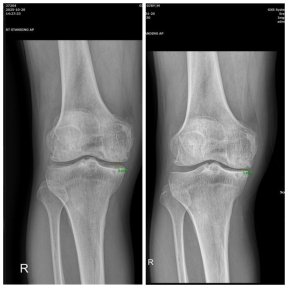
Korean orthopedic surgeons can review mobile MRI scans before your arrival, provided they are in DICOM format. Specialists often require additional weight-bearing X-rays or ultrasound tests once you arrive to assess the functional stability of the knee joint.
Bookimed Expert Insight: While most clinics allow digital reviews, doctors like Dr. Kwangyeal Lee at Nanoori Hospital provide online consultations. These sessions help clarify if a repeat MRI is necessary due to scan quality before you travel to Seoul or Incheon.
Patient Consensus: Patients found that sending high-quality digital files prevented diagnostic delays. Many were surprised by the speed of local testing, often completing mandatory blood work and X-rays on the same day as their first consultation.
South Korean surgeons are highly familiar with biologic augmentation, frequently using PRP and stem cells to boost meniscus healing. Most specialized clinics in Seoul and Incheon offer these adjuncts to international patients, often combining them with arthroscopic repairs to improve long-term results.
Bookimed Expert Insight: While biologic options like PRP are common, the best outcomes often come from surgeons with leadership roles in joint-specific societies. At Nanoori Hospital and Na-Eun Hospital, directors often participate in international research, ensuring their biologic protocols match global standards for complex sports injuries.
Patient Consensus: Patients receiving treatment in Seoul clinics noticed that PRP is often suggested as a standard way to speed up recovery after surgery. Others mentioned that while stem cell therapy is available for complex tears, it usually requires a specific request and extra fees.