

Stem cell therapy draws international patients to four countries above all: Mexico, Thailand, Colombia, and Turkey. Each treats at 29% to 60% below the US average. They lead for the same three reasons. A legal route that lets clinics treat, enough clinics to keep prices competitive, and services built around international patients.
Key takeaways
- Cost. Mexico $1,600–$9,500, Thailand $2,200–$13,000, Colombia $2,500–$20,000, Turkey $7,700–$12,000. The US average is $13,900.
- What the evidence shows. Stem cells treat dozens of conditions, from joints to neurology. Knee osteoarthritis has the clearest evidence. In 8 randomized trials with 502 patients, pain, stiffness, and joint movement all improved at 6 and 12 months.
- Who qualifies. Most conditions treated abroad qualify once the clinic confirms your case fits its approved protocol. If you have an active infection, an active cancer, or are pregnant, your own doctor decides the timing first.
- Safety. Across 62 randomized trials in 3,546 patients, serious side effects did not rise. A licensed clinic and a sterility certificate for your stem cell batch are what keep it that way.
Table of Contents
- Best Country for Stem Cell Treatment: The Four Destinations
- Stem Cell Therapy Cost by Country: Global Comparison
- Is Stem Cell Therapy Legal? A Country-by-Country Reality Check
- Mexico: The Lowest Starting Price of the Four Destinations
- Thailand: Cell Products Registered as Medicines
- Colombia: Research Protocols Under the National Medicines Regulator
- Turkey: Treatment Inside JCI-Accredited Hospitals
- Which Cells You Get: Your Own or Donated Cord Tissue
- Stem Cell Therapy Safety: How Regulated Clinics Lower the Risk
- Realistic Success Rates: What the Evidence Shows by Condition
- How to Choose the Best Place for Stem Cell Treatment
- The bottom line
- FAQ
Best Country for Stem Cell Treatment: The Four Destinations
- Mexico: the widest choice of orthopedic and autoimmune programs, and the shortest flights from the United States.
- Thailand: cell products registered as medicines and made in laboratories the regulator inspects.
- Colombia: treatment runs inside research protocols reviewed by the national medicines regulator, with the most comprehensive packages.
- Turkey: JCI-accredited hospitals, and complication insurance that is mandatory for every international patient.
Almost every program here uses mesenchymal stem cells, the type taken from umbilical cord tissue. Each of these four countries has found a legal way to offer them – either by approving the treatment for specific conditions, running it inside a regulated research program, or putting the cells through a national medicines registration process. The United States requires the same cells to complete full clinical trials before any patient can access them. That process takes years, which is why patients travel.
Stem Cell Therapy Cost by Country: Global Comparison
All four destinations price below the US average of $13,900. What separates them is the programs each one runs.
| Country | Stem cell therapy price | Compared with the US average |
|---|---|---|
| Mexico | $1,600–$9,500 | around 60% less |
| Thailand | $2,200–$13,000 | around 45% less |
| Colombia | $2,500–$20,000 | around 45% less |
| Turkey | $7,700–$12,000 | around 29% less |
| United States | $13,900 on average | the reference point, nearly nine times Mexico’s start |
Colombia shows the widest range of the four. Its protocols run from a single joint injection to a full neurological program.
The price also shifts inside a single country.
- Cell count. Programs range from 5 million cells up to 250 million, and the price spans the total dose.
- Cell source. Umbilical cord tissue is the default abroad. Cells taken from the patient’s own fat or bone marrow are used for specific cases.
- Delivery route. An infusion into a vein is the cheapest. An ultrasound-guided joint injection or delivery into the spinal fluid costs more, because it needs physician time and imaging.
- What the package bundles. Programs usually include hotel nights, transfers, laboratory work, and follow-up consultations.
A stem cell infusion is not the same product as a vitamin drip, and it is not priced like one. A quote far below the ranges above is usually not a cell therapy at all.
Condition-specific programs are priced separately. Stem cell therapy for autism runs $5,000–$11,000 in Mexico and $6,000–$12,100 in Turkey. The same treatment starts at $25,000 in the US. For a breakdown by treatment type, see the full cost guide.
Is Stem Cell Therapy Legal? A Country-by-Country Reality Check
Each destination here has its own legal route for stem cell treatment, and the route decides who can be treated. Some run it as a licensed indication, some inside authorized research, some as a registered medicine. Here is what each regulator permits.
Mexico: a storage license is not permission to treat
Mexico’s health-products regulator, COFEPRIS, has tightened its framework since 2023. The new standard sets the rules for cell banking and clinical use. A stem cell bank license covers storage only, and treatment needs a separate authorization. The clinic you choose must hold both: ask to see the treatment authorization specifically, not just the bank license.
Turkey: approved for blood and bone-marrow conditions
Turkish law approves stem cell therapy for transplants that treat blood and bone-marrow disease. Orthopedic, neurological, and anti-aging uses run under research or compassionate-use authorizations instead. Compassionate use means the regulator has approved the treatment for a specific patient.
Thailand: expanded cells are now registered as medicines
In 2024, Thailand’s Ministry of Public Health signed a decree on stem cells as medicine. It classifies cells manipulated beyond the minimum, including cells grown in a laboratory, as medicines, or advanced therapy medicinal products (ATMPs). Those products now go through drug registration. The laboratory must meet good manufacturing practice (GMP) standards set by the Pharmaceutical Inspection Co-operation Scheme.
Thai clinics can name the registration their product holds.
Colombia: treatment runs inside authorized research protocols
Colombia’s medicines and food regulator (INVIMA) authorizes cell therapy inside registered research protocols rather than for open commercial sale. That means tighter documentation for the clinic and narrower eligibility for the patient.
Stem Cell Therapy in Mexico: The Lowest Starting Price of the Four Destinations
Mexico runs the widest choice of orthopedic and autoimmune programs of the four destinations here.
Why Mexico draws international patients
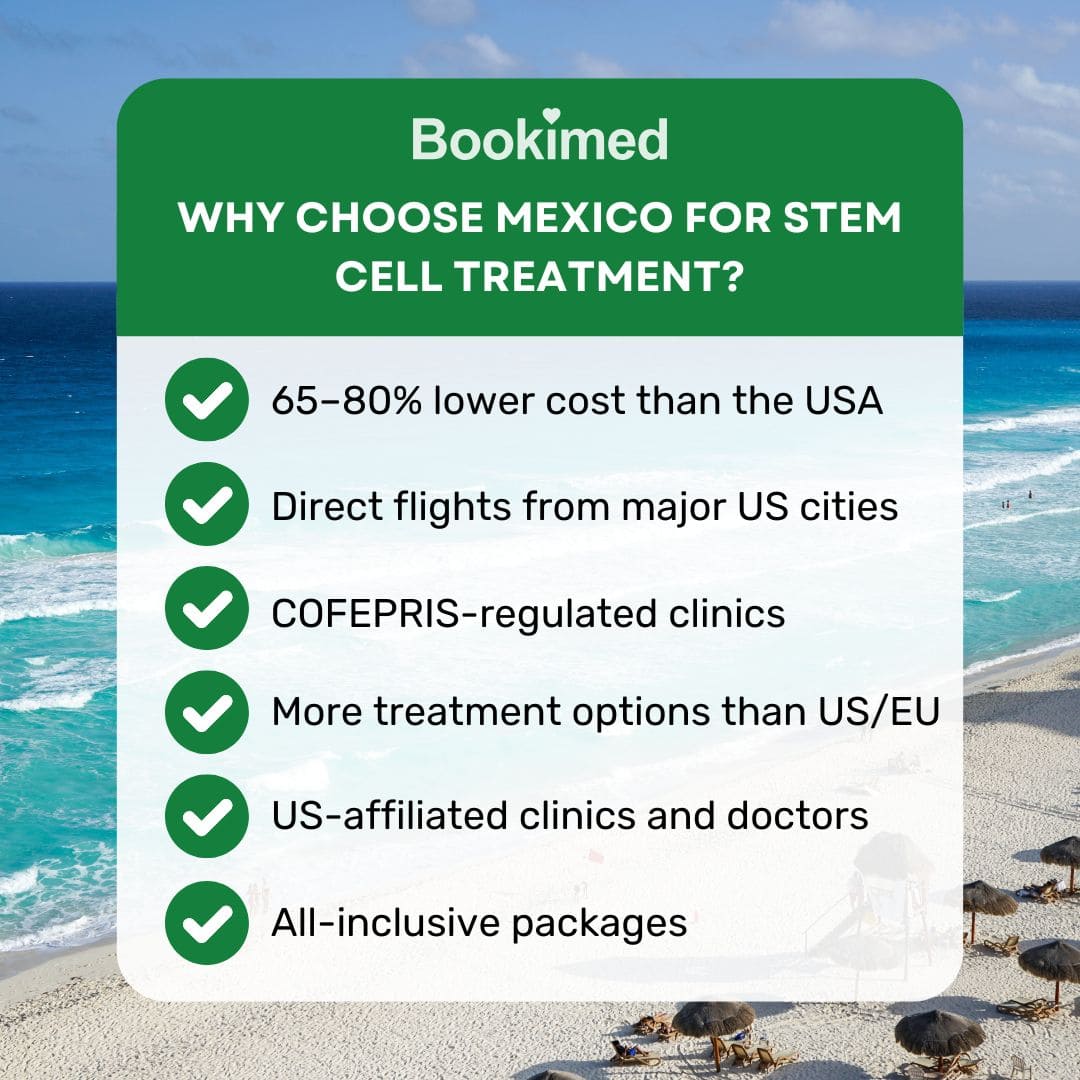
Logistics come first. Direct flights from major US hubs reach Monterrey, Cancún, Guadalajara, and Mexico City in under five hours. The regenerative clinics cluster in San Pedro Garza García in Monterrey, in Playa del Carmen, and in the Cancún hotel zone. All three sit close to an international airport.
What the science supports
Orthopedic work has the strongest clinical evidence in Mexican practice: knee osteoarthritis, partial cartilage repair, and sports injuries. Ophthalmology comes next, where a simple limbal epithelial transplant rebuilds the surface of the eye.
Clinics typically use mesenchymal stem cells from umbilical cord tissue. Orthopedic cases are treated with an ultrasound-guided joint injection; whole-body protocols are delivered through an infusion into a vein. A laboratory can show the release certificate for the batch used in your own treatment.
All-inclusive packages
Mexican regenerative clinics price the trip as a bundle rather than line by line. A typical program covers treatment, 3–4 nights in a hotel or private apartment, meals, airport transfers, local support, laboratory work, and follow-up consultations. Oxygen therapy and vitamin infusions are common additions.
Treatment is outpatient, so the same day ends at the hotel.
Who treats international patients
 Dr. Isabella Bernaschina is a regenerative medicine specialist at Juventa Regenerative Medicine in Playa del Carmen, with 10+ years in the field. She holds a master’s degree in regenerative medicine and stem cell therapy. She is a member of the Mexican Association of Professionals in Intravenous Therapy.
Bookimed partner clinics in Mexico
Bookimed's Mexican partner clinics vary in size and accreditation, from focused regenerative medicine practices to nationally certified medical centers.
- Stem Solutions is a regenerative medicine center that uses ultrasound-guided injections and bundles the hotel and transfers into its programs.
- Immunotherapy Regenerative Medicine in Puerto Vallarta holds accreditation from Mexico’s General Health Council, the national body that certifies medical facilities.
- Aura Regenerative Center is a physician-led clinic in Monterrey where every cell product is COFEPRIS-approved and comes with a certificate of analysis.
- Holistic Bio Spa® is an integrative medical center in Puerto Vallarta that has combined regenerative and conventional care since 2004.
Stem Cell Therapy in Thailand: Cell Products Registered as Medicines
What Thailand adds is a registered cell product, made in a laboratory the regulator inspects.
What the 2024 decree means at the clinic door
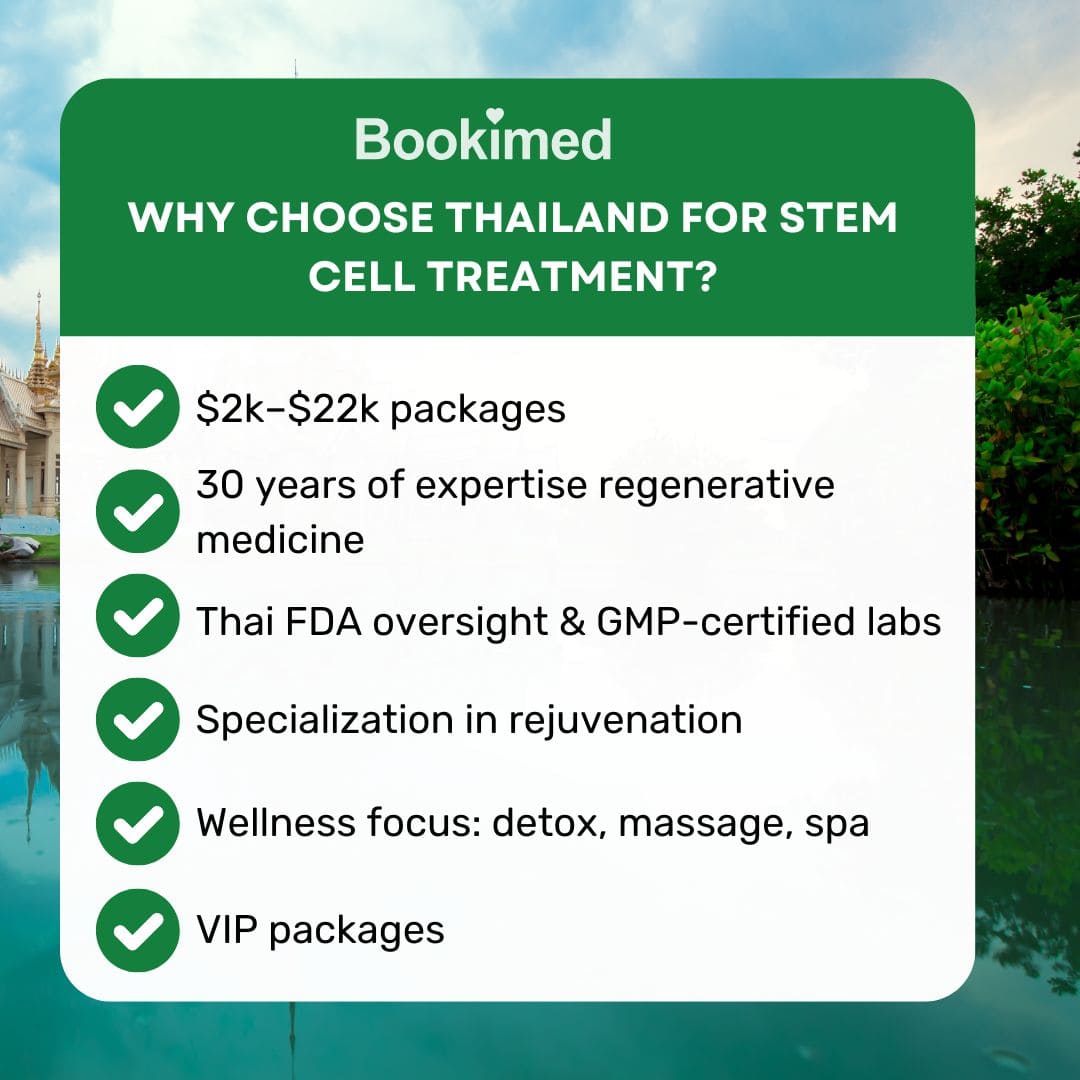
The 2024 decree standardized what Thai clinics must now provide: proof that the cell product is registered, confirmation that the laboratory meets government inspection standards, and a batch record for your specific treatment. A batch record documents the source, preparation process, and quality test results for the exact cells you receive.
Where Thailand is strongest
The laboratory rules come first: donor screening covers more than 50 pathogens, and the cell passage number is capped at four. Passage number means how many times the cells are expanded in the lab before use – beyond four rounds, they begin to lose potency. Coordination is the other strength, with English-speaking case management standard at clinics that serve international patients.
Exosome and secretome therapies have also been folded into Thai protocols. These use the signaling molecules stem cells release – the same ones that drive repair and reduce inflammation. For patients, this means more treatment options beyond a standard stem cell infusion.
What to confirm about the treating team
Which specialty the treating physician holds, and which laboratory prepares the cells, settle most of it. These belong in writing as well:
- whether the laboratory meets good manufacturing practice standards;
- whether donor screening covers more than 50 pathogens;
- what the passage number is for the batch you receive.
What the package usually covers
A standard international program covers treatment in clean-room grade suites, guided by ultrasound or fluoroscopy. The treatment is supported by pre-procedure lab work and imaging, immune profiling, and supportive vitamin infusions. The travel side covers hotel stays with meals, airport transfers, and a bilingual coordinator. Wellness sessions such as walking therapy and massage are often built in.
Treatment is outpatient. The hotel nights in the package cover the days between the session and the flight home.
Bookimed partner clinics in Thailand
Thai partner clinics range from multi-specialty hospitals to dedicated regenerative centers.
- ID Clinic Bangkok is a private multi-specialty center in Bangkok accredited by the Royal College of Surgeons Thailand.
- Menness Wellness Clinic is a Bangkok clinic focused on male health, also accredited by the Royal College of Surgeons Thailand.
- EDNA Wellness works with a laboratory certified to good manufacturing practice standards and runs cell programs for orthopedic and neurological conditions.
Colombia: Research Protocols Under the National Medicines Regulator
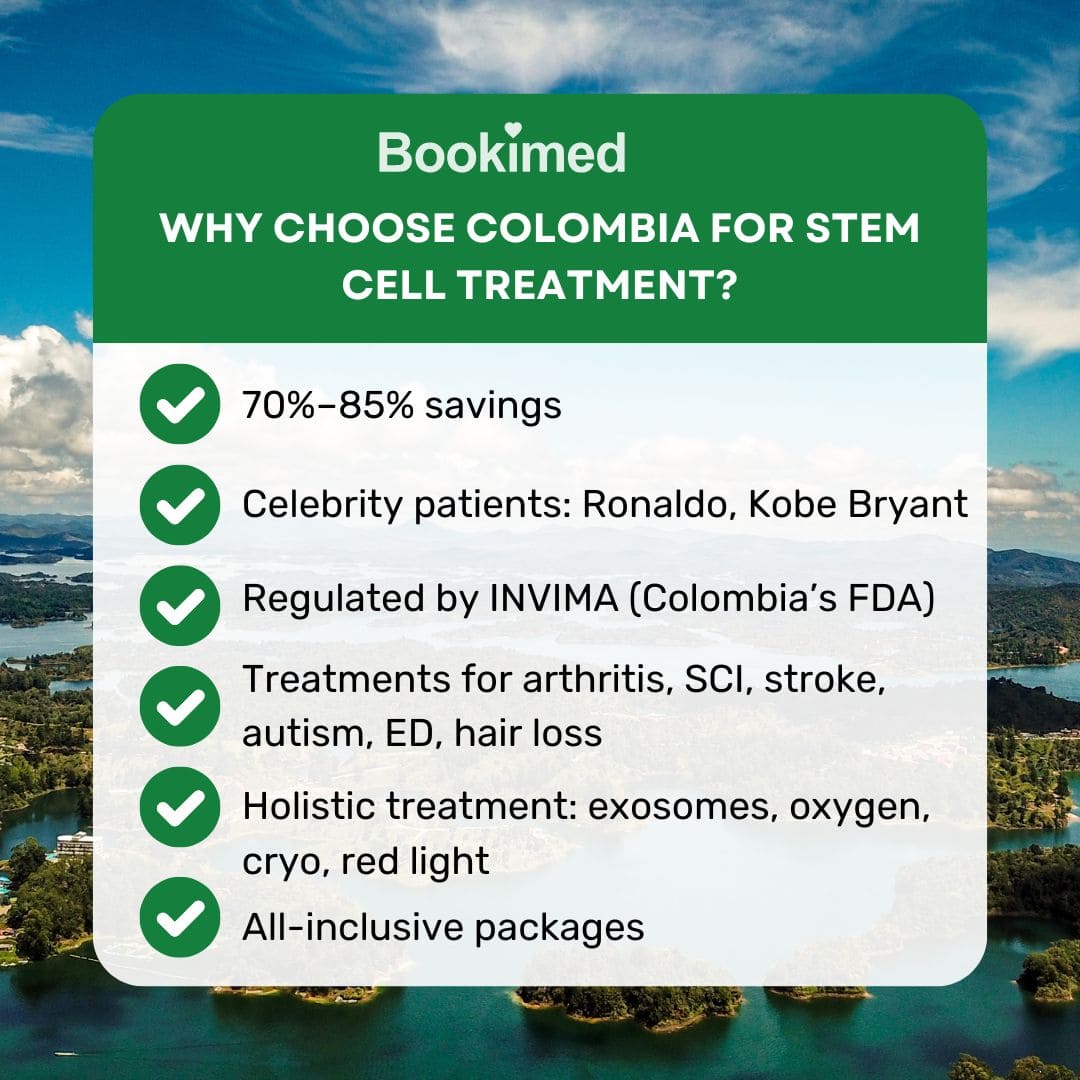
What separates Colombia from the other three is where the treatment happens. Every case runs inside a registered research protocol authorized by INVIMA, the national medicines regulator. There is more paperwork here, and a stricter check that your case fits the protocol. In return, the protocol is one a regulator has already reviewed.
Backed by registered clinical research
Colombian centers work through clinical trials, including regenerative treatments for COVID-19 that INVIMA approved. The protocols in this field cover:
- osteoarthritis;
- spinal cord injury;
- stroke recovery;
- muscle and soft-tissue repair;
- autism.
See the results of regenerative therapy for Parkinson’s disease in Colombia:
What is in the package
Colombian programs pair the therapy itself with physiotherapy and a remote follow-up consultation 30 days later. They typically include:
- mesenchymal stem cells from Wharton’s jelly, the tissue inside the umbilical cord;
- exosomes and platelet lysate to support healing;
- ultrasound and fluoroscopy-guided procedures under sedation, with a certified anesthesiologist;
- nutrient infusions and detox protocols;
- hyperbaric oxygen therapy;
- red light therapy and cryotherapy;
- airport, hotel, and clinic transfers;
- hotel accommodation;
- bilingual care coordination around the clock.
Bookimed partner clinics in Colombia
These partner centers in Medellín run these protocols:
- Stem Cells Colombia uses Wharton’s jelly cells at passage two to three, with orthopedic, urological, and aesthetic programs.
- Reju Stem Cell Clinic is located inside Salud Vegas Hospital in the El Poblado district and treats about 350 patients a year.
Turkey: Treatment Inside JCI-Accredited Hospitals
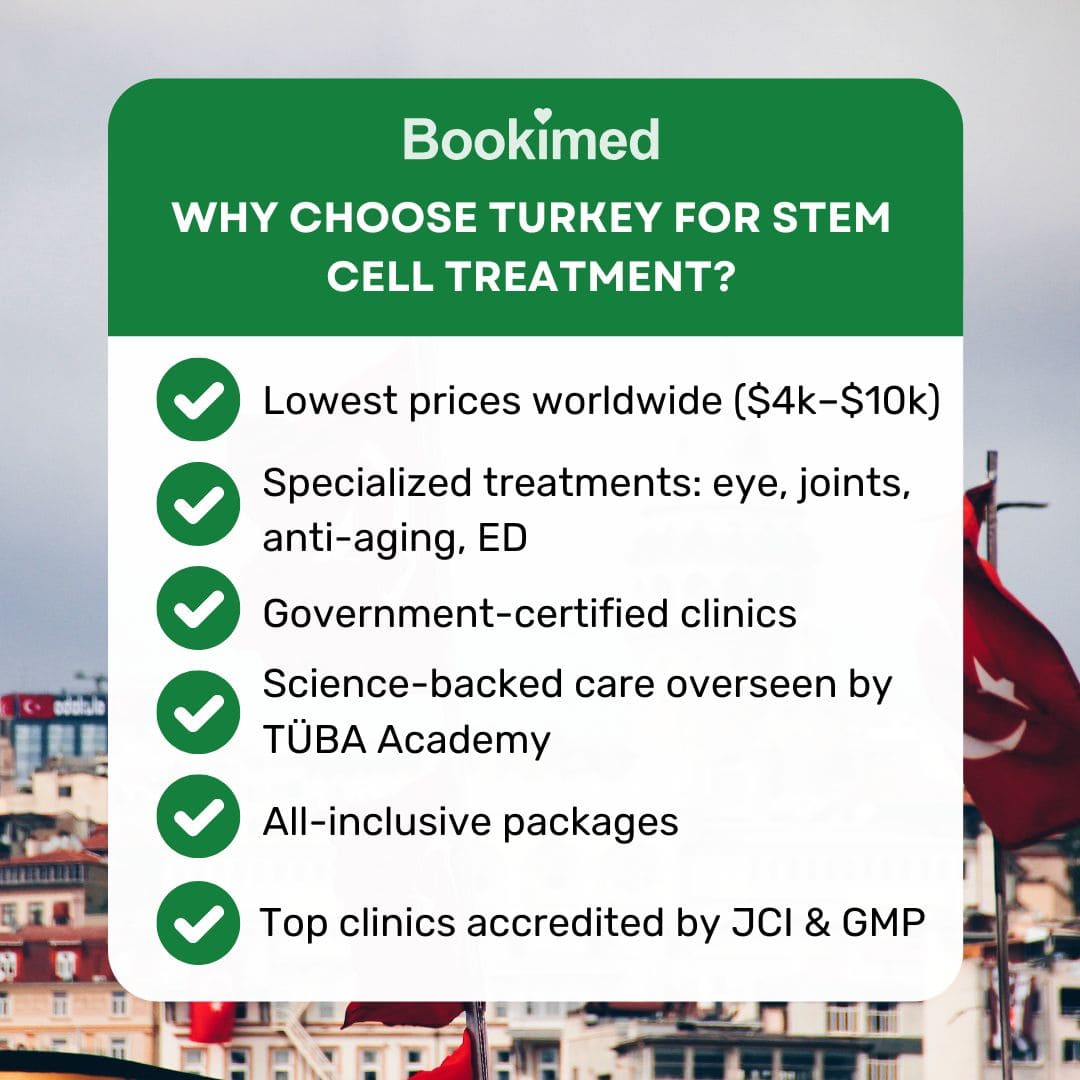
Bookimed's Turkish partners are large general hospitals. Your scans are taken in the same building where you are treated. If the joint also needs surgery, the hospital can do it on the same trip.
Complication insurance comes with the treatment
Complication insurance is mandatory in Turkey, and every international patient must hold it. The policy sets out who pays if something goes wrong.
Ask the hospital which insurer issues the policy and what it covers.
Where Turkey is strong
Turkish hospitals concentrate their stem cell work in joints, eyes, and blood conditions. Turkish law also requires the hospital to get a Ministry of Health authorization for your case before treatment.
What the package usually covers
Turkish hospitals bundle the trip: the tests you need before treatment, hotel, airport transfers, medical help around the clock, an interpreter, and follow-up consultations. Orthopedic patients often combine stem cell treatment with knee arthroscopy or a course of physiotherapy.
Bookimed partner hospitals in Turkey
Three partner hospitals in Turkey take international stem cell patients.
- Memorial Şişli Hospital was the first hospital in Turkey accredited by Joint Commission International (JCI), and it offers programs for orthopedic and ophthalmology conditions.
- Memorial Ataşehir Hospital is the JCI-accredited sister hospital on the Asian side of Istanbul, with diagnostics and surgery in one building.
- Dunyagoz Eye Hospital Istanbul Etiler is a single-specialty eye hospital that holds the Turkish government’s International Health Tourism Authorization Certificate.
Which Cells You Get: Your Own or Donated Cord Tissue
Abroad, the cells are donated from umbilical cord tissue after a full-term birth. A licensed laboratory grows them to a set dose and verifies their quality against a batch record.
In the United States, the cells come from the patient, collected on the day of treatment. US rules treat cells grown in a laboratory as a drug, so clinics there work with what they can take and return in the same procedure.
A set dose from a released batch is measurable before it reaches the patient, and the clinic can show the paperwork that proves it. Cells collected on the day are not counted or characterized the same way.
The release numbers worth asking for
A batch record answers the questions that matter, and a clinic that prepares its own cells reads them off the certificate.
- Viability. The share of cells still alive at release; products made under regulated programs run above 85%.
- Passage number. How many times the cells were grown on before use, where four or below is the working limit.
- Surface markers. The protein panel that confirms the cells really are mesenchymal cells and not something else.
- Sterility. A laboratory test showing the batch contains no bacteria or fungi.
- Donor screening. The infection tests run on the mother and the cord before the tissue was accepted.
Where the cells were before they reached you
The last question is the cold chain – the unbroken sequence of frozen storage and transport that keeps the cells viable from the laboratory to the clinic. A laboratory can belong to the clinic, or the vials can arrive by courier from somewhere else. Both work, but only if the shipment stayed frozen the whole way, which is the one failure a patient cannot see. A clinic should be able to say who owns the laboratory and how the temperature was logged in transit.
Stem Cell Therapy Safety: How Regulated Clinics Lower the Risk
Most of the protection comes from three controls: a licensed clinic, a certified clean-room laboratory, and an independent sterility certificate for the batch. Where all three are in place, pooled results from 62 randomized trials in 3,546 patients found no increase in serious adverse events.
What research shows about complications
A peer-reviewed review of stem cell tourism found that reported complications cluster in clinics that no regulator supervises. The common threads are unscreened cell products and injections given without imaging guidance. Screened products, an authorized clinic, and imaging-guided delivery prevent them.
What most patients don't consider before treatment
An unregulated stem cell procedure can rule a patient out of a legitimate clinical trial later. Some protocols may exclude anyone who has already received an unapproved cell therapy.
Can stem cells cause cancer?
The answer separates two cell types. Undifferentiated pluripotent cells, meaning embryonic and induced pluripotent stem cells, pose a tumor risk outside formal clinical trials. The guidelines of the International Society for Stem Cell Research keep them inside tightly controlled research. Mesenchymal stem cells, the type used in nearly all treatment abroad, are multipotent rather than pluripotent, so that restriction does not apply to them.
When stem cell therapy may not be suitable
Stem cell therapy is not recommended in these situations without a conversation with your own doctor first:
- an active or recent cancer;
- an active infection;
- pregnancy or breastfeeding;
- severe immunosuppression, such as transplant maintenance;
- current enrollment in an approved clinical trial.
Signals that a clinic is not the regulated kind
A few things a clinic says or does mean no regulator is supervising it.
- A promise of a cure, or a guaranteed cure rate, is a promise no clinic can make.
- A clinic that presents working around the regulator as a feature is describing the risk, not the service.
- Pressure for a same-week deposit belongs to sales, not to medicine.
- A stem cell bank license presented as treatment authorization.
These are the documents worth having in writing:
- the cell-product release specification, with the cell count, viability, passage number, sterility, and donor screening;
- the authorization that names the exact procedure;
- the clinic's complication policy, including which hospital they transfer patients to if a serious complication arises.
For the screening checks in more depth, read our page on stem cell therapy safety.
Realistic Success Rates: What the Evidence Shows by Condition
The evidence is divided by condition. Orthopedic work has the strongest published record, while neurological and anti-aging programs are newer.
Orthopedic and joint conditions
The pooled evidence comes from 8 randomized trials in 502 patients with knee osteoarthritis. Pain, stiffness, and joint movement all improved at 6 and 12 months. The effect was strongest with fat-derived cells and higher doses. The trials found no rise in adverse events.
Patients with moderate cartilage damage see the most consistent benefit. Mexico and Turkey run the most orthopedic protocols of the four.
Neurological conditions
Multiple sclerosis has the strongest record of the three. A systematic review of mesenchymal stem cell therapy found 40.4% of patients improved and 32.8% stayed stable. No major complications were reported, and headache and fever were the common minor ones. For Parkinson’s, a phase 2 randomized trial tested three infusions of donor bone marrow stem cells in 45 patients. Motor scores improved more than on placebo, and side effects were mild and short-lived.
ALS is at the earliest stage of the three. In the largest randomized trial, 33% of patients on stem cells met the response threshold, against 28% on placebo. Among patients with milder disease, the gap widened to 35% against 16%. \Colombia and Thailand run neurological protocols most often.
Anti-aging
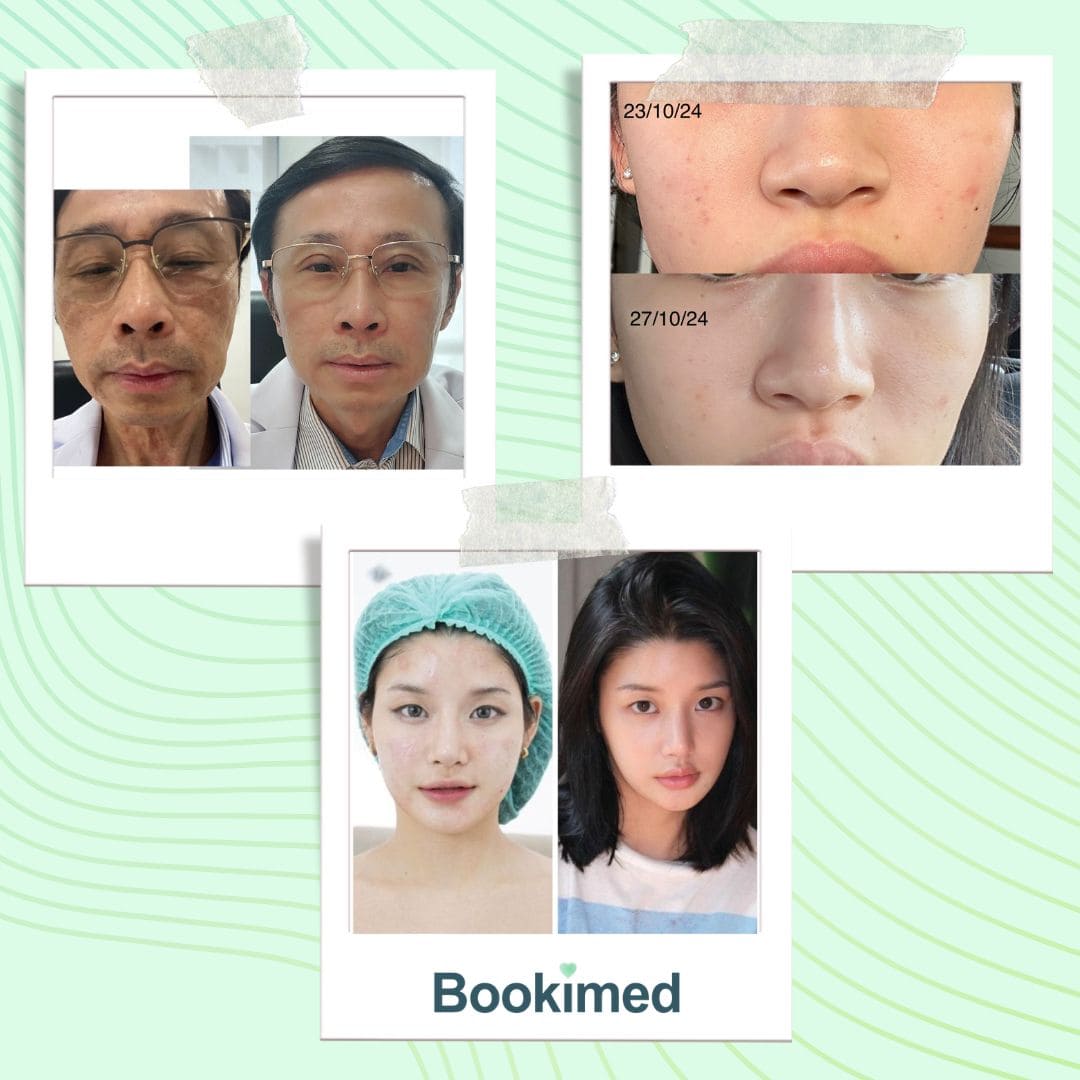
Stem cell therapy is also used for skin rejuvenation and anti-aging, where the goal is tissue repair and collagen support. In one study, patients received a single injection of their own fat-derived stem cells into facial skin. Wrinkles and sagging improved by 33% to 40% on average. The folds running from nose to mouth became shallower in all patients, and cheek pores shrank. The first changes to the folds showed 10 days to one month after the injection. Photographs taken at 12 months confirmed the effect held for over a year. Thailand and Mexico run most of the anti-aging programs.
The first regulator-approved product
Ryoncil, also called remestemcel-L, was approved by the US drug regulator, the FDA, in December 2024. It is the first mesenchymal stem cell therapy approved in the United States.
The indication is narrow: graft-versus-host disease in children after a bone marrow transplant, where the donated cells attack the recipient’s tissue. It is not approval for joint repair or anti-aging use. The milestone matters because it shows that broader US approval is a matter of time.
How to Choose the Best Place for Stem Cell Treatment
Your condition, the legal framework, and the clinic’s credentials matter more than price alone. Match what matters most to you against the four destinations, then work through the checks that follow.
| What matters most to you | Where to look | Why |
|---|---|---|
| The lowest entry price | Mexico | The lowest start of the four, with orthopedic and autoimmune programs. |
| The most complete documentation for your cells | Thailand | Cell products are registered as medicines and come with a batch record confirming source, preparation, and test results. |
| The most comprehensive package | Colombia | Programs include physiotherapy, hyperbaric oxygen, 24-hour coordination, and a 30-day remote follow-up. |
| Full hospital setting with surgical backup on site | Turkey | JCI-accredited general hospitals with imaging and surgery in the same building, and complication insurance mandatory by law. |
1. Whether the country allows the treatment you need
The first filter is legal. Ask whether the country has an approval route for your condition, not just an absence of rules against it. Where a route exists, the clinic answers to a regulator.
2. Whether the clinic’s certification covers cell handling
National and international certification is the second filter. Good manufacturing practice covers how the cells are made, and hospital accreditation covers how the facility is run. The two are not interchangeable.
3. Whether the doctor is a regenerative medicine specialist
The person performing the procedure has a specialty, and it is worth knowing which one. A regenerative medicine specialist, an anesthesiologist, and a sports physician bring different training to the same injection.
4. Which cells you get, and who grew them
The two questions are what the cell source is, and who owns the laboratory that prepared the batch. A clinic that prepares cells on site can answer the second one; a clinic that resells someone else’s vials often cannot. The cell-source section explains why the answer changes what you receive. A clinic that grows its own cells can read the batch numbers straight off the release certificate.
5. What the program includes besides the cells
Cells alone are not the whole program. Stronger ones add exosomes, ultrasound- or fluoroscopy-guided injection for accuracy, and pre-treatment and post-treatment protocols such as nutrient infusions or rehabilitation.
6. What past patients report about follow-up
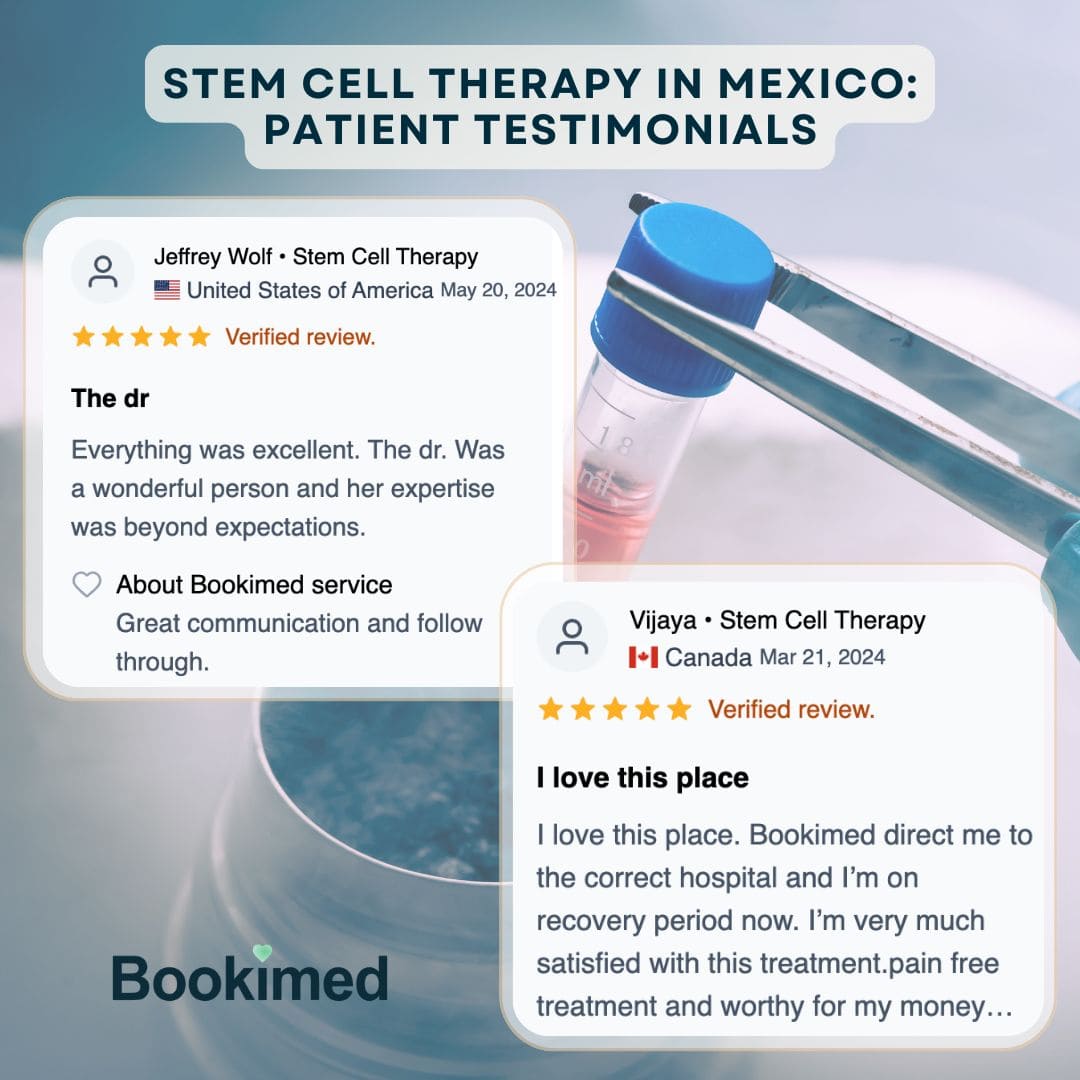
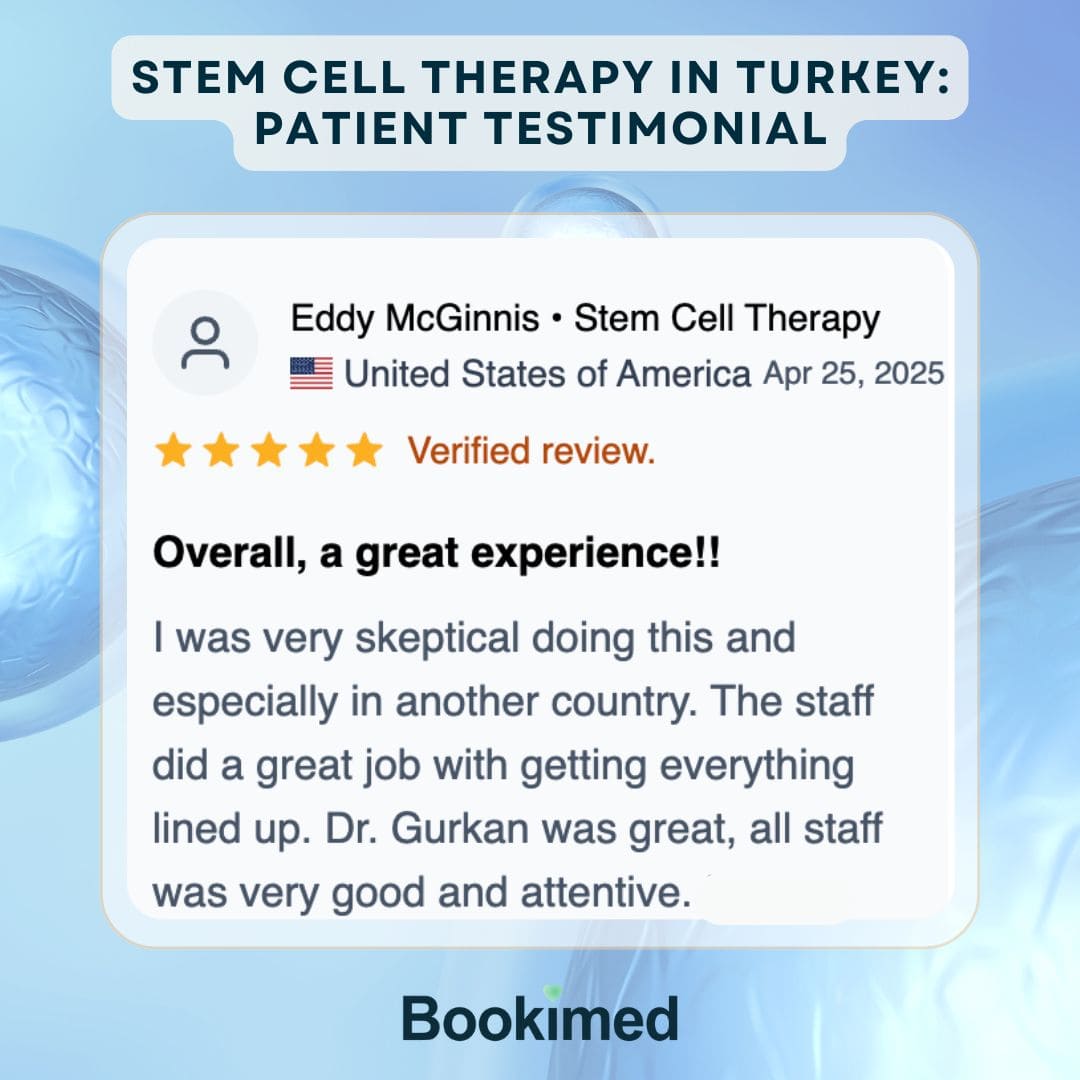
Verified Bookimed reviews describe communication, recovery, and what happened after the patient flew home.
7. Whether the trip itself is arranged
A program that includes accommodation, airport transfers, and recovery support removes a real load. That counts for more when a patient travels with limited mobility.
The Bottom Line
- Lowest entry price. Mexico, from $1,600, around 60% below the US average of $13,900.
- JCI-accredited hospitals. Turkey, $7,700–$12,000, around 29% below the US average.
- The document that matters. Written proof that the regulator in that country has authorized the specific treatment you will receive.
- Most comprehensive package. Colombia, $2,500–$20,000, around 45% below the US average.
- Most complete cell documentation. Thailand, $2,200–$13,000, around 45% below the US average.
- Trip length. 7–10 days, with 48–72 hours between treatment and the flight home.
A Bookimed medical coordinator reviews the case and sends clinic options with prices. The service is free to the patient, and the clinic charges the same as it would directly.
FAQ
What are the benefits and risks of stem cell treatment abroad?
The upside is access to programs not offered at home, with no waiting list. Oversight varies by country and by clinic, so documentation is checked case by case. A long flight soon after treatment raises the risk of a blood clot. Programs allow 48 to 72 hours between the session and the flight.
The cost gap is the main draw. Treatment starts at $1,600 in Mexico against a US average of $13,900.
On the risk side, one check settles most cases: the authorization that names the exact procedure. A clinic that cannot produce it is operating outside the approved scope.
Is stem cell therapy safe abroad?
Safety abroad rests on two checks: a clinic licensed for the exact procedure and a screened cell product with a batch record. The most consistently reported side effect across clinical trial data is a temporary fever that passes on its own.
In Thailand, cells grown in a laboratory are registered as medicines, and the laboratory is inspected against good manufacturing practice standards. The product and the facility both answer to the regulator. Colombia conducts treatment in accordance with research protocols authorized by its national regulator.
What a patient can check is the batch record. Any clinic that prepares its own cells can produce it on request.
What conditions can stem cell treatment help with?
Regenerative medicine is used across orthopedic, neurological, autoimmune, cardiac, metabolic, respiratory, cosmetic, urological, and blood conditions. Which of them a clinic can actually treat depends on the country’s rules and the protocol it runs.
| Condition area | Examples |
|---|---|
| Orthopedic | Chronic conditions like arthritis and back pain, sports injuries, cartilage repair |
| Neurological | Parkinson’s, multiple sclerosis, spinal cord injury, stroke recovery, neuropathy |
| Autoimmune | Lupus, Crohn’s disease, rheumatoid arthritis |
| Cardiac & vascular | Heart failure, heart disease |
| Diabetes & metabolic | Type 1 and type 2 diabetes |
| Respiratory | COPD, post-COVID lung damage |
| Cosmetic | Skin rejuvenation, hair restoration, vitality boosts |
| Urology | Erectile dysfunction, male infertility |
| Blood & cancer | Leukemia, lymphoma, aplastic anemia |
Evidence is not equal across these areas. A clinic that treats one area well is not automatically set up for another.
Why is stem cell therapy not approved for most uses in the USA?
Cells manipulated beyond the minimum count as a drug under US rules, so they need full clinical trials before approval, and that takes years. One mesenchymal product has now cleared that path, for a narrow pediatric indication after a bone marrow transplant. Most other uses are still in clinical trials.
The rule turns on how much the cells are changed. Cells taken and returned within the same procedure, with minimal processing, stay outside drug regulation. That is why US clinics work with cells collected from the patient on the day of treatment rather than cells grown in a laboratory.
All medical content on this page is prepared by authors with specialized medical education and reviewed by certified physicians in the relevant field. Medical review by Fahad Mawlood, Medical Editor & Data Scientist.
Last updated: October, 2026.
- Statistics: Figures are based on Bookimed’s internal database October 2026, which includes analysis of 12,450 patient requests across accredited clinics in .
- Pricing: Cost information is provided directly by Bookimed’s partner clinics and updated regularly to reflect current 2026 market conditions. Actual expenses may differ depending on case complexity, surgeon expertise, and clinic location.
- Clinical Data: Treatment outcomes and patient satisfaction figures are collected from Bookimed’s verified clinic database and supported by data from peer-reviewed medical sources such as PubMed, The Lancet, JAMA, and NEJM (2023–2026).
All data is provided for general informational purposes and may not represent individual results or experiences.