


The American Society of Plastic Surgeons (ASPS) reports over 173,000 tummy tucks in the United States in a single year. It's no wonder the tummy tuck has stayed the third most popular cosmetic surgery in recent years, after liposuction and breast augmentation. Despite hours at the gym and strict dieting, loose skin and stubborn belly fat can linger.
The main types of tummy tucks are standard (full), mini, extended and fleur-de-lis. Reverse abdominoplasty, lipo-abdominoplasty and the drainless tummy tuck change where or how the surgeon works.
A tummy tuck treats loose skin or a belly bulge that diet and exercise did not change, often after pregnancy or large weight loss. The sections that follow compare how each type differs, what it costs in Turkey, Mexico and Thailand, and how to plan recovery around the trip.
Key Takeaways
- Standard tummy tuck removes loose skin and fat and tightens the muscles across the whole belly.
- Mini tummy tuck targets the lower belly through a shorter cut.
- Extended tummy tuck treats the belly, flanks and lower back.
- Fleur-de-lis tummy tuck uses a horizontal and a vertical cut and suits major skin laxity, often after large weight loss.
- Reverse abdominoplasty lifts and tightens the upper belly.
- Lipo-abdominoplasty combines a tummy tuck with liposuction to contour the waist and sides.
- Drainless tummy tuck closes the wound with rows of internal stitches instead of drainage tubes.
- Factors to consider: skin and muscle laxity, where the fat is, the result you want, scarring and recovery time.
Table of Contents
- What Is a Tummy Tuck?
- What Are the Different Types of Tummy Tucks?
- Customizing Your Procedure: Additional Types of Tummy Tucks
- Choosing the Right Type of Tummy Tuck
- How Much Each Type of Tummy Tuck Costs
- Planning a Tummy Tuck Abroad: Recovery and the Flight Home
- How to Choose a Tummy Tuck Surgeon
- The Bottom Line on Tummy Tuck Types
- Frequently Asked Questions About Tummy Tuck Types
What Is a Tummy Tuck?
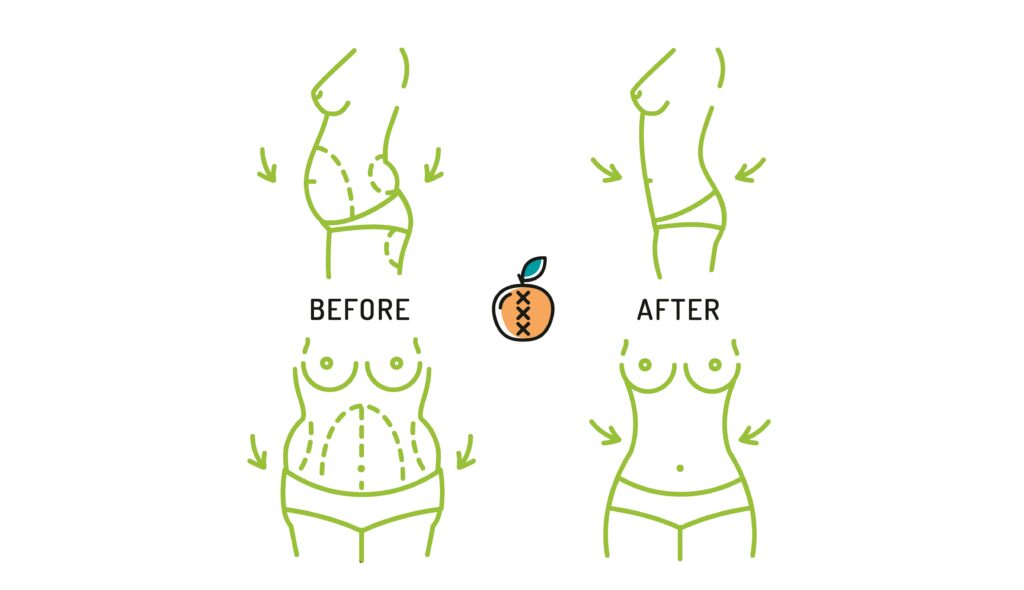
A tummy tuck is a cosmetic operation that removes loose skin and fat from the belly and tightens the stomach muscles. It is also called abdominoplasty, belly tuck, stomach tuck or abdominal tuck. Liposuction also removes fat, but it does not remove loose skin or repair stomach muscles that have separated.
Surgeons perform a tummy tuck for these reasons:
- After pregnancy, the stomach muscles can pull apart. This is rectus diastasis – the two long muscles down the front of the belly separate, and the belly bulges.
- Large weight loss can leave loose skin on the belly.
- Some belly fat does not respond to diet and exercise.
Which of these applies to you also shapes the type of tummy tuck a surgeon suggests.
A tummy tuck can bring these benefits:
- Flatter stomach. Removing loose skin and fat and tightening the muscle wall leaves a smoother, firmer belly.
- Muscle repair. The surgeon brings separated stomach muscles back together.
- Less back pain. Separated stomach muscles (rectus diastasis) can cause low back pain, and Mayo Clinic notes that tightening the core muscles can sometimes ease it.
- Body image. A firmer, flatter stomach can improve how you feel about your body.
How much each benefit shows depends on your starting point, which the surgeon assesses in person.
When to Wait Before a Tummy Tuck
Mayo Clinic lists situations in which a tummy tuck is not recommended right away:
- If you plan to lose a large amount of weight, have the surgery after you reach your goal.
- If you are thinking about becoming pregnant, have the surgery after your last pregnancy.
- If you smoke, ask the surgeon when to stop before the operation.
- If your body mass index (a weight-for-height measure) is 30 or higher, discuss the timing with the surgeon first.
- If you have a serious long-term condition such as heart disease or diabetes, or take blood-thinning medicine, discuss it with the surgeon first.
Waiting in these cases protects the result, because weight change and pregnancy can stretch the belly again.
Learn what to expect from the procedure in this tummy tuck guide.
What Are the Different Types of Tummy Tucks?

The main types are the standard (full), mini, extended and fleur-de-lis tummy tuck. They differ mainly in how much skin comes off and how long the scar is.
1. Standard (Full) Tummy Tuck
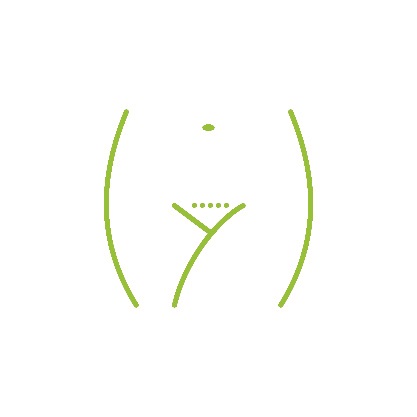 A standard tummy tuck is the most common type of abdominoplasty. It removes loose skin and fat across the whole front of the belly and tightens the stomach muscles.
- How it's done. The surgeon makes a cut from hip bone to hip bone, just above the pubic area. Loose skin and fat come off, the surgeon tightens the stomach muscles and the belly button is brought out through a new opening.
- Goal. The goal is a flatter, firmer belly across the whole front of the abdomen.
- Best for. A full tummy tuck treats loose skin and stretched muscles across the whole belly, after pregnancy or weight loss.
- Recovery. Mayo Clinic puts the return to work at about 2–4 weeks, depending on how physical your job is.

Results of a tummy tuck performed at Hospital de la Familia (Mexicali, Mexico)
2. Mini Tummy Tuck
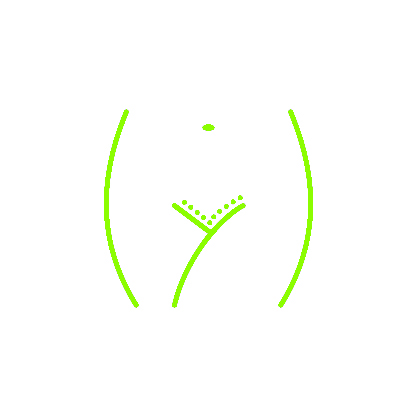 A mini tummy tuck treats only the lower belly, between the belly button and the pubic area. It is a less invasive option than a standard tummy tuck.
- How it's done. The surgeon makes a cut of about 4–8 inches (10–20 cm), close to the length of a C-section scar. Loose skin comes off below the belly button, and the belly button stays where it is.
- Goal. It gives a smoother lower belly with a shorter scar than a standard tummy tuck.
- Best for. A mini tummy tuck is suitable for a small lower-belly bulge in people close to a healthy weight.
- Recovery. The full result shows once the swelling settles, at around 6 weeks.

Before and after pictures of a mini tummy tuck at Istanbul Aesthetic Plastic Surgery Center (Istanbul, Turkey)
3. Extended Tummy Tuck
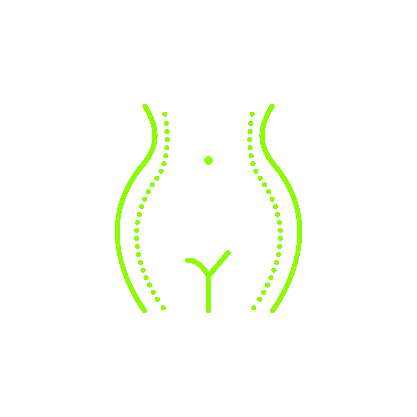 An extended tummy tuck goes further than a standard one and also treats the flanks, the love handles between the waist and hips.
- How it's done. The surgeon makes the cut low, above the pubic area, and extends it onto the sides. Loose skin and fat come off the belly and the flanks.
- Goal. The belly, hips and lower back get a smoother shape.
- Best for. An extended abdominoplasty suits a large amount of loose skin after major weight loss.
- Recovery. Recovery takes longer than after a standard tummy tuck, and most of the swelling goes down at around 2–3 months.

Before and after pictures of an extended tummy tuck at Dr. MED (Istanbul, Turkey)
4. Fleur-de-Lis Tummy Tuck
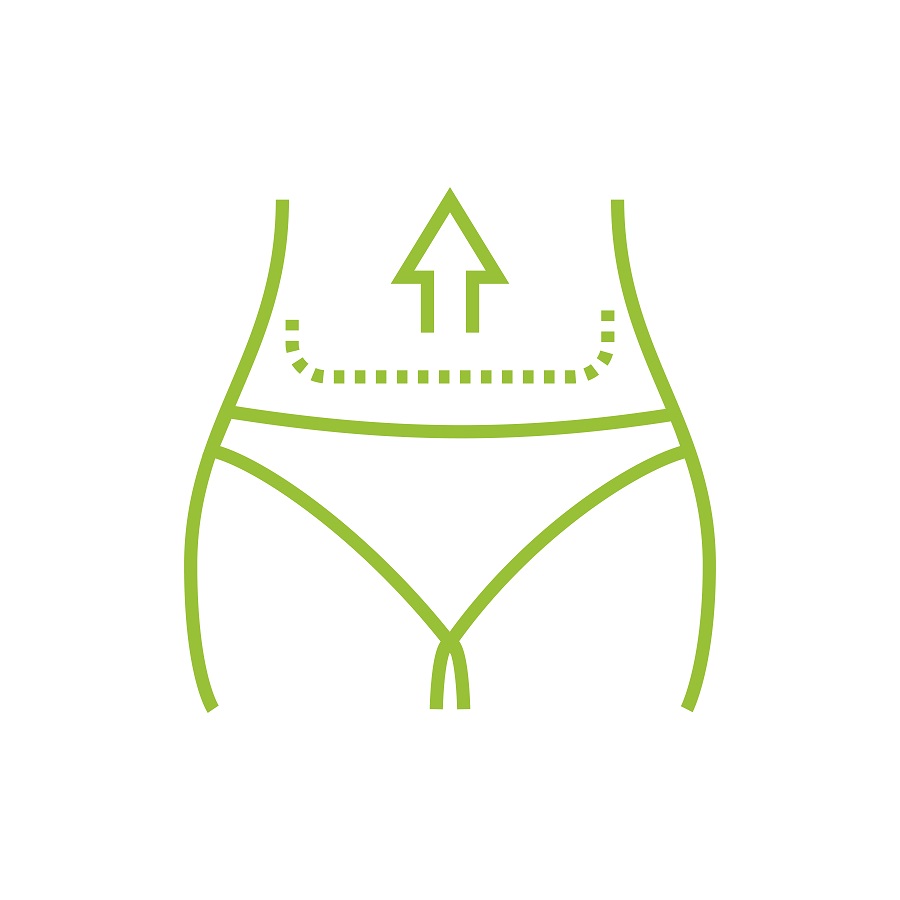 A fleur-de-lis tummy tuck removes skin in two directions. Its name comes from the shape of the scar, which looks like a stylized lily.
- How it's done. The surgeon makes one horizontal cut low on the belly and one vertical cut down the middle. Skin comes off both across the belly and down its length.
- Goal. It reshapes a belly with loose skin in both directions.
- Best for. The fleur-de-lis technique treats loose skin after large weight loss, often after bariatric surgery (an operation on the stomach or bowel to lose weight).
- Recovery. Recovery takes at least as long as after an extended tummy tuck, because two scars heal, so ask your surgeon for your own timeline.
Here's a brief comparison of the main types of tummy tucks for your convenience:
What differs | Standard Tummy Tuck | Mini Tummy Tuck | Extended Tummy Tuck | Fleur-de-Lis |
|---|---|---|---|---|
Cut and scar | Horizontal, hip to hip | About 10–20 cm (4–8 inches), below the belly button | Across the lower belly and onto the sides | Horizontal plus vertical, down the middle of the belly |
Area treated | Whole belly | Lower belly | Belly, flanks, lower back | Whole belly, across and down |
Belly button | Moved to a new opening | Stays in place | Moved to a new opening | Moved to a new opening |
Skin removed | Moderate to large amount | Small amount | Large amount | Largest amount |
Best for | Loose skin after pregnancy or weight loss | Small lower-belly bulge | Loose skin on the belly and sides | Loose skin in two directions after large weight loss |
Recovery | Back to work in about 2–4 weeks | Full result at about 6 weeks | Most swelling gone at 2–3 months | At least as long as extended; ask your surgeon |
Resulting scar | One hip-to-hip scar along the swimsuit line | The shortest scar and no new scar around the belly button | A longer scar that reaches the sides | Two scars: one low across the belly, one down the middle |
More skin removed means a longer scar, so the area you want treated and the scar you accept go together.
Customizing Your Procedure: Additional Types of Tummy Tucks
Reverse abdominoplasty, lipo-abdominoplasty and the drainless tummy tuck are variations that change where on the belly or how the surgeon works.
1. Reverse Abdominoplasty
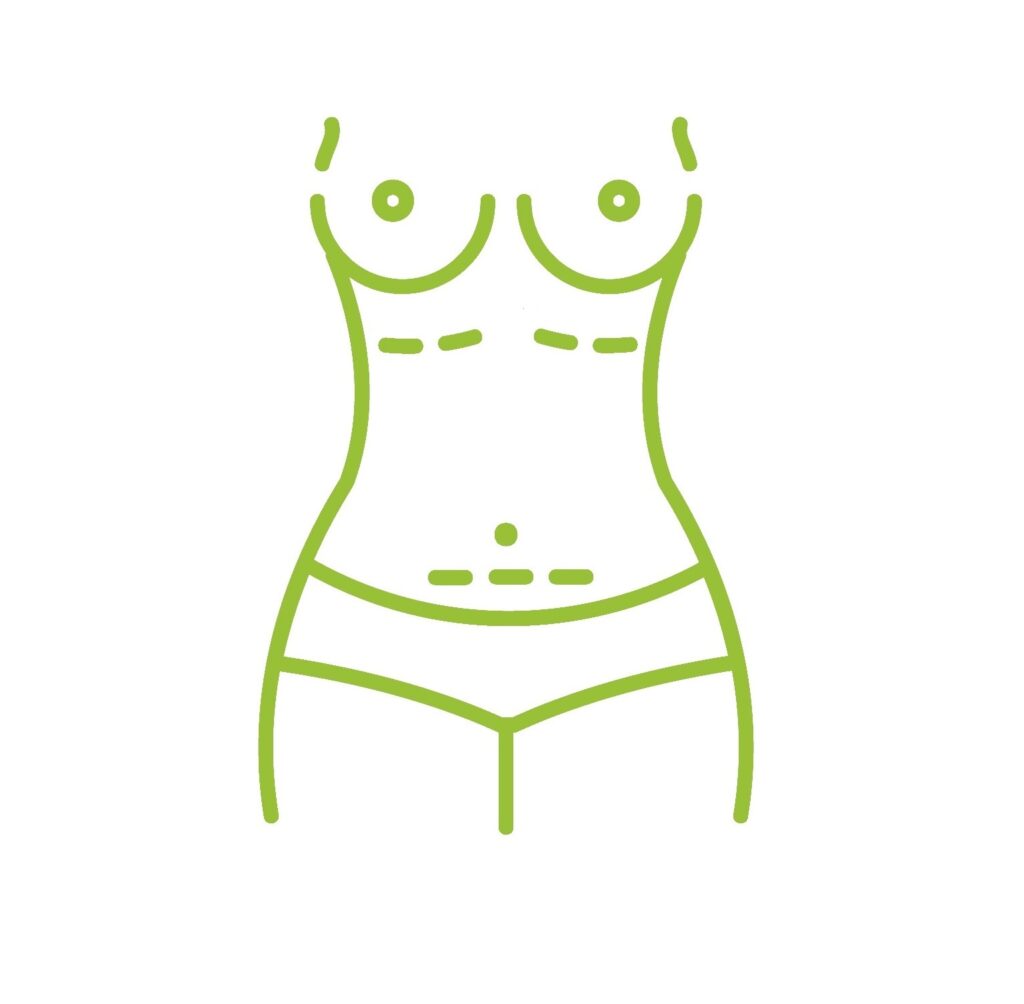 A reverse tummy tuck lifts and tightens the upper belly.
- How it's done. The cuts follow the fold under the breasts and cross the lower breastbone. The surgeon pulls the skin upward, so the scar lies in that fold.
- Goal. The upper belly becomes smoother and tighter.
- Best for. ASPS notes that a reverse abdominoplasty is suitable for loose skin in the upper belly, usually without the muscle separation that affects the lower belly.
2. Lipo-Abdominoplasty
 Lipo-abdominoplasty adds liposuction to a tummy tuck to shape the waist and sides.
- How it's done. The surgeon uses liposuction to remove fat from the belly and flanks, then tightens the skin and muscles.
- Goal. It gives a more defined waist and midsection.
- Best for. The combined operation treats fat on the waist and sides as well as loose belly skin.
- Recovery. A review of tummy tuck safety notes that surgeons increasingly combine the operation with liposuction, and that adding it makes the operation and recovery longer.

Before and after photos of a lipo-abdominoplasty performed in Istanbul, Turkey
3. Drainless Tummy Tuck
A drainless tummy tuck removes skin and fat like the other types but closes the wound without drainage tubes.
- How it's done. After a tummy tuck, the surgeon may leave thin drainage tubes under the skin for a few days. In a drainless tummy tuck, the surgeon instead stitches the skin layer down to the muscle layer in rows, called progressive tension sutures.
- Goal. These stitches leave less space for fluid to collect, which lowers the chance of a seroma (fluid collecting under the skin). Mayo Clinic notes that some surgical techniques avoid the need for drains.
- Best for. Patients who would rather avoid drainage tubes. An analysis of several studies found that progressive tension sutures reduced fluid build-up. Even so, in a survey of US board-certified plastic surgeons, 89% still use drains. Ask your surgeon which method they use and why.
Choosing the Right Type of Tummy Tuck

The choice of tummy tuck type depends on where the loose skin and fat are, whether the stomach muscles have separated and how big a change you want. You and the surgeon weigh these factors together at the consultation.
1. Where the Loose Skin Is
The surgeon plans the length and position of the cut around the loose skin. Loose skin high on the belly, just under the breasts, is treated with a reverse abdominoplasty instead.
2. Where the Fat Is
A tummy tuck removes some fat along with the skin. If the fat is mainly on the lower belly, a standard tummy tuck may be enough. If there is also fat on the waist and flanks, lipo-abdominoplasty adds liposuction to shape those areas.
3. Whether the Stomach Muscles Need Repair
After pregnancy or large weight loss, the stomach muscles can stay stretched or separated. A standard tummy tuck tightens these muscles along the whole belly. A reverse tummy tuck is suitable for loose upper-belly skin in people whose muscles have not fully separated.
4. How Big a Change You Want From a Tummy Tuck
A mini tummy tuck makes a smaller change to the lower belly with a shorter scar. An extended tummy tuck or lipo-abdominoplasty reshapes the whole midsection, including the waist and sides.
5. Where the Tummy Tuck Scar Is Placed
Mayo Clinic describes the tummy tuck scar as lasting, but placed along the swimsuit line, where clothing hides it. The scar can take up to a year to fade as much as it will. The mini tummy tuck leaves the shortest scar, and the extended and fleur-de-lis types leave the longest.
6. How Long Recovery Takes After a Tummy Tuck
Recovery time depends on the type of tummy tuck and on how physical your job is. Mayo Clinic advises these steps during recovery:
- Avoid lifting, straining and other strenuous tasks during recovery.
- Wear an abdominal binder (a wide elastic support garment) for about 6–8 weeks.
- Avoid sports for at least 8 weeks after surgery.
If your job is physical, plan your time off work around these limits.
7. What Happens at the Tummy Tuck Consultation
At a consultation, a board-certified plastic surgeon examines your skin, fat and muscles in person before suggesting a type. Ask how a later pregnancy or weight change would affect the result you choose.
How Much Each Type of Tummy Tuck Costs
A standard tummy tuck costs $2,800–$4,100 in Turkey and $3,100–$4,000 in Thailand, according to Bookimed data. The price in Mexico is $3,500–$4,800, while US prices start at $5,100.
That is up to 45% less in Turkey, about 35% less in Thailand and about 30% less in Mexico than the US starting price.
Fleur-de-lis and reverse tummy tucks cost more than a standard one in every destination. The surgeon removes more skin through longer cuts, so the operation takes longer. Prices differ by type and country:
| Type | Turkey | Mexico | Thailand | United States | Best for |
|---|---|---|---|---|---|
| Standard tummy tuck | $2,800–$4,100 | $3,500–$4,800 | $3,100–$4,000 | from $5,100 | Loose skin and muscles across the whole belly |
| Fleur-de-lis tummy tuck | $5,800–$6,400 | from $6,900 | $4,500–$8,500 | $12,000–$20,000 | Loose skin in two directions after large weight loss |
| Reverse tummy tuck | from $5,000 | from $5,800 | from $8,000 | $12,000–$20,000 | Loose skin in the upper belly |
In Turkey, Mexico and Thailand, a fleur-de-lis tummy tuck costs roughly 25–75% less than in the United States. For a reverse tummy tuck, the difference is roughly 30–75%.
Prices for a mini tummy tuck start at $4,000 in Thailand and $4,100 in Turkey.
Destination guides compare the best countries for a tummy tuck and where to find a lower-cost tummy tuck.
Planning a Tummy Tuck Abroad: Recovery and the Flight Home
Plan to stay near the clinic for at least one week after a tummy tuck. ASPS recommends this minimum after any elective surgery, and the surgeon may advise waiting two weeks before traveling.
How Surgeons Lower Blood-Clot Risk After a Tummy Tuck
Surgeons take steps to keep blood moving in your legs after a tummy tuck. Tightening the stomach muscles and wearing a compression garment increase pressure inside the belly. A review of tummy tuck safety notes that this can slow blood flow in the legs.
To lower the chance of a blood clot, surgeons keep the operation shorter and split large combined operations into stages. The review's authors calculate a blood-clot risk score, called the Caprini score, for every patient. They then decide case by case who needs blood-thinning medicine.
Ask your surgeon how they assess your clot risk and whether to split combined operations.
Steps to Take Before a Tummy Tuck Trip
Before the trip, settle these points with your surgeon:
- Tell the surgeon about every medicine you take, including birth control pills.
- Book the return flight only after the surgeon confirms you can travel.
The medical coordinator arranges the clinic appointment and stays in touch with you during your stay.
The lowest standard tummy tuck price in Turkey is about $2,300 below the lowest US price, before the cost of the extra hotel nights.

- Technique: Full Body Lift
- Dr. Phatcharasak Kraisornphongsakul Md is board certified in plastic surgery since 2000.
- ID Clinic Bangkok is visited by 4,000 patients annually from Europe, the Commonwealth, and more.
- Included Services: Post-operative care, video or text consultation, consultation with a doctor, hospitalization, transfer airport-hotel-clinic-airport.
- Stay Info: 3 days hospital stay, 5 days hotel stay included in the price.
- Technique: Premium tummy tuck
- Murat Yaman treats 500-600 patients annually, focusing on patient satisfaction and natural-looking results.
- Lokman Hekim Istanbul Hospital frequently serves patients from CIS, Africa, and Arab League States for specialized procedures.
- Included Services: Post-operative care, electrocardiogram (ECG), general anesthesia, preoperative tests, blood tests, medications, language assistance, consultation with a plastic surgeon, 4* hotel, VIP transfer (all transfers between airport, hotel, and hospital).
- Stay Info: 3 days in the hospital and 3 days in a 4* hotel, hotel included in the price.
- Technique: Standard tummy tuck, no implant applicable
- Kadriye Ipek Uzunoglu is among the top-rated revision rhinoplasty surgeons in Turkey.
- Memorial Şişli Hospital is chosen by patients from 92 countries annually for treatment.
- Included Services: Blood tests, 5* hotel, VIP transfer.
- Stay Info: 2 days in hospital, 7 days in hotel, included in the price.
- Dr. Derya Bingol has the European Board of Plastic Reconstructive and Aesthetic Surgery Certificate.
- Db'est Clinic serves 600 patients annually, attracting individuals from Europe, Latin America, and North America.
- Included services: Consultation with a doctor, consultation with an anesthesiologist, ultrasound, 4* hotel, transfer airport-hotel-clinic-airport.
- Stay info: 2 days stay in the hospital, 7 days stay in the hotel, included in the price.
- Technique: Premium liposuction with 3D surgical planning and simulation; no implant applicable.
- Javier Herrero Jover pioneered 3D surgical planning and is the founder of a leading plastic surgery unit.
- Centro Médico Teknon is the official medical service provider for the 37th America's Cup Louis Vuitton sailing regatta in 2024.
- Included Services: 3D surgical planning, compression garments, 24-hour nurse services, breakfast, 3D modeling, coffee zone, varicose vein stockings, vitamin infusions, consultations, medications, pre-op exam, general anesthesia, consumables, individual patient room, airport transfers.
- Stay Info: 1 day hospital stay, 15 days hotel stay included in the price.
How to Choose a Tummy Tuck Surgeon
Choose a board-certified plastic surgeon who performs the type of tummy tuck you need and can show before-and-after photos of it. Use these checks when you compare surgeons:
- Ask about board certification. Board certification means the surgeon passed a specialist board's exams in plastic surgery. Membership in the International Society of Aesthetic Plastic Surgery (ISAPS) or ASPS is another credential to ask about. Hospitals may also hold Joint Commission International (JCI) accreditation, an international hospital quality and safety standard. Plastic surgeons in Mexico are certified by the Mexican Council of Plastic, Aesthetic and Reconstructive Surgery (CMCPER).
- Assess experience. Ask how often the surgeon performs the type you are considering, and look at before-and-after photos of that type.
- Read reviews. Patient reviews describe the surgeon's results and how the surgeon communicates.
- Schedule a consultation. At the consultation, the surgeon answers your questions and gives you a realistic idea of what to expect. Ask which type they recommend for your body and why, and whether they use drains.
Among Bookimed's partner clinics, Lokman Hekim Istanbul Hospital and Memorial Bahçelievler Hospital in Turkey are JCI-accredited.
At Dr. Ilker Manavbasi’s Clinic in Turkey and Marroquín & Sandoval Plastic Surgery Clinic in Mexico, the surgeons hold ISAPS and ASPS memberships. The Marroquín & Sandoval surgeons are also CMCPER-certified.
The coordinator helps compare partner clinics and surgeons for the type you choose and stays in touch with the clinic.

The Bottom Line on Tummy Tuck Types
The type you choose sets both the price and the recovery plan:
- Saving. A standard tummy tuck costs up to 45% less in Turkey than the US starting price.
- Larger types. In Turkey, Mexico and Thailand, fleur-de-lis prices are roughly 25–75% lower and reverse prices roughly 30–75% lower than in the United States.
- Recovery timeline. Plan at least one week near the clinic, then at least 8 weeks before returning to sports.
- Next step. Send photos of your belly for a consultation, so a surgeon can suggest a type.
With a suggested type, you can compare clinic prices for that exact operation.
Frequently Asked Questions About Tummy Tuck Types
The type of tummy tuck affects the price and the length of the scar, while the trip abroad adds questions about when to fly home.
Which type of tummy tuck is right for me?
Which type of tummy tuck suits you depends on what a board-certified plastic surgeon finds when they examine your belly at the consultation.
The surgeon checks where the loose skin is, whether the stomach muscles have separated and where the fat is. They also ask whether you plan to lose more weight or have children. A mini tummy tuck treats the lower belly, a standard one the whole belly and an extended one the belly and sides. A fleur-de-lis treats skin loose in two directions, and a reverse tummy tuck treats the upper belly.
Send photos of your belly before the consultation, so the surgeon can make an early suggestion. If you plan a pregnancy or a large weight loss, ask whether to wait, because both can change the result. Bring a list of your medicines too, since the surgeon uses it to plan the operation.
What is the difference between a mini and a full tummy tuck?
A mini tummy tuck treats only the lower belly through a shorter cut, while a full one treats the whole belly and tightens the muscles.
In a mini tummy tuck, the surgeon makes a cut of about 4–8 inches (10–20 cm), and the belly button stays in place. Expect to see the final shape about 6 weeks after surgery, when the swelling has gone down. In a full tummy tuck, the cut goes from hip bone to hip bone, and the belly button is moved to a new opening.
A mini tummy tuck is priced from $4,000 in Thailand and from $4,100 in Turkey. A full tummy tuck costs $2,800–$4,100 in Turkey. Ask the surgeon which of the two treats the loose skin you have.
How much does a tummy tuck cost abroad?
In Turkey, Mexico and Thailand, a standard tummy tuck is priced from $2,800 to $4,800, while US prices start at $5,100.
That is about 30–45% less than the US starting price, and the lowest prices start in Turkey. Fleur-de-lis and reverse tummy tucks cost more, because the surgeon removes more skin through longer cuts. Prices for a fleur-de-lis tummy tuck start at $4,500 in Thailand, against $12,000–$20,000 in the United States.
The final price depends on the type, the clinic and how much skin and fat the surgeon removes. Ask the clinic what the quote includes, such as hospital nights, follow-up visits and the compression garment. Compare quotes for the same type of tummy tuck, so the prices describe the same operation.
How soon can I fly home after a tummy tuck?
Plan to fly home no sooner than one week after a tummy tuck, and after two weeks if the surgeon recommends it.
ASPS recommends a minimum stay of one week after any elective surgery. The surgeon sets the travel date at your check-up before discharge, based on how you are healing. Plan the extra hotel nights into the trip from the start, so a later flight does not mean a rushed change.
Tell the surgeon about every medicine you take, including birth control pills, because some can increase the chance of a blood clot. Wear the abdominal binder as your care team instructs during the stay. Avoid lifting heavy luggage on the trip home, and ask the surgeon when lifting is safe.
How long do tummy tuck results last?
Tummy tuck results are usually long lasting if you stay at a stable weight, according to Mayo Clinic.
A large weight loss or a pregnancy after surgery can stretch the belly again and change the result. For this reason, surgeons may suggest having the operation after you reach a stable weight and finish having children. Scar fading can continue for up to a year, and the scar is usually placed along the swimsuit line.
Keep a steady weight with regular exercise and a balanced diet after recovery. If you plan a pregnancy later, tell the surgeon at the consultation, since it may change the timing of the operation. Ask the surgeon how long your scar will be, because its length depends on the type of tummy tuck.
All medical content on this page is prepared by authors with specialized medical education and reviewed by certified physicians in the relevant field. Medical review by Ergin Er, Plastic surgeon.
Last updated: October, 2026.
- Statistics: Figures are based on Bookimed’s internal database October 2026, which includes analysis of 12,450 patient requests across accredited clinics in .
- Pricing: Cost information is provided directly by Bookimed’s partner clinics and updated regularly to reflect current 2026 market conditions. Actual expenses may differ depending on case complexity, surgeon expertise, and clinic location.
- Clinical Data: Treatment outcomes and patient satisfaction figures are collected from Bookimed’s verified clinic database and supported by data from peer-reviewed medical sources such as PubMed, The Lancet, JAMA, and NEJM (2023–2026).
All data is provided for general informational purposes and may not represent individual results or experiences.