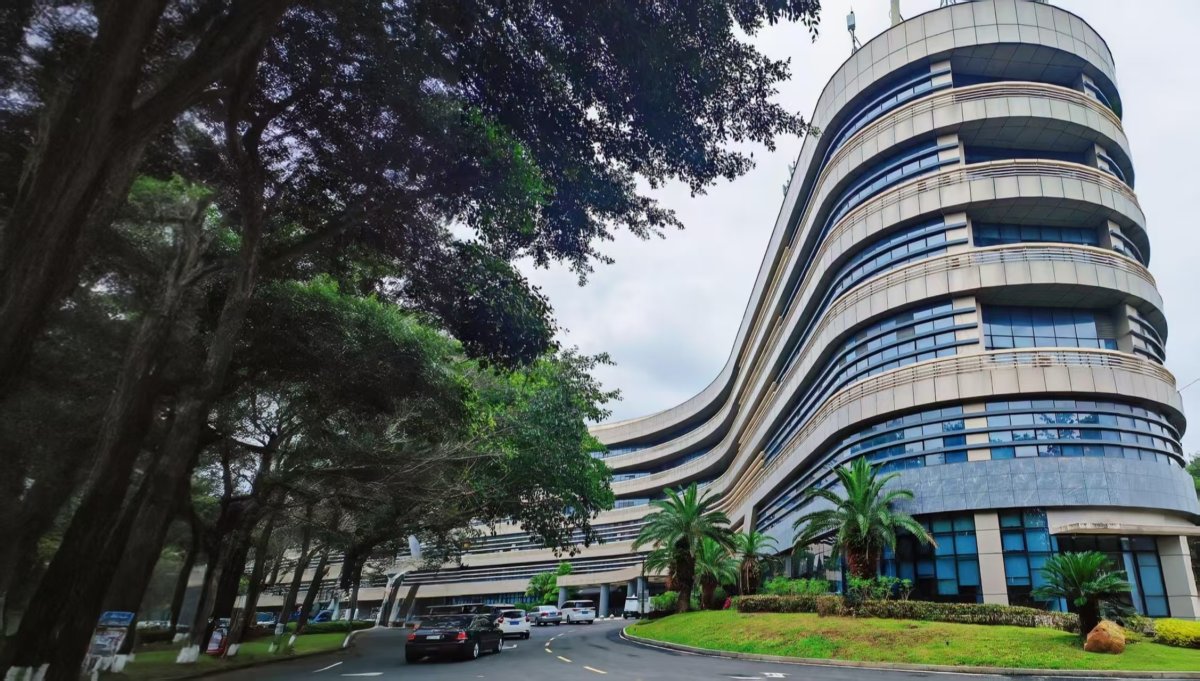
Boao International Medical Center
China, Qionghai


Medically reviewed by
Yesim Yildirim
| China | Turkey | Austria | |
|---|---|---|---|
| Chemotherapy for Brain Tumor | from $1,500 | from $1,000 | ≈ $6,500 |
No hidden fees – just official clinic prices. Pay at the clinic for Chemotherapy for Brain Tumor upon arrival and use a flexible installment plan if needed.
Bookimed is committed to your safety. We only work with medical institutions that maintain high international standards in Chemotherapy for Brain Tumor and have the necessary licenses to serve international patients worldwide.
Bookimed offers free expert assistance. A personal medical coordinator supports you before, during, and after your treatment, solving any issues. You're never alone on your Chemotherapy for Brain Tumor journey.

Day 1: Arrival
Day 2-3: Pre-operation
Day 4-5: Chemotherapy for Brain Tumor
Day 6: Post-operation
Week 1-2: Rehabilitation
Week 3: Return to Normal Activities
Week 4: Final Result
Please note that the timeline and process can vary depending on individual circumstances and the specifics of the brain tumor. Always consult with your healthcare team for advice tailored to your situation.
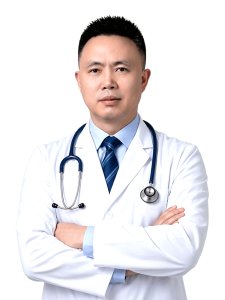
Chief physician and professor. Grade 1 Expert at the Cancer Center, West China Hospital, Sichuan University (ranked No. 2 in China). Completed a postdoctoral fellowship in interventional radiology at the Chinese PLA General Hospital. Leads multidisciplinary team (MDT) care for complex tumors. Expert in minimally invasive interventional oncology for liver, lung, and pancreatic cancers.
Accreditations: Council Member, WATA. Member of CACA and CMDA committees on intervention, ablation, radioactive seeds, and pain. In 2023, inaugural director member, Palliative Care Committee, Sichuan MDA. Editorial board member of the Chinese Journal of Interventional Imaging and Therapy. Editorial board member of the Chinese Journal of Pain Medicine.
Leads 2 provincial S&T projects and 2 NSFC projects. Has 40+ papers, with 30+ as first or corresponding author. Highest impact factor: 10.73. Hepatocellular carcinoma (HCC) cohort: TACE + lenvatinib vs TACE + sorafenib. OS 18.97 vs 10.77 months. PFS 10.6 vs 5.4 months. ORR 66.8% vs 33.3%.
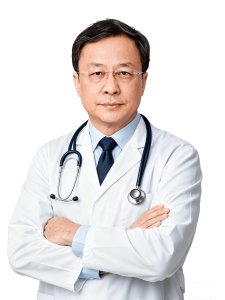
Professor Luo Xiaoping is a nationally recognized interventional radiologist and a leading authority in Western China. He began pioneering vascular interventions in the early 1990s. He helped found the Interventional Group at the Second Affiliated Hospital of Chongqing Medical University.
He has completed over 100,000 interventional procedures, including about 4,000 complex cases. His key skills include TACE for hepatocellular carcinoma, Budd–Chiari interventions, TIPS, and single-stage bilateral stenting for hilar biliary obstruction, with success rates near 100%. He has been a master’s supervisor since 2007. He has trained many physicians, guided complex cases at more than 40 major hospitals across Western China, and helped build interventional programs. He has published 32 papers as first or corresponding author (22 CSCD core, 4 Chinese core, 6 CSCD extended).
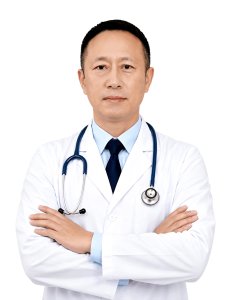
Dr. He Weibing is a pioneer of argon-helium cryoablation in China with more than 20 years of frontline practice. He was a founding member of Fuda Cancer Hospital (Guangzhou). He co-founded its Minimally Invasive Tumor Treatment Center and served as Executive Deputy Director. He also helped found the Ablation Group of the China Anti-Cancer Association. He has been the primary operator in more than 10,000 procedures.
He specializes in tumor cryoablation and is proficient in 125I seed brachytherapy, with a focus on liver and lung cancers. He proposed ten argon-helium techniques. Key co-authored data include: lung cryotherapy n=508; NSCLC n=120 (CR 25.5%, PR 41.8%, 6/12/24-month survival 64%/55%/36%); pancreatic cancer n=38 (median survival 12 months). He served on editorial boards in 2008 and 2010. He has been a national trainer for Varian and Boston Scientific since 2001.
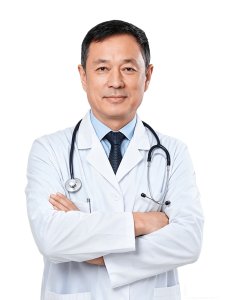
Professor Xiao Yueyong is Chief Physician in the Department of Radiological Diagnosis at the Chinese PLA General Hospital. He is a leading expert in minimally invasive interventional oncology. He serves as the inaugural President of WATA (2025–). He is President of the International (2020–) and Asian (2012–) Societies of Cryotherapy. He is also Deputy Head of the NHC Expert Group on tumour ablation regulations (2009–).
He has performed over 100,000 CT/MRI‑guided minimally invasive procedures. His work covers chemical ablation, RFA, MWA, cryoablation, and NanoKnife (IRE). He introduced and advanced NanoKnife ablation in China. He led the first national standards for tumour cryoablation and NanoKnife.
Honors include the National Special Contribution Award (Lifetime Honorary). He received First Prize from the Chinese Medicine Education Association (2021). He received two Second Prizes for Military Medical Achievements (2016, 2018) and two Second Prizes from the China Anti‑Cancer Association (2019, 2022). He was named Asian Ablation Master. His research record includes 13 Chinese patents. He is the principal investigator for four NSFC projects and one MOST subject. He has published over 200 papers, with over 110 as first or corresponding author and over 40 in SCI journals. He has led over 10 ablation guidelines or consensus statements.
 Anna Leonova
