CyberKnife in Italy — get 3 personalized clinic matches
Bookimed lists 2 cyberknife clinics in Italy, all in Milan. These clinics are rated 4.7/5 in 126 verified patient reviews on Bookimed.


Medically reviewed by
Ali Zirh
How it works
How Much Does CyberKnife Cost in Italy?
CyberKnife in Italy typically costs from $7,500 to $11,500. The total price depends on the tumor location, required fractions, and clinic tier. In the US, similar procedures cost around $33,000 on average. Italy offers savings of around 71%. Treatment usually includes advanced treatment planning, imaging, and several high-precision radiation sessions.
- CyberKnife for brain tumor: $7,500 to $11,500.
- CyberKnife for prostate cancer: $9,000 to $14,000.
- CyberKnife for lung cancer: $7,500 to $11,500.
- NanoKnife: Price on request to Price on request for non-thermal tumor ablation.
- Regional variations: Main medical hubs like Milan and Vicenza offer specialized oncology centers.
Bookimed Expert Insight: Milan is the strategic choice for high-precision radiotherapy. San Raffaele and San Donato Hospital both hold IRCCS accreditation from the Italian Ministry of Health. This status confirms their role as top-tier research institutions. Patients can access world-class technology in facilities ranked among the World's Best Hospitals by Newsweek. These centers manage over 300,000 patients annually, ensuring high clinical expertise for complex cases.
| Italy | Turkey | Austria | |
|---|---|---|---|
| CyberKnife | ≈ $7,500 | from $3,500 | ≈ $7,500 |
| CyberKnife for prostate cancer | ≈ $9,000 | from $6,000 | ≈ $8,500 |
| CyberKnife for lung cancer | ≈ $7,500 | from $6,000 | ≈ $6,500 |
| CyberKnife for brain tumor | ≈ $7,500 | from $4,800 | ≈ $9,500 |
Discover the Best CyberKnife Clinics in Italy: 2 Verified Options and Prices




CyberKnife Overview in Italy
Day 1
- Arrive in the country.
- Check into hotel or other accommodation.
Day 2
- Initial consultation with the specialist.
- Perform necessary medical tests.
Day 3
- Meet with the CyberKnife team to plan the treatment.
- Have a CT scan to determine the exact location of the tumor.
Day 4
- Begin CyberKnife treatment which lasts 1-2 hours.
- No anesthesia is needed for the procedure.
Day 5
- Post-operation follow-up with the specialist.
- Stay in the clinic for observation if needed.
Week 1-2
- Rest and recover at the accommodation.
- Follow-up consultation with the specialist if needed.
Week 3-4
- Gradual return to regular activities including work.
- Light sports activities can be resumed.
Week 5-6
- Full recovery and return to all regular activities.
- Final results of the CyberKnife treatment can be seen.
Note: The above timeline is a general guide. Each patient"s case is unique and the timeline may vary. Regular transfers are provided, but accommodation is not included in the service.
- Bookimed deposit: $200 or €200.
- Clinic deposit: Pay a set percentage in advance.
Video Stories from Bookimed Patients
Reviews about Bookimed: Discover Patients' Insights
All reviewsShare this content
 Anna Leonova

Our CyberKnife Techniques: What Suits You Best?
When considering CyberKnife, it’s important to understand the different techniques and which is best suited for you. Here’s a concise comparison of popular options:
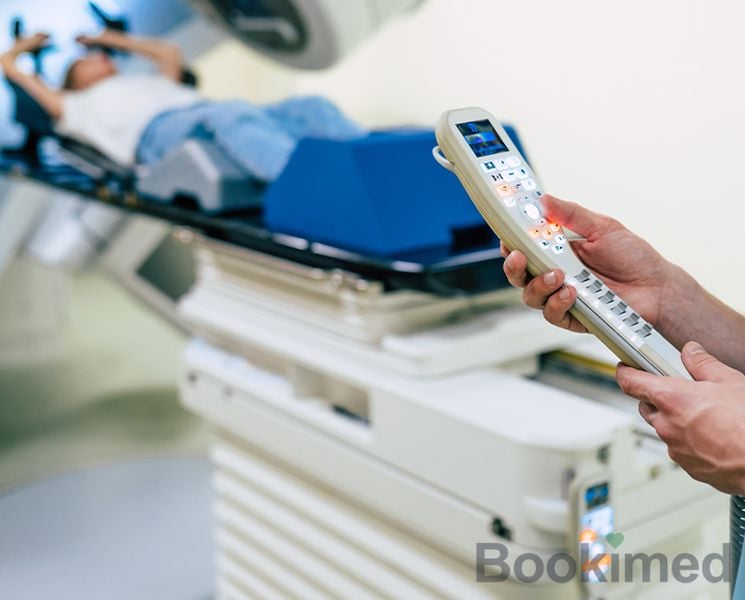
CyberKnife for brain tumor
This non-invasive treatment uses precision radiation therapy to target brain tumors with high accuracy.
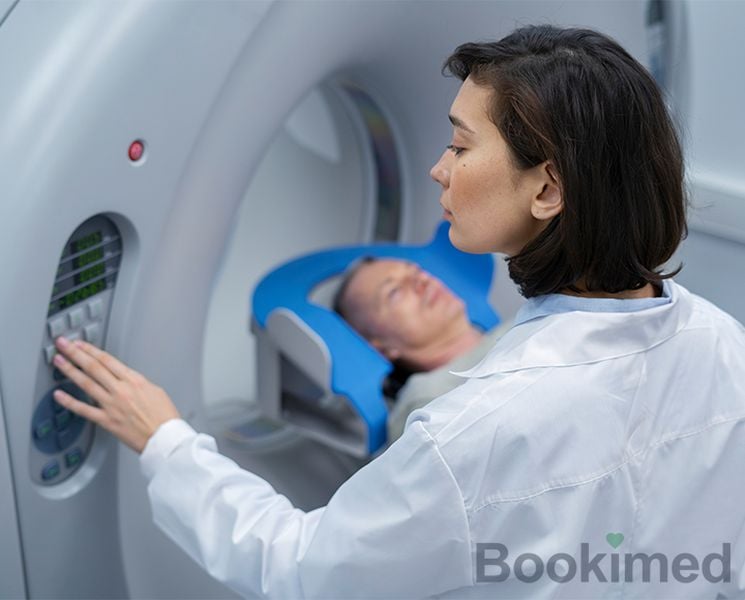
CyberKnife for prostate cancer
CyberKnife for prostate cancer is a non-invasive treatment utilizing precision radiation therapy to target and treat prostate tumors.

CyberKnife for lung cancer
CyberKnife for lung cancer is a non-invasive treatment using precision radiation therapy to target tumors.
FAQ about CyberKnife in Italy
Does CyberKnife treatment in Italy require surgery or an incision?
CyberKnife treatment in Italy does not require surgery or incisions. This robotic radiosurgery system delivers high-dose radiation from outside the body with sub-millimeter precision. Patients remain awake during sessions as the linear accelerator targets tumors without cutting skin or needing general anesthesia.
- Treatment approach: Surgeons use robotic arms to deliver radiation from multiple angles non-invasively.
- Anesthesia requirements: Most patients require no sedation because the procedure is entirely painless.
- Outpatient status: Sessions allow patients to leave the clinic immediately after radiation delivery.
- Fiducial markers: Some tumors require tiny gold seeds placed via needle before treatment.
Bookimed Expert Insight: Italian centers like San Raffaele specialize in high-volume cancer care, performing 12,000 treatments annually. Data shows patients often choose Milan clinics for CyberKnife because they combine Newsweek-ranked hospital quality with costs starting from $7,500, significantly lower than US averages.
Patient Consensus: The term radiosurgery often causes initial worry about cutting. Patients clarify that the process feels like getting an X-ray, though wearing the immobilization mask or frame feels very clinical.
What is CyberKnife treatment in Italy?
CyberKnife treatment in Italy is a non-invasive robotic radiosurgery used to treat tumors. The system uses a flexible robotic arm to deliver high-dose radiation with sub-millimeter accuracy. It tracks tumor movement in real time during outpatient-like sessions.
- Technology type: It delivers stereotactic body radiation therapy without incisions or general anesthesia.
- Treatment duration: The non-surgical approach requires only 1 to 5 brief treatment sessions.
- Italian costs: Procedures range from $7,500 to $11,500 depending on tumor complexity.
- Subtype pricing: Brain tumor treatments cost $7,500 while prostate options cost $9,000.
- US comparison: The same treatment averages $33,000 in the United States.
Bookimed Expert Insight: Advanced Italian research hospitals like San Raffaele in Milan combine CyberKnife technology with specialized neurosurgery units. These facilities hold official IRCCS research accreditations from the Italian Ministry of Health. Choosing a center with both credentials helps ensure high success rates for complex tumor cases.
Patient Consensus: This therapy reduces travel stress because it requires fewer sessions than traditional daily radiation. However, patients must discuss potential side effects like fatigue or localized tissue irritation with a specialist.
How many sessions (fractions) are typically required for CyberKnife treatment in Italy?
CyberKnife treatment in Italy typically requires 1 to 5 sessions, known as fractions. This non-surgical approach uses Stereotactic Body Radiation Therapy (SBRT) to deliver high-dose radiation. Most treatment plans for tumors in the prostate, lung, or spine are completed within 2 weeks at IRCCS-accredited facilities.
- Single fraction: Used for small brain lesions or functional conditions like trigeminal neuralgia.
- Multi-fraction sessions: 3 to 5 sessions are standard for prostate, lung, and liver tumors.
- Session duration: Each outpatient treatment lasts between 30 and 90 minutes.
- Treatment timeline: Multiple fractions are usually scheduled over 1 to 2 weeks.
Bookimed Expert Insight: While 5 sessions is the standard for many cancers, specialized Milan centers like Ospedale San Raffaele use CyberKnife alongside PET-MRI for precise mapping. This combination helps confirm if a single-fraction approach is safe for specific intracranial cases. Always verify if your plan exceeds 5 sessions, as higher counts often indicate traditional radiotherapy rather than CyberKnife.
Patient Consensus: Patients report that 5 sessions is the most common course for prostate cases. They suggest preparing for specific requirements like fasting or enemas before the first session begins.
What are the primary medical hubs for CyberKnife in Italy?
Milan, Vicenza, and Rome serve as the primary hubs for CyberKnife robotic radiosurgery in Italy. These cities house several Scientific Institute for Research, Hospital and Healthcare (IRCCS) accredited centers. Facilities like Ospedale San Raffaele focus on high-precision treatment for complex oncological and neurological cases.
- Milan medical hub: San Raffaele and San Donato provide advanced robotic systems for cancer care.
- Vicenza expertise: San Bortolo Hospital offers foundational experience in early robotic radiosurgery integration.
- Specialized accreditations: IRCCS certification ensures research-backed protocols for non-invasive tumor treatments.
- Geographic reach: Additional advanced radiotherapy units operate in Rome, Turin, and Cotignola.
Bookimed Expert Insight: Milan centers like San Raffaele handle massive volumes, treating 12,000 cancer patients annually. This high activity level correlates with refined precision in robotic movements. Choosing IRCCS-accredited facilities ensures your treatment follows the latest scientific research protocols recognized by the Italian Ministry of Health.
Patient Consensus: Patients value the speed of access in the Italian system compared to other countries. Many suggest prioritizing large academic centers to ensure the clinical indication for this specialized tool is accurate.