Breast Biopsy in Republic of Korea — Get 3 Top Clinic Matches with Costs

Medically reviewed by
Yesim Yildirim
How Much Does Breast biopsy Cost in Republic of Korea?
Breast biopsy in the Republic of Korea typically costs from $450 to $1,000. The final price depends on the biopsy method used and the complexity of the case. Patients save around 77% compared to the United States. In the US, similar diagnostic procedures cost about $3,200 on average. These services are widely available in leading medical hubs like Seoul and Incheon.
- Core needle biopsy: Typically follows an initial ultrasound if a suspicious mass is found.
- Vacuum-assisted biopsy: Often costs more than standard methods but allows for larger tissue samples.
- Breast ultrasound: Usually costs about $100 to $300 as a preliminary diagnostic step.
- Oncologist consultation: Typically runs about $30 to $100 depending on the specialist's seniority.
Bookimed Expert Insight: Choosing a specialized women’s center in Seoul provides access to niche expertise in aesthetic results. Ewha Womans University Medical Center focuses exclusively on female patients and minimally invasive breast procedures. Other top facilities like Samsung Medical Center treat over 2,000,000 patients annually with presidential-level care standards. This high volume often means clinicians have vast experience with complex diagnostic cases. Some doctors, such as Dr. Lee Ji Hyun, have even led specialized breast centers in Japan. Seoul National University Bundang Hospital further enhances safety using the first fully digital health record system in Korea.
| Republic of Korea | Turkey | Austria | |
|---|---|---|---|
| Breast biopsy | ≈ $450 | from $800 | ≈ $650 |
Your Benefits and Guarantees with Bookimed
Transparent Prices & Flexible Installments
No hidden fees – just official clinic prices. Pay at the clinic for Breast biopsy upon arrival and use a flexible installment plan if needed.
Verified Clinics & Doctors Only
Bookimed is committed to your safety. We only work with medical institutions that maintain high international standards in Breast biopsy and have the necessary licenses to serve international patients worldwide.
Free 24/7 Assistance
Bookimed offers free expert assistance. A personal medical coordinator supports you before, during, and after your treatment, solving any issues. You're never alone on your Breast biopsy journey.

Your personal Bookimed medical coordinator
- Supports you at every stage
- Helps choose the right clinic and doctor
- Ensures quick and convenient access to information
Discover the Best Breast biopsy Clinics in Republic of Korea: 8 Verified Options and Prices













Our Trusted Doctors
View all Doctors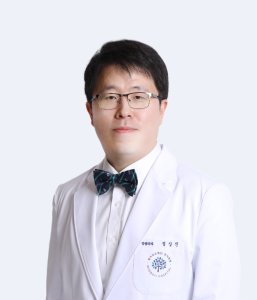
Jung Sang Jin
Dr. Jung Sang Jin is a Clinical Professor of Orthopedic Surgery at Myongji Hospital, an educational partner of Hanyang University. He specializes in joint replacement, knee conditions, lower-extremity trauma, diabetic foot, arthritis, and osteoporosis.
He earned his MD and MSc from Konyang University. He completed his internship and orthopedic residency at Konyang University Hospital. He then finished a hip and knee arthroplasty clinical fellowship at Samsung Medical Center. He also completed AO Recon advanced arthroplasty training in Davos. In addition, he finished the AO Trauma Masters and AO Recon Hip and Knee courses. He is a member of the Korean Orthopaedic Association, Korean Knee Society, Korean Fracture Society, Korean Society of Sports Medicine, Korean Hip Society, and AO Trauma and AO Recon. He has published on hip replacement outcomes. He received a KOA poster award in 2023.
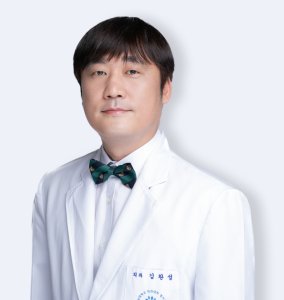
Kim Wan Song
Dr. Wan‑Sung Kim, MD, PhD, is Director of the Thyroid Center and an Associate Professor of Surgery at Myongji Hospital, an educational partner of Hanyang University. He is a breast and thyroid surgeon. He treats cancer and benign disease and focuses on minimally invasive thyroid and adrenal surgery.
Expertise: endoscopic and robotic thyroidectomy (transoral, axillary-areolar), thyroid radiofrequency ablation, ethanol ablation for thyroid lesions, and endoscopic or robotic adrenal tumor surgery.
He previously served as Head of Surgery at Myongji Hospital and Chuncheon Gangnam Hospital. He completed his residency and a breast and thyroid fellowship at Myongji. He holds an MD and MS from Catholic Kwandong University and a PhD from Kangwon National University. He is a member of the Korean Association of Thyroid and Endocrine Surgeons, the Korean Breast Cancer Society, the Korean Surgical Society, and the Korean Surgical Ultrasound Society.
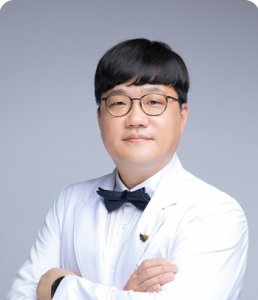
Shin Hyuk Jai
Dr. Hyuk‑Jai Shin, MD, PhD, is a Clinical Professor of Surgery at Myongji Hospital in South Korea. He is also Director of the Breast Center and Vice President for Medical Affairs. His work focuses on breast cancer, benign breast disease, robotic and endoscopic breast surgery, and systemic therapy. He chairs the Korean Breast Cancer Society group for robotic and endoscopic minimally invasive surgery. He is a full member of ASCO.
He earned his MD and PhD from Dankook University. He completed a breast fellowship and served as a principal proteomics researcher at Seoul National University Hospital. He received endoscopic training at Kameda Hospital in Japan. He was an exchange professor at the University of Melbourne and a visiting surgeon at the Peter MacCallum Cancer Centre. He previously led the Breast & Thyroid Center and the Precision Medicine Center at Myongji Hospital. His publications include first‑author chapters in Translational Research in Breast Cancer (Chapter 30, pp. 567–590, Springer) and the Textbook of Surgical Ultrasound (Chapter 3‑3, VABB). He also co‑authored a nationwide VABB survey (Anticancer Research, 2012; 32(12):5459–64).

Jong Kyun Lee
Dr. Jong Kyun Lee is a gastroenterologist at Samsung Medical Center in Seoul. He focuses on pancreatic, bile duct, and gallbladder cancers. Dr. Lee serves as a professor and treats complex conditions like pancreatitis and gallstones. He completed medical training at Seoul National University and the University of California.
- Performs specialized procedures including Whipple surgery and distal pancreatectomy.
- Maintains membership in the Korean Society of Gastrointestinal Endoscopy.
- Treats patients at a clinic ranked among the World's Best Smart Hospitals by Newsweek.
- Member of the Korean Pancreatobiliary Association and the Society of Gastroenterology.
Video Stories from Bookimed Patients
Share this content
 Anna Leonova
FAQ about Breast biopsy in Republic of Korea
Do I need a visa to South Korea?
Today, South Korea has visa-free agreements with 112 states. None visa is required for stays under 90 days or less. To stay longer in this country, you need a visa. What states need a visa for treatment in South Korea and what countries can cross the border free and easy read here.
What is the level of medicine in South Korea?
Healthcare is the key development sector of the Korean government. The Korean authorities are convinced that care for the citizens' health should be an absolute priority of state policy and spend about 1 billion a year for medical tourists attraction.
According to Mark Britnell, hospitals dominate the health system. 94% of hospitals are privately owned.
What are the most popular plastic surgery procedures?
According to ASPS statistics, 17.7 mln cosmetic surgeries and 5.8 mln reconstructive procedures have been performed in 2018. Among cosmetic procedures the most popular are:
- breast augmentation
- liposuction
- rhinoplasty (nose job)
- eyelid surgery
- tummy tuck.
Tumor removal, laceration repair, maxillofacial surgery, scar revision, hand surgery are the most common operations in the context of reconstructive surgery.
What documents are required to apply for a visa to South Korea for treatment?
Visas for travel to South Korea require a number of documents. The necessary papers can be submitted 90 days before the planned departure. Lists of documents includes:
- ID card
- confirmation of online registration and filling out the questionnaire
- certificate of income and availability of funds
- insurance policy for a stay in South Korea (original and copy)
- 2 photos (5x6)
- visa receipt
- booking of flight and hotel
- medical opinion about the need for treatment.
What should you know about South Korea before the trip?
Currency | South Korean Won (you also can pay for services in dollars) |
Best period for the trip | April, May & June or September, October & November. |
Language | Korean (most of medical staff speaks English fluently) |
Visa | none required for stays under 90 days or less |
Time difference with Europe | 9 hours |
Time difference with the USA | 9 hours |
Capital | Seoul |
Medical tourism center | Seoul |
Popular resorts | Gangwon-do, Gyeongju, Boseong, Jeju |
What hotel services are provided here?
In South Korea, hotels of different price ranges and service levels are presented. Most tourists choose 4 and 5 star hotels with all-inclusive meals. Such hotels have everything for a comfortable stay: varied food, a large well-groomed territory, animation for children and adults. Some hotels have their own water park, which guests can use for free. Budget travelers can afford to book an economical 3-star hotel with half board or no meals at all.