Hip replacement in Thailand: costs, clinics and reviews
A hip replacement in Thailand costs $8,500 / ฿289,000 to $12,000 / ฿408,000, about 78% less than the US average of $46,500 / ฿1,581,000 (Bookimed data, November 2026). Most packages include airport transfers. Bookimed lists 8 hip replacement clinics in Thailand, in Bangkok and Chiang Mai, including JCI-accredited and GHA-accredited clinics. These clinics are rated 4.6/5 in 149 verified patient reviews on Bookimed.
Want to explore more options? You can also browse all 14 clinics below.
Bookimed is free for patients – clinics pay us a commission, and you pay the clinic its own price with no markup. Five steps to your hip replacement in Thailand:
Share your case
Tell us about your hip condition and share your latest hip scans and medical reports.
Get treatment plans
Your coordinator finds clinics that match your needs and helps you choose. Your preferred clinics then send personalized treatment plans and quotes for you to compare.
Plan your trip
We set treatment dates that work for you and help arrange your flights and accommodation. If needed, we request a visa support letter from the clinic.
Visit the clinic
The clinic team performs your hip replacement on the agreed dates. We support you throughout your trip.
Recover at home
You can fly home after a 2–6-week stay, with your result improving over 6–12 months. Your coordinator stays in touch and helps arrange a follow-up if you need one.
Some clinics ask for a deposit. A $200 or €200 deposit paid through Bookimed comes off your clinic bill and is refundable up to 10 calendar days before your visit. A deposit paid to the clinic follows its own terms.
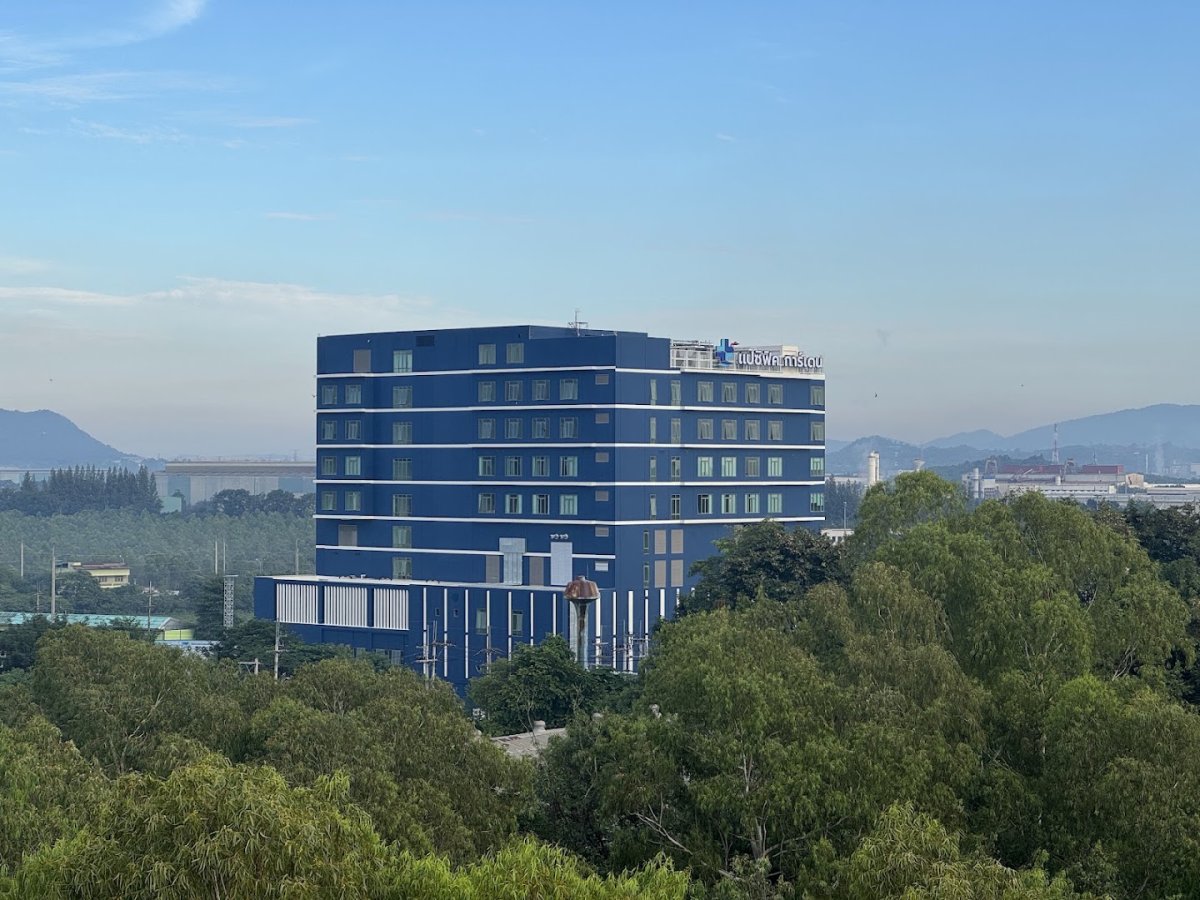
Pacific Garden Hospital offers specialized joint care at its Orthopedic Center, led by the RUKX Rayong Clinic. The hospital features two dedicated orthopedic surgeons, Dr. Chatree Klanwarin and Dr. Saengsoon Munkhongpornpaiboon, who handle complex cases. Recovery is a primary focus here, with a physical therapy program that includes ultrasound, electrical stimulation, and magnetic therapy. These sessions help patients regain mobility after surgery. This private facility in Si Racha provides a full range of medical services to support a safe recovery process.
Get matched with the best doctors for Hip replacement
Tell us about your needs — and get 3 tailored offers from top doctors for you.
Does a doctor recommend you a hip replacement?
Direct prices from clinics
Free evaluation of your medical case
Free personal assistance 24/7
Thailand Hip replacement overview
Cost and clinics
Typical hip replacement price in Thailand
Packages
Clinics
Accreditations
Cities
Hip replacement surgeons
Surgeon experience
$8,500 / ฿289,000–$12,000 / ฿408,000
1 packages
14 clinics
JCI (8 clinics), ISO (4), GHA (2), TEMOS (1)
Bangkok (10 clinics), Chiang Mai (1), Pattaya (1)
15 surgeons
~92% of surgeons have 10+ years of practice (median 23 years)
The procedure
Before the trip
Time in Thailand
Operation time
Anesthesia
Back to desk work
Final result
Prepare with medical assessment, imaging, optimize health, and pre-op exercises
2–6 weeks, including about 5 nights in hospital
1–2 hours
Regional or general
4–12 weeks
6–12 months
How much does a Hip replacement cost in Thailand?
Hip replacement in Thailand costs from $8,500 / ฿289,000 to $12,000 / ฿408,000. The final price depends on procedure type, hospital, and implant selection.
Hip replacement in Thailand costs from $8,500 / ฿289,000 to $12,000 / ฿408,000. The final price depends on procedure type, hospital, and implant selection. Bangkok and Si Racha are available treatment destinations. In the US, this procedure costs $46,500 / ฿1,581,000 on average. Bookimed package examples may include meals, 24-hour nursing, a VIP room, and hotel accommodation.
MAKOplasty. $10,500 / ฿357,000 to $15,500 / ฿527,000.
MAKOplasty total hip replacement. $15,500 / ฿527,000 to $18,500 / ฿629,000.
ALMIS – minimal invasive hip arthroplasty. $11,000 / ฿374,000 to $17,500 / ฿595,000.
Total hip replacement. $7,500 / ฿255,000 to $16,000 / ฿544,000.
Total hip replacement revision. $11,500 / ฿391,000 to $17,500 / ฿595,000.
Bookimed Expert Insight. Package totals can reflect accommodation as well as hospital care. PMG Hospital’s package is around $8,000 and includes six hotel nights. Pacific Garden Hospital’s package is approximately $8,500, with three hospital days and no hotel stay. Comparing lodging and hospital-day inclusions helps patients assess the full planned budget. Both package examples specify a Johnson & Johnson hip implant.
Data verified by Bookimed as of November 2026, based on patient requests and official quotes from 309 clinics worldwide. Median costs are based on real invoices (2025–2026) and updated monthly. Actual prices may vary.
How to choose a Hip replacement clinic in Thailand
For hip replacement in Thailand, narrow clinics by location, compare like-for-like starting quotes, choose a suitable package, match the surgeon to the needed technique, then confirm credentials and facility standards.
What to check
Location shortlist
Bookimed lists 14 clinics for hip replacement in Thailand – use its top-ranked options in Bangkok, Si Racha District, and Pattaya to narrow your choice.
Price comparison
Compare starting quotes for the same hip replacement scope, since the highest clinic quote on Bookimed starts at about 1.4 times the lowest.
Travel options
Bookimed lists 3 hip replacement packages in Thailand, and all include airport transfers – compare treatment scope and included services against your budget.
Consultation
Ask whether the surgeon you consult will perform the needed technique, not an assistant, and answer questions before treatment – Bookimed doctors have a median of 23 years of practice.
Clinic credentials
Ask whether the surgeon is licensed by the Medical Council of Thailand, and discuss facility standards – Bookimed’s top-ranked clinics include 6 with international accreditation.
PMG Hospital uses CT scans and bone densitometry for precise hip replacement planning. These modern diagnostic tools help the orthopedic team select the most accurate implant fit for each case. This multispecialty facility in Bangkok holds Global Healthcare Accreditation for international patient standards. The medical team provides a seamless experience with visa assistance, interpretation, and airport transfers. With 100+ beds, the hospital offers a comfortable private environment for recovery after orthopedic surgery.
Dr. Rapeepat Narkbunnam brings 23 years of orthopedic expertise with 900+ hip replacements performed. The clinic offers robotic-assisted and minimally invasive techniques, with costs typically ranging from 400,000–800,000 THB depending on implant choice. As a Stanford-trained robotic surgery expert, Dr. Narkbunnam provides personalized treatment plans at Thailand's first dedicated orthopedic hospital, which holds AACI accreditation.
MAKOplasty, MAKOplasty total hip replacement, ALMIS - minimal invasive hip arthroplasty, Total hip replacement, Total hip replacement (arthroplasty) revision, Total hip replacement for developmental dysplasia of the hip, Revision hip arthroplasty
LUX KOR Hospital operates as a dedicated orthopedic center in Bangkok, specializing in total hip replacement for international patients. Dr. Witthawas Mingmongkolchaikun leads the surgical team with First Class Honors and a subspecialty in reconstructive orthopedic surgery from Mahidol University. The hospital provides a complete care pathway, integrating pre-surgical risk assessments with tailored physical therapy programs. Their approach focuses on root-cause treatment and continuous follow-up to help patients regain mobility. Most visitors travel from the USA, Canada, and Australia for this specialized care.
Dr. Piya Assawaboonyadej brings 18 years of orthopedic experience with 1,100+ joint replacements performed. The procedure may cost around 400,000 THB – typically covering surgery, anesthesia, 5 nights hospitalization, transfers, and follow-up. She holds a Clinical Fellowship in Orthopedic Oncology from University of Iowa. The hospital offers ISO 9001:2015 certified care with a 91-98% patient recommendation rate.
Bumrungrad International Hospital is a JCI-accredited facility with one of Southeast Asia's largest orthopedic programs, treating over 1 million patients annually. Hip replacement typically costs around $19,300–$26,740. The hospital ranks among the region's most technologically advanced facilities.
ISO, JCI, GHA
—
Hip replacement, CT (computer tomography), Arthroscopy
Dr. Anuchit Kitsombat is a 25-year experienced plastic surgeon specializing in reconstructive procedures. The B.Care Medical Center in Bangkok offers modern techniques for shorter recovery times in home-like environment. The clinic has been operating since 1999 with 120 doctors and 800 nurses.
MedConsult Bangkok Medical Clinic is a private multi-specialty center for both adults and children. It is best known for plastic surgery, aesthetic medicine, and medical check-ups. Around 1,000 patients visit the clinic each year from Europe, Asia, the US, Canada, and Australia. Specializes in cosmetic procedures, cosmetology, and complete health screenings under one roof. Serves international patients from across the globe with tailored care plans. Staffed by 8 doctors operating in two dedicated departments.
—
—
Consultation with an orthopedist (traumatologist), Chest X-Ray, Complete blood count
Forty percent of international medical tourists pick Bangkok Hospital Pattaya. It treats over 400,000 patients yearly from 150 countries and holds JCI accreditation. Part of the Bangkok Dusit Medical Services group, its top specialties are cardiology and cosmetic surgery. Heart Center performs coronary bypass surgery without a heart-lung machine. Received the Prime Minister's Export Award for services to international patients. Digital Mammogram with Tomosynthesis offers 2D and 3D breast imaging in 10 seconds with less pain. 128-Slice CT scans coronary arteries in 4 seconds with 90% accuracy. Accredited by TEMOS and certified under ISO 9001 by TÜV NORD.
Sikarin Hospital uses computer navigation to guide hip implant placement. Its endoprosthesis pairs hypoallergenic metal with plastic for joint movement. A 3–4-week stay in Thailand covers diagnostic tests, surgery, and rehabilitation. Pre-operative assessment can use the hospital’s 128-slice CT scanner and on-site MRI. Sikarin is JCI- and ISO-accredited, with single rooms and free airport transfers for international patients.
Specializes in stem cell therapy for joint pain – Dr Theeracha Wuttiphan combines orthopedic surgery with advanced regenerative treatments at ID Clinic Bangkok.
Orthopedic surgeon with expertise in arthroscopy and spine surgery
Performs stem cell therapy for arthritis, knee pain, and back pain
Worked at Thammasat University Hospital and Rajavithi Hospital
Trained at Perpetual Medical University in the Philippines
Dr. Piya Assawaboonyadej is an orthopedic surgeon at Intrarat Hospital in Bangkok. He specializes in bone and connective tissue tumor surgery. He completed a clinical fellowship in Orthopedic Oncology and Reconstruction at the University of Iowa. Dr. Assawaboonyadej is a member of the Royal College of Orthopaedic Surgeons of Thailand.
Expert in musculoskeletal tumor surgery and limb salvage techniques.
Performs complex procedures including robotic knee replacement and endoscopic discectomy.
Treats diverse conditions like developmental hip dysplasia and bone sarcomas.
Practices at Intrarat Hospital, an ISO 9001:2015-certified facility in Thailand.
A hip replacement replaces a damaged hip joint and may suit people with serious hip-joint damage. In Thailand, suitability depends on the cause and severity of your hip damage. Your overall health also matters.
A hip replacement may suit you if:
You have advanced hip osteoarthritis that still causes pain despite nonsurgical treatment.
Inflammatory arthritis, such as rheumatoid arthritis, has damaged your hip joint.
The top of your thigh bone has lost its blood supply and collapsed.
You have a displaced fracture near the top of your thigh bone and are suitable for surgery.
You have arthritis in your hip after an injury.
Hip dysplasia has led to arthritis in your hip.
Consider another option or wait if:
You have an active infection in your hip or elsewhere. Treat the infection before considering surgery.
Your surgeon has found too little bone for an implant or severely weakened muscles that stabilize your hip. Ask your surgeon to assess whether surgery is suitable.
A nerve-related joint problem or severe muscle or nerve problems make your hip unstable. Ask your surgeon how this affects your suitability.
Your diabetes is poorly controlled. Ask your doctor whether it should be better controlled before surgery.
Your BMI is very high. Ask your surgeon how this affects your suitability.
You smoke. Ask your surgeon whether you should stop before surgery.
If you want to try other treatments before surgery, non-surgical hip treatment may be an option.
Before you book:
Ask: “Which records should I send you before my consultation?”
Ask: “How should I tell my surgeon which medicines I take?”
Ask: “Does my diabetes or smoking need to be addressed before surgery?”
Ask: “Which surgical approach may suit my anatomy and priorities?”
Bookimed helps you find clinics and pass on your records and questions. The clinic’s doctor reviews them and decides whether hip replacement suits you.
Why choose Thailand for a Hip replacement
Anatomy-based robotic planning for tailored implant positioning
Patients choose Thailand for hip replacement for its accredited clinics, long-practicing doctors, and procedure options. JCI Standards.
Patients choose Thailand for hip replacement for its accredited clinics, long-practicing doctors, and procedure options.
JCI Standards. JCI accreditation is held by 8 clinics. JCI identifies, measures, and shares global best practices in quality and patient-safety standards.
International Patient Care. GHA accreditation is held by 2 clinics. This independent program evaluates service quality for international patients at medical facilities worldwide.
Experienced Doctors. Among doctors with a known start year, 9 of 12 have practiced for 15 years or more.
Language Support. Medical institutions in Thailand provide interpretation and translation services for foreign patients, supporting communication during care.
Procedure Options. Clinics offer MAKOplasty, MAKOplasty total hip replacement, ALMIS – minimal invasive hip arthroplasty, and total hip replacement.
Thailand may suit patients who value assessed clinic standards, long-practicing doctors, and a choice of procedure techniques.
Source: Bookimed data on confirmed patients, clinics, doctors and prices, November 2026.
Typical price
vs Thailand
Thailand (this page)
$8,500 – $12,000
–
United States of America
from $38,000
+347%
Turkey
from $6,000
−29%
Where to get a Hip replacement in Thailand
In Thailand, Bangkok has 10 clinics and receives 95% of Bookimed requests, giving patients the widest choice. Its options include MAKOplasty and ALMIS, with prices from $8,800 / ฿299,200 to $11,800 / ฿401,200.
In Thailand, Bangkok has 10 clinics and receives 95% of Bookimed requests, giving patients the widest choice. Its options include MAKOplasty and ALMIS, with prices from $8,800 / ฿299,200 to $11,800 / ฿401,200. Pattaya suits patients who prefer coastal recovery days, with U-Tapao Airport 31 km from the city center. Chiang Mai suits patients who want a nearby arrival point, with its airport 5 km from the city center and prices from $12,000 / ฿408,000.
Northern Thailand tourist city · Chiang Mai International Airport, 5 km from city center
Airport close to city center
A city tells you how you will travel and where you will recover, but not how your hip replacement will go. Surgeons and clinics in the same city differ in experience and in how they handle aftercare, so choosing them matters just as much as choosing the city.
Our Hip replacement techniques
Posterior approach is usually chosen when you have complex anatomy, because the surgeon makes an incision along the back of the hip. Lateral (anterolateral) approach suits you if you prioritize a lower dislocation risk, because the surgeon makes an incision along the side of the hip.
Posterior approach is usually chosen when you have complex anatomy, because the surgeon makes an incision along the back of the hip. Lateral (anterolateral) approach suits you if you prioritize a lower dislocation risk, because the surgeon makes an incision along the side of the hip.
Technique
How it works
Usually chosen when
Price from in Thailand
Posterior approach
The surgeon makes an incision along the back of the hip
You have complex anatomy
≈ $6,500
Lateral (anterolateral) approach
The surgeon makes an incision along the side of the hip
You prioritize a lower dislocation risk
≈ $6,500
In Thailand, 14 partner clinics offer Hip Replacement (data as of November 2026).
This table shows the main Hip Replacement techniques. Partner clinics in Thailand confirm which ones they offer, and the doctor confirms which one suits you after reviewing your medical history and goals.
Alternatives to Hip Replacement
Hip resurfacing may be an option if your bones are strong and you want to preserve more bone.
To compare offers fairly, ask each clinic which technique the price includes, what the package covers and how many days you need to stay in Thailand.
Hip replacement recovery timeline: what to expect week by week
You can usually fly home after 2–6 weeks with your surgeon’s approval, depending on flight length, wound healing, and safe walking. For primary hip replacement, desk work may be possible around 4–6 weeks, while physically demanding work may take 8–12 weeks. You can usually resume low-impact exercise such as walking, swimming, or cycling after 8–12 weeks, once your surgeon clears you; high-impact sports are often discouraged. Your strength, walking, and pain relief usually continue to improve for 6–12 months, when the final result is reached.
About 5 nights
A physiotherapist helps you start moving on the day of surgery or the next day. Pain may be moderate to significant at first, and your team will provide pain relief and steps to prevent blood clots. Use a frame or crutches and follow hip precautions if advised.
Weeks 1–6
Walking and home exercises progress as your wound heals, often from two crutches to one or a cane, while a routine wound review is usually at 10–14 days. Avoid driving until cleared and heavy lifting. Short-haul flying may be possible from about 2 weeks with your surgeon’s approval if your wound is healed and walking is safe.
Weeks 6–12
You may progress to walking without aids, desk work, and light activity while rebuilding strength. Avoid high-impact activity; a routine review, sometimes with imaging, is usually around 6–8 weeks.
Months 3–12
Strength and walking continue to improve as you gradually return to low-impact recreation. Avoid high-impact or contact sports unless cleared; a routine later review is usually around 3–12 months, with timing varying by surgeon.
When to contact your clinic: Contact your clinic about redness or drainage from the incision, or worsening hip or leg pain. Calf pain or swelling needs emergency care. For chest pain or sudden breathlessness after a long flight, seek emergency help locally.
Is a Hip replacement in Thailand safe?
Hip replacement in Thailand is safe when an experienced orthopedic surgeon performs it after an individual assessment, in a licensed clinic, with follow-up planned in advance. Of 23K+ Bookimed patients who had a hip replacement, 85% would recommend it.
Which risks need attention?
Most risks after hip replacement are temporary and treatable, though some complications need prompt care. Possible risks and side effects include:
Deep vein thrombosis or pulmonary embolism
Joint or wound infection
Hip implant dislocation
Periprosthetic fracture
Nerve or blood vessel injury
Implant loosening or wear over time
Persistent pain or stiffness
Bleeding or anesthesia-related complications
Your orthopedic surgeon should explain how likely each risk is for you and how it would be treated. A licensed clinic with an experienced specialist is equipped to recognize and manage complications early, which can help reduce the chance of a problem becoming more serious.
What if there is a complication or the result falls short?
Contact your orthopedic surgeon or clinic straight away if you notice:
Increasing redness or swelling around the wound
Drainage from the hip wound
Before the procedure, get the direct contact details of a named doctor who will handle any complications, not only a general helpline.
Traveling to Thailand for a Hip replacement
Plan to stay in Thailand for 2–6 weeks, including about 5 nights in hospital, after the procedure and before flying home. US and UK passport holders can stay without a visa for up to 30 days, and a medical treatment visa may be needed for stays up to 60 days.
When
What happens
Before the procedure
Arrival and consultation
1–4 days after
Stay in hospital
10–14 days after
Check-up
2–6 weeks after
Flight home
Before you fly
Visa. US and UK passports allow up to 30 visa-free days. A medical treatment visa may be needed for stays up to 60 days. US arrivals under 60 days must pre-register online.
Passport. The US State Department strongly recommends US passports remain valid at least six months beyond arrival. UK passports must expire at least six months after arrival and have at least one blank page.
Medicines. US travelers should carry prescription medicines in original packaging with a doctor's prescription and check they are legal in Thailand. UK prescriptions are usually accepted by Thai hospitals and pharmacies.
Hand luggage. The clinic asks for pelvis and hip X-rays in AP and lateral views, a hip MRI or CT report if available, and an orthopedic surgeon’s report or clinical summary.
Getting there and staying
Airports. Suvarnabhumi Airport (BKK) is about 30 km east of downtown Bangkok. Don Mueang Airport (DMK) is 23 km from the Grand Palace.
Flight time. Bangkok is about 9,600 km from London, with about 11–12 hours of flying time. It is about 13,900 km from New York, with about 16–17 hours of flying time. A connection adds time.
Emergency. In a medical emergency, call 191 for an ambulance.
When to go
Weather. Bangkok daytime highs average about 31 °C from September to January and about 35 °C in April and May. May to October are the wettest months, with 100 mm of rain or more.
Season. November to April is drier, with milder weather from November to February. May to October is wetter, and April and May are especially hot.
Insurance and changes
Health insurance. Medicare and Medicaid do not apply overseas for US travelers. US travelers should make sure their health insurance plan provides overseas coverage. UK travelers cannot use a UK GHIC or UK EHIC in Thailand.
Hospital payment. Hospitals require a guarantee of payment before treating you.
Flying home
Fit to fly. You can usually fly home after 2–6 weeks with your surgeon’s approval, depending on flight length, wound healing, and safe walking.
Take home. After hip replacement, take home the implant details and operation information, including the implant card, operation notes, and X-rays.
Hip replacement in Thailand: Video Reviews from Bookimed Patients
Dayana
I combined my vacation in Antalya with a check-up.
I am healing faster than I expected, and I am back to my computer, and piano based work 10 days later
Menness clinic is very professional, and I highly recommend them for carpal tunnel release. I had a bilateral open release done by Dr. Big, the orthopedic surgeon on staff at Menness clinic. I was nervous going in because my CTS was severe and I have cerebral palsy. I was pleased to learn that Dr. Big had performed surgery on people with CP previously, and knew exactly what to expect, and how to operate on me to get the best outcome possible. I am healing faster than I expected, and I am back to my computer, and piano based work 10 days later.
I am absolutely thrilled with the treatment and service. I didn’t expect to feel any results for at least several months. After two days, I almost got rid of the pain, and I was told that I wouldn't feel the benefits for at least 2 months. Stay in touch. Anyone considering stem cells, contact me if you want an honest review. I can't praise this procedure enough. If I live 5 years without pain, I will definitely return for a follow-up procedure. Five-star staff and treatment ❤️
Waking up after the knee replacement surgery, my first impression was one of being in capable hands
Waking up after the knee replacement surgery, my first impression was one of being in capable hands. The staff was attentive. Throughout the process, the surgeon and clinical team demonstrated solid professionalism, and I felt properly supported during my stay. I appreciate that even now, during this early recovery phase, the clinic remains easy to reach whenever I have questions. One thing for others to note is that there were some additional expenses beyond the initial quoted price. Overall, it was a good experience.
A certified medical writer with 10+ years of experience, developed Bookimed’s trusted content, backed by a Master’s in Philology and medical expert interviews worldwide.
Dr. Kayhan Turan is an orthopedic surgeon specializing in robotic-assisted joint replacement and sports medicine. He performed Turkey's first robotic knee and hip replacements and has completed over 3,500 robotic surgeries.
This page may feature information relating to various medical conditions, treatments, and healthcare services available in different countries. Please be advised that the content is provided for informational purposes only and should not be construed as medical advice or guidance. Please consult with your doctor or a qualified medical professional before starting or changing medical treatment.
FAQ about Hip replacement in Thailand
How long after hip surgery can I start walking again?
Most patients in Thailand begin standing and taking assisted steps with a walker or crutches within 24 hours of hip surgery. While early mobilization is standard, specific techniques like the anterior approach can allow some patients to attempt unaided steps on the same day as their procedure.
Hospital mobilization: Patients typically walk 50 meters with assistive devices by day 1 post-op.
Weight-bearing status: Most surgeons allow immediate weight-bearing as tolerated to prevent blood clots.
Device transition: Many patients move from a walker to a cane within 1 to 3 weeks.
Full independence: Walking unaided indoors usually occurs by week 4 or 6 after surgery.
Bookimed Expert Insight: Thai orthopedic centers like KDMS Specialized Orthopedic Hospital utilize robotic-assisted systems and Stryker implants to enhance precision. Data shows these advanced technologies, combined with a 4-to-5-day included hospital stay, allow for more intensive initial physical therapy compared to the shorter stays common in Western facilities.
Patient Consensus: Patients describe walking to the bathroom on Day 0 and emphasize that Thai physical therapy protocols are often more proactive than those in the US. Success relies on starting short, frequent walks and strengthening quads pre-operatively for a smoother transition.
What is the typical recovery timeline for hip replacement surgery in Thailand?
Recovery from hip replacement in Thailand typically involves 4 to 5 days of hospitalization followed by 3 to 6 weeks for resuming daily activities. While patients begin walking with assistance within 24 hours, achieving full tissue healing and maximum mobility generally takes 6 to 12 months.
Hospital stay: Expect 4 to 5 nights in specialized facilities like KDMS Specialized Orthopedic Hospital.
Initial mobility: Patients start assisted walking using walkers or crutches within 1 day post-surgery.
Functional recovery: Most individuals return to light work and driving within 4 to 6 weeks.
Long-term healing: Bone-implant integration and 95% recovery typically occur between 6 and 12 months.
Bookimed Expert Insight: Thai orthopedic centers are shifting toward robotic-assisted surgery using the Stryker system to accelerate early recovery. Data from KDMS Specialized Orthopedic Hospital shows these advanced techniques often include 4-day stays in VIP rooms. This precision approach helps minimize trauma, allowing for more intensive early physical therapy compared to traditional methods.
Patient Consensus: Many patients experience a progress plateau around week 2 but reach significant mobility by week 6. Frequent feedback highlights that arranging professional physical therapy before returning home is essential for maintaining surgical gains.
Which type of hip implant is used in Thailand, and will an MRI be safe afterward?
Thai hospitals use world-class, non-ferromagnetic implants from brands like Stryker, Zimmer Biomet, and DePuy Synthes, making MRIs safe after surgery. These modern titanium, ceramic, or cobalt-chromium components are typically MRI-conditional up to 3-Tesla, though minor image distortion may occur near the joint.
Universal implant brands: Clinics utilize Stryker, Zimmer Biomet, and DePuy Synthes systems found in Western hospitals.
Advanced robotic options: Specialized centers like KDMS Hospital offer robotic-assisted surgery using the Stryker MAKO system.
Material safety: Non-magnetic materials like titanium and ceramic prevent movement or heating during MRI scans.
Local specialized fit: Some facilities offer the CU Unipolar Prosthesis designed specifically for smaller-framed Asian patients.
Bookimed Expert Insight: While many think only one type of implant exists, top Bangkok surgeons like Dr. Napon Sinthuvanich at KDMS prioritize cementless titanium implants for faster bone ingrowth. This approach is highly effective for active patients and ensures long-term MRI compatibility without the risks associated with older stainless steel models.
Patient Consensus: Patients emphasize requesting an implant passport before discharge to prove MRI safety to future doctors. Most feel reassured after confirming their Thai hospital used the exact same high-end brands available in the US or Europe.
How long should I plan to stay in Thailand after a hip replacement?
Plan for a total stay of 10 to 21 days in Thailand to ensure a safe recovery and medical clearance. Most patients spend 4 to 7 days in a specialized orthopedic hospital followed by 7 to 14 days of outpatient physical therapy at a nearby hotel.
Hospital stay: Expect 4 to 5 days for monitoring and initial rehabilitation sessions.
Hotel recovery: Stay 7 to 14 days post-discharge for wound care and physiotherapy.
Travel clearance: Obtain a fit-to-fly certificate around day 14 to 21 post-operation.
Long-haul flights: Wait 6 to 12 weeks for intercontinental travel to minimize clot risks.
Bookimed Expert Insight: Patients often overlook that robotic-assisted procedures at facilities like KDMS Specialized Orthopedic Hospital allow for faster mobilization. Choosing robotic surgery with Stryker implants typically stabilizes the joint quicker, often making a 14-day total stay feel more comfortable than a traditional 21-day recovery period. This efficiency helps manage the physical fatigue often reported during the first post-operative flight.
Patient Consensus: Many patients recommend staying at least 14 days to benefit from affordable local physiotherapy, which can accelerate recovery compared to returning home early. They consistently emphasize prioritizing deep vein thrombosis prevention by wearing compression socks and booking flexible return flights.
What do all-inclusive medical packages for hip replacement in Thailand usually cover?
All-inclusive hip replacement packages in Thailand typically cover the surgical procedure, FDA-approved implants from brands like Stryker or Zimmer, and 4–5 nights of hospital stay in private or VIP rooms. These bundles also include anesthesia, nursing care, and essential airport-to-clinic transfers for international patients.
Surgical team: Includes professional fees for the lead surgeon, assistants, and anesthesiology services.
Hospital stay: Covers 4–5 nights in private or VIP rooms with 24-hour nursing care.
Medical implants: Standard packages provide high-quality prosthetic devices from Stryker, Zimmer, or DePuy.
Logistics: Most comprehensive offers feature private transfers between the airport, hotel, and clinic.
Bookimed Expert Insight: Thai orthopedic centers specialty-focus more than general hospitals. Facilities like KDMS Specialized Orthopedic Hospital perform 1,000 surgeries annually with dedicated robotic systems. Choosing these specialized clinics often ensures more precise implant alignment via MAKOplasty technology compared to general surgical wards.
Patient Consensus: Patients emphasize that while surgery and hospital nights are covered, you should budget 10–20% extra for incidentals. Many suggest verifying if physical therapy sessions continue after discharge or if they require additional fees.
How long must I stay in Thailand after hip replacement surgery?
Patients should plan to stay in Thailand for 14 to 21 days after hip replacement surgery. This timeframe ensures safe wound healing, completion of initial physical therapy, and staple removal. Surgeons strictly advise against long-haul flights for 6 to 12 weeks to prevent deep vein thrombosis.
Hospital stay: Most JCI-accredited facilities include 4 to 5 days of inpatient monitoring and care.
Initial mobility: Patients typically begin assisted walking and physical therapy within 24 hours of surgery.
Follow-up care: A mandatory checkup occurs 7 to 10 days post-op for staple or suture removal.
Travel clearance: Surgeons require confirmed mobility and stable healing before issuing a fit-to-fly certificate for travel.
Bookimed Expert Insight: While many general hospitals suggest 14 days, specialized centers like KDMS Specialized Orthopedic Hospital often utilize robotic-assisted systems like Stryker. This technology can refine implant positioning, but the 21-day recommendation remains standard to ensure patients can navigate airport environments safely without assistance.
Patient Consensus: Many travelers recommend booking an extended hotel stay near the hospital for daily physiotherapy. Survivors of the procedure warn against rushing home, as managing swelling and logistics is much easier with local medical support.
Do I have to stop blood thinners like warfarin or aspirin before surgery?
Patients undergoing hip replacement in Thailand must typically stop blood thinners to minimize surgical bleeding risks. Surgeons generally require stopping warfarin 5 days before surgery, while aspirin and Plavix are held for 7 to 10 days. Newer anticoagulants like Eliquis or Xarelto usually require a 2 to 3-day cessation period.
Warfarin management: Stop 5 days pre-op; Thai hospitals often provide heparin bridging if clot risk is high.
Aspirin timeline: Discontinue 7 to 10 days before surgery to prevent excessive post-operative wound drainage.
Newer anticoagulants: Stop Eliquis or Xarelto 48 to 72 hours before the scheduled joint replacement.
Pre-operative testing: Clinics like Bumrungrad International Hospital mandate coagulation and INR tests 2 days before surgery.
Bookimed Expert Insight: Thai orthopedic centers like KDMS Specialized Orthopedic Hospital often utilize robotic-assisted techniques which can reduce blood loss. However, surgeons here rarely make exceptions for elective hip procedures and will postpone surgery if coagulation levels aren't optimal. Budget for 2 extra pre-op days in Bangkok if you require hospital-managed bridging therapy.
Patient Consensus: Patients emphasize contacting Thai surgeons 4 weeks early for a personalized bridging plan. Many noted that skipping the 7-day aspirin stop led to significant post-op swelling and redness.
Kayhan Turan — Dr. Kayhan Turan is an orthopedic surgeon specializing in robotic-assisted joint replacement and sports medicine. He performed Turkey's first robotic knee and hip replacements and has completed over 3,500 robotic surgeries.
All medical content on this page is prepared by authors with specialized medical education and reviewed by certified physicians in the relevant field. Medical review by Kayhan Turan, Orthopedic surgeon.
Last updated: Nov 24, 2026.
Statistics: Figures are based on Bookimed’s internal database November 2026, which includes analysis of 12,450 patient requests across 14 accredited clinics in Thailand.
Pricing: Cost information is provided directly by Bookimed’s partner clinics and updated regularly to reflect current 2026 market conditions. Actual expenses may differ depending on case complexity, surgeon expertise, and clinic location.
Clinical Data: Treatment outcomes and patient satisfaction figures are collected from Bookimed’s verified clinic database and supported by data from peer-reviewed medical sources such as PubMed, The Lancet, JAMA, and NEJM (2023–2026).
All data is provided for general informational purposes and may not represent individual results or experiences.
Get a free consultation
Have a question about Hip replacement in Thailand?
Ask a Bookimed medical coordinator about prices, clinics, techniques or your case. Write to us in the messenger you already use.
Direct prices from clinics
Free evaluation of your medical case
Free personal assistance 24/7
Ask your question in a messenger
Tap a messenger to open a chat with a Bookimed medical coordinator.