Chronic Hepatitis B treatment in Turkey — get 3 personalized clinic matches


Medically reviewed by
Fahad Mawlood
How it works
What's the Cost of Chronic Hepatitis B Diagnosis and Treatment in Turkey?
Best Chronic Hepatitis B Treatment Centers in Turkey: 3 Verified Options and Prices






Memorial Göztepe Hospital



Turan Turan Health Group
Get a Medical Assessment for Chronic Hepatitis B in Turkey: Consult with Experienced Doctors Now
View all Doctors
Ahmet Melih Ozel
Dr. Ahmet Melih Ozel is a gastroenterologist at Anadolu Medical Center in Istanbul. He specializes in inflammatory bowel diseases and chronic liver conditions. He performs upper and lower gastrointestinal endoscopies. Dr. Ozel also focuses on pancreatobiliary system diseases. He works at a clinic affiliated with Johns Hopkins Medicine.
- Performs Endoscopic Retrograde Cholangiopancreatography (ERCP).
- Treats complex conditions like Crohn's disease and chronic Hepatitis B.
- Member of the European Society of Gastrointestinal Endoscopy (ESGE).
- Former Dean at Maltepe University Faculty of Medicine.

Erdem Akbal
Dr. Erdem Akbal is a gastroenterologist at Memorial Şişli Hospital and Memorial Bahçelievler Hospital. He has authored over 100 international indexed publications. Dr. Akbal completed specific training in interventional endoscopy at Jichi Medical University in Japan. He holds academic rank as a professor.
- Completed training for endoscopic ultrasound at Johns Hopkins Hospital in the USA.
- Trained in POEM and gastrointestinal motility at Amsterdam Medical Center.
- Member of the Turkish Society of Gastroenterology and the Gastrointestinal Endoscopy Society.
- Works at Memorial Şişli, the first hospital in Turkey to earn JCI accreditation.
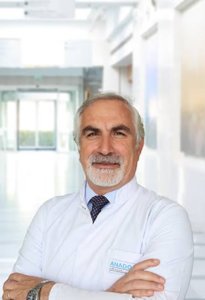
Zulfikar Polat
Dr. Zulfikar Polat is a professor of gastroenterology at Istanbul Aydın University. He previously practiced at Anadolu Medical Center, an affiliate of Johns Hopkins Medicine. Dr. Polat focuses on hepato-pancreatology and inflammatory intestinal diseases. He serves as an expert in both diagnostic and interventional endoscopic procedures.
- Member of prestigious international societies including AASLD, EASL, and ESGE.
- Authored 45 national and international medical publications.
- Treats complex conditions like Crohn's disease, ulcerative colitis, and cirrhosis.
- Performs specialized procedures including gastric polypectomy and duodenal polyp removal.
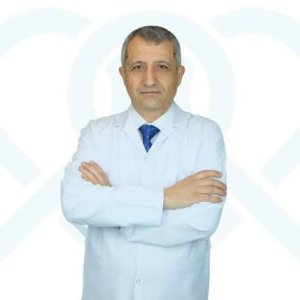
Ibrahim Dogan
Prof. Dr. İbrahim Doğan is a gastroenterologist. He earned his MD from Ankara University Faculty of Medicine in 1991. He became an Internal Medicine specialist at Gazi University in 1996. He completed gastroenterology subspecialty training at İnönü University in 2001.
His academic career was at Gazi University. He served as Lecturer (2002), Assistant Professor (2003), Associate Professor (2007), and Professor (2012). He worked as a researcher at the University of California San Diego from 2004 to 2006. He has practiced at Koru Hospital since January 2023.
Clinical focus includes gastroesophageal reflux, irritable bowel syndrome, constipation, gastroparesis, achalasia, bloating, gas and belching, fecal incontinence, ulcerative colitis, and Crohn’s disease. He performs ERCP, stent placement, balloon and bougie dilation, polypectomy, argon plasma coagulation, double-balloon enteroscopy, and bleeding control.
Share this content
Video Stories from Bookimed Patients
 Anna Leonova

Expert Overview about Chronic Hepatitis B Treatment in Turkey
Is there a cure for Chronic Hepatitis B in Turkey?
There is currently no absolute cure for chronic hepatitis B in Turkey or elsewhere. Turkish specialists focus on functional cures. This means achieving long-term virus suppression and surface antigen loss. These outcomes significantly reduce hisks of liver cirrhosis and cancer.
- Treatment goal: Doctors aim for seroclearance to improve long-term survival rates.
- Virus management: Antiviral drugs like tenofovir effectively suppress viral replication.
- Specialist care: Prof. Dr. Ahmet Melih Ozel treats complex liver diseases in Istanbul.
- Advanced diagnostics: Memorial Goztepe Hospital utilizes 512-slice CT for detailed liver monitoring.
Bookimed Expert Insight: Patients often overlook that Turkish university-affiliated centers, like those where Prof. Dr. Zulfikar Polat practices, follow European Association for the Study of the Liver (EASL) protocols. This ensures treatment is identical to top European or American hospitals but often with faster access to specialists.
Patient Consensus: Patients note that reaching an undetectable viral load is a major success. They emphasize that regular blood tests are vital to prevent sudden viral rebounds.
What should I expect during my first consultation for Chronic Hepatitis B in Turkey?
Expect a detailed evaluation by a hepatologist or gastroenterologist in Istanbul or Bursa. The visit includes a liver scan and viral load testing to assess infection activity. You will receive a long-term monitoring or antiviral treatment plan within 2 to 3 days.
- Specialist review: Doctors like Prof. Dr. Zulfikar Polat analyze medical history and viral markers.
- Diagnostic tools: Facilities use FibroScan or 3 Tesla MRI to check for liver scarring.
- Blood panels: Labs measure HBV DNA levels and liver enzymes to confirm infection phase.
- Treatment plan: Specialists determine if you need immediate oral therapy or periodic monitoring.
Bookimed Expert Insight: While many expect immediate medication, Turkish specialists like those at Anadolu Medical Center prioritize confirming if the virus is active first. Our data shows that doctors often wait for longitudinal trends from multiple labs before starting long-term therapy. This cautious approach prevents unnecessary lifelong medication for patients in the inactive carrier phase.
Patient Consensus: Patients note that consultations can feel efficient but quick, so bringing a written list of questions is helpful. Many emphasize that having previous lab results handy is vital for the doctor to see how the virus has behaved over time.
How long does Chronic Hepatitis B treatment last?
Chronic Hepatitis B treatment in Turkey usually requires long-term management lasting several years or a lifetime. Antiviral medications suppress the virus indefinitely. Immune modulators like interferon typically involve shorter courses of 6 to 12 months. Regular monitoring occurs every 3 to 12 months.
- Antiviral duration: Oral medications like tenofovir often require lifelong use to prevent liver damage.
- Interferon course: Injectable immune modulators usually follow a fixed 24 to 48-week schedule.
- Monitoring frequency: Specialist consultations and liver enzyme tests occur every 3 to 6 months.
- Follow-up tests: Regular DNA viral load and ultrasound scans ensure long-term liver health.
Bookimed Expert Insight: Turkish gastroenterology centers like Anadolu Medical Center operate in affiliation with Johns Hopkins Medicine. These facilities utilize advanced 512-slice CT and 3 Tesla MRI for precise liver monitoring. Accessing professors like Dr. Zulfikar Polat ensures your long-term protocol aligns with the latest European Association for the Study of the Liver (EASL) guidelines.
Patient Consensus: Patients emphasize that treatment is a marathon rather than a quick cure. They highlight the importance of never stopping medication abruptly to avoid dangerous viral flares.
Are Turkish hospitals experienced in managing Chronic Hepatitis B?
Turkish hospitals provide extensive expertise in chronic Hepatitis B management due to high regional prevalence. Specialists manage over 600,000 cases annually across major centers. Facilities like Anadolu Medical Center follow standardized protocols and utilize advanced tools like AI-supported 3 Tesla MRI for precise liver monitoring.
- Specialized expertise: Prof. Dr. Zulfikar Polat belongs to the European Association for the Study of Liver.
- Advanced diagnostics: Memorial Goztepe Hospital employs AI-supported 3 Tesla MRI and Digital PET/CT imaging.
- Standardized care: National programs ensure treatment protocols remain consistent across major JCI-accredited medical facilities.
- Expert credentials: Specialists like Dr. Ahmet Melih Ozel hold certifications from the Turkish Liver Research Association.
Bookimed Expert Insight: Turkish gastroenterology departments demonstrate exceptional depth by employing dual-specialized professors. Dr. Zulfikar Polat and Dr. Ahmet Melih Ozel are both professors with military medical academy backgrounds. This specific training path in Turkey indicates a high-volume clinical environment and rigorous quality standards.
Patient Consensus: Patients note that major cities like Istanbul offer the most reliable access to English-speaking specialists and comprehensive lab monitoring. Most confirm that care follows a very organized protocol of viral load checks and routine antiviral management.