Lister Hospital
United Kingdom, London


Medically reviewed by
Esra Cabuk Comert
Endometriosis treatment cost in United Kingdom typically depends on the surgical complexity and the choice between public or private care. Private laparoscopic surgery for endometriosis ranges from $6,200 to $10,200, while more extensive procedures like the Wertheim-Meigs operation run from $20,000 to $35,000. Total expenses are influenced by specialist fees, diagnostic imaging, and hospital stay duration. London remains the primary hub for specialized endometriosis care.
Typical Endometriosis Treatment Costs in United Kingdom
Bookimed Expert Insight: Patients seeking specialized care for endometriosis-related fertility issues should consider centers with long-standing expertise. Lister Hospital in London offers over 30 years of experience in infertility and comprehensive women's healthcare. For complex or multidisciplinary cases, innovative facilities like Princess Grace Hospital provide advanced surgical environments. These private options allow patients to bypass long diagnostic waiting lists common in the public sector.
| United Kingdom | Turkey | Austria | |
|---|---|---|---|
| The Wertheim-Meigs operation | ≈ $20,000 | from $5,600 | ≈ $14,500 |
| Laparoscopic surgery for endometriosis | ≈ $6,200 | from $5,500 | ≈ $5,200 |
| Cervix Conization | ≈ $3,300 | from $800 | ≈ $2,300 |
No hidden fees – just official clinic prices. Pay at the clinic for Endometriosis treatment and use a flexible installment plan if needed.
Bookimed is committed to your safety. We only work with medical institutions that maintain high international standards in Endometriosis treatment and have the necessary licenses to serve international patients worldwide.
Bookimed offers free expert assistance. A personal medical coordinator supports you before, during, and after your treatment, solving any issues. You're never alone on your Endometriosis treatment journey.

 Anna Leonova

NHS first-line medical treatments for endometriosis focus on pain relief and hormonal suppression. General practitioners typically prescribe paracetamol or non-steroidal anti-inflammatory drugs like ibuprofen or naproxen. Hormonal options include combined oral contraceptives or progestogen-only methods to regulate or stop the menstrual cycle.
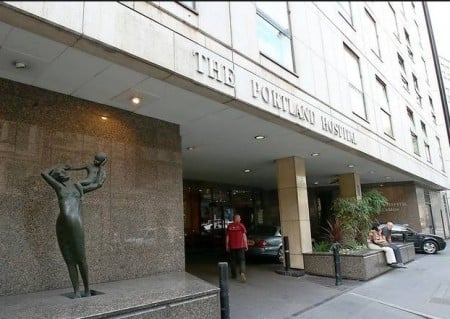
Bookimed Expert Insight: London centers like Portland Hospital and Lister Hospital offer specialized gynecological care with Care Quality Commission oversight. While the NHS focuses on medication first, these facilities provide integrated fertility support for endometriosis patients. This is vital since Lister Hospital manages one of the largest IVF programs in the United Kingdom.
Patient Consensus: Patients note that doctors often suggest taking the pill continuously to stop periods. Many suggest requesting a hormonal coil early to help manage heavy bleeding and pelvic pain effectively.
Surgery is recommended when hormonal therapies fail to control pelvic pain or imaging shows ovarian endometriomas over 4 centimeters. Surgeons typically perform laparoscopic excision to remove lesions. This minimally invasive method preserves fertility and allows for pathological confirmation of the diseased tissue.
Bookimed Expert Insight: London centers like Lister Hospital and Portland Hospital offer specialized gynecological care within the HCA Healthcare UK Network. While the UK is a top destination for fertility, many patients seek complex endometriosis excision at ISO 9001 certified facilities. Confirming that your surgeon works within a multidisciplinary team is essential for cases involving the bowel or bladder.
Patient Consensus: Patients emphasize that negative scans do not always rule out the condition. Many recommend clarifying if a procedure is only for diagnosis or includes immediate surgical treatment.
Endometriosis has no definitive cure. Treatments manage symptoms and suppress inflammation rather than eliminating the disease. Laparoscopic surgery improves fertility by restoring pelvic anatomy. However, lesions may recur. Specialized clinics in London like Lister Hospital provide advanced fertility support for affected patients.
Bookimed Expert Insight: London clinics show a strong link between specialized gynecology and maternity success. For instance, Lister Hospital operates a highly successful IVF program with over 17,250 births. Patients often benefit from integrated care where surgical excision and fertility treatments happen within the same network. This coordination is vital because endometriosis recurrence can impact the timing of embryo transfers.
Patient Consensus: Patients emphasize that surgery and symptom control are often separate goals from getting pregnant. Many note it is important to discuss egg freezing or IVF early, especially if lesions involve the ovaries.
Referral to a specialist endometriosis centre is necessary for suspected or confirmed deep infiltrating disease. This includes cases involving the bowel, bladder, or ureters. Patients with persistent symptoms despite medical treatment also require specialist intervention. Early referral is vital for managing ovarian endometriomas and extrapelvic involvement.
Bookimed Expert Insight: Specialist London clinics like Portland Hospital manage over 45,000 pediatric outpatients annually. This volume is critical for younger patients needing complex adolescent care. Large centres often provide access to advanced diagnostics like hysteroscopy and hormonal profiling. Choosing a facility with CQC rankings ensures higher safety standards for complex surgeries.
Patient Consensus: Patients emphasize the importance of keeping a symptom diary to secure a referral. Many note that imaging like ultrasound or MRI can help speed up the process.
The NHS recently approved Relugolix combination therapy (Ryeqo) and Linzagolix (Yselty) as once-daily oral tablets for moderate-to-severe endometriosis. These GnRH antagonists offer a non-invasive alternative to clinic-based injections. They are available to adult patients who have not responded to prior medical or surgical treatments.
Bookimed Expert Insight: While these tablets manage symptoms, diagnosis remains the critical first step. Major London centers like Portland Hospital utilize ISO 9001 standards for complex gynecological screenings. This high-level diagnostic precision ensures these newer medications are prescribed correctly for those who have exhausted standard surgical or hormonal routes.
Patient Consensus: Patients value these at-home options as a way to avoid frequent hospital visits for injections. Many note that staying period-free is their main goal for judging treatment success.