


Turkey, Mexico, Spain, Thailand, the Czech Republic, and Poland are the main destinations for IVF abroad. Greece and Northern Cyprus follow further down – Greece treats women up to 54, and Northern Cyprus allows sex selection with no waiting list. One cycle costs $2,700–$4,200 in Turkey and $12,000–$25,000 in the United States. A Turkish or Thai package may cover the cycle, the scans, and the hotel nights.
IVF has become a mainstream path to parenthood: at least 12 million babies have been born through in vitro fertilization (IVF) and similar treatments since 1978. In the United States, IVF and similar treatments now account for about 2.6% of all babies born.
Key takeaways
- Turkey is the cheapest of the six at $2,700–$4,200 a cycle, roughly 75% below the US price.
- Poland has the lowest price in the European Union, from $3,000, while prices in the Czech Republic start at $4,000.
- Mexico, Spain, and Northern Cyprus treat single women and same-sex couples. Turkey and the Czech Republic treat different-sex couples only.
- Spain has the largest donor-egg program in Europe, and the donor stays anonymous for life.
- Thailand allows sex selection with genetic testing, quoted at $13,200–$20,700 a cycle.
- Greece treats women up to age 54, the highest limit here, and the Czech Republic stops at 49.
Table of Contents
- Where to Get IVF: Top Countries At a Glance
- IVF Success Rates by Country: What the Numbers Actually Measure
- Top Countries for IVF Treatment Abroad
- IVF Risks and What to Ask Your Clinic
- What IVF Abroad Costs: Medicines, Tests and the Trip
- How Bookimed Can Simplify Your IVF Journey
- The Bottom Line
- Frequently Asked Questions
Where to Get IVF: Top Countries At a Glance
The table sets each country's price beside the legal rules that decide who can be treated there.
| Country | IVF cost per cycle (USD) | Best for | Main restrictions |
|---|---|---|---|
| Turkey | $2,700–$4,200 | Lowest price | No egg donation or surrogacy |
| Mexico | $6,800–$10,700 | Fewest restrictions | Surrogacy only in some states |
| Spain | $12,600–$19,700 | Largest donor pool | No sex selection |
| Thailand | $13,800–$15,000 | Genetic testing with sex selection | No surrogacy or anonymous donation |
| Czech Republic | $4,000–$7,000 | Short donor wait in the European Union | Different-sex couples only, up to age 49 |
| Poland | $3,000–$5,000 | Lowest price in the European Union | No donor program for single women |
Greece and Northern Cyprus cover a narrower need. Greece treats women up to age 54, and Northern Cyprus allows gender selection with no waiting list. Select clinics quote one cycle at about $2,800–$4,700 in Greece and about $2,900–$4,000 in Northern Cyprus.
IVF Success Rates by Country: What the Numbers Actually Measure
Two clinics can both report high success and count completely different things. Three questions decide what a number really means. Does it count a pregnancy or a baby born? Is it measured per cycle started, per egg collection, or per embryo put back? And which age group and which year does it cover?
The gap is wide. In the same clinics and the same year, one rate can be nearly double the other.
The table lines up five destinations from one source and one year: the European IVF monitoring registry for 2019. ICSI means one sperm is injected directly into the egg. The first column shows the share of egg collections that resulted in a delivery (i.e., a live birth). The second shows the same for frozen embryo transfers – cycles where previously frozen embryos were thawed and transferred in a later attempt.
| Country | Deliveries per egg collection (ICSI) | Deliveries per frozen embryo thawed |
|---|---|---|
| Turkey | 21.2% | 39.1% |
| Czech Republic | 14.0% | 18.9% |
| Poland | 13.9% | 25.6% |
| Spain | 13.5% | 26.5% |
| Greece | 10.6% | 28.3% |
Mexican clinics report to the Latin American registry, which publishes one rate for the whole region rather than per country: 13.0% of egg collections in fresh cycles ended in a birth in 2021. Thailand's national registry counts births per transfer instead, and reports 36.3% for a frozen transfer in 2021. Ask each clinic for its own rate and the year it covers.
Two other countries give you something to compare against. The CDC reports that 37.5% of US treatment cycles ended in a live birth. The UK's Human Fertilisation and Embryology Authority reports an average birth rate of 30% per embryo transferred.
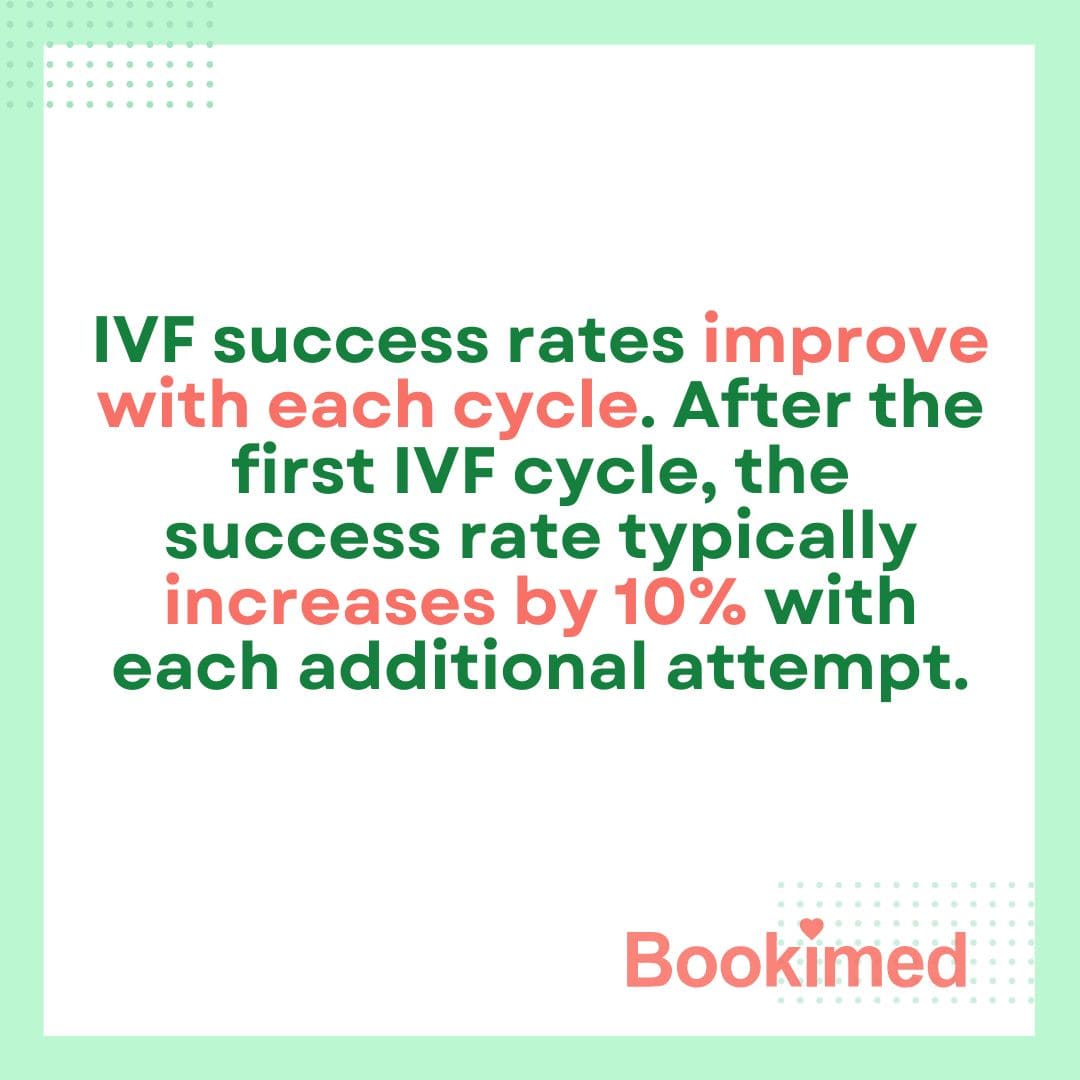
Several attempts change the odds more than any single-cycle figure shows. In a study of 156,947 women, 29.5% had a baby after the first cycle. That rose to 59.0% after three.
To check a clinic's own figure, ask what the rate is based on, for which age group, and for which year. Ask as well whether it covers cycles with your own eggs or with donor eggs.
Top Countries for IVF Treatment Abroad
Each destination below carries the cost of one cycle, who can be treated there, and what a package covers.
Turkey – Affordable IVF with High Success Rates, from $2,700
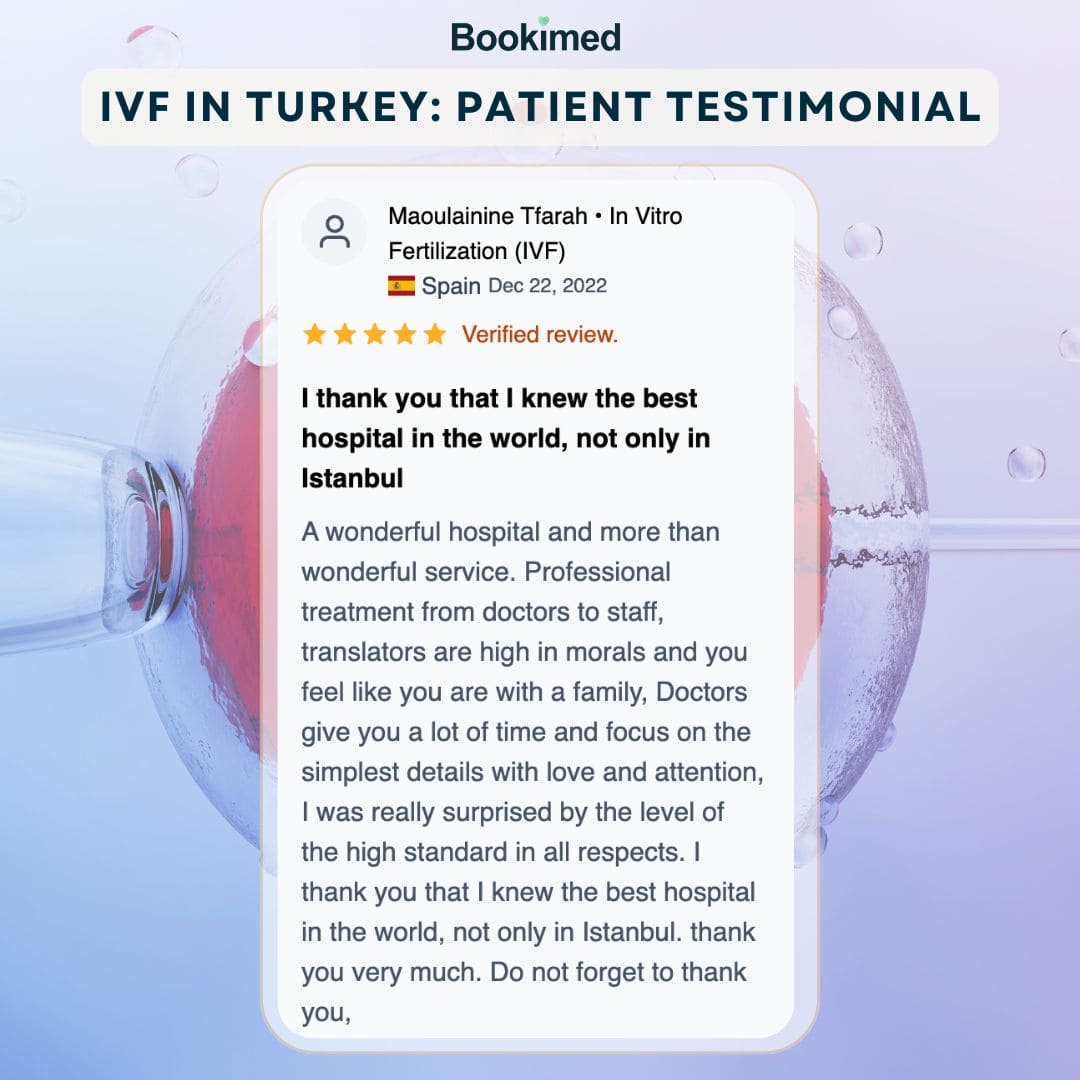
One IVF cycle in Turkey costs $2,700–$4,200. That is roughly 75% less than the US price. Turkey performs 8% of all European assisted reproduction cycles, the sixth-highest volume on the continent.
Success rates
A survey of 25 Turkish centers in 2019 counted the live births for every embryo transfer:
- Fresh cycle: 30.6%, with embryos transferred soon after fertilization;
- Frozen cycle: 40.1%, with embryos frozen and later thawed;
- Tested embryos: 50.7%, where embryos were checked for genetic conditions first.
The same survey reported that 86.1% of deliveries were a single baby, because most transfers used one embryo.
Who can be treated
Turkish law allows standard IVF and ICSI, genetic testing, and fertility preservation. Three options are not available in Turkey:
- egg donation;
- surrogacy;
- treatment for single women or same-sex couples.
Single people and same-sex couples looking for fertility treatment may find Northern Cyprus to be a better fit.
What a package covers
Turkish fertility clinics bundle most of what an IVF trip needs into one price. A package usually covers:
- a full IVF or ICSI cycle;
- examinations and doctor consultations;
- ultrasound monitoring;
- blood tests and hormone panels;
- pregnancy testing;
- 15–21 nights of hotel accommodation;
- airport, clinic, and hotel transfers;
- multilingual support;
- embryo freezing, where needed;
- a 24/7 personal assistant;
- online follow-ups with your doctor.
Partner clinics in Turkey
Bookimed's ranking system scores every partner clinic by an automatic algorithm. It works with Memorial Şişli Hospital and Anadolu Medical Center, both accredited by the Joint Commission International (JCI) and holding ISO certification.
Mexico – Broad Access to Advanced Technology, from $6,800
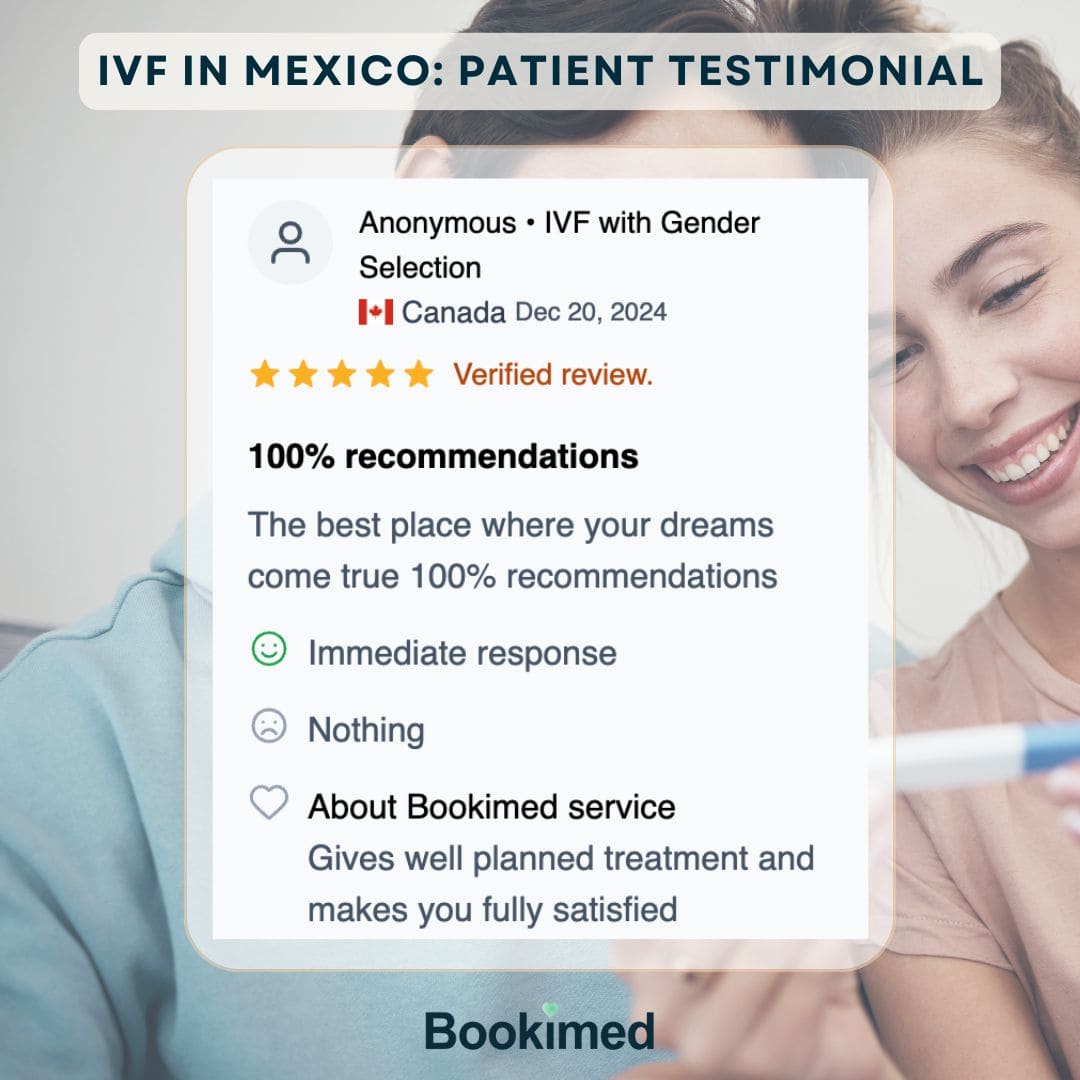
IVF in Mexico costs $6,800–$10,700 per cycle, roughly 40% less than the US price. The quote is a package: the cycle, the stimulation medication, and the embryo work are included in one figure. Border cities such as Tijuana are a short trip from California, and Cancún has direct flights from more than 20 US cities. There is no waiting list, and the country allows treatments that stricter European systems restrict.
Who can be treated
Mexico has few legal restrictions on fertility treatment. Single women and same-sex couples are welcome, which is the country's main draw. Available options include:
- standard IVF and ICSI;
- egg and sperm donation;
- embryo donation;
- surrogacy, in some states;
- genetic testing of the embryos.
What a package covers
Mexican clinics bundle the cycle and its extras into one price. A package usually covers:
- a complete IVF or ICSI cycle;
- stimulation medications;
- monitoring and follow-ups;
- testing of the embryos before transfer;
- anesthesia;
- embryo freezing;
- a pregnancy blood test.
Partner clinics in Mexico
Bookimed works with Advanced Fertility Center Cancun in Cancún, one of its Mexican partners. Hospital de la Familia is another, accredited by the General Health Council of Mexico.
Spain – Europe's Largest Donor-Egg Program, from $12,600
IVF in Spain costs $12,600–$19,700 per cycle, against $12,000–$25,000 in the United States. The two quotes cover different things. A US price is the cycle itself – monitoring, egg retrieval, and the laboratory work – with medication, genetic testing, and donor eggs billed on top. The Spanish quote already includes them. Spain performs over 149,000 fertility treatments a year, the most in Europe. About 35% of those cycles are for patients who travel in.
Success rates
The national fertility register, published by the Spanish Fertility Society, gives birth rates per embryo transfer. With a patient's own eggs, it reports 34% under age 35, and 24.7% between 35 and 39. With donor eggs, the rates rise to 47.0% and 46.5%. About 10% of Spanish births now follow assisted reproduction.
Donor eggs
Spain has the largest donor-egg program in Europe. Donation is anonymous by law, so a patient cannot choose the donor. The clinic matches physical features instead. That anonymity is permanent, and the child can never obtain identifying information about the donor.
Who can be treated
Spain has some of the most open assisted-reproduction laws in Europe. They allow:
- standard IVF and ICSI;
- sperm and egg donation;
- embryo donation;
- testing of the embryos before transfer;
- fertility preservation;
- treatment for same-sex couples.
Spanish law sets no upper age limit, and the professional societies recommend 50 as the cut-off. Non-medical sex selection is not allowed. One rule matters for female couples. Where both partners take part, the non-carrying partner is a legal mother only if the couple is married.
What a package covers
Spanish IVF packages usually include:
- an IVF or ICSI cycle;
- stimulation medications;
- ultrasound scans and blood tests;
- pregnancy testing.
Partner clinics in Spain
Among the Spanish clinics Bookimed works with for IVF are Centro Médico Teknon and Quirónsalud Marbella. Both hold JCI accreditation.
Thailand – IVF in Asia with Genetic Testing, from $13,800
IVF in Thailand costs $13,800–$15,000 per cycle, against $12,000–$25,000 in the United States. The Thai figure is an all-in package rather than a bare cycle: the stimulation medication, the scans, the embryo work, the genetic screening, and the transfers are all included. Thai clinics offer genetic testing with sex selection, which European law does not allow. Our full guide to IVF in Thailand covers the process step by step.
IVF with gender selection in Thailand is quoted at $13,200–$20,700, and the genetic testing behind it is billed by the number of embryos checked.
Who can be treated
Thai law on assisted reproduction requires a marriage certificate for treatment. A single woman or an unmarried couple may not be eligible, so confirm this with the clinic first. Available options include:
- standard IVF and ICSI;
- genetic testing of the embryos;
- egg and sperm donation;
- embryo donation;
- fertility preservation;
- sex selection.
Two options are not available: surrogacy and anonymous donation.
What a package covers
Thai clinics quote one price for the cycle and the extras around it. A package usually covers:
- a complete ICSI cycle, with embryos grown for several days before transfer;
- genetic screening of the embryos;
- doctor consultations and nursing care;
- ovarian stimulation medication;
- hormone blood tests and ultrasound scans;
- anesthesia and pain management;
- laser-assisted hatching to help the embryo implant;
- frozen embryo storage, with the first year included;
- post-transfer support and pregnancy testing;
- airport, hotel, and clinic transfers;
- sex selection through genetic testing.
Partner clinics in Thailand
In Thailand, Bookimed works with Prime Fertility Clinic, which holds JCI accreditation and ISO certification. Bumrungrad International Hospital in Bangkok is also a partner, and it holds JCI accreditation.
Czech Republic and Poland – Low-Cost IVF in the European Union, from $3,000
A cycle in the Czech Republic costs $4,000–$7,000. In Poland, it costs $3,000–$5,000. Together they cost about 65% less than the US price. Both quotes cover the cycle itself, with the stimulation medication billed on top.
The European Union setting changes a few things for you. Clinics work under European tissue and safety rules. Flights from Western Europe are short, and neither country has a waiting list for international patients.
Czech law allows treatment for different-sex couples only, up to age 49, and egg or sperm donation there is anonymous. A single woman or a same-sex couple should look at Spain or Mexico instead.
Poland restricts its donor programs. If you need donor eggs, check your eligibility with the clinic first.
Partner clinics in the Czech Republic and Poland
Premium Center of Gynecology and Obstetrics in Neratovice holds SAK accreditation, the Czech national standard. In Poland, Gyncentrum in Katowice is certified to ISO and TÜV standards, and INVICTA in Gdańsk holds ISO 15189 for its genetics laboratory.
Greece – Progressive IVF Hub with Age-Friendly Rules
Greece treats women up to age 54, further than any other destination here. The European register also reports the highest share of patients aged 40 and over starting IVF in Greece. For older patients, that openness is the main draw.
Who can be treated
Greek rules are built around age. Treatment is allowed up to 54. From 50 to 54, it requires approval from the National Authority of Medically Assisted Reproduction, valid for a year. Embryo freezing, genetic testing, and sperm or egg donation are all permitted. Same-sex couples face extra limits, so confirm access with the clinic first.
What a Greek IVF package covers
A Greek package is usually quoted per cycle and covers:
- consultations and ultrasound scans;
- egg collection under anesthesia;
- fertilization by IVF or ICSI;
- embryo culture and transfer;
- post-transfer follow-ups.
Ask a Greek clinic whether your age needs the National Authority's approval, because that adds a step before treatment.
Partner clinics in Greece
Interbalkan European Medical Center in Thessaloniki holds TEMOS and Global Healthcare Accreditation for international patients. Babydust Clinic in Athens is certified by ISO 9001 by TÜV NORD.
Northern Cyprus – IVF with Gender Selection and No Waiting Lists
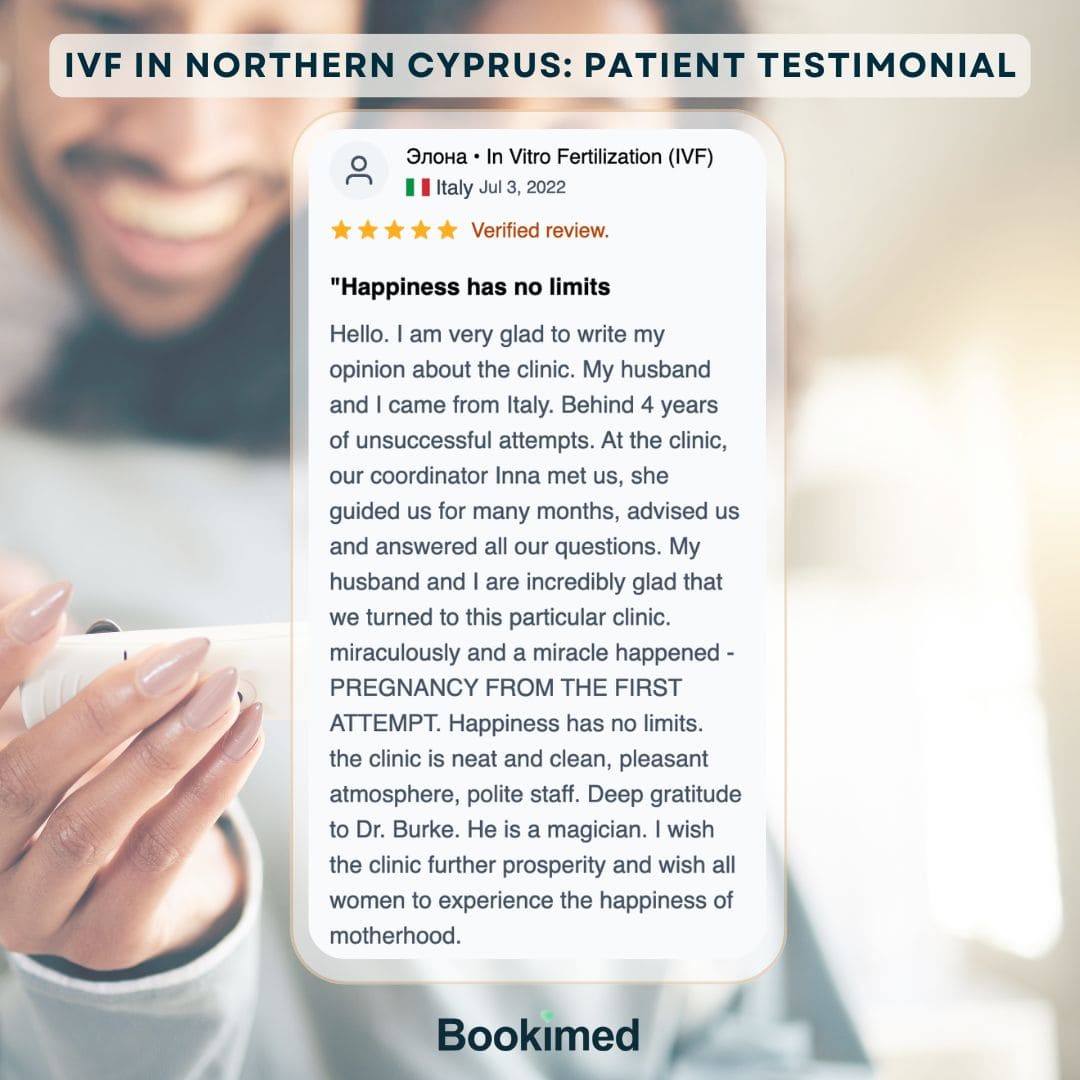
Northern Cyprus lets you act on three things at once. Choosing the baby's sex is legal here. There is no waiting list, and single women and same-sex couples are treated.
Who can be treated
The rules are liberal, with a few clear limits. Available options include:
- standard IVF and ICSI;
- sex selection;
- egg and sperm donation, from US and Danish banks;
- genetic testing of the embryos.
Surrogacy is not available.
What a package covers
A Northern Cyprus package is built around the cycle itself and covers:
- a complete IVF or ICSI procedure;
- ovarian stimulation protocols;
- sex selection;
- ultrasound monitoring throughout;
- private patient accommodation;
- donor egg or sperm programs.
Airport transfers and nearby hotel nights are charged separately.
Partner clinics in Northern Cyprus
North Cyprus IVF Centre holds JCI accreditation and runs its own genetics laboratory. IVOX Hospital in Nicosia is affiliated with the European Society of Human Reproduction and Embryology (ESHRE) and treats about 1,000 fertility patients a year.
IVF Risks and What to Ask Your Clinic
Most IVF cycles pass without a problem. The one risk worth a question at every clinic is the ovaries overreacting to the fertility drugs.
Doctors call that reaction ovarian hyperstimulation, and it comes in three degrees. A review of IVF cycles found that at least 98% of cycles never develop the severe form. At least 94% never develop the moderate form, and two thirds show no mild reaction either. When it does occur, mild cases resolve on their own with rest and fluids. Moderate and severe cases are managed by the clinic with monitoring and medication.
Patients rarely need a hospital stay. The survey of 25 Turkish centers counted 11,121 egg collections in 2019. About 99% of them needed no hospital stay. Where care was needed, the two reasons recorded were a severe overreaction and bleeding.
Ask the clinic two things. Ask how it monitors your response to the drugs, and when it would cancel a cycle, and get both answers in writing. A canceled cycle protects you from an overreaction.
Transferring more than one embryo raises the chance of twins, which carries higher risk for both mother and babies. Most clinics transfer a single embryo to reduce that risk: in the Turkish survey, 65.3% of transfers used a single embryo, and 86.1% of live births were singletons.
If you have a long-term health condition, consult your doctor before you plan the trip.
What IVF Abroad Costs: Medicines, Tests and the Trip
Every price here is for one cycle, but what that cycle includes changes from country to country. That difference, not the headline figure, decides what the trip costs.
The inclusion of stimulation drugs varies most. Mexican, Spanish, Thai, and Northern Cypriot packages may include them. If not included, these drugs add about $1,000 to $3,000, depending on the dose your body needs.
Three more steps may or may not be included in a package, so check each one:
- Testing embryos for chromosome problems before transfer.
- Freezing the spare embryos for a later attempt. Storage is usually charged yearly after the first year.
- Using donor eggs or sperm, which costs more than a cycle with your own.
A quote also tends to leave out three things:
- Flights to and from the country.
- The scans and blood tests done at home before you travel.
- The fee charged if a cycle is canceled before egg collection.
Most of the monitoring happens before you travel. The scans of the first ten to twelve days can often be done at home. That leaves roughly a week abroad for the egg collection and the transfer.
Ask the clinic to arrange this shared monitoring with a doctor near you before you fly.
One question settles the total. Ask the clinic for a written list of what the quoted price includes and excludes. Do that before you pay a deposit.
Most-picked offers for In Vitro Fertilization (IVF)
- Dr. Cayetana Barbed is ranked among the top 10 gynecologists in Catalonia for reproductive medicine excellence.
- Centro Médico Teknon provides advanced IVF care and runs one of Spain's most innovative egg donation programs.
- Included Services: Language assistance.
- Stay Info: Accommodation and transfers are not included; no hospital or hotel stay required.
- Technique: IVF with vitrified donor eggs.
- In Vitro Fertilization (IVF)
- Language assistance
- Dr. Cayetana Barbed runs one of Spain's most advanced egg donation programs, serving global patients with high-tech care.
- Centro Médico Teknon is the official medical service and reference hospital for the 37th America's Cup Louis Vuitton regatta in 2024.
- Included Services: Language assistance.
- Stay Info: Accommodation and transfer are not included; no hospital or hotel stay required.
- In Vitro Fertilization (IVF)
- Language assistance
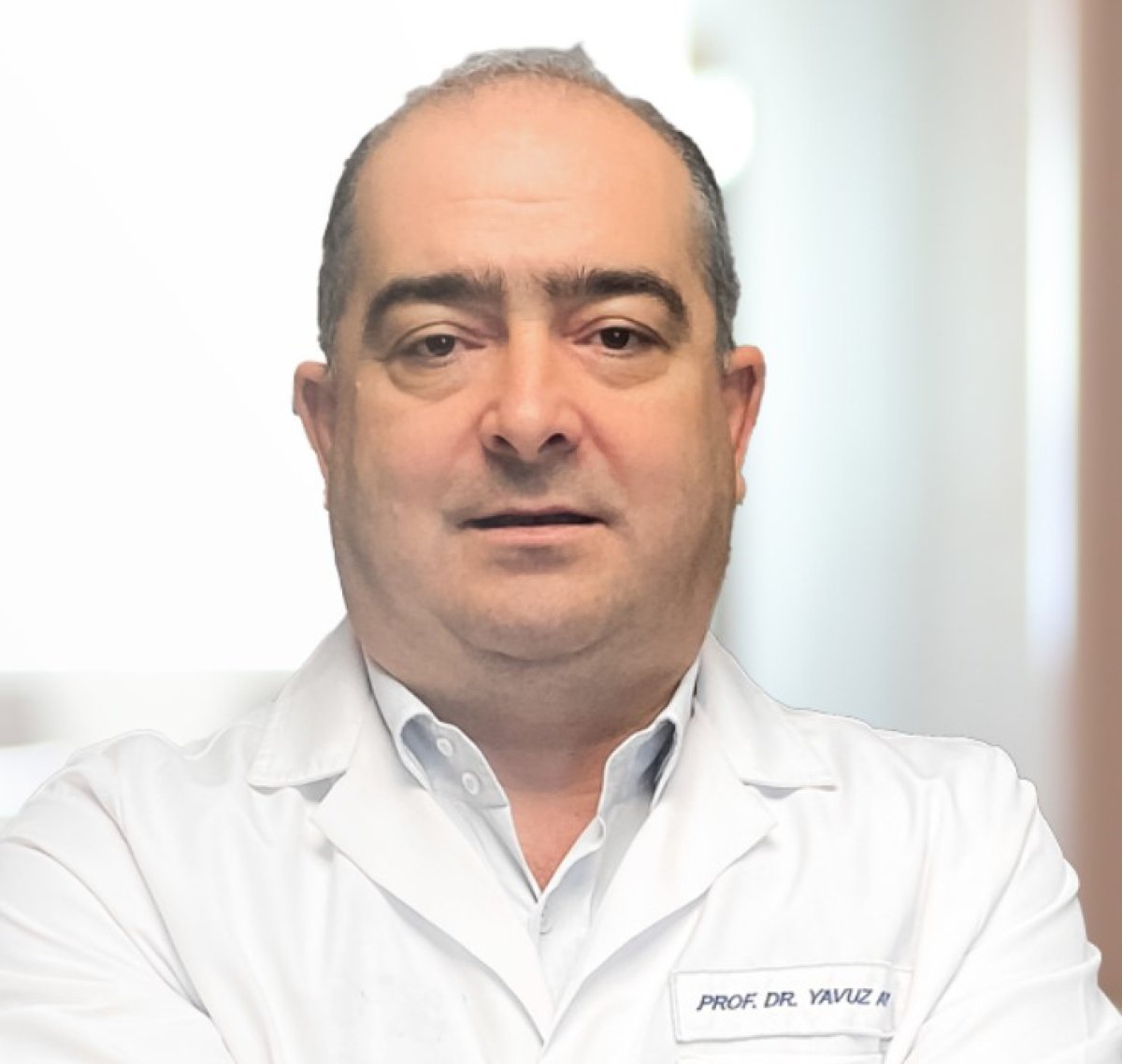
- Yavuz Aydin is a member of the American Society for Reproductive Medicine and ESHRE.
- VM Medical Park Florya Hospital welcomes patients from Europe, the USA, Canada, Australia, and CIS countries.
- Included Services: spermiogram, blood tests, hormone tests, ICSI, embryo transfer, couple diagnosis, language assistance, gynecologist consultation, abdominal and pelvic CT, airport-hotel-clinic transfers.
- Stay Info: Accommodation is not included in the price; no hotel stay required.
- In Vitro Fertilization (IVF)
- Spermiogram
- Blood tests
- Hormone tests
- Intracytoplasmic sperm injection (ICSI)
- Embryo transfer
- Comprehensive couple diagnosis before IVF
- Language assistance
- Consultation with a gynecologist
- Abdominal and pelvic CT
- Transfer airport-hotel-clinic-airport
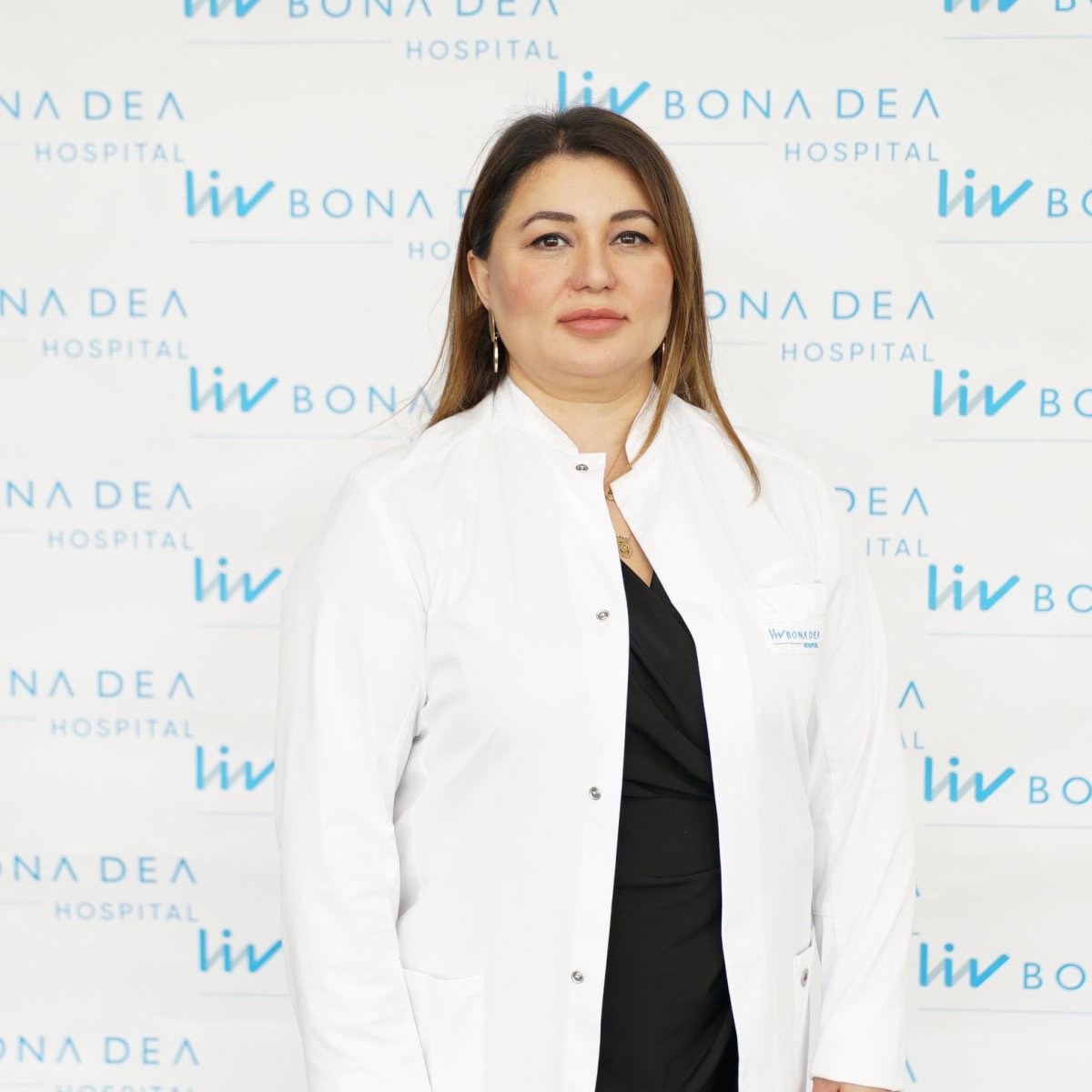
- Dr. Sevinc Serdarli has specialized in gynecology and obstetrics at Health Sciences University Istanbul.
- Liv Bona Dea Hospital Baku serves patients from Europe, Commonwealth, Arab League States, and CIS countries.
- Included Services: Medications, comprehensive couple diagnosis before IVF, language assistance, consultation with a gynecologist, transfer airport-hotel-clinic-airport.
- Stay Info: 0 days stay in the hospital, 10 days stay in the hotel, accommodation is not included.
- In Vitro Fertilization (IVF)
- Comprehensive couple diagnosis before IVF
- Language assistance
- Transfer airport-hotel-clinic-airport

- Sevinc Serdarli completed an advanced in-vitro fertilization course with Op. Dr. Serdar Celik in Baku in 2022.
- Liv Bona Dea Hospital Baku serves patients from Europe, the Commonwealth, Arab League states, and CIS countries.
- Included Services: ultrasound, embryo transfer, medications, preoperative tests, transfer airport-hotel-clinic-airport.
- Stay Info: 14 days stay in a hotel; accommodation is not included in the price.
- In Vitro Fertilization (IVF)
- Preoperative tests
- Medications
- Embryo transfer
- Ultrasound
- Transfer airport-hotel-clinic-airport
How Bookimed Can Simplify Your IVF Journey
Not sure which country fits your case? A Bookimed medical coordinator can guide you through the options and the costs. Here is how it works:
- Browse IVF clinics and treatment packages worldwide.
- Fill out a short form about your fertility needs and preferences.
- Compare your options with a dedicated medical coordinator, including the independent ranking of the top 10 IVF clinics.
- Receive personalized treatment programs and quotes.
- Choose the country and clinic that suit your case.
- Confirm your treatment.
- Plan your trip with our 24/7 support.
You can send your medical records in your own language. We will have them translated for the clinic.
The Bottom Line
- What the quoted price covers changes by country. Several packages here already include the stimulation drugs; where they do not, the drugs add about $1,000 to $3,000.
- Ask what a clinic's success rate is based on: a pregnancy or a birth, per cycle or per embryo transfer.
- Clinics in Spain, Greece, Poland, and the Czech Republic follow one set of European tissue and safety rules.
- Most trips are about a week. The scans of the first ten to twelve days can be done at home.
- Turkey offers no egg donation and no surrogacy, so check the legal rules before you commit to a country.
Frequently Asked Questions
These are the questions patients ask our coordinators most often about IVF abroad.
Which country has the best IVF success rates in Europe?
Among the destinations here, Turkey reports the strongest figures. The European fertility registry recorded 21.2% of egg collections leading to a delivery. That figure covers ICSI cycles, where a single sperm is injected into the egg. The rate for every batch of frozen embryos thawed was 39.1%. Both numbers count deliveries rather than pregnancies.
That is the honest way to read success: always check what the number counts. A rate per embryo transfer counts only the women who reached a transfer. Cycles stopped earlier, or that produced no embryo worth transferring, are left out of that figure, which is why it looks higher than a rate counted from the egg collection.
Greece, Spain, Poland, and the Czech Republic report to the same registry, so their figures can be compared. When a clinic quotes a single success rate, ask what it is based on and for which age group.
How much does IVF cost abroad compared with the US?
One cycle runs from about $2,700 in Turkey to about $19,700 in Spain, where the quote covers a full donor-egg or genetic-testing program. In the United States, it costs about $12,000 to $25,000, and that price is usually the cycle alone, with the medication, the genetic testing, and any donor eggs billed on top. The exact figure depends on the country, the clinic, and whether donor eggs are used.
Turkey, Greece, Northern Cyprus, and Poland start lowest, at $2,700 to $3,000 a cycle, roughly 75% below the $12,000 a US cycle starts at. The Czech Republic starts at $4,000 and Mexico at $6,800. Spain and Thailand start at $12,600 and $13,800, close to the US starting price, but those two quotes are all-inclusive and the US one is not. A cycle costs less abroad mainly because it costs the clinic less to run, from wages to rent to laboratory supplies.
Compare what each quote includes, not only the figure: the packages here differ on the drugs, the embryo testing, and the freezing. Donor-egg cycles cost more than a standard cycle everywhere, so price them separately.
Which country is best for IVF with donor eggs?
Spain is the usual first choice for IVF with donor eggs. It has the largest donor program in Europe, so waiting times are short and the choice is wide. Donation is anonymous by law.
You cannot choose the donor, and the clinic matches physical features for you. The child can never obtain identifying information about the donor later. The Czech Republic also offers anonymous donation with short waits, at a lower price.
Greece treats women up to 54, and from 50 the National Authority must approve the cycle. Success rates with donor eggs are usually higher than with your own eggs, because the eggs come from younger women. If contact with the donor matters to your family, check each country's rules first.
Are fertility medicines included in the price?
It depends on the country. The Mexican, Spanish, Thai, and Northern Cypriot packages may include the stimulation drugs. If not included, the drugs add about $1,000 to $3,000, depending on the dose.
The dose you need depends on your age and how your ovaries respond. The drug bill can therefore vary between patients at the same clinic.
Two laboratory steps are included in some packages but not others: testing the embryos before transfer, and freezing the spare ones. Look for both in your written quote.
Can single women and same-sex couples have IVF abroad?
Yes, in several destinations, though the rules differ. Mexico, Spain, and Northern Cyprus treat single women and same-sex couples. Turkey and the Czech Republic treat only different-sex couples. The Czech Republic also sets an upper age of 49.
Thailand requires a marriage certificate, so a single woman or an unmarried couple cannot access it there. In Spain, one rule matters for female couples. The non-carrying partner is a legal mother automatically only if the couple is married.
Northern Cyprus has no waiting list, so single patients can often start treatment within a few weeks. If you are single or in a same-sex couple, start with the countries that welcome you. Then confirm the legal details with the clinic.
How long do I need to stay abroad for IVF?
For most patients, about a week abroad is enough. The first ten to twelve days of a cycle are monitoring scans and blood tests. These can often be done at home. You then travel for the egg collection and the embryo transfer, which fall within roughly a week.
A frozen-embryo transfer is done on a later, shorter trip, so some patients split the treatment into two visits. Ask your clinic whether it can arrange the early monitoring with a doctor near you. That shortens the time away.
Book flexible travel, because the exact dates depend on how your body responds to the drugs. Plan for a few extra days in case the schedule shifts. Your coordinator can help you agree the timing with the clinic.
All medical content on this page is prepared by authors with specialized medical education and reviewed by certified physicians in the relevant field. Medical review by Fahad Mawlood, Medical Editor & Data Scientist.
Last updated: October, 2026.
- Statistics: Figures are based on Bookimed’s internal database October 2026, which includes analysis of 12,450 patient requests across accredited clinics in .
- Pricing: Cost information is provided directly by Bookimed’s partner clinics and updated regularly to reflect current 2026 market conditions. Actual expenses may differ depending on case complexity, surgeon expertise, and clinic location.
- Clinical Data: Treatment outcomes and patient satisfaction figures are collected from Bookimed’s verified clinic database and supported by data from peer-reviewed medical sources such as PubMed, The Lancet, JAMA, and NEJM (2023–2026).
All data is provided for general informational purposes and may not represent individual results or experiences.