Medication Treatment for Epilepsy in Austria — Get 3 Top Clinic Matches with Costs


Medically reviewed by
Fahad Mawlood
How Much Does Medication treatment for epilepsy Cost in Austria?
Medication treatment for epilepsy in Austria typically ranges from $1,200 to $3,500. Final costs depend on diagnostic complexity, drug types, and whether the patient is a visitor. In the US, similar care costs $3,900 on average. Patients can find savings of around 38%. Common inclusions involve neurological consultations and initial diagnostic testing.
- Diagnostic packages: $1,200 to $3,500 covering EEG and neurologist consultations.
- Standard medications: Approximately 20-30% lower for residents under the national Social Security system.
- Specialist consultations: Private neurology visits in Vienna often account for the primary initial expense.
- Drug-refractory cases: Specialized protocols for resistant epilepsy can increase annual medication costs by 300%.
Bookimed Expert Insight: Seeking care in Vienna provides access to elite specialists like Dr. Fritz Leutmezer. He serves as President of the Austrian Multiple Sclerosis Society. Clinics like Döbling Private Hospital implement JCI-International Patient Safety Goals. This ensures high-tier safety for both adults and children. While initial diagnostics start around $1,100, the long-term value lies in precise medication titration.
| Turkey | Austria | Spain | |
|---|---|---|---|
| Medication treatment for epilepsy | from $1,300 | ≈ $1,200 | ≈ $900 |
Your Benefits and Guarantees with Bookimed
Transparent Prices & Flexible Installments
No hidden fees – just official clinic prices. Pay at the clinic for Medication treatment for epilepsy upon arrival and use a flexible installment plan if needed.
Verified Clinics & Doctors Only
Bookimed is committed to your safety. We only work with medical institutions that maintain high international standards in Medication treatment for epilepsy and have the necessary licenses to serve international patients worldwide.
Free 24/7 Assistance
Bookimed offers free expert assistance. A personal medical coordinator supports you before, during, and after your treatment, solving any issues. You're never alone on your Medication treatment for epilepsy journey.

Your personal Bookimed medical coordinator
- Supports you at every stage
- Helps choose the right clinic and doctor
- Ensures quick and convenient access to information
Discover the Best Medication treatment for epilepsy Clinics in Austria: 1 Verified Option and Prices


Medication treatment for epilepsy Overview in Austria
Day 1
- Arrival in the country and transfer to the hotel.
- Rest and acclimatization to the new environment.
Day 2
- Transfer from the hotel to the clinic.
- Consultation with a neurologist.
- Conduct of medical tests to assess health status.
Day 3
- Discussion of test results with the neurologist.
- Formation of a personalized medication plan for epilepsy treatment.
Day 4
- Start of medication treatment for epilepsy.
- Observation of patient"s reaction to medication.
Week 1-2
- Continuation of medication treatment under medical supervision.
- Regular check-ups with the neurologist.
Week 3
- Assessment of initial treatment results.
- Adjustment of medication plan if necessary.
Month 1
- End of in-clinic treatment phase.
- Patient is discharged and returns home.
Month 2-6
- Continuation of medication treatment at home.
- Regular remote consultations with the neurologist.
- Return to work and daily activities as advised by the doctor.
Month 6
- Final evaluation of treatment results.
- Further treatment planning if necessary.
Please note that each patient"s case is unique and may require different treatment approaches and timelines. Always consult with your healthcare provider for personalized advice.
- Bookimed deposit: $200 or €200.
- Clinic deposit: Pay a set percentage in advance.
As the leading global medical tourism platform, Bookimed.com provides objective and transparent information to patients and medical centers worldwide, including those seeking Medication treatment for epilepsy in Austria. All the data presented on the platform is grounded in research, foresight, and expertise.
Smart automatic ranking system
Bookimed.com forms its listings of clinics and doctors using a strict smart automatic ranking system. This system is based on real Bookimed patient rates, ensuring that patients seeking Medication treatment for epilepsy in Austria receive the most objective and transparent information about clinics and medical services.
The platform"s experienced data scientist collects data daily, monitors and optimizes the ranking system using machine learning and artificial intelligence to ensure that the ranking system is up-to-date and accurate.
Real people"s experience only
Bookimed.com collects the opinions of patients only after they have received medical experience with the clinic. This way, patients seeking Medication treatment for epilepsy in Austria can trust the facility they choose. The platform publishes positive and negative reviews, ensuring informed decision-making for future clients.
Topics with high levels of expertise, authority, and trustworthiness
On Bookimed.com, patients seeking Medication treatment for epilepsy in Austria can find the best medical solutions from top medical service providers in one place, often at competitive prices. Bookimed.com ensures that the information is fresh by having the clinic"s representatives update doctors" CVs, clinics" capacities, before-after pictures, prices, packages, and specials by themselves shortly. Patients can meet the clinic"s representative and check the date of updated content at every clinic"s page to ensure its trustworthiness.
The platform"s blog and supportive pieces are created by professional authors with at least 3-year experience in medical writing and edited by medical specialists with relevant clinical and research expertise. All pieces follow the Bookimed"s Editorial Guidelines. Bookimed.com strives to enhance patient access to health information, making it expert but easy to understand.
Bookimed values
At Bookimed.com, people come first, and that"s our core value. The data presented on the platform is collected, edited, reviewed, and regularly updated by patients, partner clinics, and the Bookimed Medical Advisory Board. This board consists of world-renowned doctors with over 20 years of expertise and a positive reputation. Learn more about us and our mission.
If you find any mistakes or have any questions regarding the information presented on Bookimed.com, please feel free to contact us at marketing@bookimed.com.
Our Doctors
View all Doctors
Fritz Leutmezer
Dr. Leutmezer is a neurologist with over 60 published papers, specializing in epilepsy and multiple sclerosis at Vienna General Hospital.
- President of Austrian Multiple Sclerosis Society
- Vice President of Vienna Multiple Sclerosis Society
- Author of a book on multiple sclerosis
- Offers acupuncture for nerve-related conditions
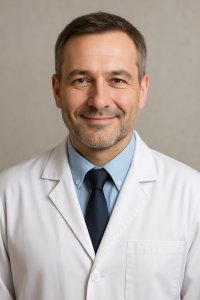
Klaus Novak
Dr. Klaus Novak is a neurosurgeon at Döbling Private Hospital in Vienna. He introduced intraoperative motor evoked potential monitoring to Austria. This technique improves patient safety during complex nerve surgeries. Dr. Novak specializes in spine surgery and brain tumor treatment. He completed clinical research at Beth Israel Hospital in the United States.
- Serves as a member of the interdisciplinary Movement Disorder Board at MedUni Vienna.
- Treats epilepsy, hydrocephalus, movement disorders, and neuromodulation.
- Practices at an ISO-certified facility ranked among the top private hospitals in Vienna.
- Consults patients in German, English, Spanish, French, and Italian.
Reviews about Bookimed: Discover Patients' Insights
All reviewsShare this content
Video Stories from Bookimed Patients
 Anna Leonova

FAQ about Medication treatment for epilepsy in Austria
What are the first-line medication choices for treating epilepsy in Austria?
Austria follows joint German-Austrian-Swiss neurology guidelines for epilepsy treatment. Specialists like Dr. Fritz Leutmezer at Vienna General Hospital (AKH) prioritize lamotrigine for focal-onset seizures and valproate for generalized cases. Clinical choice depends on seizure type, patient age, and family planning needs.
- Focal seizures: Lamotrigine is the primary monotherapy choice due to high tolerability.
- Generalized epilepsy: Valproic acid remains most effective for primary tonic-clonic or myoclonic seizures.
- Alternative therapy: Levetiracetam or lacosamide are preferred when first-line options are unsuitable.
- Emergency protocol: Benzodiazepines like lorazepam or midazolam serve as the immediate first-line response.
Bookimed Expert Insight: While medication starts at $1,200 in Austria, the treatment path is highly specialized. Facilities like Dobling Private Clinic offer combined diagnostics and rehabilitation. Data shows that Austrian neurologists favor slow titration of lamotrigine to maximize success rates. This approach minimizes side effects compared to faster-acting alternatives.
Patient Consensus: Patients often find levetiracetam effective but frequently discuss mood changes. Many prefer lamotrigine for its lower side-effect profile despite the longer time required to reach a full therapeutic dose.
Are newer-generation anti-seizure medications widely used in Austrian clinical practice?
Newer-generation anti-seizure medications are the clinical standard in Austria. Neurologists utilize second- and third-generation agents like levetiracetam and lacosamide. These drugs offer superior safety profiles and fewer drug interactions. Austrian national health insurance ensures broad access to these European Medicines Agency-approved therapies.
- Enhanced safety: Newer agents reduce risks of metabolic complications and idiosyncratic adverse effects.
- Vulnerable populations: Lamotrigine and levetiracetam are prioritized for women to minimize teratogenic risks.
- Geriatric care: Gabapentin and levetiracetam are frequently prescribed to elderly patients with comorbidities.
- High availability: Social health insurance provides comprehensive coverage for modern outpatient and hospital treatments.
Bookimed Expert Insight: While Austrian clinics like Döbling Private Clinic offer cutting-edge care, the strategy often involves staged therapy. Clinicians frequently use Xcopri or Briviact as targeted add-ons. This approach balances newer efficacy with the established safety records of first-line treatments.
Patient Consensus: Patients value the shift toward medications with fewer side effects. Many emphasize discussing whether new drugs are intended as primary therapy or rescue options.
How are insurance reimbursements and costs handled for specialized epilepsy drugs in Austria?
Austria handles epilepsy drug costs through a centralized social insurance system where the Austrian Health Insurance Fund (ÖGK) covers most outpatient medications. Patients typically pay a flat prescription fee of €7.55 instead of market prices. Coverage depends on the drug classification within the national Reimbursement Code (EKO).
- Reimbursement code: The EKO determines if social security fully or partially funds specific epilepsy drugs.
- Green box: Standard medications in this category require no prior authorization for immediate pharmacy pickup.
- Yellow box: Specialized or innovative drugs often require prior approval from insurance medical officers.
- Prescription fee: Patients pay a standardized fee per item using their electronic health e-card.
- Fee exemptions: Low-income patients or those with high annual costs may receive medications entirely free.
Bookimed Expert Insight: While public insurance covers standard care, patients seeking advanced diagnostics at facilities like Döbling Private Clinic in Vienna often utilize private supplemental insurance. Our data shows these premium plans frequently bridge the gap for non-EKO listed drugs, covering 50% to 100% of costs that public funds might decline. For complex cases, neurologists like Fritz Leutmezer at Vienna General Hospital can provide the essential medical justification needed to secure approval for specialized, non-standard therapies.
Patient Consensus: Patients emphasize that success with non-listed drugs depends heavily on a neurologist proving that first-line options failed. Most find the fixed co-pay system makes long-term management affordable compared to international market prices.
Where can patients in Austria access specialized medical evaluation and medication management for drug-resistant epilepsy?
Patients in Austria access specialized care for drug-resistant epilepsy at university hospitals and certified epilepsy outpatient clinics (Spezialambulanzen). Facilities like Vienna General Hospital (AKH) provide advanced diagnostics, including long-term Video-EEG monitoring, neuromodulation, and presurgical evaluations for patients unresponsive to standard pharmacological therapies.
- Specialized facilities: University clinics in Vienna, Salzburg, and Linz offer multidisciplinary refractory epilepsy management.
- Expert consultation: Specialist neurologists like Fritz Leutmezer at Vienna General Hospital manage complex seizure disorders.
- Advanced diagnostics: Centers utilize inpatient Video-EEG monitoring to localize seizure foci for surgical consideration.
- Referral pathway: Access requires a referral from a general practitioner or a resident neurologist.
Bookimed Expert Insight: Data highlights that Vienna General Hospital (AKH) serves as a primary hub for complex cases, supported by specialists like Fritz Leutmezer who manage 29 distinct departments. Patients seeking private care often choose Döbling Private Clinic in Vienna, which provides rapid access to multidisciplinary diagnostics and acute medical services within the PremiQaMed Group network.
Patient Consensus: Patients emphasize seeking a dedicated epileptologist rather than a general neurologist for uncontrolled seizures. Success often depends on providing a comprehensive seizure diary and complete medication history during the initial reassessment.