Radioiodine Therapy in China — Get 3 Top Clinic Matches with Costs
Radioiodine therapy in China is offered by Fuda Cancer Hospital in Guangzhou. The clinic is rated 4.6/5 in 19 verified patient reviews on Bookimed.


Medically reviewed by
Fahad Mawlood
How Much Does Radioiodine therapy Cost in China?
Radioiodine therapy in China typically costs from $900 to $2,300. The final price mainly depends on the required dosage, facility type, and the city, with Guangzhou and Beijing being major hubs. In the US, similar procedures cost around $6,000 on average. Patients save around 73% compared to US prices. Inclusions often cover the radioactive isotope, nuclear medicine consultations, and specialized isolation room stays.
- Therapy with radioactive iodine in thyroid cancer: $3,500 to $6,800.
- High-dose protocols: Often cost more than low-dose treatments for hyperthyroidism.
- Specialized oncology centers: These facilities may charge more than standard public hospitals for nuclear medicine.
- Diagnostic imaging: Pre-treatment PET-CT scans typically add around 15-20% to the base therapy cost.
Bookimed Expert Insight: Choosing a JCI-accredited facility like Fuda Cancer Hospital provides access to high-precision nuclear medicine. While basic sessions start low, their advanced oncology packages typically run about $3,900 to $9,500. This higher price includes expert care from specialists like Dr. Dai Wen Yan. These centers offer significant value for late-stage cases where specialized isolation and monitoring are mandatory. For international patients, these comprehensive packages often prove more efficient than paying for individual services.
| China | Turkey | Austria | |
|---|---|---|---|
| Radioiodine therapy | ≈ $900 | from $2,500 | ≈ $2,400 |
| Therapy with radioactive iodine in thyroid cancer | ≈ $3,500 | from $4,500 | ≈ $4,500 |
Your Benefits and Guarantees with Bookimed
Transparent Prices & Flexible Installments
No hidden fees – just official clinic prices. Pay at the clinic for Radioiodine therapy upon arrival and use a flexible installment plan if needed.
Verified Clinics & Doctors Only
Bookimed is committed to your safety. We only work with medical institutions that maintain high international standards in Radioiodine therapy and have the necessary licenses to serve international patients worldwide.
Free 24/7 Assistance
Bookimed offers free expert assistance. A personal medical coordinator supports you before, during, and after your treatment, solving any issues. You're never alone on your Radioiodine therapy journey.

Your personal Bookimed medical coordinator
- Supports you at every stage
- Helps choose the right clinic and doctor
- Ensures quick and convenient access to information
Discover the Best Radioiodine therapy Clinics in China: 1 Verified Option and Prices


Radioiodine therapy Overview in China
Day 1
- Arrive in the country.
- Transfer from airport to hotel.
Day 2
- Transfer from hotel to clinic.
- Consultation with a radiologist.
- Preparation for Radioiodine therapy.
Day 3
- Undergo Radioiodine therapy.
- Therapy lasts 1-2 hours, no anesthesia required.
- Transfer back to hotel.
Day 4
- Rest day at the hotel.
Day 5
- Check-up with radiologist at clinic.
- Transfer from clinic to hotel.
Day 6
- Transfer from hotel to airport.
- Departure from the country.
Week 1-2
- At home, avoid close contact with others.
- Drink plenty of fluids to flush out any remaining radioiodine.
Week 3-4
- Resume normal activities while maintaining precautions.
Please note that each case is individual and the timeline could vary based on personal health conditions and recovery speed.
- Bookimed deposit: $200 or €200.
- Clinic deposit: Pay a set percentage in advance.
Our Trusted Doctors
View all Doctors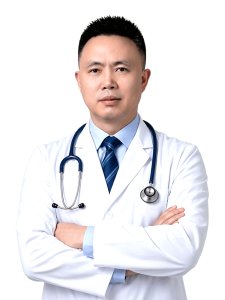
Liao Zhengyin
Chief physician and professor. Grade 1 Expert at the Cancer Center, West China Hospital, Sichuan University (ranked No. 2 in China). Completed a postdoctoral fellowship in interventional radiology at the Chinese PLA General Hospital. Leads multidisciplinary team (MDT) care for complex tumors. Expert in minimally invasive interventional oncology for liver, lung, and pancreatic cancers.
Accreditations: Council Member, WATA. Member of CACA and CMDA committees on intervention, ablation, radioactive seeds, and pain. In 2023, inaugural director member, Palliative Care Committee, Sichuan MDA. Editorial board member of the Chinese Journal of Interventional Imaging and Therapy. Editorial board member of the Chinese Journal of Pain Medicine.
Leads 2 provincial S&T projects and 2 NSFC projects. Has 40+ papers, with 30+ as first or corresponding author. Highest impact factor: 10.73. Hepatocellular carcinoma (HCC) cohort: TACE + lenvatinib vs TACE + sorafenib. OS 18.97 vs 10.77 months. PFS 10.6 vs 5.4 months. ORR 66.8% vs 33.3%.
Luo Xiaoping
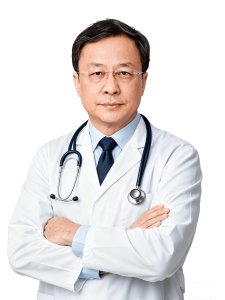
Professor Luo Xiaoping is a nationally recognized interventional radiologist and a leading authority in Western China. He began pioneering vascular interventions in the early 1990s. He helped found the Interventional Group at the Second Affiliated Hospital of Chongqing Medical University.
He has completed over 100,000 interventional procedures, including about 4,000 complex cases. His key skills include TACE for hepatocellular carcinoma, Budd–Chiari interventions, TIPS, and single-stage bilateral stenting for hilar biliary obstruction, with success rates near 100%. He has been a master’s supervisor since 2007. He has trained many physicians, guided complex cases at more than 40 major hospitals across Western China, and helped build interventional programs. He has published 32 papers as first or corresponding author (22 CSCD core, 4 Chinese core, 6 CSCD extended).
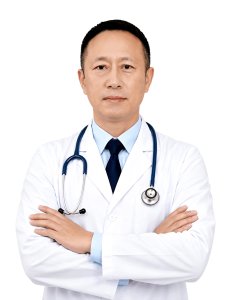
He Weibing
Dr. He Weibing is a pioneer of argon-helium cryoablation in China with more than 20 years of frontline practice. He was a founding member of Fuda Cancer Hospital (Guangzhou). He co-founded its Minimally Invasive Tumor Treatment Center and served as Executive Deputy Director. He also helped found the Ablation Group of the China Anti-Cancer Association. He has been the primary operator in more than 10,000 procedures.
He specializes in tumor cryoablation and is proficient in 125I seed brachytherapy, with a focus on liver and lung cancers. He proposed ten argon-helium techniques. Key co-authored data include: lung cryotherapy n=508; NSCLC n=120 (CR 25.5%, PR 41.8%, 6/12/24-month survival 64%/55%/36%); pancreatic cancer n=38 (median survival 12 months). He served on editorial boards in 2008 and 2010. He has been a national trainer for Varian and Boston Scientific since 2001.
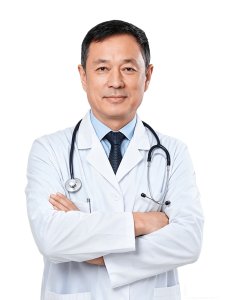
Xiao Yueyong
Professor Xiao Yueyong is Chief Physician in the Department of Radiological Diagnosis at the Chinese PLA General Hospital. He is a leading expert in minimally invasive interventional oncology. He serves as the inaugural President of WATA (2025–). He is President of the International (2020–) and Asian (2012–) Societies of Cryotherapy. He is also Deputy Head of the NHC Expert Group on tumour ablation regulations (2009–).
He has performed over 100,000 CT/MRI‑guided minimally invasive procedures. His work covers chemical ablation, RFA, MWA, cryoablation, and NanoKnife (IRE). He introduced and advanced NanoKnife ablation in China. He led the first national standards for tumour cryoablation and NanoKnife.
Honors include the National Special Contribution Award (Lifetime Honorary). He received First Prize from the Chinese Medicine Education Association (2021). He received two Second Prizes for Military Medical Achievements (2016, 2018) and two Second Prizes from the China Anti‑Cancer Association (2019, 2022). He was named Asian Ablation Master. His research record includes 13 Chinese patents. He is the principal investigator for four NSFC projects and one MOST subject. He has published over 200 papers, with over 110 as first or corresponding author and over 40 in SCI journals. He has led over 10 ablation guidelines or consensus statements.
Video Stories from Bookimed Patients
Related Articles

Effective treatment of thyroid cancer at all stages
Written by Veronika Kazina
Share this content
 Anna Leonova
