Glaucoma Treatment in Greece — Get 3 Personalized Clinic Matches


Medically reviewed by
Fahad Mawlood
What's the Cost of Glaucoma Diagnosis and Treatment in Greece?
| Greece | Turkey | Austria | |
|---|---|---|---|
| Trabeculotomy | from $1,300 | from $2,000 | ≈ $3,300 |
| Laser trabeculoplasty | - | from $800 | ≈ $550 |
Your Benefits and Guarantees with Bookimed
Transparent Prices & Flexible Installments
No hidden fees – just official clinic prices. Pay at the clinic for Glaucoma treatment and use a flexible installment plan if needed.
Verified Clinics & Doctors Only
Bookimed is committed to your safety. We only work with medical institutions that maintain high international standards in Glaucoma treatment and have the necessary licenses to serve international patients worldwide.
Free 24/7 Assistance
Bookimed offers free expert assistance. A personal medical coordinator supports you before, during, and after your treatment, solving any issues. You're never alone on your Glaucoma treatment journey.

Your personal Bookimed medical coordinator
- Supports you at every stage
- Helps choose the right clinic and doctor
- Ensures quick and convenient access to information
Best Glaucoma Treatment Centers in Greece: 3 Verified Options and Prices


Get a Medical Assessment for Glaucoma in Greece: Consult with Experienced Doctors Now
View all Doctors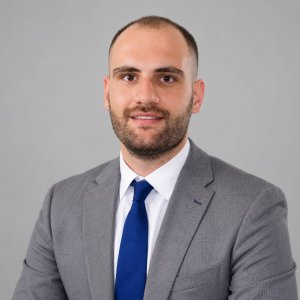
Panagiotis Dervenis
Dr. Panagiotis Dervenis is a specialist in cornea, glaucoma, cataract, and refractive surgery. He graduated from the Aristotle University of Thessaloniki. He earned an MSc with distinction in Biomedical Research Methodology, Biostatistics, and Clinical Bioinformatics in 2020.
He trained in ophthalmology in Trikala (2019–2021). He then worked at the University Eye Clinic of Sussex (2022) and at Moorfields Eye Hospital (2022–2023). He completed a glaucoma clinical fellowship (2023–2024). This included MIGS and complex surgery, such as trabeculectomy and drainage valves/devices.
He is a cornea and ocular surface fellow at Moorfields and King’s College Hospital (2024–2026). He has performed many modern corneal transplants (DMEK, DSAEK, DALK, PK). He completed refractive surgery training at Ulster University (2024–2025) under Prof. Dan Reinstein (LASIK, PRK, SMILE). He also trained in cataract surgery with premium IOLs. He earned FEBO after the pan-European board exams (2025). In 2026 he was selected by AECOS as one of 12 Rising Stars.
Share this content
Video Stories from Bookimed Patients
 Anna Leonova

Expert Overview about Glaucoma Treatment in Greece
Can glaucoma be cured by surgery performed in Greece?
Glaucoma cannot be cured by surgery in Greece or any other country. Vision loss from optic nerve damage is irreversible. Greek specialists use surgery to lower intraocular pressure and protect remaining vision. Procedures slow disease progression but do not eliminate the condition permanently.
- Treatment goal: Surgery manages fluid drainage to reduce internal eye pressure levels.
- Surgical techniques: Clinics perform laser trabeculoplasty and traditional trabeculotomy for various stages.
- Lifelong management: Patients require regular exams after surgery as pressure can rise again.
- Accredited facilities: Interbalkan European Medical Center in Thessaloniki holds Temos and GHA international accreditations.
Bookimed Expert Insight: Multidisciplinary centers like Interbalkan European Medical Center leverage partnerships with Massachusetts General Hospital. This connection allows Greek surgeons to apply academic protocols to complex cases. Selecting a hospital with strong international research ties often ensures access to updated drainage techniques.
Patient Consensus: Patients note that surgery significantly improves daily life by reducing the need for drops. They emphasize that while vision doesn't return, the stability provided by surgery offers great peace of mind.
What qualifications do glaucoma surgeons in Greece hold?
Glaucoma surgeons in Greece are ophthalmologists who complete a six-year medical degree and a four-year residency. They must pass state board exams for licensing. Top specialists often hold a Fellowship of the European Board of Ophthalmology (FEBO) and complete international glaucoma fellowships.
- Medical licensure: Surgeons require a state license from the Greek Ministry of Health.
- Specialist title: Doctors must pass oral and written exams after a four-year residency.
- Advanced credentials: Many hold a Fellowship of the European Board of Ophthalmology (FEBO) diploma.
- Subspecialty training: Leading experts often complete one-year glaucoma fellowships in Germany or the UK.
- Research degrees: Top-tier specialists frequently possess a Master of Science or a PhD.
Bookimed Expert Insight: Greek medical centers like Interbalkan European Medical Center hold Global Healthcare Accreditation (GHA). They often maintain active partnerships with elite institutions like Harvard University. This global connection ensures that local surgical protocols align with the highest international safety standards.
Patient Consensus: Patients note it is important to find surgeons who focus specifically on glaucoma cases. They value doctors who clearly explain pressure-lowering targets and prioritize conservative medical treatments before suggesting surgery.
How long does recovery take after glaucoma surgery in Greece?
Recovery after glaucoma surgery in Greece typically takes 3 to 6 weeks. Total vision stabilization may require up to 3 months. Timelines vary significantly by technique. Laser procedures offer recovery within 2 days. Traditional incisional surgeries require 4 to 6 weeks for pressure stabilization.
- Laser recovery: Patients usually return to normal activities within 1 to 2 days.
- MIGS timeline: Minimally invasive procedures allow functional recovery in 1 to 3 weeks.
- Surgical restrictions: Avoid lifting over 5 kg and bending for at least 2 weeks.
- Water safety: Keep eyes dry and avoid swimming for at least 4 weeks.
Bookimed Expert Insight: Patients should prioritize clinics with international accreditations like Global Healthcare Accreditation (GHA). Interbalkan European Medical Center in Thessaloniki holds both GHA and Temos certifications. These credentials ensure the facility meets rigorous standards for managing international patients during the critical first month of recovery.
Patient Consensus: Patients note the first week is often the most challenging due to light sensitivity and a gritty sensation. Many emphasize that while you can resume light activities quickly, vision clarity may fluctuate for several weeks.
Which cities and clinics are recognized for advanced glaucoma care in Greece?
Athens and Thessaloniki are the primary Greek hubs for advanced glaucoma care. These cities house university hospitals and specialized centers like Athens Eye Hospital. Facilities offer Selective Laser Trabeculoplasty and Minimally Invasive Glaucoma Surgery. Surgeons often hold certifications from the European Board of Ophthalmology.
- Specialized facilities: Athens Eye Hospital features a dedicated Glaucoma Department for complex cases.
- Academic centers: AHEPA University Hospital in Thessaloniki leads international research on trabeculectomy outcomes.
- Advanced diagnostics: Top centers provide Optical Coherence Tomography and automated perimetry for staging.
- Accreditation standards: Interbalkan European Medical Center holds Global Healthcare Accreditation for medical tourism quality.
Bookimed Expert Insight: While many private clinics offer basic screenings, Interbalkan European Medical Center stands out for its collaboration with Massachusetts General Hospital. This partnership ensures patients access protocols often reserved for top-tier US academic institutions. Choosing a multidisciplinary center with over 30 departments provides better safety for patients with underlying conditions like heart disease.
Patient Consensus: Patients note that traveling to major cities is necessary for specialized workups. They recommend specifically asking surgeons about their yearly volume of pressure-lowering procedures rather than general eye care experience.
How long should international patients plan to stay in Greece for major glaucoma surgery?
International patients should plan to stay in Greece for 7 to 14 days after major glaucoma surgery. This window allows surgeons to monitor initial healing and intraocular pressure. Stable readings are essential before flying. Most medical teams require multiple follow-up visits during the first 2 weeks.
- Incisional surgery stay: Plan for 14 days near the clinic to manage pressure stabilization and healing.
- Minimally invasive options: Less intensive procedures like micro-implants typically require a shorter 4 to 5-day stay.
- Mandatory follow-up: Next-day assessments are critical for checking pressure and removing surgical eye patches.
- Activity restrictions: Patients must avoid swimming or strenuous sightseeing for at least 2 to 4 weeks.
Bookimed Expert Insight: Quality signals in Greece often align with international partnerships. Interbalkan European Medical Center in Thessaloniki cooperates with Massachusetts General Hospital and Harvard University. Such global ties often indicate rigorous adherence to high-standard postoperative monitoring protocols used in the United States.
Patient Consensus: Patients emphasize that this surgery is not a one-day event. They note it is important to build in extra time for medication changes and second checks during the first 2 weeks.