To homepage

How it works

We've transformed the clinic search process, making it simple, fast, and personal.
Answer a few questionsTake a short quiz to share your Braces goals.
Get personalized offers3 clinics, handpicked based on your answers, provide tailored treatment plans and quotes.
Choose the best optionCompare offers and choose the clinic that suits you best.
You can also browse all 3 clinics below.
820К+ patients have got assistance since 2014
50 countries
1,500 clinics
6K+ reviews
3K+ qualified doctors

How Much Does Braces Cost in Republic of Korea?

Braces in the Republic of Korea typically cost from $4,000 to $4,500. Prices vary based on the alignment system, case complexity, and clinic location in hubs like Seoul. Patients save around 20% compared to the US, where similar procedures cost $5,000 on average. Packages usually include 3D digital scans, specialist consultations, and diagnostic imaging across major medical centers.

  • Ceramic braces: $3,400 to $5,900 for a more discreet, tooth-colored aesthetic appearance.
  • Lingual braces installation: $8,200 to $11,500 which are placed behind the teeth.
  • Self-ligating systems: Often cost 15-20% more than traditional metal options due to faster adjustments.
  • Clear aligners: Generally represent the higher end of the price spectrum for removable treatments.

Bookimed Expert Insight: Choosing a specialist with high patient volumes and university affiliations ensures top-tier care. For instance, Dr. Jeongwon Youn at Yonsei JW Dental Clinic has completed over 6,000 cases. Ceramic packages there start around $4,500 and include 3D planning. This clinic is popular with US patients and provides evidence-based care through adjunct professors. Global hubs in Seoul offer advanced digital scans often included in the initial price.

Republic of KoreaTurkeyThe USA
Bracesfrom $4,000from $167from $3,500
Lingual braces installationfrom $8,200from $2,800from $8,000
Ceramic Bracesfrom $3,400from $1,172from $5,200
Twin block braces-from $1,100-
Metal braces (South Korea), 1 jaw-from $1,600from $3,500
Data verified by Bookimed as of May 2026, based on patient requests and official quotes from 222 clinics worldwide. Median costs are based on real invoices (2025–2026) and updated monthly. Actual prices may vary.

Braces Packages in Republic of Korea — May 2026

Procedure type
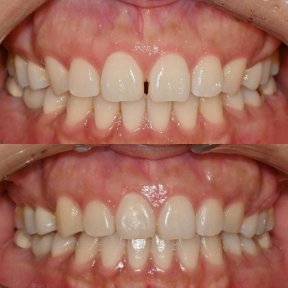
Before and after braces results at Yonsei JW Dental Clinic – improved teeth alignment
Before and after braces results at Yonsei JW Dental Clinic, improved teeth alignment
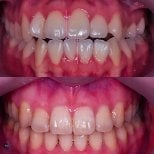
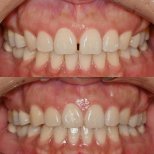
Before and after braces results at Yonsei JW Dental Clinic – improved teeth alignment
Before and after braces results at Yonsei JW Dental Clinic, improved teeth alignment
19 years of experience

Clippy-C Self-Ligating Braces for Straighter Teeth with 3D Planning

Dr. Jeongwon Youn, an adjunct professor at Yonsei University with over 6,000 orthodontic cases completed, provides this care. The package at the official Straumann® provider Yonsei JW Dental Clinic costs around $4,000 and covers a precise 3D dental scan and a full consultation. This clinic, which serves thousands of international patients annually, uses the 3D scanning for detailed treatment planning.

Discover the Best Braces Clinics in Republic of Korea: 3 Verified Options and Prices

The Bookimed clinic ranking is based on data science algorithms, providing a trusted, transparent, and objective comparison. It takes into account patient demand, review scores (both positive and negative), the frequency of updates to treatment options and prices, response speed, and clinic certifications.
JK Plastic Surgery Center
S-plant Dental Hospital
You’ve viewed 5 of 11 clinics

Braces Overview in Republic of Korea

Takeaways
Related procedures & Costs
How it works
What to expect
Pros & Cons
Benefits
Payment
patients recommend -
85%
Surgery Time - 2 hours
Stay in the country - 1 day
Rehabilitation - 1 day
Anesthesia - Local anesthesia
Bookimed fees - $0

Bookimed, a leading global medical tourism platform, is committed to helping clients looking for Braces in Republic of Korea by offering expert assistance and trustworthy medical solutions for every situation. Smart automatic ranking system is used to compose transparent clinic listings, meticulously maintained by a data scientist using AI for accuracy. The platform guarantees authenticity by publishing reviews from real patients after their treatments. Bookimed offers comprehensive medical solutions, with updates from clinics to ensure trustworthiness. The content about Braces in Republic of Korea, crafted by experienced medical authors and reviewed by specialists, adheres to Bookimed"s Editorial Guidelines, reflecting the platform"s commitment to delivering high-quality and clear health information. For more details or inquiries, feel free to contact us at marketing@bookimed.com or learn more about us and our mission here.

Our Trusted Doctors

View all Doctors
verified

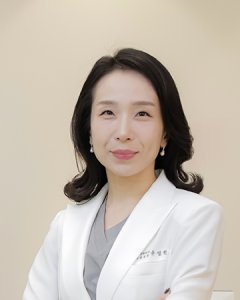
Jeongwon Youn

19 years of experience

PhD in Orthodontics with adjunct professorship at Yonsei University – Dr. Youn brings academic expertise to every braces case at Yonsei JW Dental Clinic.

  • Member of The Korean Association of Orthodontists
  • Specializes in lingual orthodontics and Invisalign treatments
  • Trained at Yonsei Severance Hospital for orthodontics residency
  • Completed Implant Master Course for comprehensive dental care
verified

Kim Geun-il

12 years of experience

Specialist in Implant Dentistry with credentials from Seoul National University – Dr. Kim designs only necessary treatments for optimal oral health.

  • Graduated from Seoul National University School of Dentistry
  • Certified by the Korean Academy of Implant Dentistry
  • Member of the International Team for Implantology (ITI)
  • Uses Osstem and MegaGen Implant systems
verified

Kwon Jae-won

14 years of experience

Integrated Dentistry Specialist – Dr. Kwon Jae-won designs precise treatment plans tailored to each patient's needs.

  • Graduated with honors from Seoul National University School of Dentistry
  • Specialist in Integrated Dentistry certified by Ministry of Health and Welfare
  • Member of multiple prestigious dental associations including Korean Academy of Implant Dentistry
  • Completed residency at Seoul National University Dental Hospital
  • Holder of Osstem Implant Clinical Training Certificate
verified

Kang Dong-ho

23 years of experience

23 years of experience specializing in prosthodontics – Dr. Kang combines academic expertise with precision in braces and aligner treatments at Yonsei Uline Dental Clinic.

  • Ph.D. in Prosthodontics from Yonsei University
  • Certified Invisalign provider for clear aligner treatments
  • Former Head of Prosthodontics at Yonsei University Yongin Severance Dental Hospital
  • Full Member of the Korean Academy of Prosthodontics

Video Stories from Bookimed Patients

Igor
It was great! Transfers, accommodation, treatment—all included.
Procedure: Dental Implant
David
Who knew getting your teeth fixed could be a mini vacation?
Procedure: Installation of a dental implant with crown
Pavel
I recommend Bookimed's services to everyone - they made my life much easier.
Procedure: Zirconia crown installation

Reviews about Bookimed: Discover Patients' Insights

All reviews
Светлана • Consultation with a dentist
Republic of Korea
Mar 5, 2020
Verified review.
Dr
Very expensive at the clinic, too.

Braces: Before & after photos

View all

Related Articles

Share this content

Updated: 03/05/2020
Authored by
Anna Leonova
Anna Leonova
Head of Content Marketing Team
A certified medical writer with 10+ years of experience, developed Bookimed’s trusted content, backed by a Master’s in Philology and medical expert interviews worldwide.
Fahad Mawlood
Medical Editor & Data Scientist
General practitioner. Winner of 4 scientific awards. Served in Western Asia. Former Team Leader of a medical team supporting Arabic-speaking patients. Now responsible for data processing and medical content accuracy.
Fahad Mawlood Linkedin
This page may feature information relating to various medical conditions, treatments, and healthcare services available in different countries. Please be advised that the content is provided for informational purposes only and should not be construed as medical advice or guidance. Please consult with your doctor or a qualified medical professional before starting or changing medical treatment.

Our Braces Techniques: What Suits You Best?

When considering Braces, it’s important to understand the different techniques and which is best suited for you. Here’s a concise comparison of popular options:

Ceramic Braces

These are orthodontic braces that use clear or tooth-colored brackets to align teeth discretely.

Pros: Less noticeable than metal brackets, making them aesthetically pleasing. Suitable for adults and teens, they offer similar effectiveness to traditional braces with a subtle appearance.
Cons: Ceramic materials are more fragile and may require more care than metal brackets. They can stain if not properly maintained.
Effectiveness: Achieves up to 90% alignment success rate in dental correction.
Duration: 18-24 months
Recovery: Not needed
Best for: Individuals seeking discreet dental alignment. Suitable for mild to moderate bite correction.

Damon Braces

These are self-ligating orthodontic braces that use a sliding mechanism to hold the wire, allowing teeth to move more freely and comfortably.

Pros: Requires fewer adjustments, reducing orthodontist visits by up to 50%. The sliding mechanism applies less pressure, enhancing comfort compared to traditional metal brackets.
Cons: May not be as discreet as lingual braces, with visibility similar to ceramic braces. Not suitable for all complex orthodontic cases.
Effectiveness: Achieves significant dental alignment with up to 70% fewer extractions.
Duration: 12-24 months
Recovery: Not needed
Best for: Ideal for moderate to severe dental alignment issues in patients aged 12-50.

Lingual Braces

Lingual braces are dental appliances fitted behind the teeth, making them invisible from the front.

Pros: Completely hidden from view, making them ideal for those seeking discretion. They provide effective teeth straightening with a success rate of 95%.
Cons: Lingual braces can cause initial discomfort and speech difficulties, unlike ceramic braces which are less intrusive.
Effectiveness: Achieves up to 95% success in dental alignment.
Duration: 1-2 hours
Recovery: Not needed
Best for: Adults and teens requiring discreet orthodontic treatment.

FAQ about Braces in Republic of Korea

These FAQs come from real patients seeking medical assistance through Bookimed. Answers are given by experienced medical coordinators and trusted clinic representatives.

Is Republic of Korea a good place for Braces procedure?

According to patient reviews and data from Bookimed, Republic of Korea is a top destination for Braces treatment due to its highly specialized medical facilities.

  • The leading specialties for Braces in the country are orthodontics and dentistry.
  • S-Plant Dental Hospital in Seoul is an outstanding specialized medical facility that has performed over 23,000 dental implants in 11 years.
  • The clinic uses a uniquely designed 3D-modeling method to perform surgeries which helps to reduce the risk of complications and speed up recovery.
  • Kyung Hee University Hospital at Gangdong is the first and only global center that combines different medical approaches in one facility.
  • The center is recognized as an outstanding facility by WHO and UNICEF, with 1,500,000 patient visits annually.
  • Seoul National University Bundang Hospital specializes in general and abdominal surgery, oncology, orthopedics and traumatology, with 1,500,000 patients undergoing treatment at the hospital every year.
  • Chung-Ang University Hospital is a well-known medical facility in Seoul that attracts patients from the United States, Canada, the UK, and other countries.
  • The success rate of Braces treatment in Republic of Korea is high due to the experience and qualification of the doctors and the use of modern technologies.
  • According to Bookimed, the country attracts 30,000 international patients for treatment annually, with most of them coming from South Asia.

How long does it take to get Braces in Republic of Korea?

The duration of a braces trip to Republic of Korea takes around 18-24 months.

Which hospital is best for Braces in Republic of Korea?

Bookimed's rating has revealed the top 5 hospitals in Republic of Korea for Braces:

  1. Kyung Hee University Hospital at Gangdong (KUIMS)
  2. Seoul National University Bundang Hospital (SNUBH)
  3. Seoul St. Mary’s Hospital
  4. S-plant Dental Hospital
  5. Chung-Ang University Hospital

Will a Korean braces doctor continue treatment that I started abroad?

Korean orthodontists often continue braces treatment started abroad if the appliance systems are compatible and records are complete. Most specialists require a re-evaluation to align the existing setup with their clinical standards. Doctors like Dr. Jeongwon Youn have performed 6,000+ orthodontic cases including complex transfers.

  • Documentation requirements: Patients must provide previous X-rays, 3D scans, and the original treatment plan.
  • System compatibility: Doctors may replace current brackets or wires if they use different local brands.
  • Specialized techniques: Specialists like Dr. Kang Dong-ho provide certified Invisalign care for clear aligner transfers.
  • Transfer fees: Expect costs for a new diagnostic consultation and fees for the remaining complexity.

Bookimed Expert Insight: Data shows that doctors with international backgrounds, such as Dr. Lim Gi-hyeon who trained at a Harvard-affiliated hospital, are better prepared for foreign transfers. These specialists frequently use Western-standard bracket systems, which reduces the need for expensive appliance replacements. Choosing a doctor at a KOIHA-accredited clinic like Yonsei Uline Dental Clinic ensures adherence to strict quality protocols during the transition.

Patient Consensus: Patients emphasize that bringing a transfer letter from their original doctor makes the transition effortless. They note that switching to Korean care often lowers monthly costs significantly compared to Western countries. While some were surprised by a small fee to replace wires, they found the precision improved their final results.

How often will I need to see my braces doctor for check-ups?

Patients wearing traditional metal or ceramic braces typically visit their doctor every 4 to 6 weeks. These visits involve wire adjustments and elastic band changes. South Korean orthodontists use precise diagnostic tools to track tooth movement and maintain progress during every scheduled appointment.

  • Traditional braces: Appointments occur every 4 to 6 weeks for necessary manual wire adjustments.
  • Self-ligating braces: These systems often allow for longer intervals between visits every 8 to 10 weeks.
  • Clear aligners: Office visits are usually required every 6 to 10 weeks for progress monitoring.
  • Emergency repairs: Periodic check-ups allow doctors to fix loose brackets or uncomfortable poking wires.

Bookimed Expert Insight: Orthodontists in Seoul often hold specialized certifications from prestigious institutions like Yonsei University. Dr. Kang Dong Ho, for example, is Invisalign certified and has performed 8,000+ dental procedures. This advanced certification allows doctors to manage complex alignment cases with fewer clinical visits.

Patient Consensus: Patients mention they felt surprised by how fast the local check-ups were. The dental teams were very organized and kept everyone on schedule. Many noted that regular visits helped them feel more confident about their treatment results.

Is it easy to find English-speaking braces doctors in Korea?

Finding English-speaking braces doctors in Korea is quite straightforward in major cities like Seoul. Top orthodontists often hold international training from institutions like Harvard Medical School or Ohio State University. Many clinics in Gangnam and Sinchon employ bilingual coordinators to manage consultations and follow-up care.

  • International training: Many doctors completed residencies or fellowships at prestigious American dental schools.
  • Specialized certifications: Leading providers hold Korean Board certifications and are certified Invisalign practitioners.
  • Dedicated support: Larger clinics use English-speaking staff to assist with questionnaires and appointment booking.
  • Academic expertise: Many practitioners serve as adjunct professors at top institutions like Yonsei University.

Bookimed Expert Insight: Data shows a high concentration of English proficiency among doctors with dual board certifications. For instance, Dr. Lim Gi-hyeon of 365SeoulOneTop365 Dental Clinic is a visiting practitioner at a Harvard-affiliated hospital. Choosing doctors with such international academic ties typically ensures a higher level of communication for complex orthodontic cases.

Patient Consensus: Patients note that major clinics in Seoul offer smooth experiences with doctors who explain procedures clearly in English. Many find booking via KakaoTalk easy and appreciate receiving detailed aftercare instructions in their own language. Those visiting high-end Gangnam clinics often mention that the communication is even more efficient than in their home countries.

What is the typical training or background of a Korean orthodontic doctor?

Korean orthodontic doctors undergo a rigorous ten-year training path including dental school and specialized residency. Leading specialists like Dr. Jeongwon Youn at Yonsei JW Dental Clinic often hold a PhD in Orthodontics. They must obtain Ministry of Health and Welfare certification to practice as specialists.

  • Academic foundation: Complete six years of dental school followed by the National Licensing Exam.
  • Specialized residency: Undertake a four-year internship and intensive residency at accredited training hospitals.
  • Advanced credentials: Top doctors hold PhDs from prestigious institutions like Seoul National University or Yonsei.
  • International exposure: Many pursue fellowships at global institutions like Harvard Medical School or Ohio State.

Bookimed Expert Insight: Data shows a high concentration of orthodontists with dual roles in clinical practice and academia. For instance, Dr. Jeongwon Youn and Dr. Kang Dong-ho both serve as adjunct professors at Yonsei University. This suggests patients receive care from doctors who actively train the next generation of specialists.

Patient Consensus: Patients note that Korean orthodontists are incredibly precise and use detailed 3D scans before starting treatment. Many felt confident because their doctors clearly explained the movement of every tooth using digital models.

Does a Korean National Health Insurance plan pay for orthodontic doctors’ services?

South Korean National Health Insurance typically excludes orthodontic services for aesthetic reasons. Coverage applies only to specific medical conditions. These include congenital deformities like cleft lip or severe jaw disorders. Most international patients paying out-of-pocket find high expertise in private clinics.

  • Congenital deformities: Insurance may cover braces for patients with cleft lip or palate.
  • Medical necessity: Braces are partially covered if required for registered rare health conditions.
  • Functional improvement: Coverage prioritizes essential functions like chewing or speaking over cosmetic changes.
  • Excluded services: Standard aesthetic braces, whitening, and veneers are generally full out-of-pocket costs.

Bookimed Expert Insight: While insurance is limited, South Korea offers highly qualified specialists with niche training. Dr. Kang Dong Ho, for instance, completed a mini-residency in orthodontics at Yonsei University. Patients often benefit from doctors who hold Ph.D. credentials and ministry-certified specialist statuses in Seoul.

Patient Consensus: Patients note that while the national plan does not help with cosmetic costs, the results justify the price. They often mention feeling relieved by the precision and preventive care focus found in Korean dental hospitals. Many were surprised by how thoroughly doctors explain the long-term functional benefits.

What should you know about South Korea before the trip?

Currency

South Korean Won (you also can pay for services in dollars)

Best period for the trip

April, May & June or September, October & November.

Language

Korean (most of medical staff speaks English fluently)

Visa

none required for stays under 90 days or less

Time difference with Europe

9 hours

Time difference with the USA

9 hours

Capital

Seoul

Medical tourism center

Seoul

Popular resorts

Gangwon-do, Gyeongju, Boseong, Jeju

What is the level of medicine in South Korea?

Healthcare is the key development sector of the Korean government. The Korean authorities are convinced that care for the citizens' health should be an absolute priority of state policy and spend about 1 billion a year for medical tourists attraction.

According to Mark Britnell, hospitals dominate the health system. 94% of hospitals are privately owned.

What hotel services are provided here?

In South Korea, hotels of different price ranges and service levels are presented. Most tourists choose 4 and 5 star hotels with all-inclusive meals. Such hotels have everything for a comfortable stay: varied food, a large well-groomed territory, animation for children and adults. Some hotels have their own water park, which guests can use for free. Budget travelers can afford to book an economical 3-star hotel with half board or no meals at all.

Do I need a visa to South Korea?

Today, South Korea has visa-free agreements with 112 states. None visa is required for stays under 90 days or less. To stay longer in this country, you need a visa. What states need a visa for treatment in South Korea and what countries can cross the border free and easy read here.

What documents are required to apply for a visa to South Korea for treatment?

Visas for travel to South Korea require a number of documents. The necessary papers can be submitted 90 days before the planned departure. Lists of documents includes:

  • ID card
  • confirmation of online registration and filling out the questionnaire
  • certificate of income and availability of funds
  • insurance policy for a stay in South Korea (original and copy)
  • 2 photos (5x6)
  • visa receipt
  • booking of flight and hotel
  • medical opinion about the need for treatment.

What are the most popular plastic surgery procedures?

According to ASPS statistics, 17.7 mln cosmetic surgeries and 5.8 mln reconstructive procedures have been performed in 2018. Among cosmetic procedures the most popular are:

  • breast augmentation
  • liposuction
  • rhinoplasty (nose job)
  • eyelid surgery
  • tummy tuck.

Tumor removal, laceration repair, maxillofacial surgery, scar revision, hand surgery are the most common operations in the context of reconstructive surgery.

Get a free consultation

Select the best way to contact you