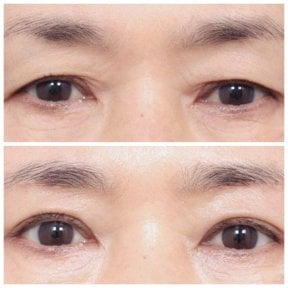
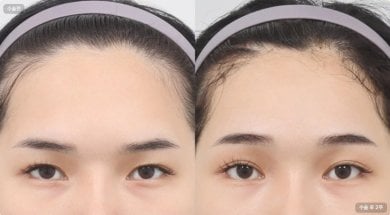
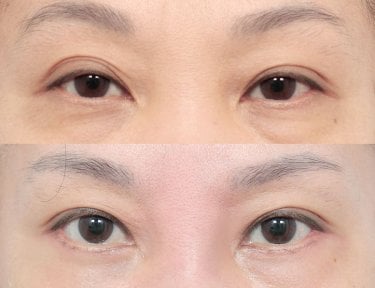
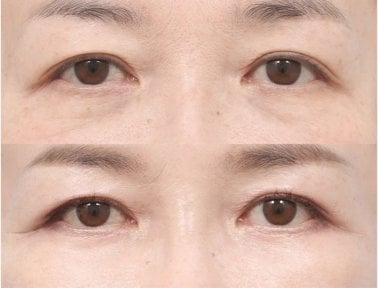
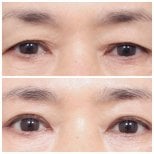
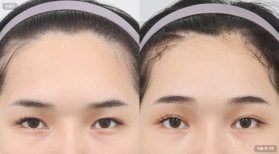
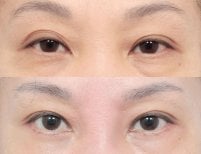
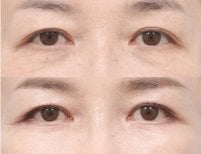
Korea's reputation for eyelid surgery comes from tailoring the technique to each patient's eyelid anatomy. Surgeons here design a crease that suits your features. They correct a droopy muscle when that's the real cause. And they reposition under-eye fat without an external scar. The aim is an eye that looks brighter and more rested, still unmistakably yours. Which method fits? It comes down to your lids, your skin, and what's actually driving the change.
Suture vs. Incisional Double-Eyelid Methods: Which One Fits Your Eyelid Anatomy?
Two techniques create a double-eyelid crease. The right one depends on how your lid is built. Get the match right, and the crease looks natural and stays that way as you age.
Asian vs. Western eyelid anatomy
A large share of East Asian eyelids have no natural crease. It's the look often called a "monolid". The lid muscle sends few attachments to the skin, and fat sits forward, giving a fuller lid. These anatomical differences help determine which technique is most suitable.
Suture (non-incisional) method
The suture method forms a crease through one or two tiny holes. These anchor the skin to the lid muscle, with no external cut. Swelling settles in about 2–3 days. The crease may loosen or fade over the years, so this method is often better suited to thinner lids with little excess fat.
Incisional method and crease height
The incisional method opens along the crease line to remove excess skin, muscle, and a little fat. It gives a permanent, precise crease. This method is often better suited to eyelids with more tissue or more pronounced changes in the upper lid. Expect 7–14 days of visible swelling and in-person stitch removal at days 5–7.
Korean surgeons typically keep the crease lower, around 4–6 mm above the lash line. In Western surgery, creases sit higher at 8–10 mm (per the American Academy of Ophthalmology)—though applying that higher position to Asian eyelid anatomy risks an unnaturally deep, overdone fold.
Seoul clinics such as VG Plastic Surgery and SAERO Plastic Surgery handle both upper and lower eyelid work. A surgeon can choose the method based on your individual eyelid anatomy.
| Feature | Suture (non-incisional) | Incisional |
|---|
| External cut | None, 1–2 micro-holes | Along the crease line |
| Visible swelling | 2–3 days | 7–14 days |
| Permanence | Can fade over years | Permanent |
| Best-fit skin | Thinner lids, little fat | Thicker skin, heavier sagging |
| Stitch removal | None | In person, days 5–7 |
Under-Eye Fat Repositioning vs. Traditional Lower Blepharoplasty
Puffy lower lids can be smoothed in two different ways. Your lower eyelid anatomy helps determine which method suits you best. The newer approach also preserves the soft roll beneath your lashes.
Scarless fat repositioning
Under-eye fat repositioning in Korea works through a small cut inside the lower lid. It moves the fat that causes bags down into the hollow of the tear trough. Because the incision sits on the inner lining of the lid, it leaves no external scar and needs no stitch removal.
It suits patients whose skin still has good elasticity. It also leaves the eyelid muscle untouched. That helps preserve, and can even enhance, the youthful roll just under the lashes, known in Korea as “aegyo-sal.”
When skin-excising surgery is needed
Traditional lower blepharoplasty is the answer only when there's both bulging fat and loose, wrinkled skin. It uses an external cut just below the lash line to trim skin and tighten muscle. It also carries a higher chance of the lid pulling down or turning outward, a complication known as ectropion. That's why the scarless route is preferred when only fat needs moving.
The deciding factor is your skin and lower-eyelid anatomy. Repositioning suits smooth-but-puffy lids. Skin removal becomes an option when the skin has genuinely stretched.
Seoul surgeons who list this work include Wonjin Plastic Surgery Clinic and VG Plastic Surgery. Both offer lower blepharoplasty with fat repositioning.
| Feature | Fat repositioning | Traditional lower bleph |
|---|
| Incision | Inside the lid | Just below the lashes |
| External scar | None | Fine sub-lash line |
| Stitch removal | None | Yes |
| Best-fit skin | Firm, elastic | Loose, stretched |
| Lid-position risk | Lower | Higher |
Ptosis or Just Sagging Skin? How to Tell Before You Choose Surgery
Droopy-looking eyes can have different causes, and each one calls for a different approach. Identifying the cause helps the surgeon choose the right technique and create a more balanced, natural-looking result.
The forehead-strain self-check
One clue is how much you rely on your forehead muscles to keep your eyes open. Do you lift your brows all day to see clearly? You may be using your forehead muscle to hold up heavy lids. That's a classic sign of weak lid muscle rather than loose skin. Watch for:
- deep forehead lines that appear early;
- a constant, subtle brow-raise in photos;
- tension headaches or an aching brow by evening.
That muscle weakness is called ptosis. It's different from simply having extra skin, as the Mayo Clinic explains. Adding a crease without correcting it leaves the lid sitting high and sleepy. True correction adjusts the lid-lifting muscle itself. Mild cases are corrected through micro-holes. Heavier cases with thick skin require a full incision.
Functional vs. cosmetic: the vision test
Heavily sagging upper-lid skin can drape over the lashes and block your upper and side vision. At that point, surgery is a functional matter, not only a cosmetic one. It can make everyday tasks like reading and driving easier. Surgeons who focus on eyelids, such as Dr. Paik Hye-won, handle blepharoplasty, double-eyelid creation, and ptosis correction together. That way, both the muscle and the skin get addressed in one plan.
Epicanthoplasty: When Inner-Corner Surgery Helps
Epicanthoplasty releases the small fold at the inner corner of the eye to make it look longer and more open. It's often bundled with double-eyelid surgery. But it works best as a selective choice, not an automatic add-on. It helps most when a heavy inner fold hides the corner and makes the eyes look short or close-set. When the corners already look balanced, removing the fold can look overly sharp. In those cases, leaving the inner corner unchanged may create a more natural result.
The inner corner also needs careful planning because of its delicate anatomy:
- Scarring can be more noticeable here than on the upper lid, so a precise inside-the-fold technique is important.
- The fold sits over the tear ducts, so the surgeon needs to work carefully around this area.
- Preserving part of the fold can help maintain a softer, more natural shape.
Because the inner corner is such a delicate area, it's worth choosing a surgeon who concentrates on eye procedures. Clinics such as JK Plastic Surgery Center focus on exactly that.
How Do You Verify Operating-Room Safety at a Korean Clinic?
A safe operation in Seoul starts with asking the clinic a few practical questions. The answers can tell you a lot about how the clinic handles surgery and patient safety. These are the same checks Bookimed's coordinators raise with patients before a Seoul trip.
Anesthesia staffing
Ask whether a full-time anesthesiologist stays with you from the first cut until you wake up. Some busy clinics rely on part-time anesthesiologists who move between rooms. So confirming full-time cover is a simple, powerful check. For instance, AB Plastic Surgery lists an anesthesiology specialist ratio double the industry average. Lienjang Plastic Surgery & Aesthetic Clinic reports on-site anesthesiologists and no surgical incidents since its foundation in 2004.
Confirm your surgeon
Confirm in writing that the surgeon who consults with you is the one who will perform your procedure. Korea's 2023 operating-room camera law adds an extra layer of transparency to surgical care. Having the surgeon's name documented gives you a clear record of who will perform your procedure.
Your CCTV rights
Since September 2023, Korean operating rooms must record surgery under general anesthesia or deep sedation when the patient asks in writing. Ask how you receive the footage and whether any live-view fee applies. That way, there are no surprises later. Clinics like URBAN Plastic Surgery and VG Plastic Surgery run CCTV in their operating rooms, alongside full emergency-response systems.
2026 Updates: VAT Refund, Medication Rules, and Pre-Op Safety Prep
A few practical changes affect your budget and your preparation. Knowing them early keeps the trip smooth.
The 2026 VAT change
Since January 1, 2026, South Korea has ended the cosmetic-surgery VAT refund. Cosmetic procedures are now priced with tax included, and there's no airport refund to claim back. Plan your budget for the full amount.
Upper and lower eyelid surgery in Korea costs about $3,600–$5,600, roughly 50% below the US. That figure is already tax-inclusive. Some clinics now offer their own value-back or direct discounts to soften the change, so it's worth asking your coordinator.
Bringing medications
Strong opioid painkillers such as Vicodin or Percocet are tightly controlled under Korean law. Bringing your own supply means arranging clearance in advance. It's simpler to plan pain relief through your clinic instead. Eligible travelers can enter South Korea without K-ETA through the end of 2026. Travelers arriving without it complete the online e-Arrival Card within three days before landing.
Bleeding-prevention prep
Eyelid tissue has a rich blood supply. A little preparation lowers the chance of bruising and bleeding. About 7–14 days before surgery, stop:
- blood thinners and aspirin;
- ibuprofen and other anti-inflammatory painkillers;
- vitamin E, fish oil, and herbal supplements such as ginseng and garlic.
Also tell your surgeon about dry eye, glaucoma, thyroid conditions, or diabetes, since these can mean adjusting the timing. Careful preparation helps reduce bleeding and bruising around the eyes and gives your surgeon a clearer picture of anything that could affect your procedure. For a wider view of planning treatment in Seoul, see Bookimed's guide to plastic surgery in Korea.