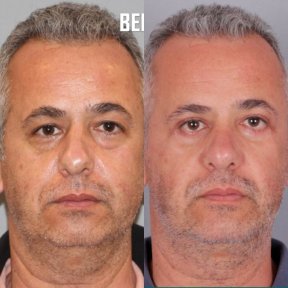
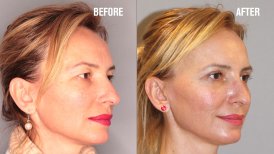
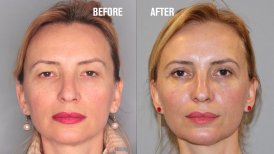
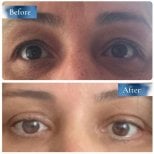
Tired, heavy-looking eyes can make you appear older and more worn out than you feel. Upper and lower eyelid surgery – also called blepharoplasty – lifts and refreshes that area. Turkey has become a leading destination for it. Choosing the right surgeon and clinic is essential for protecting your eyes and getting a good result.
How to Choose a Qualified Eyelid Surgeon in Turkey
The eyelid is one of the thinnest, most delicate tissues in the body. That makes your surgeon's training in eyelid and eye-area surgery especially important. Bookimed works with 65+ verified partner clinics in Turkey. It has handled over 500 patient requests for this procedure. So, you have plenty of options to choose from.
Oculoplastic vs general plastic surgeon
An oculoplastic surgeon is an eye doctor who then completes a dedicated eye-area fellowship of about two years. That training focuses only on the eyelids and the tissue around them. A general plastic surgeon operates across the whole body. Both can perform eyelid surgery well. But that extra eye-area training is a meaningful signal for delicate lower-lid work. Under ASOPRS fellowship standards, a candidate must personally perform at least 300 major and 150 minor eye-area procedures before board eligibility.
Popularity isn't the same as training. A 2025 study of the most-followed international eyelid surgeons found that 68% were general plastic surgeons. Only about 23% had completed a specialized eyelid fellowship. Social-media reach, in other words, is a poor guide to eyelid experience.
Your surgeon-vetting checklist
- Fellowship training: ask whether the surgeon has specific eyelid or oculoplastic training, not only a general plastic surgery board certification.
- Check for active membership in a recognized plastic or eye surgery society.
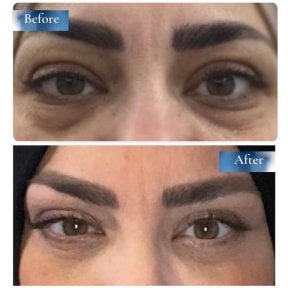
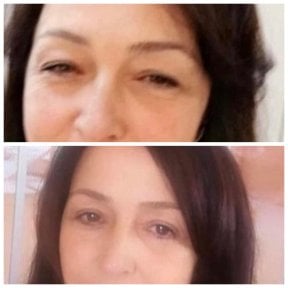
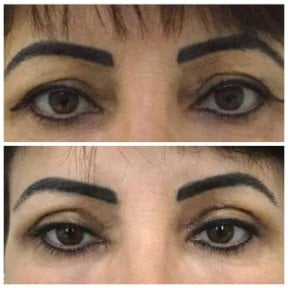
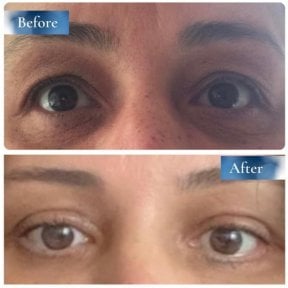
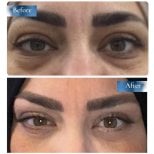
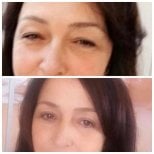
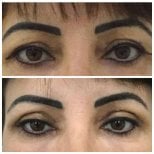
- Ask to see before-and-after photos of eyelid work specifically, not a mixed body surgery portfolio.
Several surgeons in the Turkey network hold recognized European board credentials, and most operate in Istanbul. Dr. Derya Bingol holds EBOPRAS certification, the European board qualification for plastic and aesthetic surgery, and performs blepharoplasty. Dr. Furkan Erol Karabekmez is also EBOPRAS-certified and a former Mayo Clinic research fellow, with a focus on facial aesthetic and reconstructive surgery.
Protecting Your Eyes: Dry Eye Risk and the Pre-Op Checks That Prevent It
Most patients avoid long-term dry eyes or problems with their eyelids closing properly, especially when the surgeon screens carefully beforehand. Although temporary dry eye is common, about 95% of patients recover fully within 8 weeks. Here's what affects the eye surface, and the checks that help lower the risk.
How eyelid surgery can affect dry eye
Removing too much skin from the upper lid can leave the eyes unable to close fully, a condition called lagophthalmos. That exposes the surface of the eye and can cause irritation. So a skin- and muscle-sparing technique is used to lower the risk. The blink reflex also spreads your tears across the eye. If surgery weakens the eyelid muscle, the tear film can thin, and the eyes can feel dry for a while. This is usually temporary.
Pre-op eye check
Tell your surgeon about anything that raises the risk, so they can plan a gentler approach:
- Previous laser vision correction: if you've had LASIK or PRK, your dry-eye risk is higher. Guidance is to wait at least six months and check the tear film first.
- Prominent or bulging eyes may require a more conservative technique.
- Loose lower lids, or visible white below the iris, signal that the lower lid needs careful support during surgery.
A responsible clinic runs a proper eye assessment. It checks the tear film and confirms the eye rolls up when it closes, rather than judging by looks alone. This is available in Turkey. For example, Prof. Dr. Ahmet Satici's ophthalmology practice, performs both blepharoplasty and laser eye surgery. That means it can assess the tear film and any post-laser risk directly. Its upper and lower blepharoplasty package includes an ophthalmologist consultation and costs $3,600, led by a surgeon with 20,000+ procedures. A UK patient treated at Lokman Hekim Istanbul Hospital wrote in their review: "My biggest concern before my upper and lower eyelid surgery was how my eyes would actually feel afterwards, especially when blinking. It's a relief to say they feel completely normal and comfortable."
When Is It Safe to Fly Home After Eyelid Surgery?
All-inclusive trips tend to schedule your flight home about a week after surgery. Whether that's right for you depends on what was done and how you're healing. It's better to wait for your surgeon's recommendation before setting your return flight.
Why cabin conditions matter
Cabin pressure is lower than on the ground. That lets tissues swell a little more and can strain fresh incisions. Cabin air is also very dry. Healing eyelids that aren't yet blinking normally can leave the eye surface sore on a long flight.
Safe fly-back windows by procedure
Based on general surgical guidance, an upper-eyelid-only procedure may allow a short-haul flight from around day 7 with a fit-to-fly sign-off. Combined upper and lower surgery usually needs longer. Long-haul flights to the US or Australia are best delayed further. A few habits make the trip home easier:
- Pack lubricating drops – the eye surface dries out fast in cabin air.
- Skip heavy bags, since straining can increase pressure around the eye and may contribute to rare retrobulbar (orbital) bleeding. Use assistance and travel light.
- Fit-to-fly clearance: get it documented by your surgeon before you travel.
Bookimed Expert Insight: Most all-inclusive packages include your hotel stay. So if your surgeon advises waiting a few more days, you can extend your stay and fly home when you're ready. The Premium Upper and Lower Eyelid Surgery package at Quartz Hospital, for example, covers a 4-star hotel, VIP transfers, and a follow-up exam for $4,000.
Support continues once you're home. For example, Soraca Med provides 24/7 post-treatment monitoring, and some clinics include up to a year of follow-up guidance.
Your Rights as a Foreign Patient in Turkey
Turkey provides legal protections for cosmetic-surgery patients, including those traveling from abroad. A few simple steps can help make sure those protections apply to you.
What makes your consent valid
Turkish law gives patients specific protections for elective cosmetic surgery. Under the Turkish Consumer Protection Law, surgeons can have responsibility for delivering the agreed treatment and result. The consent process should give you a clear understanding of what you are agreeing to before surgery. So check the following:
- A language you understand: ask for a certified translation if the form is in Turkish.
- Give yourself time to read it. You should receive the form early enough to review it carefully before the day of surgery.
- Insist on a real conversation, where the surgeon, not an agent, discusses it with you.
Authorized clinics and complication insurance
Responsibility can be shared across the coordinating agency, the hospital, and the operating surgeon. So choosing a properly authorized facility matters.
Turkish clinics that treat international patients hold a government Health Tourism Authorization Certificate. It's a baseline sign the facility is cleared to treat foreign patients. Several clinics in the network, including Soraca Med and Prof. Dr. Ahmet Satici's practice, hold it.
Turkey has also introduced complication insurance for health tourists. It can cover revision surgery, an extended stay, and a return flight. Check whether your package includes this coverage and ask about adding it if you want it.
For additional support after returning home, you can also arrange for someone in Turkey to help coordinate communication and handle any necessary follow-up. A notarized power of attorney (a vekaletname) lets a local representative in Turkey pursue any claim on your behalf after you fly home. Patients in the reviews repeatedly name their Bookimed coordinator for communicating with the clinic and helping with follow-up after they return home.
Planning a Safe Recovery: Accreditation and Emergency Support
Most eyelid-surgery issues, such as swelling and bruising, are minor and preventable. In a study of blepharoplasty patients, over 90% had no complications at all. Good wound care and infection control are key to a smooth recovery, especially when you have access to proper follow-up care after surgery abroad.
What to verify before you travel
- Accreditation: look for Joint Commission International (JCI) accreditation, which implies strict sterilization and sterile operating rooms.
- Emergency and ICU access: a 24-hour emergency channel, with intensive-care backup during your surgical stay.
- Ask how remote follow-up works, ideally a structured photo or video review once you're home.
- Confirm the complication cover and revision policy, so an unexpected issue doesn't become an out-of-pocket surprise.
Accredited clinics and emergency backup
Our network includes hospitals with different levels of accreditation and emergency infrastructure. For example, Memorial Şişli Hospital was the first hospital in Turkey to earn JCI accreditation, and it has 252 beds and 13 operating rooms. Lokman Hekim Istanbul Hospital is JCI-accredited and also ISO 9001 certified. Hisar Hospital Intercontinental is a JCI-accredited multi-specialty hospital. For aftercare, Dr. MED includes up to a year of follow-up support – the kind of infrastructure that turns a rare problem into a managed one.