Amblyopia Treatment in Spain — Get 3 Top Clinic Matches with Costs
Amblyopia treatment in Spain costs $550 to $2,000, about 57% less than the US average of $3,000 (Bookimed data, November 2026). It is offered by Centro Médico Teknon, a JCI-accredited clinic in Barcelona. The clinic is rated 4.7/5 in 498 verified patient reviews on Bookimed.


Medically reviewed by
Fahad Mawlood
How Much Does Amblyopia treatment Cost in Spain?
Amblyopia treatment in Spain typically costs from $550 to $2,000. Total expenses depend on the therapy type, session count, and clinical expertise. In the US, this procedure costs $3,000 on average. Most private medical plans in Spain include diagnostic exams, vision training sessions, and specialized software for home-based exercises.
- Initial functional exam. Professional mapping of visual dysfunction to plan therapy.
- Vision therapy sessions. Active brain-eye re-education through customized computer programs.
- Session bundles. Discounted packages of ten or more sessions for long-term care.
- Home-training materials. Specialized tools or software kits required for consistent daily progress.
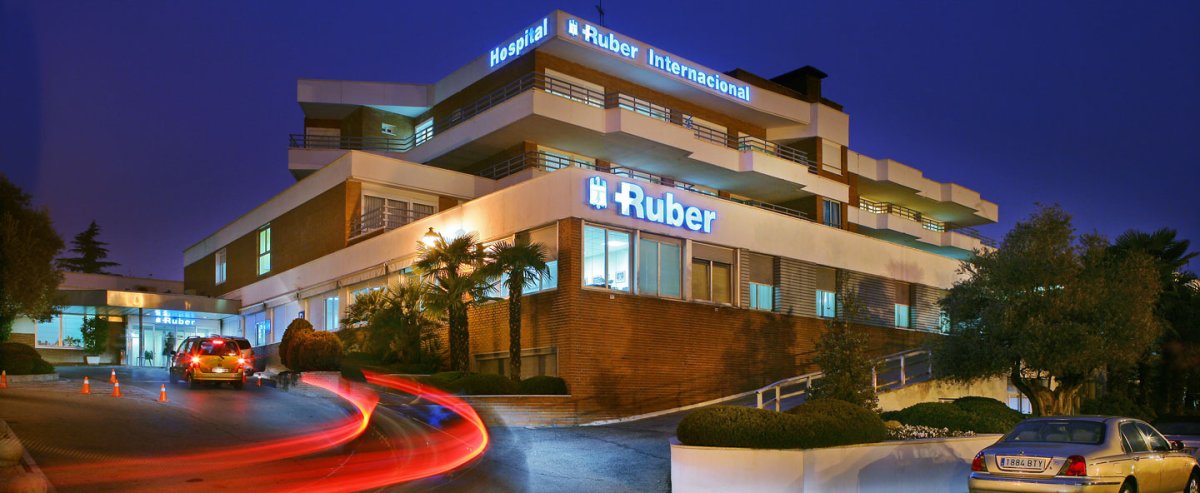
Bookimed Expert Insight. Choosing top-tier centers like Centro Médico Teknon in Barcelona provides access to JCI-accredited care. These facilities often manage complex cases using advanced diagnostic departments. Hospital Ruber Internacional in Madrid is another elite option. It is ranked among the top six hospitals in Spain by Forbes. Patients benefit from highly experienced specialists like Dr. Ferran Mascaró Zamora. He has authored three books on ophthalmology and leads major orbital departments. This level of expertise ensures high-quality outcomes in world-class settings.
| Turkey | Austria | Spain | |
|---|---|---|---|
| Amblyopia treatment | from $500 | ≈ $900 | from $550 |
Your Benefits and Guarantees with Bookimed
Transparent Prices & Flexible Installments
No hidden fees – just official clinic prices. Pay at the clinic for Amblyopia treatment upon arrival and use a flexible installment plan if needed.
Verified Clinics & Doctors Only
Bookimed is committed to your safety. We only work with medical institutions that maintain high international standards in Amblyopia treatment and have the necessary licenses to serve international patients worldwide.
Free 24/7 Assistance
Bookimed offers free expert assistance. A personal medical coordinator supports you before, during, and after your treatment, solving any issues. You're never alone on your Amblyopia treatment journey.

Your personal Bookimed medical coordinator
- Supports you at every stage
- Helps choose the right clinic and doctor
- Ensures quick and convenient access to information
Discover the Best Amblyopia treatment Clinics in Spain: 2 Verified Options and Prices









Amblyopia treatment Overview in Spain
- Strabismus surgery - from $15,400The operation corrects eye alignment, involves adjusting eye muscles, helping to improve focus and coordination.
- Strabismus treatment - from $5,500The procedure corrects eye misalignment, involving surgery or glasses, enhancing vision and appearance.
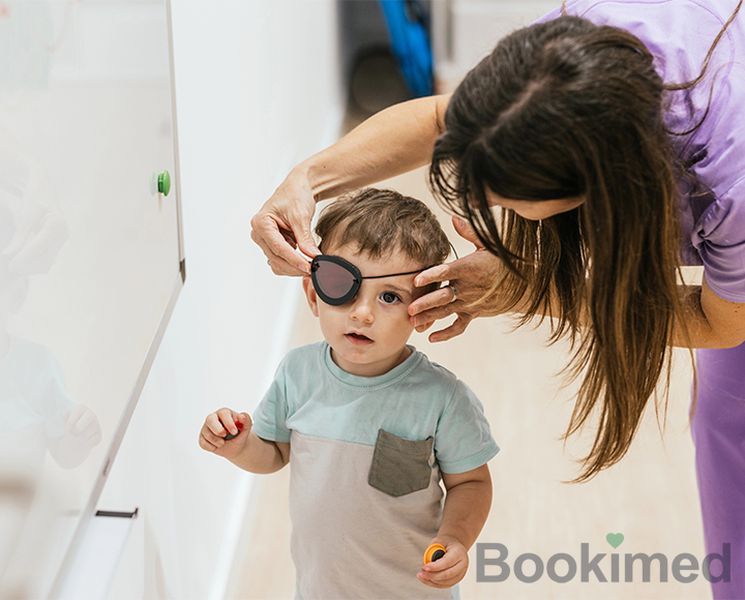
- Amblyopia treatment - from $550This therapy helps restore impaired vision by enhancing the weaker eye"s function through exercises, glasses, or patching.
Day 1
- Arrive at the clinic.
- Complete registration and paperwork.
- Consultation with the ophthalmologist.
- Undergo medical tests including Autorefractometry.
Day 2
- Discuss test results and treatment plan with a specialist.
- Begin Amblyopia treatment process.
- Treatment specifics will be explained.
- No anesthesia is typically required.
Day 3 - Day 5
- Continue Amblyopia treatment as per the plan.
- Regular checks and adjustments are made.
- Language assistance provided throughout the process.
Week 1 - Week 6
- Post-treatment checkups at the clinic.
- Follow up with the ophthalmologist regularly.
- Patient can gradually return to work.
- Start light activities, avoid strenuous sports.
Week 7 onwards
- Regular follow-ups continue, either in person or remotely.
- Full return to sports and other activities.
- Final results should be noticeable.
Please note that each case is individual and the treatment plan may vary based on the patient"s condition and progress.
- Bookimed deposit: $200 or €200.
- Clinic deposit: Pay a set percentage in advance.
Our Doctors
View all Doctors
Ferran Mascaró Zamora
Head of the Orbital and Oculoplastics Department at Teknoftal Institut Oftàlmic – specializes in complex eye conditions like amblyopia.
- Over 29 years of experience in ophthalmology
- Expert in lens surgery, refractive surgery, and oculoplastics
- Published 2 original articles and co-authored 3 ophthalmology books
- Member of the Spanish Society of Ocular and Orbital Plastic Surgery

Jordi Mones
Dr. Jordi Mones is a macula and vitreoretinal specialist at Centro Médico Teknon. He is a Research Member Elect of experts in the International Alliance AMD. Dr. Mones developed innovative imaging techniques for macular degeneration. He completed his research fellowship at Harvard Medical School. This doctor sits on the board of 12 major scientific societies.
- Acts as a scientific adviser to the European Association for Vision and Eye Research.
- Was a scientific member of the European Union Horizon 2020 program.
- Specializes in vitrectomy, laser eye surgery, and complex cataract procedures.
- Works at Centro Médico Teknon, a JCI-accredited facility in Barcelona.
Video Stories from Bookimed Patients
Reviews about Bookimed: Discover Patients' Insights
All reviews
Share this content
 Anna Leonova

Fast Facts about Amblyopia treatment
Amblyopia treatment
Amblyopia treatment aims to improve vision in the weaker eye by stimulating its use and correcting any underlying issues.
FAQ about Amblyopia treatment in Spain
What are the common treatments for lazy eye used in Spain?
Common treatments for lazy eye in Spain include vision therapy, patching, and specialized software to improve neural connections. Spanish clinics like Centro Médico Teknon and Hospital Ruber Internacional utilize advanced techniques. These range from non-invasive VR-based exercises to adjustable strabismus surgery for complex cases.
- Vision therapy: Office-based exercises and VR programs stimulate the weaker eye and brain.
- Occlusion therapy: Patching the stronger eye remains a standard method for neural strengthening.
- Corrective optics: Specialists prescribe prism lenses, contact lenses, or Bangerter filters for alignment.
- Surgical intervention: Adjustable strabismus surgery allows doctors to fine-tune results using specialized sutures.
Bookimed Expert Insight: Spain ranks third globally for medical requests in ophthalmology on our platform. High-volume centers like Hospital Ruber Internacional serve 25,000 patients annually. Our data shows clinics often integrate local VR software into therapy packages. This digital focus helps maintain engagement during the long recovery process.
Patient Consensus: Many patients recommend beginning with conservative therapy like pencil push-ups or patching. Those choosing surgery often prefer specialists using adjustable sutures for precise alignment results.
What is the best age to treat amblyopia in Spain?
The best age to treat amblyopia in Spain is between 3 and 7 years old. Spanish pediatric guidelines emphasize early screenings at ages 3, 4, and 5. This window maximizes brain plasticity before visual pathways finalize around age 10 to 12.
- Critical window: Early intervention before age 6 offers the highest success for restoring vision.
- Screening schedule: Spanish clinics prioritize exams at ages 3, 4, and 5 for detection.
- Treatment limits: Standard patching effectiveness significantly diminishes after age 8 and is discouraged after 12.
- Surgical timing: Strabismus surgery outcomes are most successful when performed before the child turns 5.
Bookimed Expert Insight: Spain ranks 3rd globally for eye care requests, with centers like Centro Médico Teknon holding JCI accreditation. While early childhood is ideal, specialized clinics in Barcelona now offer dichoptic training for older children. These technologies provide a second chance for vision recovery after the traditional patching window closes.
Patient Consensus: Parents stress that waiting after age 6 makes progress much slower. Many wish they had started therapy sooner to avoid the intensive 6-hour daily commitment required for older children.
Can adults in Spain get treatment for amblyopia?
Adults in Spain can access advanced amblyopia treatment through neurological visual retraining and dichoptic training. Specialized centers in Barcelona and Madrid utilize virtual reality and vision therapy to improve visual acuity. These modern techniques often achieve a 75% success rate by leveraging adult neural plasticity.
- Treatment methods: Clinics offer dichoptic training, virtual reality (VR), and specialized software like RevitalVision.
- Clinical centers: JCI-accredited facilities like Centro Médico Teknon in Barcelona provide expert ophthalmology care.
- Program duration: Modern therapy typically requires consistent daily effort over 6 to 18 months.
- Expert oversight: Specialists like Dr. Ferran Mascaró Zamora monitor progress to adjust training intensity.
Bookimed Expert Insight: Spain ranks among the top three destinations globally for specialized medical requests. While many doctors still believe adult brains cannot change, centers like Teknon use VR-based training programs. These games activate the lazy eye while both eyes remain open, preventing the double vision risks associated with traditional adult patching.
Patient Consensus: Success depends heavily on daily consistency over several months rather than quick fixes. Patients report that modern dichoptic training feels safer and more engaging than using patches, which can be socially difficult for working adults.
How many hours a day does a child need to patch in Spain?
Children in Spain typically follow patching protocols of 2 to 6 hours daily for amblyopia. Standard care at JCI-accredited centers like Hospital Ruber Internacional or Centro Médico Teknon adjusts duration based on visual acuity and the child's age to maximize success.
- Moderate amblyopia: Children aged 3–12 usually require 2 to 6 hours of daily patching.
- Severe amblyopia: Severe cases often involve 6 hours of patching or full-time waking hours.
- Starting protocol: Specialists frequently prescribe 2 hours daily as a baseline for younger children.
- Alternative options: Atropine drops serve as a pharmacological alternative for children in school environments.
Bookimed Expert Insight: Spanish ophthalmologists often prioritize consistency over total hours. Some specialists now recommend a 20-hour weekly target instead of strict daily quotas. This flexibility helps parents manage schedules while maintaining the same clinical efficacy as traditional 6-hour daily protocols.
Patient Consensus: Parents find that integrating patching with screen time or games significantly improves compliance. Many mention that establishing a firm daily routine is more effective than focusing on perfect timing each day.
Why choose Spain for amblyopia treatment?
Spain is a top destination for amblyopia treatment due to high-caliber specialists and advanced technologies like VR-based therapy. Patients access JCI-accredited facilities in Barcelona and Madrid that maintain a 75% success rate. The Spanish healthcare system ranks among the world’s best for pediatric eye care.
- Expert specialists: Dr. Ferran Mascaró Zamora at Centro Médico Teknon leads specialized ophthalmology departments.
- Advanced technology: Clinics utilize cutting-edge RevitalVision software and virtual reality-based vision therapy exercises.
- Clinical standards: Hospital Ruber Internacional holds Joint Commission International (JCI) and multiple ISO certifications.
- Surgical options: Specialized centers perform strabismus surgery starting from $5,500 to treat underlying causes.
Bookimed Expert Insight: Spain’s unique advantage is the concentration of high-volume research hospitals like Centro Médico Teknon. While basic vision therapy can be done at home, these centers offer exclusive access to proprietary VR software and CAM methods. This synergy between surgery and digital therapy explains the high success rates for adults.
Patient Consensus: Patients value the high-caliber specialists in Spain for complex pediatric cases. Many suggest verifying software region accessibility before beginning digital vision therapy programs to ensure seamless treatment at home.