Breast Capsulectomy in Spain — get 3 top clinic matches with costs
A breast capsulectomy in Spain costs $4,000 to $6,600, about 44% less than the US average of $9,500 (Bookimed data, November 2026). Bookimed lists 2 breast capsulectomy clinics in Spain, in Marbella and Alicante.

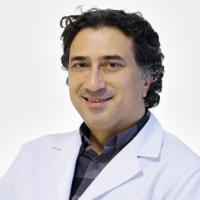
Medically reviewed by
Ergin Er
How it works
How Much Does Breast Capsulectomy Cost in Spain?
Breast capsulectomy in Spain typically costs from $4,000 to $6,600 depending on case complexity. Prices fluctuate based on the surgical technique used and the clinic location in cities like Marbella, Barcelona, or Madrid. Patients save approximately 44% compared to the US, where the average price is $9,500. Most Spanish quotes include preoperative tests, anesthesia, hospital stay, and post-operative follow-up care.
- Location-based pricing: Packages in Madrid or Barcelona may cost 15-20% more than in Alicante.
- Combined procedures: Surgical costs increase if performing implant removal or replacement alongside the capsulectomy.
- Surgical complexity: Total or en-bloc capsulectomy typically requires more operating time than partial tissue removal.
- Clinic tier: Premium facilities in Marbella often charge higher fees for specialized boutique environments.
Bookimed Expert Insight: Choosing a clinic in Marbella or Madrid offers access to elite surgical leadership. Dr. José Luis Martín Del Yerro Coca at Quironsalud Madrid holds EBOPRAS certification and prestigious awards. High-tier clinics like Ocean Clinic hold ISO standards and ASPS accreditations, ensuring top-tier safety. While Alicante offers lower base prices, Madrid's centers provide extensive research backgrounds and high publication volumes. This combination of expertise and internationally recognized accreditation makes Spain a high-value destination for complex revisions.
| Spain | Turkey | The USA | |
|---|---|---|---|
| Breast Capsulectomy | from $4,000 | from $3,000 | ≈ $6,500 |
Discover the Best Breast Capsulectomy Clinics in Spain: 5 Verified Options and Prices















Breast Capsulectomy Overview in Spain
- Breast Implant Revision - from $5,000This surgery corrects or replaces earlier breast implants, enhancing shape, size, and position for improved aesthetics and feel.
- Breast Implant Removal - from $3,500The procedure involves removing or replacing breast implants, enhancing natural shape, which can boost confidence and alleviate discomfort.
- Breast Capsulectomy - from $4,000The procedure involves surgical removal of scar tissue around a breast implant, improving comfort and appearance.
Day 1: Arrival
- Check into the medical facility.
- Undergo initial examination by a specialist.
- Get briefed about the procedure and expected outcomes.
Day 2: Pre-Operation
- Consultation with the anesthesiologist.
- Perform necessary medical tests including blood tests, mammogram.
Day 3: Breast Capsulectomy
- Procedure begins with general anesthesia.
- Surgeon creates incisions and removes the capsule.
- Operation lasts 1-3 hours depending on individual case.
- Post-operation monitoring in recovery room.
Day 4: Post-Operation
- Monitor for any signs of complications.
- Begin gentle range-of-motion exercises.
- Discharge from the clinic if stable.
Week 1-2: Rehabilitation
- Continue gentle exercises at home.
- Attend follow-up appointments with the surgeon.
- Limit strenuous physical activities.
Week 3-6: Further Rehabilitation
- Gradually increase physical activities.
- Return to work, if job is not physically demanding.
Week 7+: Final Recovery
- Resume full physical activities, including sports.
- See the final result of the surgery.
Please note that the timeline and process can vary depending on individual health conditions and recovery rate. Always follow your doctor"s advice for the best outcomes.
- Bookimed deposit: $200 or €200.
- Clinic deposit: Pay a set percentage in advance.
Our Doctors
View all Doctors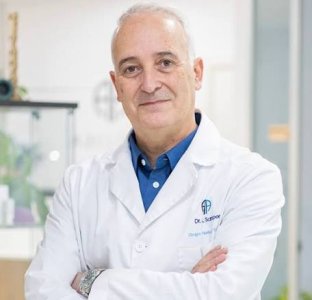
Albert Samper
Dr. Alberto Samper Sugrañes is a plastic, aesthetic and reconstructive surgeon at Centro Médico Teknon in Barcelona. He specialises in facial and body procedures. He offers personalised planning and seeks natural results.
He led the plastic surgery team at Hospital Universitari Quirón-Dexeus from 2003 to 2021. He now works at Centro Médico Teknon (since Nov 2025), Quirónsalud Ciudad Real (since May 2026) and Quirónsalud Clideba (since Feb 2026).
He trained in Plastic, Reconstructive and Aesthetic Surgery at Clínica Universidad de Navarra. He is a full member of SECPRE and a member of the AAAS. He has written many articles and books. He has given hundreds of lectures. His expertise includes facelift and neck lift, blepharoplasty, breast and body contouring, post-bariatric and reconstructive surgery, and lipofilling. He also uses 3D planning and simulation and ultrasound-assisted assessment.

Antonio Rivera Munoz
Over 19 years performing advanced plastic surgeries – Dr. Rivera co-directs the Plastic Surgery Unit at Quirónsalud Marbella, specializing in complex breast procedures.
- Trained in tissue engineering at the University of Granada
- Expertise in both cosmetic and reconstructive breast surgeries
- Regular participant in international surgical conferences
- Works alongside oncology teams for post-mastectomy reconstruction

José Luis Martín Del Yerro Coca
Dr. Martín Del Yerro specializes in breast implants and reconstruction, with extensive experience in aesthetic and reconstructive plastic surgery.
- Over 44 years in plastic surgery, with focus on breast procedures
- First Prize winner in SECPRE competition for resident doctors
- Director of International Symposium on Breast Reconstruction
- Member of Spanish Society of Reparative and Aesthetic Plastic Surgery
- Co-director of training courses on augmentation mammoplasty
Video Stories from Bookimed Patients
Reviews about Bookimed: Discover Patients' Insights
All reviewsShare this content
 Anna Leonova

FAQ about Breast Capsulectomy in Spain
What is a breast capsulectomy?
Breast capsulectomy is a surgical procedure that removes the fibrotic scar tissue capsule forming around a breast implant. Surgeons perform this to treat capsular contracture, a condition where the natural tissue shell hardens, causing pain, breast distortion, or implant displacement.
- En-bloc technique: Removes the implant and entire capsule together as a single, sealed unit.
- Full capsulectomy: The surgeon surgically removes the complete scar tissue lining in several pieces.
- Clinical indications: Primarily treats severe capsular contraction, implant rupture, or Breast Implant Illness.
- Spanish standards: Clinics in Madrid and Barcelona utilize SECPRE-certified surgeons for complex revisions.
Bookimed Expert Insight: Data across Spanish clinics like Hospital Ruber Internacional reveals a shift toward total capsulectomy over simple capsulotomy. While partial release is faster, top-tier surgeons in Spain emphasize complete removal of calcified tissue. This approach minimizes the risk of recurrent hardening and helps ensure smoother aesthetic results during implant replacement.
Patient Consensus: Patients emphasize that simply removing the implant often fails to resolve discomfort. Many advise ensuring the surgeon removes the entire hardened capsule specifically to address persistent pain or health concerns.
When should the capsule be removed?
Breast capsule removal is clinically indicated when scar tissue hardens, causes pain, or the implant ruptures. Specialized surgeons in Spain perform capsulectomy to address capsular contracture or Breast Implant Illness. While healthy, pliable capsules may remain, symptomatic or textured implant cases often require surgical intervention for patient safety.
- Medical necessity: Removal is essential if capsular contracture causes hardening or significant breast pain.
- Rupture protocol: Surgeons perform total capsulectomy if a silicone implant leak is detected.
- Implant type: Textured implants often require full removal due to stronger tissue adhesion.
- Surgical approach: Options include total or partial capsulectomy based on tissue health and thickness.
Bookimed Expert Insight: Spain’s top-tier facilities like Hospital Ruber Internacional offer advanced surgical safety by combining JCI accreditation with high-tech imaging like 3-Tesla MRI. While many patients seek capsulectomy for Peace of Mind, data suggests that removing thin, healthy capsules can sometimes increase surgical trauma unnecessarily. Always ensure your surgeon at a specialized center like Clínica Planas evaluates the capsule's pliability before committing to a full removal.
Patient Consensus: Most patients prioritize removing the capsule if an implant has ruptured to prevent silicone leakage. However, many weigh the peace of mind of a full removal against risks like seroma formation or excessive scarring.
What is the difference between complete capsulectomy and en bloc resection?
En bloc resection removes the breast implant and capsule together as one sealed unit to prevent leakage. Complete capsulectomy removes all scar tissue, but the surgeon may open the capsule or remove it in pieces during the procedure. Both require advanced surgical skill.
- Procedure technique: En bloc keeps the capsule sealed around the implant throughout the entire extraction.
- Medical purpose: En bloc is the gold standard for cancer cases like BIA-ALCL pathology.
- Surgical complexity: Complete capsulectomy is common for contracture when capsules adhere to the chest.
- Surgery duration: These invasive procedures typically require 3 to 6 hours for safe tissue dissection.
Bookimed Expert Insight: Spain ranks 3rd globally for these requests, with centers like Hospital Ruber Internacional maintaining JCI accreditation. Data show that surgeons in Madrid and Barcelona often combine these procedures with revision expertise. You can save up to 44% compared to US averages of $9,500.
Patient Consensus: Patients emphasize verifying technical skill by requesting photos of intact capsules. Many prefer en bloc for ruptured implants to prevent silicone spillage and potential fluid buildup from leftover tissue.
Will the surgeon test the capsule?
Surgeons routinely perform an intraoperative assessment of the capsule during a breast capsulectomy in Spain to evaluate integrity and potential leaks. Most surgeons also send the extracted scar tissue to a laboratory for histology and pathology testing to ensure no underlying medical concerns exist.
- Pathology testing: Extracted capsule tissue undergoes microscopic analysis to rule out cellular abnormalities.
- Integrity check: Surgeons visually inspect the capsule during surgery to identify ruptures or silicone leakage.
- Surgeon credentials: Specialists often hold memberships in the Spanish Society of Plastic Surgery (SECPRE).
- Cost savings: Procedures in Spain average $4,000 to $6,600, saving up to 44%.
Bookimed Expert Insight: Spain ranks 3rd globally in medical requests partly because of clinic credentials. Note that clinics like Ocean Clinic or Antiaging Group Barcelona often include board-certified surgeons with ASPS or IPRAS accreditations. This high level of specialization means pathology testing for capsules is a standard safety protocol rather than an optional add-on.
Patient Consensus: Patients recommend asking your surgeon about intraoperative capsule assessments during the pre-operative consultation. Consensus shows that adhering to strict EU guidelines in Spain provides significant peace of mind regarding tissue handling.
What happens to the breasts after capsulectomy?
After a capsulectomy, breasts immediately feel softer and less painful as surgeons remove the restrictive scar tissue. The initial appearance often looks deflated or wrinkled, but tissues gradually settle and fluff over 3 to 12 months. Patients must wear surgical bras to support cavity collapse.
- Textural changes: Breasts feel significantly softer once the hardened collagen capsule is surgically removed.
- Initial appearance: Expect a flattened or wrinkly look immediately after surgery as skin adjusts.
- Tissue settling: The fluffing process naturally restores volume and shape over 3 to 12 months.
- Nipple position: Nipples may initially point downward but gradually angle upward as swelling subsides.
Bookimed Expert Insight: Spanish clinics like Ocean Clinic or Hospital Ruber Internacional emphasize total capsulectomy to ensure the surgical cavity collapses properly. Data shows that clinics in Spain often maintain high safety rankings, partly because surgeons frequently hold triple-accreditation from SECPRE, EBOPRAS, and IPRAS. This high level of specialization is critical because capsulectomy is often more technically demanding than the original implantation.
Patient Consensus: Many patients describe an initial raisin sack phase with saggy skin that can be emotionally difficult. However, most emphasize that patience is vital as the breasts naturally round out after the third month.
Can the capsule dissolve on its own?
A breast implant capsule cannot dissolve on its own because it consists of biologically permanent scar tissue. While medications like capsules dissolve in the stomach, surgical scar tissue requires a breast capsulectomy for removal. Spanish specialists use total, partial, or releasing techniques depending on tissue health.
- Tissue composition: The capsule is permanent fibrous scar tissue formed by the immune system.
- Surgical removal: Removal requires a total or partial capsulectomy under general anesthesia.
- Tissue-sparing retention: Surgeons sometimes leave thin capsules to minimize trauma to surrounding chest tissue.
- Recovery period: Full healing takes several weeks with restricted activity to prevent complications.
Bookimed Expert Insight: While many seek total removal to address symptoms, surgeons at top Spanish centers like Hospital Ruber Internacional often use the existing capsule as a structural support during reconstructive phases. Data shows that preserving a thin, healthy capsule can actually improve muscle attachment and aesthetic contouring, provided no contracture is present.
Patient Consensus: Many patients find that symptoms often improve after implant removal even if a thin capsule is left. Experts advise verifying any claims that scar tissue will naturally disappear, as these are biologically inaccurate.
What should I ask my surgeon about the final look?
To ensure your breast capsulectomy in Spain meets your aesthetic goals, ask your surgeon about the impact of capsule removal on breast shape, symmetry, and skin laxity. Inquire about techniques like full capsulectomy versus capsulotomy and whether a simultaneous mastopexy is necessary to prevent an empty appearance or nipple distortion.
- Technique impact: Ask how full removal versus incision affects long-term symmetry and seroma risk.
- Symmetry risks: Discuss how textured implant removal specifically influences scarring and potential breast asymmetry.
- Lifespan of results: Inquire if a lift is required to avoid the inside-out look after removal.
- Recovery timeline: Confirm how the final shape settles over the 12-month post-operative period.
Bookimed Expert Insight: Spanish surgeons like Dr. José Luis Martín Del Yerro Coca often integrate advanced reconstructive training from global centers to improve aesthetic outcomes. Data shows that for patients with implants older than 20 years, asking about a Mastopexy is critical. Clinics in Barcelona and Madrid often recommend this to ensure the final look doesn't result in an empty sack appearance due to lost skin elasticity.
Patient Consensus: Patients emphasize not judging your appearance at 6 weeks since significant changes occur up to month 5. Many recommend using two small medical compression bras for 12 weeks to help the chest cavity collapse and settle properly.