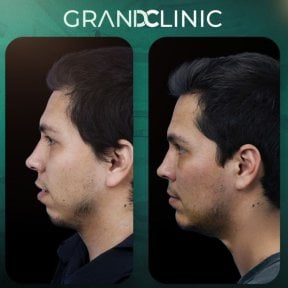
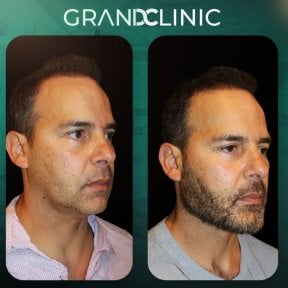
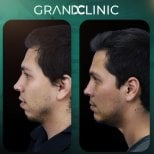
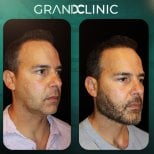
Chin Implant or Sliding Genioplasty: Which Suits You
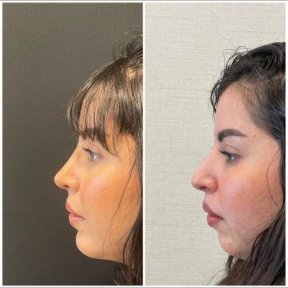
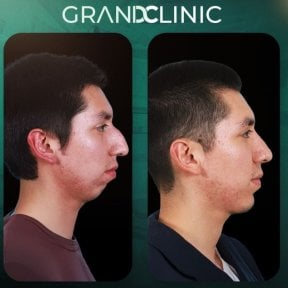
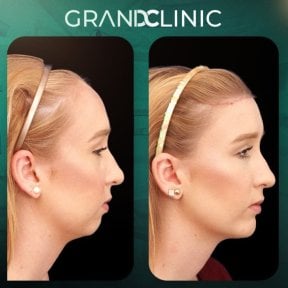
If your chin looks weak, two operations can strengthen it, and they work differently. A chin implant in Turkey adds a soft, pre-shaped piece over the front of your jawbone to boost projection. A sliding genioplasty moves your own lower jawbone forward. A small titanium plate holds it, so the living bone heals as one piece.
Both give good results. One review of 54 studies covered 4,897 patients. Satisfaction and improvement were similar for each: 96.4% with an implant and 97.1% with the bone operation. The right choice depends on what each procedure can actually correct.
What each procedure does
An implant mainly adds forward projection, building up the chin without moving bone. A sliding genioplasty can do more. It can lengthen or shorten the chin, narrow it, and recenter a chin that sits off-center. Because the bone carries the muscle and skin with it, more of the movement shows as a visible change.
| | Chin implant | Sliding genioplasty |
|---|
| What it changes | Adds forward projection | Moves bone in 3D: advance, shorten, narrow, recenter |
| Adjustable later | Yes, can be resized or removed | No, a set skeletal change |
| Permanence | Removable in a short procedure | Permanent once the bone heals |
| Who it suits | Mild-to-moderate chins that need more projection | Severe recession, height or width imbalance, asymmetry |
When bone surgery is the better fit
An implant can be swapped or removed later in a short operation. A genioplasty is permanent once the bone heals. Surgeons match the method to the size of the correction and your anatomy. A good surgeon assesses your jaw shape, bite, and goals, then recommends the option that fits. Turkish clinics also offer sliding genioplasty for cases that need bone movement.
This route doesn't suit everyone. Stock implants match mild-to-moderate recession, while a sliding genioplasty is usually the better fit for severe recession or a height or width imbalance. Smokers, people with a BMI over 30, and teenagers whose facial bones are still growing are usually advised to discuss timing with their surgeon first. A short consultation confirms which option matches your anatomy and health.
Silicone, Medpor, or Gore-Tex: Choosing Your Implant Material
Silicone, Medpor, and Gore-Tex differ mainly in one thing: how easily a surgeon can change the implant later. Silicone is the most widely used chin implant material, and it's the easiest to adjust or remove.
Medical-grade silicone is smooth and flexible. Your body forms a thin capsule around it rather than growing into it. A surgeon can resize or remove it later in a short operation. It also has the highest reported satisfaction of the three, over 99%.
Reversible vs integrated
Porous polyethylene, sold as Medpor, is firmer, and its tiny pores let tissue grow into it. That anchors it well but makes later removal harder. Gore-Tex is soft with some tissue ingrowth, sitting between the two in terms of how easily it can be reversed.
| Material | Feel | Reversibility | Best suited to |
|---|
| Silicone | Smooth, flexible | Easiest to resize or remove | Anyone who may want to adjust later |
| Medpor | Firm | Hard to remove once tissue grows in | Those wanting a firmly fixed implant |
| Gore-Tex | Soft | Moderate | A soft feel with some fixation |
What each material suits
There's no single best material. The real question is what you value more. If it is the freedom to change your mind later, silicone fits. If it is a firmly integrated implant, Medpor or Gore-Tex fits. How well a material integrates with tissue versus staying separate is a core factor here. All three leave over 97% of patients happy with the look. Your surgeon matches the material to your priorities and jaw shape.
How Surgeons Keep the Jawbone Healthy Under an Implant
Most people who get a chin implant maintain a normal jawbone shape for the long term. In the review of 54 studies, over 93% of implant patients showed no loss of bone contour beneath the implant. That's the usual outcome. In the small minority who do, steady pressure from the chin muscle (the mentalis) can slowly flatten the bone under the implant.
Why placement matters
Where the surgeon places the implant makes a real difference. Setting it directly on the bone, under the thin covering membrane, is linked to far fewer problems. Correct positioning keeps the implant low on the strong part of the jaw, away from the tooth roots.
Detailed pre-op imaging helps a surgeon plan safe placement. For example, Hisar Hospital Intercontinental has a 640-slice CT scanner and a 3 Tesla MRI.
It's correctable if it happens
If bone change or slight shifting does occur, it can be corrected. A study of revision surgery after silicone chin implants found no further complications after the corrective operation.
Lip and Chin Sensation After Surgery: What to Expect
A lasting change in feeling is uncommon after a chin implant. When feeling does change, it almost always comes back. A nerve running through the chin – the mental nerve – supplies feeling to your lower lip. Protecting it is the surgeon's main sensory concern.
How likely is numbness
A temporary change in feeling affects about 1 in 40 implant patients, roughly 2.4%. It is more common after the bone operation, near 16%, because the nerve is gently stretched. In most people, it is still short-lived. Feeling usually returns over 3 to 12 months. A tingling or itching sensation is the normal sign the nerve is healing.
How surgeons protect the nerve
Surgeons keep the risk low by planning around the nerve. A pre-op 3D scan maps exactly where it runs. Any bone cuts stay a safe distance below the nerve opening and the tooth roots.
How Recovery Differs by Incision Type
Your surgeon can reach the chin two ways: through a small cut inside your mouth, or one under your chin. Aftercare differs between them. Swelling and bruising are normal for the first few days either way. Sleeping with your head raised and using cold compresses early helps it settle.
Inside-the-mouth incision care
An incision inside the mouth leaves no visible scar, but the wound needs mouth care:
- a liquid diet for the first days, moving to soft foods over the next few;
- a gentle alcohol-free medicated rinse after eating, to keep the wound clean;
- no straws or hard chewing until your surgeon clears it.
Under-the-chin incision care
An incision under the chin leaves a tiny scar hidden in the natural crease. Because the incision is outside the mouth, you can eat normally, though softer foods are more manageable while swelling is high. Keep the small dressing clean and dry as your surgeon directs.
Light walking early helps circulation. Avoid strenuous exercise for a few weeks so you don't disturb healing. Ask your clinic for a written aftercare plan before you fly home. Then you know what to do at each stage.
How to Choose a Qualified Chin Surgeon in Turkey
Choosing the right surgeon and hospital is the most useful safety step you can take.
Check the surgeon
- Registered with the Turkish Medical Association, the surgeon holds a Ministry of Health certificate in plastic, reconstructive, and aesthetic surgery.
- Membership of the Turkish Plastic Surgery Society (TSPRAS) and a European board fellowship show training checked against national and European standards.
- For a sliding genioplasty, look for maxillofacial training, which adds hands-on experience with bone work.
Check the hospital and paperwork
- Choose a hospital with JCI or ISO accreditation, on-site emergency care, and imaging, not a treatment-room-only setup. Lokman Hekim Istanbul Hospital, for example, holds both JCI accreditation and ISO 9001 certification.
- Check that the clinic holds Turkey's health tourism authorization (USHAS) to treat international patients, and that your agreement names your surgeon's full legal name rather than just a clinic brand.
- One named anesthesiologist should cover the operation.
- Ask who your named contact at the clinic will be – one person who answers your questions before and after surgery.
Bookimed-listed Turkish surgeons hold fellowships from bodies such as the European Board of Plastic, Reconstructive and Aesthetic Surgery (EBOPRAS) and the International Society of Aesthetic Plastic Surgery (ISAPS). Your Bookimed coordinator can confirm a surgeon's credentials for you. You can also see the full list of chin implant doctors in Turkey in one place.