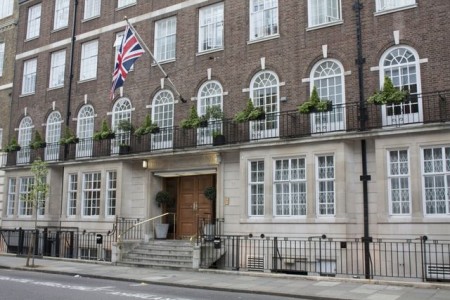
Harley Street Clinic
United Kingdom, London


Medically reviewed by
Fahad Mawlood
Atrial fibrillation treatment cost in United Kingdom typically involves essential interventions such as radiofrequency ablation, which runs from $9,500 to $12,500. For advanced cases, heart cryoablation costs between $24,000 and $36,000. Total expenses depend on hospital stay duration, necessary cardiac mapping, and the choice between private or public healthcare. Patients primarily find specialized care in London or Oxford.
Typical Atrial Fibrillation Treatment Costs in United Kingdom
Bookimed Expert Insight: For complex arrhythmias, centers specializing exclusively in heart and lung diseases offer superior expertise. Royal Brompton and Harefield NHS Foundation Trust is the largest British facility for these conditions. Patients seeking shorter wait times and modern mapping technology should consider private networks like London Bridge Hospital. These award-winning facilities provide 24/7 medical assistance and pioneered advanced surgical techniques for international cardiac patients.
| United Kingdom | Turkey | Austria | |
|---|---|---|---|
| Radiofrequency ablation with 3D mapping | ≈ $11,500 | ≈ $4,800 | ≈ $9,500 |
| Radiofrequency ablation | ≈ $9,500 | from $5,000 | ≈ $7,500 |
| Heart cryoablation | ≈ $24,000 | from $5,900 | ≈ $14,500 |
No hidden fees – just official clinic prices. Pay at the clinic for Atrial fibrillation treatment and use a flexible installment plan if needed.
Bookimed is committed to your safety. We only work with medical institutions that maintain high international standards in Atrial fibrillation treatment and have the necessary licenses to serve international patients worldwide.
Bookimed offers free expert assistance. A personal medical coordinator supports you before, during, and after your treatment, solving any issues. You're never alone on your Atrial fibrillation treatment journey.

 Anna Leonova

NHS guidelines specify rate control as the standard first-line medical treatment for atrial fibrillation. Doctors usually prescribe beta-blockers like bisoprolol or calcium channel blockers like diltiazem. Anticoagulants such as apixaban or rivaroxaban are prioritized simultaneously to reduce stroke risk based on clinical scores.
Bookimed Expert Insight: Patients seeking care in London should note that specialized centers focus heavily on advanced diagnostics before medication. Royal Brompton and Harefield NHS Foundation Trust serves 240,000 patients yearly and uses robotic 3D mapping. This high volume ensures precise diagnosis before starting long-term drug therapies.
Patient Consensus: Patients mention that doctors first focus on slowing the heart rate while assessing stroke risk. Many note that blood thinners are often started immediately alongside heart rate medications.
The need for blood thinners depends on your personal stroke risk score. Doctors in the United Kingdom use the CHA2DS2-VASc tool to evaluate this. Atrial fibrillation increases clot risk significantly. These medications are essential if your clinical risk outweighs the potential for bleeding.
Bookimed Expert Insight: Patient volume often signals where complex cases are managed best. Royal Brompton and Harefield NHS Foundation Trust treats over 240,000 patients annually. They utilize advanced tools like remote-controlled robots for 3D arrhythmia mapping. Choosing centers with such high volume ensures your stroke prevention plan uses the latest technology.
Patient Consensus: Many people find that even after feeling better post-procedure, they must stay on thinners. Patients emphasize that atrial fibrillation can be silent while stroke risks remain high.
UK clinicians consider catheter ablation when medications fail to control symptoms or cause side effects. Guidelines also recommend it for patients with symptomatic atrial fibrillation who prefer rhythm control. Specialized centers now utilize pulsed field ablation as a precise alternative to traditional thermal methods.
Bookimed Expert Insight: While many facilities focus on basic care, premier London centers offer unique procedural depth. London Bridge Hospital performed the first dual ablation for arrhythmia. Royal Brompton and Harefield handles 240,000 annual patient visits with advanced robotic mapping. This high volume often correlates with better precision during complex electrical mapping procedures.
Patient Consensus: Patients often note that acting early is vital because NHS waiting lists can be long. They also emphasize that specialists focus more on documented history than active symptoms during consultations.
Most people can safely exercise and perform daily activities with atrial fibrillation. Regular moderate activity helps reduce symptoms and improves heart health. You should focus on aerobic exercises like walking or light cycling. It is essential to avoid high-intensity training during active episodes.
Bookimed Expert Insight: Specialist centers in London demonstrate that advanced diagnostics are key to safe activity. Royal Brompton and Harefield NHS Foundation Trust uses remote-controlled robots for 3D mapping. This technology helps identify specific arrhythmia triggers more accurately than standard tests. Patients at London Bridge Hospital also benefit from dual ablation procedures for complex cases. Knowing your exact rhythm pattern allows for a more personalized and confident exercise plan.
Patient Consensus: Patients note that walking is the most reliable way to stay active. Many emphasize that staying hydrated and avoiding heavy lifting helps prevent heart rate redlining during workouts.
Drivers must report atrial fibrillation to the DVLA if symptoms like dizziness or fainting occur. Reporting is mandatory if the arrhythmia is uncontrolled for 4 weeks. Group 2 licence holders face stricter rules. Most Group 1 drivers remain eligible if the condition is stable.
Bookimed Expert Insight: The Royal Brompton and Harefield NHS Foundation Trust serves 240,000 patients yearly. Large centers often use remote-controlled robots for 3D mapping of arrhythmias. These advanced diagnostic tools help specialists determine if your heart rhythm is stable enough for driving.
Patient Consensus: Patients note the DVLA focuses on functional impacts like severe palpitations. Short driving restrictions usually follow cardiac ablation procedures to ensure full recovery before returning to the road.


