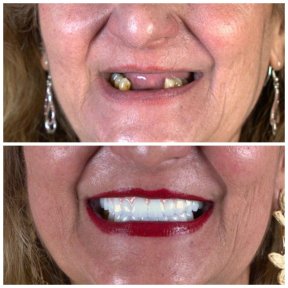
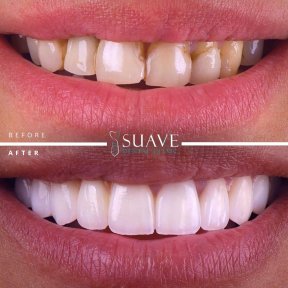
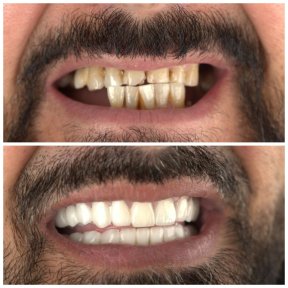
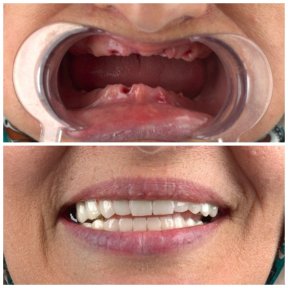
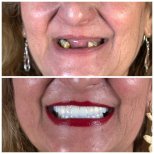
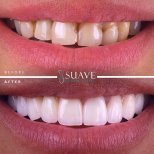
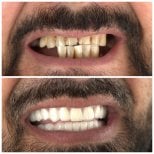
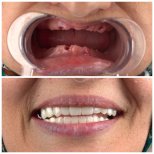
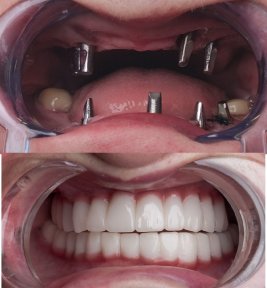
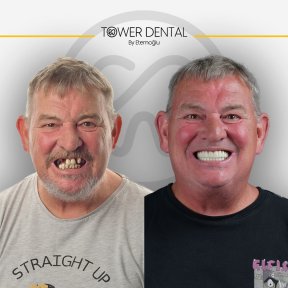
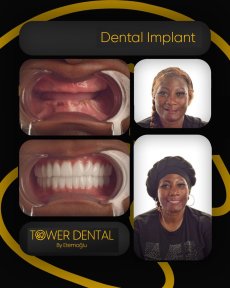
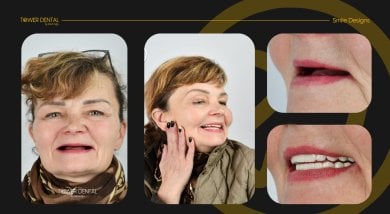
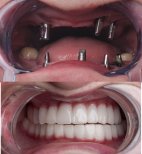
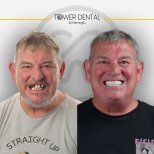
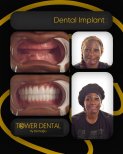
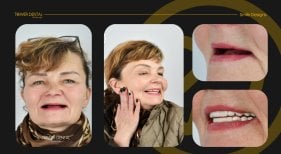
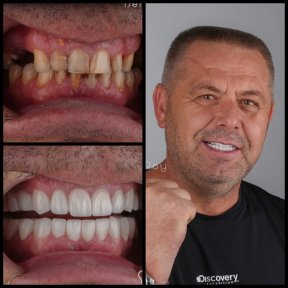
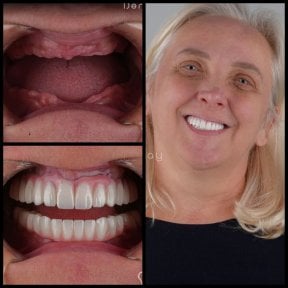
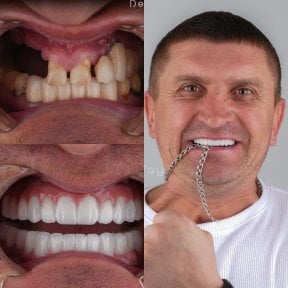
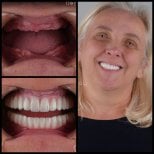
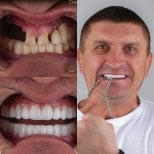
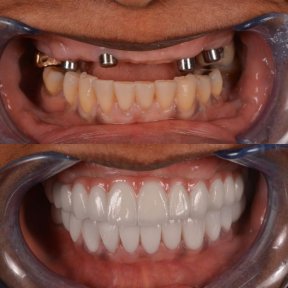
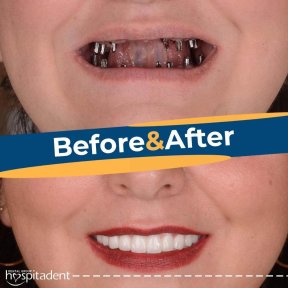
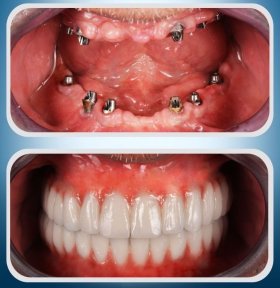
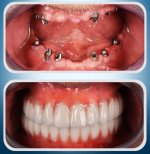
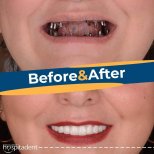
All-on-6 gives you a full arch of fixed teeth on six implants, and in Turkey it costs $3,200–$13,800. The same treatment runs $25,000–$45,000 in the United States and $20,000–$33,000 in the United Kingdom. That is a saving of roughly 87% and 84%. One thing to plan for: the work takes two trips to Turkey, not one. A few months of healing sit in between.
All-on-6 vs All-on-4: How Six Implants Share the Load
Both protocols replace a full arch with a bridge fixed onto implants. The difference is how many implants carry it, and that changes who each one suits.
What the survival data shows
Both protocols hold up well over time. Full-arch implant bridges survive at about 94–98% over 5 to 10 years across the published research. A separate 6-year follow-up of immediately loaded full-arch cases reported about 98% implant survival.
When six implants help vs four
The difference is in how the load is carried. All-on-4 tilts the two back implants up to 30–45 degrees to anchor into denser front-jaw bone and often skip grafting. All-on-6 adds two more upright anchors, which spreads chewing force more evenly. So if one implant is ever lost, the bridge can often stay on the remaining five.
| Feature | All-on-4 | All-on-6 |
|---|
| Implants per arch | 4 | 6 |
| Back implants | 2 tilted up to 30–45° | 2 extra upright anchors |
| Bone grafting | Often avoided | Often avoided; suits longer spans |
| Best suited to | Lighter bite, adequate front-jaw bone | Heavier bite, grinding, longer arches |
| If one implant is lost | Bridge may be compromised | Often stays on the remaining five |
The right number is a case-by-case call. Specialists match it to your bone, bite, and arch shape, not a fixed rule. Several Bookimed partners, including WestDent Clinic and Tower Dental Clinic, plan both protocols. So you can compare both options inside one clinic.
Who Qualifies for All-on-6 in Turkey?
Two things decide whether All-on-6 suits you: what a scan shows about your jawbone, and your general health. Both are checked before any treatment plan is priced.
The 3D scan and pre-surgery workup
Most people missing a full arch can be candidates for All-on-6. The plan is set by a scan, not a guess. A 3D cone-beam CT scan maps your bone density, the lower-jaw nerve, and the sinus floor. That is detail a flat panoramic X-ray cannot show. Turkish All-on-6 packages routinely build this scan and a panoramic X-ray into the price.
Health factors that shape your plan
A few health factors change the plan rather than rule it out. Your surgeon checks each one first.
- Smoking. It slows the healing blood supply and raises implant-failure risk, so non-smokers have the best odds. Pausing before and after surgery measurably helps.
- Diabetes. Steady blood sugar heals well. Poorly controlled diabetes slows bone healing, so getting it into a healthy range comes first.
- Bone-strengthening drugs. The high-dose forms used in some cancer care can affect jaw healing, so surgery may be postponed.
- Active gum infection. It is treated and cleared first – a temporary hold, not a permanent no.
- Thin bone. A graft or sinus lift may be needed, which adds healing time to the plan.
Complex cases stay workable. Surgeons like Dr. Susana Akdash at WestDent and Dr. Ertan Etemoglu at Tower Dental add bone grafting and sinus lifts. For severe upper-jaw bone loss, Dr. Etemoglu also places longer zygomatic implants, priced at about $4,800–$15,000. In reviews, patients single out surgeons who show them the CT scan and are honest about bone quality before starting.
How Long Does All-on-6 Recovery Take in Turkey?
The recovery time for All-on-6 in Turkey runs across two visits, not one. The implants need time to fuse to the bone before they can carry a permanent bridge.
Trip 1: implants and temporary teeth
The first trip is the surgical one and takes about 4–7 days. Your surgeon removes any failing teeth, places the six implants, and fits a lightweight temporary acrylic bridge the same day. A soft diet then protects the healing implants while you fly home.
Healing at home
Next comes the quiet part. The implants gradually fuse to the bone, a process called osseointegration. This healing takes about 3 months in the lower jaw and 4–6 months in the softer upper jaw. You spend this window at home, eating gently, with no repeated heavy load on the new implants.
The permanent teeth aren't fitted on day one. A temporary bridge is safe straight away. But loading a rigid permanent bridge onto healing bone too early raises the risk of failure, the immediate-loading research shows.
Trip 2: the permanent bridge
The second trip, about 5–7 days, is the finishing one. The temporary comes off, digital scans capture the healed arch, and your permanent monolithic zirconia or metal-acrylic bridge is fitted. If a bone graft or sinus lift was part of the plan, extra healing time is added first.
Patient reviews describe exactly this rhythm – stage one now, stage two around six months later. Many Turkey packages cover the first trip with the temporary bridge and 5 to 9 hotel nights. Good Look Clinic's is one.
Choosing Your Bridge Material: Monolithic Zirconia vs Acrylic-Titanium (Toronto) Hybrid
"All-on-6" describes the six implants. The bridge on top is a separate choice, and it changes both the feel and the upkeep. The two common options are monolithic zirconia on a titanium bar and an acrylic-titanium hybrid, or Toronto bridge.
| Feature | Monolithic zirconia | Acrylic-titanium (Toronto) hybrid |
|---|
| Feel | Hard and rigid; passes more load to the implants | Lighter; cushions the bite |
| Appearance | Natural and stain-resistant | Natural, but the acrylic can stain over time |
| Typical service life | 15–20+ years | Refurbishment every 5–8 years |
| Best for | Strong bites and long-term wear | A lighter, softer bite feel |
Over five years, monolithic zirconia and metal-ceramic bridges perform comparably, so neither is simply "better," a 5-year clinical comparison found. The differences show up in wear and small repairs. Zirconia is the harder, longer-lasting surface; the acrylic hybrid is gentler on the bite but asks for refurbishment sooner.
Some Turkish clinics back their zirconia crowns with a 20-year guarantee. Hybrid arches start near $3,200, while final-zirconia cases commonly land around $9,500. The best material depends on your bite and whether you grind, not on price.
Keeping Your Implants Healthy for the Long Term
An All-on-6 bridge is built to last decades, and two things decide whether it does. One is the bone around the implants. The other is how well you clean underneath the bridge every day.
How implants hold up over the years
Implants last when they are looked after. Well-maintained full-arch restorations show only limited bone loss even at five years, a follow-up study found. A little bone settling in the first year is normal. It's faster or larger loss that flags a problem to check. Gum inflammation around implants is common. One review put peri-implant disease near 29% of full-arch patients. The early, reversible stage is easy to catch at a routine check-up.
The maintenance that prevents problems
A fixed bridge traps food and plaque underneath. So day-to-day cleaning is the single biggest factor in how long it lasts.
- Water flosser and interdental brushes. Clean under the bridge daily, where a normal toothbrush can't reach.
- Professional recalls. Regular hygiene visits keep bone levels monitored and catch problems early, as prosthodontic guidance advises.
- A night guard. If you clench or grind, one protects the bridge from cracked ceramic or loosened screws.
- Past gum disease. It means closer monitoring of the bone around your implants.
Healthy implants are maintained, not just placed. Turkey packages often include a lifetime implant warranty and follow-up visits. Clinics such as Soraca Med add 24/7 post-treatment monitoring. But none of that replaces daily cleaning and recalls.
Aftercare Back Home
The trip home is part of the treatment plan, not the end of it. Two things need arranging before you fly: who checks your implants at home, and the paperwork they will need.
Lining up follow-up where you live
Planning the trip home is as much a part of All-on-6 as the surgery itself. Most UK dentists have treated someone who had dental work abroad, the British Dental Association notes. So lining up local follow-up before you travel is simply good planning. Public health systems at home usually cover only urgent problems, like pain or swelling. They rarely cover routine upkeep of private work, so arrange local recalls in advance.
The implant passport
Before leaving Turkey, ask for an implant passport. It's a simple record of the manufacturer, implant system, and the serial, lot, and component sizes for every part placed. A dentist at home needs those details to source matching parts if a screw or component ever needs attention.
How to Choose a Turkish Clinic You Can Trust
A few concrete checks separate a clinic you can rely on from one you can't. Each one is answerable before you pay a deposit.
- Independent accreditation. Look for JCI, Temos, or ISO. These are standards verified by an outside body, not just a basic operating license. Hisar Hospital Intercontinental holds JCI accreditation, and Hospitadent Dental Group carries Temos and ISO.
- Confirmed surgeon credentials. Check for implant-specific training and membership. Dr. Hasan Onur Akin, for example, has been a certified International Team for Implantology member since 2020.
- A documented implant system. Confirm the brand is Straumann, Nobel Biocare, or Osstem, and ask for paperwork you can keep.
Bookimed has arranged more than 1,400 All-on-6 requests for Turkey. Across those reviews, patients most often credit clear coordination and surgeons who explain the plan honestly. Those are the same signals worth confirming before you travel.