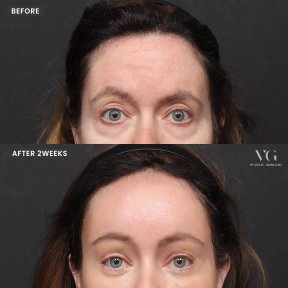
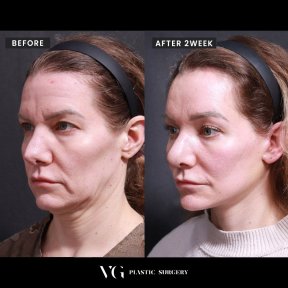
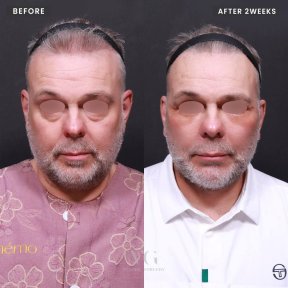
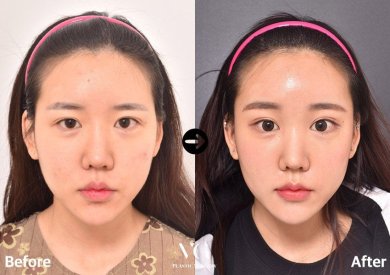
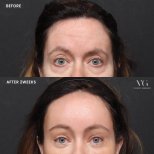
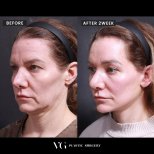
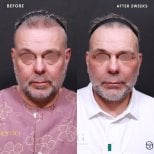
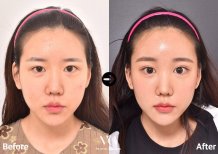
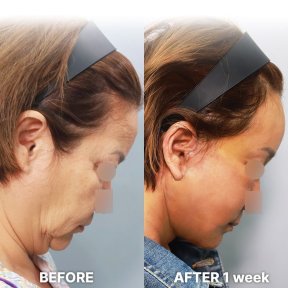
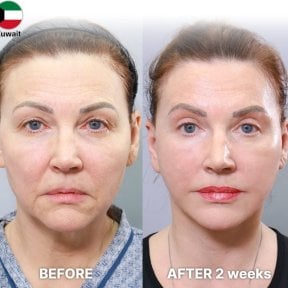
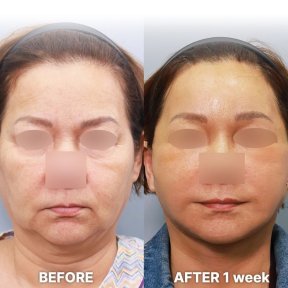
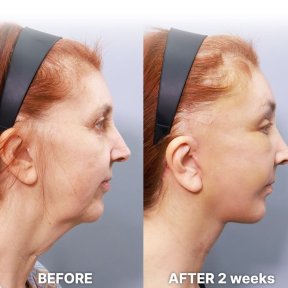
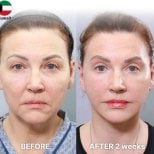
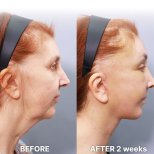
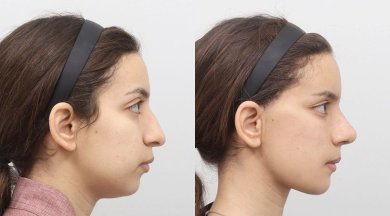
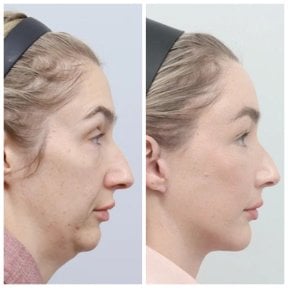
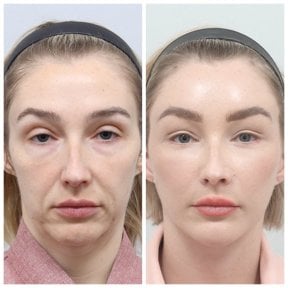
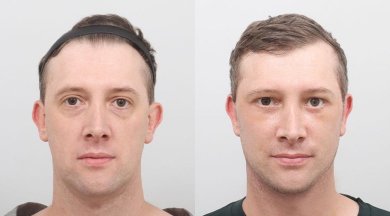
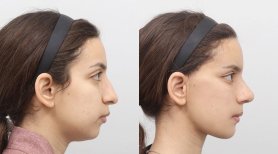
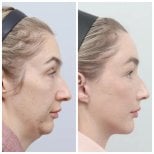
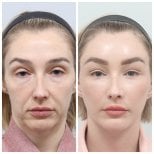
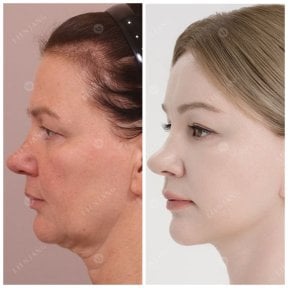
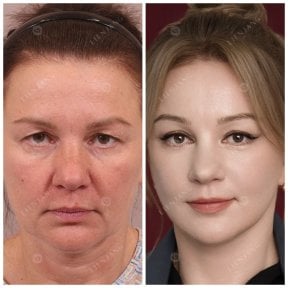
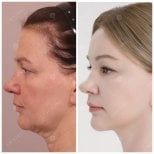
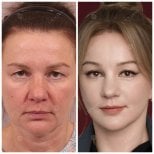
South Korea has become a leading destination for the deep plane facelift. This technique repositions the deeper layers of the face for a natural, long-lasting result while preserving the face's natural contours and movement. Seoul's surgeons perform these lifts routinely, and the verified clinics we work with pair that skill with strong patient-safety systems. Here's what to know about the technique, safety, recovery, real costs, and choosing your surgeon.
Mini vs. SMAS vs. Deep Plane Facelift: The Anatomical Differences
The difference between these three facelifts comes down to one thing: the tissue layer the surgeon works on. That layer decides how natural the result looks and how long it lasts.
Key takeaways
- Deep plane: repositions the deeper facial tissues, aiming for a more comprehensive and durable lift.
- SMAS: works at the SMAS layer, providing a structural lift without going as deep.
- Mini facelift: focuses on a smaller treatment area and is generally less extensive.
| Technique | What it lifts | How long it lasts |
|---|
| Mini | Skin and surface tissue | 3–5 years |
| SMAS | The surface muscle layer (SMAS) | 5–10 years |
| Deep plane | Below the SMAS, releasing the retaining ligaments | 10–15 years |
What each technique actually lifts
A SMAS lift tightens the surface muscle-and-tissue layer and pulls it sideways. The deep plane goes one layer deeper. It releases the ligaments that tether the cheek and jaw, so the midface, jawline, and neck move together as one unit, according to clinical anatomy research. A mini lift stays closer to the skin and is designed for more limited areas of early laxity.
How long each result lasts
Because the deeper structures are repositioned and held with no tension, deep plane results typically last 10–15 years. A SMAS lift holds around 5–10 years, and a mini lift about 3–5 years. In a systematic review of 2,896 patients, satisfaction reached 94.4% for the deep plane versus 87.8% for a SMAS lift.
How deep plane creates a natural result
The deep-plane flap stays thick and keeps its own blood supply, so the skin is laid back without tension. That's the mechanism behind the natural, un-pulled look patients ask for. Since the technique works in deeper anatomical planes, it requires advanced surgical training and experience.
For example, in Seoul, Dr. Yong Woo Kim at Returning Plastic Surgery has performed more than 1,000 procedures, and Dr. Yoon Hyun Jun at HERSHE Plastic Surgery Korea is a full member of the Korean Society for Aesthetic Plastic Surgery (KSAPS).
For a wider view of costs and clinics, see plastic surgery in Korea.
Planning Your Trip to Seoul: Entry Rules, Tax Changes, and Patient Protections
Two recent rule changes affect how international patients plan a Seoul trip, and one protection is worth knowing before you go.
Entry: the mandatory e-Arrival Card
From January 1, 2026, travelers entering Korea without a K-ETA must submit an online e-Arrival Card before they land. File it at the official e-Arrival Card site within three days (72 hours) of departure. Visa-exempt travelers still need the card even when the K-ETA is waived.
Cost: the tax refund has ended
Korea ended its 10% cosmetic-surgery tax refund for foreign visitors on January 1, 2026. Invoices now include a non-refundable 10% tax, so the amount shown on your invoice is the amount to budget for.
K-MEDI support for international patients
Korea gives foreign patients a formal way to settle a dispute without going to court. The Korea Medical Dispute Mediation and Arbitration Agency, known as K-MEDI, handles complaints and reaches binding settlements in months. If a clinic is at fault but does not pay, the agency compensates the patient first and recovers the money from the clinic.
Deep Plane Facelift: What to Know About Recovery
Key takeaways
- The deep plane's thick, well-supplied flap supports healthy skin healing near the ear.
- Experienced surgical technique helps protect the facial nerve, with temporary weakness uncommon and lasting nerve damage very rare.
- Fine supportive sutures and careful blood-pressure control help keep postoperative bleeding uncommon.
Nerve and skin healing
The nerve that moves your face can be temporarily stretched during surgery, which may cause mild weakness that settles as healing progresses. Lasting nerve damage is very rare when an experienced surgeon operates. In a review of 15,404 facelift patients, more than 99.9% had no permanent nerve damage. Because the deep-plane flap retains its blood supply, it supports healthy skin healing around the incision, including near the ear.
How surgeons support a smooth recovery
Two measures are particularly important during recovery. A supportive stitch pattern holds the tissue for two to three days, which lowers pooled bleeding to around 0.6% and keeps skin-healing problems near the ear under 1%. Surgeons also keep blood pressure steady during and after surgery to reduce bleeding. Surgeon experience and appropriate patient selection are important parts of a well-planned facelift. The next section explains what to look for when choosing a surgeon.
Seoul clinics also offer examples of these safety measures in practice. AB Plastic Surgery runs a full anesthesiology team at double the usual ratio and keeps 24-hour cameras in every operating room. VG Plastic Surgery adds university-grade monitoring and hyperbaric oxygen therapy (breathing pure oxygen in a pressurized room to speed tissue healing).
Before a Deep Plane Facelift: What to Know and How to Prepare
Before recommending a deep plane facelift, your surgeon should review your overall health, medical history, and expectations for the result.
Who a surgeon may advise to wait
A responsible surgeon screens for realistic expectations, including body dysmorphic disorder, when someone fixates on a flaw others barely notice. Surgery may be postponed for a few reasons: active heart or lung disease, uncontrolled diabetes, which slows healing, or a body-mass index above 35. These conditions affect fitness for general anesthesia.
What to stop before you fly
On your surgeon's instruction, pause anything that raises bleeding or clotting risk:
- Blood thinners and NSAID painkillers (aspirin, ibuprofen, and naproxen): stop about 3 weeks before surgery, because they thin the blood.
- Estrogen-based hormone therapy: stop about 3 weeks before, because it raises clot risk.
- Blood-thinning supplements (ginseng, ginkgo, fish oil, garlic, turmeric, and vitamin E): pause about 3 weeks before.
- Smoking and vaping: stop at least 4 weeks before, since nicotine starves the healing skin of blood and is the biggest avoidable cause of healing problems.
Many Seoul clinics, including Returning Plastic Surgery, offer an online consultation, so your candidacy is assessed before you arrange travel.
Recovery in Seoul: The 10–14 Day Safe-Fly Window and What Each Week Looks Like
Most patients spend about 10–14 days in Seoul before flying home, then heal over the following months.
Week 1: sutures and wound care
The surgeon removes stitches between days 7 and 10. Keep the incisions dry for the first week; many Seoul clinics handle professional hair-washing during that time. Some add hyperbaric oxygen and LED light therapy (skin-level light that helps reduce inflammation) to calm early swelling.
Weeks 2 to 6: easing back in
Skip saunas, public baths, and jjimjilbangs for 4–6 weeks. Avoid strenuous exercise, heavy lifting, and bending for 3–4 weeks, with full workouts around 6 weeks. Gentle lymphatic-drainage massage starts only after about a month. Doing it earlier can disturb tissue that's still knitting together. Healing is gradual over several months, and the final result settles over roughly 10–12 months.
The 10–14 day fly window
Plan to stay about 10–14 days before you fly. Early in healing, cabin-pressure changes can trigger sudden swelling, delayed bleeding under the skin, or reduced blood flow to the healing tissue. The extra days allow the early healing period to progress before a long flight.
Aftercare varies by clinic. For example, Lienjang Plastic Surgery builds hyperbaric oxygen therapy into its Premium Deep Plane Facelift package, and HERSHE Plastic Surgery Korea includes post-surgery hair washing and care.
How to Verify Your Surgeon and Clinic in South Korea
A few checks can help you confirm your surgeon's qualifications and your clinic's credentials in South Korea.
Check the surgeon: KSPRS certification
In Korea, a general doctor may legally perform cosmetic surgery. So confirm your surgeon is board-certified by the Korean Society of Plastic and Reconstructive Surgeons, or KSPRS. Only KSPRS-certified surgeons have completed a full plastic-surgery residency. For instance, Dr. Yong Woo Kim and Dr. Yoon Hyun Jun, both named above, hold this certification.
Check the clinic: KAHF and anesthesiology
Look for KAHF accreditation, the Ministry of Health and Welfare program for hospitals serving foreign patients. It checks 149 items, from licensed translators and translated consent forms to sterile operating rooms and emergency readiness. Also confirm the clinic has a full-time in-house anesthesiologist who monitors you during and right after surgery.
Cameras in the operating room
Korea's operating-room camera law, passed in 2021 and in force since 2023, requires active cameras during general-anesthesia surgery. A reputable clinic should provide written confirmation and a contract naming your operating surgeon, so you know who is scheduled to perform the procedure.
How Much Should You Budget for a Facelift Trip to Korea?
The surgery is usually the largest expense, but the total cost also includes flights, accommodation, and other travel expenses.
- The surgery package costs around $10,900–$12,800 and covers the surgeon, general anesthesia, pre-op tests, the facility, and post-op medication; flights and most hotel nights are separate.
- Round-trip flights to Incheon (ICN) cost roughly $800–$1,500 from North America, $600–$1,200 from Europe, and $500–$1,000 from Australia or New Zealand.
- Budget about $50–$100 a night for a guesthouse or $100–$200 for a mid-range hotel near Gangnam across your 12–14 nights.
- Most clinics take a 20–30% deposit to hold a date, and card payments often add a 3–4% fee that a bank transfer avoids.
- Combining procedures such as a neck lift, eyelid surgery, or fat grafting cuts the overall cost by about 10–15%, since the facility, anesthesia, and recovery are billed once.
For comparison, a deep plane facelift in the United States costs around $21,500–$46,500, which is about 3 times more than the Korean option, even after travel costs are included. In the UK, the same procedure costs around $14,800–$26,000, so South Korea remains more affordable even after travel costs. Sample Seoul packages show the range. For example, Dr. Tak Plastic Surgery lists a deep plane lift near $12,800, and a deep plane plus neck lift at Returning Plastic Surgery is about $10,900.