Plasmapheresis in Thailand: costs, clinics and reviews

Last updated: Nov 17, 2026

Medically reviewed by
Fahad Mawlood
How it works
Bookimed is free for patients – clinics pay us a commission, and you pay the clinic its own price with no markup. Five steps to your plasmapheresis in Thailand:
Share your case
Tell us about your condition and share your medical reports and recent test results.
Get treatment plans
Your coordinator finds clinics that match your needs and helps you choose. Your preferred clinics then send personalized treatment plans and quotes for you to compare.
Plan your trip
We set treatment dates that work for you and help arrange your flights and accommodation.
Visit the clinic
The clinic team starts your plasmapheresis on the agreed dates. We support you throughout your trip.
Back home
You can fly home 1–7 days after treatment, and results develop over 1–3 months. Your coordinator stays in touch and helps arrange a follow-up if you need one.
Some clinics ask for a deposit. A $200 or €200 deposit paid through Bookimed comes off your clinic bill and is refundable up to 10 calendar days before your visit. A deposit paid to the clinic follows its own terms.
Plasmapheresis Prices by Clinic in Thailand



Get matched with the best doctors for Plasmapheresis
Tell us about your needs — and get 3 tailored offers from top doctors for you.
Is there a history of any autoimmune diseases or blood disorders?
Direct prices from clinics
Free evaluation of your medical case
Free personal assistance 24/7
Thailand Plasmapheresis overview
Cost and clinics
| Typical plasmapheresis price in Thailand | Plasmapheresis specialists |
|---|---|
| $1,200 / ฿40,800–$2,600 / ฿88,400 | 3 specialists |
The procedure
| Before the trip | Time in Thailand | Nights in hospital | Operation time per session | Anesthesia | Back to desk work | Final result per course |
|---|---|---|---|---|---|---|
| Get specialist assessment and confirm diagnosis with blood tests | 5–7 visits over 1–2 weeks (first trip 1–7 days) | None (outpatient procedure) | 1.5–3 hours | None | Same or next day | 1–3 months |
How much does a Plasmapheresis cost in Thailand?
| Thailand | Turkey | Austria | |
|---|---|---|---|
| Plasmapheresis | ≈ $1,200 / ฿40,800 | from $3,200 / ฿108,800 | ≈ $1,500 / ฿51,000 |
How to choose a Plasmapheresis clinic in Thailand
For plasmapheresis in Thailand, first meet the practitioner and share your records – then confirm who performs the technique, assess qualifications and facility standards, and read patient reviews.
What to check
Consultation
Before booking, discuss your medical history and medicines with the practitioner so treatment can be planned safely.Medical records
Give the treatment team your full record and ask them to review it before deciding whether treatment is suitable and assessing risks.Confirm the practitioner
Make sure the person you consult will perform the plasmapheresis technique you need, so responsibility is clear.Credentials and facility
Ask about qualifications, specialty, experience, and whether the practitioner is licensed by the Medical Council of Thailand – ask about hygiene and safety standards.Patient feedback
Read reviews about the surgeon, care, and trip, and ask for examples of similar cases and references.
Discover Plasmapheresis Clinics in Thailand
| Clinic Name | Patient Rating | About | Accreditations | Lead Doctor | Techniques |
|---|---|---|---|---|---|
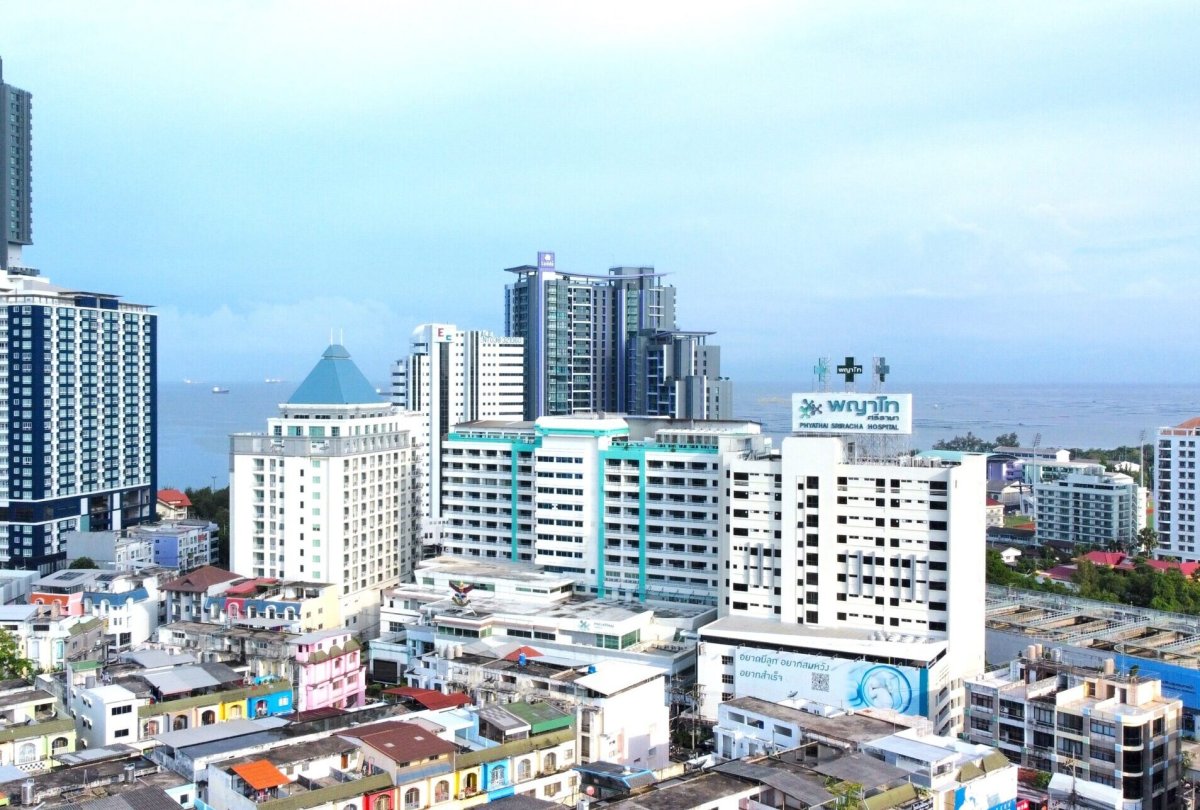
| Phyathai Sriracha Hospital Si Racha District | 4.4 | Phyathai Sriracha Hospital is a large multispecialty center in Chonburi, Thailand. It provides specialized care in reproductology, pediatrics, and nephrology. The fertility center reports an overall IVF success rate of 78%-89%. For women under 35, the rate climbs to 85%-93%. Founded in 1995, the hospital is part of the Bangkok Dusit Medical Services group. It is also a teaching base for assisted reproductive medicine in Thailand.The hospital holds JCI and AACI accreditations for quality and safety. Its IVF lab has an ULPA air filtration system reaching Class 1000 cleanliness. Advanced equipment includes EmbryoScope Plus and Geri Plus time-lapse monitors. Doctors use the closed Vitrosafe Active IVF system to mimic body conditions. Genetic screening relies on NGS/PGT-Plus technology covering 23 chromosome pairs. International patients, mostly from China, get support through a Shanghai representative office. | JCI | — | — |
Our Doctors
View all Doctors
Dr Phatcharasak Kraisornphongsakul Md
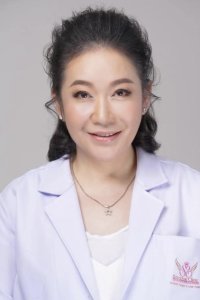
Siriporn Cheawchanwej
Dr. Siriporn specializes in aesthetic medicine with international training spanning Sweden, Korea, and Hong Kong.
- Diploma from the American Academy of Aesthetic Medicine
- Trained in Restylane techniques and botulinum toxin applications
- Attended Asia-Pacific forums on rhinoplasty and minimal invasive procedures
- Member of the Eurasian Congress in Aesthetic and Anti-aging Association
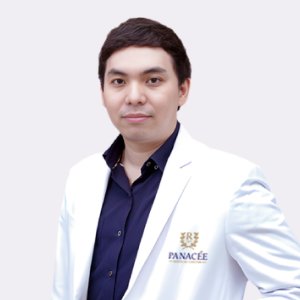
Peerapat Tangjai
Dr. Peerapat Tangjai is a wellness specialist at Panacee Medical Center in Bangkok. He earned First-Class Honors and a Gold Medal from Srinakharinwirot University. Dr. Tangjai focuses on cell therapy, anti-aging, and metabolic health. He is a former manager of diabetic wound care at Thonburi Bumrungmuang Hospital.
- Holds certifications in stem cell therapies for chronic diseases from Global Stem Cell USA.
- Performs specialized IV and chelation therapies for cardiovascular wellness and detox.
- Maintains certifications in hair transplantation and integrative anti-aging medicine.
- Led research on the link between HbA1c levels and retinopathy in diabetes patients.
Why choose Thailand for a Plasmapheresis
JCI-accredited hospital options
| Typical price | vs Thailand | |
|---|---|---|
| Thailand (this page) | $1,200 – $2,600 | – |
| United States of America | from $4,500 | +275% |
| Turkey | from $3,200 | +167% |
Plasmapheresis recovery timeline: what to expect week by week
You can usually fly home 1–7 days after your last exchange with your doctor's approval, once you are clinically stable, access issues have resolved, and follow-up is arranged. You may return to desk work the same or next day after a session, depending on your condition and fatigue. Strenuous exercise is usually avoided for about 24 hours after a session, with later activity depending on your underlying disease. Your final result may take 1–3 months, while maximal benefit in immune neuropathy usually appears weeks after the course and varies by diagnosis, severity, and concurrent immunotherapy.
During session
Your plasma is separated by filtering or spinning and replaced with albumin or plasma while the team monitors you. Report tingling, cramps, chills, itching, or breathlessness right away.
Immediately after
You will have a brief observation, an access-site check, and time to rest before going home the same day. Avoid strenuous exercise for about 24 hours.
Between sessions
Light daily activity is fine as tolerated, though fatigue is common, and you should keep to your planned exchange schedule. Keep the access site clean and dry, and avoid heavy lifting or strenuous exercise if you have a catheter.
After the last session
You can usually fly home 1–7 days after your last exchange with your doctor's approval, once you are clinically stable, access issues have resolved, and follow-up is arranged. A planned lab and clinical review follows. Resume strenuous exercise only after team clearance, with timing depending on neurological recovery.
When to contact your clinic: Contact your clinic for chest pain or breathlessness, bleeding or swelling at the access site, or mouth tingling or cramps.
Is a Plasmapheresis in Thailand safe?
Traveling to Thailand for a Plasmapheresis
Plasmapheresis in Thailand: Video Reviews from Bookimed Patients
Thailand Plasmapheresis Reviews at Bookimed: Discover Patients' Insights
View all
Share this content
 Anna Leonova

FAQ about Plasmapheresis in Thailand
What documents are required to apply for a visa to Thailand for treatment?
Visas for travel to Thailand require a number of documents. The necessary papers can be submitted 90 days before the planned departure. The list of documents includes:
- ID card
- confirmation of online registration and filling out the questionnaire
- certificate of income and availability of funds (20,000 baht per person/40,000 baht per family)
- insurance policy for a stay in Thailand (original and copy)
- 2 photos (4x6)
- visa receipt
- booking of round-trip air ticket (paid in full) and hotel
- medical opinion about the need for treatment.
What is the level of medicine in Thailand?
Healthcare is the key development sector of the Thai government. The Thai authorities are convinced that care for the citizens' health should be an absolute priority of state policy and spend about 25 billion baht for healthcare annually.
As a result, 36,673 medical facilities provide excellent medical care in the country. 64 centers in the Kingdom have certificate of JCI (Joint Commission International), the international improver of healthcare quality and safety across the globe. The index of certificates obtained is the largest. To compare, Israel has 20 JCI-accredited facilities, and Germany — only 10 clinics of this type.
When is the best time to travel to Thailand?
The main advantage of Thai resorts is the long beach season. On the east coast and west coast the climate features are different, so take it into account when planning the trip. The best time to travel is during the cool and dry season between November and early April. A large influx of tourists is in March-May, when the air temperature is +30°C.
What should you know about Thailand before the trip?
Official name | The Kingdom of Thailand |
Currency | Thai Baht (you also can pay for services in dollars) |
Best period for the trip | November-early April |
Language | Thai (most of medical staff speaks English fluently) |
Visa | is required for a trip of 3-6 months |
Time difference with Europe | 7 hours |
Time difference with the USA | 12 hours |
Capital | Bangkok |
Medical tourism center | Bangkok |
Popular resorts | Koh Samui, Phuket, Chiang Mai, Koh Chang, Hua Hin |
What hotel service is provided here?
In the Kingdom of Thailand, hotels of different price ranges and service levels are presented. The level of Thai hotels is comparable to hotels in Tunisia, Morocco or Egypt. Most tourists choose 4 and 5 star hotels with all-inclusive meals. Such hotels have everything for a comfortable stay: varied food, a large well-groomed territory, animation for children and adults. Some hotels have their own water park, which guests can use for free. Budget travelers can afford to book an economical 3-star hotel with half board or no meals at all.
Do I need a visa?
For now, the Kingdom of Thailand requires different visa regimens for diverse states. Some foreigners can stay in the country 60 days without visa control, some of them — only 14 days.
How long you can stay in Thailand and what countries can cross the border easy read here.
Last review: Nov 17, 2026
Fahad Mawlood — General practitioner. Winner of 4 scientific awards. Served in Western Asia. Former Team Leader of a medical team supporting Arabic-speaking patients. Now responsible for data processing and medical content accuracy.
Have a question about Plasmapheresis in Thailand?
Ask a Bookimed medical coordinator about prices, clinics, techniques or your case. Write to us in the messenger you already use.
- Direct prices from clinics
- Free evaluation of your medical case
- Free personal assistance 24/7
Ask your question in a messenger
Tap a messenger to open a chat with a Bookimed medical coordinator.
Free and without obligation · Terms of use · Privacy policy