Benign Testicular Tumor Treatment in Ukraine — Get 3 Personalized Clinic Matches


Medically reviewed by
Fahad Mawlood
What's the Cost of Benign testicular tumor Diagnosis and Treatment in Ukraine?
Your Benefits and Guarantees with Bookimed
Transparent Prices & Flexible Installments
No hidden fees – just official clinic prices. Pay at the clinic for Benign testicular tumor treatment and use a flexible installment plan if needed.
Verified Clinics & Doctors Only
Bookimed is committed to your safety. We only work with medical institutions that maintain high international standards in Benign testicular tumor treatment and have the necessary licenses to serve international patients worldwide.
Free 24/7 Assistance
Bookimed offers free expert assistance. A personal medical coordinator supports you before, during, and after your treatment, solving any issues. You're never alone on your Benign testicular tumor treatment journey.

Your personal Bookimed medical coordinator
- Supports you at every stage
- Helps choose the right clinic and doctor
- Ensures quick and convenient access to information
Best Benign testicular tumor Treatment Centers in Ukraine: 6 Verified Options and Prices




Oleg Kolibaba Medical Center

Dobrobut Medical Network
Alexander Stakhovsky



Get a Medical Assessment for Benign testicular tumor Treatment in Ukraine: Consult with 6 Experienced Doctors Now
View all Doctors
Arkatov Andriy
Boiko Sergiy

Djuran Bogdan
Specializes in urological surgeries with advanced laser techniques – Dr. Bogdan provides comprehensive care at Dievo Surgery Center.
- Performs laser enucleation of prostate and bladder tumors
- Skilled in minimally invasive percutaneous nephrolithotripsy
- Expert in laparoscopic procedures including radical nephrectomy
- Leads master classes and expert consultations for complex cases

Krivusha Oleg Serhiiovych
Nearly 11 years of urology practice, specializing in men's health and urological oncology. Dr. Krivusha brings a personalized approach to each case.
- Specializes in urological oncology and reconstructive urology
- Proficient in modern diagnostic and surgical techniques
- Trusted by patients with consistently positive feedback
Share this content
Video Stories from Bookimed Patients
 Anna Leonova

Expert Overview about Benign testicular tumor Treatment in Ukraine
How do doctors in Ukraine distinguish a benign testicular tumor from cancer?
Urologists in Ukraine distinguish benign testicular tumors from cancer using physical exams, scrotal ultrasound, and serum tumor markers like AFP and HCG. Clinicians follow European Association of Urology (EAU) protocols to differentiate solid masses from fluid-filled cysts. Definite diagnosis requires histopathological examination after surgical removal.
- Scrotal ultrasound: Distinguishes solid intratesticular masses from fluid-filled benign cysts.
- Tumor markers: Blood tests measure AFP, HCG, and LDH levels for malignancy.
- Physical examination: Urologists check for firmness, irregularities, or lymph node swelling.
- Histopathological analysis: Pathologists examine tissue post-orchiectomy to confirm the final diagnosis.
Bookimed Expert Insight: Ukrainian oncology centers like Dobrobut Medical Network and Dievo Surgery Center focus on high-volume diagnostic precision. Dr. Alexander Stakhovsky alone has contributed to 140 articles on reconstructive oncourology. This academic depth ensures that surgical decisions for solid masses follow strict international safety standards.
Patient Consensus: Patients note that doctors move quickly with imaging and blood work because ruling out cancer is the top priority. Many emphasize that getting a second opinion is helpful when ultrasound results for solid lumps are ambiguous.
Will I lose testosterone or fertility after benign testicular tumor treatment?
Benign testicular tumor treatment in Ukraine typically has a minimal impact on testosterone and fertility. Surgeons often prioritize partial orchiectomy to preserve healthy tissue. One functional testicle is usually sufficient. It produces enough hormones and sperm for normal health and natural conception.
- Surgical approach: Partial orchiectomy removes the tumor while saving healthy testicular tissue.
- Testosterone production: A single healthy testicle usually compensates to maintain normal hormonal levels.
- Fertility preservation: Removing one testicle generally does not prevent fathering children naturally.
- Treatment benefit: Benign tumors do not require chemotherapy, avoiding toxic effects on sperm.
Bookimed Expert Insight: Patients seeking specialized care should note that Ukrainian centers like Dobrobut Medical Network handle over 11,000 surgeries annually. This high volume allows surgeons to maintain proficiency in complex reconstructive techniques. Choosing an experienced oncourologist like Dr. Alexander Stakhovsky, who holds 8 patents, ensures access to refined tissue-sparing protocols that prioritize your long-term reproductive health.
Patient Consensus: Patients note that libido and sexual function usually stay normal, though many recommend freezing sperm before surgery to ensure peace of mind.
What are the treatment options for a benign testicular tumor?
Benign testicular tumor treatment focuses on mass removal while preserving fertility. Doctors prioritize testis-sparing surgery for small, well-defined growths to maintain healthy tissue. If malignancy cannot be ruled out during surgery, a radical inguinal orchiectomy may be necessary to remove the entire testicle.
- Testis-sparing surgery: Surgeons remove only the tumor when lesions are small and peripheral.
- Inguinal orchiectomy: Complete removal of the testicle is standard for larger or suspicious masses.
- Intraoperative biopsy: Frozen section pathology during surgery helps determine if a full removal is required.
- Active surveillance: Periodic ultrasound monitoring is reserved for very small, stable, and non-palpable lesions.
Bookimed Expert Insight: Patient volume often signals surgical precision in localized centers. Dobrobut Medical Network in Kyiv performs over 11,000 operations annually across 75 branches. This high frequency allows surgeons like Dr. Alexander Stakhovsky, who has authored 140 articles, to handle complex reconstructive urology cases efficiently.
Patient Consensus: Patients note that waiting for pathology results is often the most stressful part of treatment. They emphasize confirming if a clinic offers frozen-section capability before booking to ensure the best chance of organ preservation.
Which clinics in Ukraine specialize in benign testicular tumor treatment?
Ukrainian clinics like Dievo Surgery Center and Dobrobut Medical Network specialize in treating benign testicular tumors. These facilities offer advanced diagnostics and surgical care in Kyiv and Uzhhorod. Most centers provide minimally invasive options and pathomorphological testing to confirm tumor types.
- Specialized surgical centers: Dievo Surgery Center serves 4,000 patients and features 17 departments.
- Large medical networks: Dobrobut Medical Network manages 75 branches and performs 11,000 yearly operations.
- Expert urological teams: Dr. Alexander Stakhovsky at Dobrobut holds 140 articles and 8 patents.
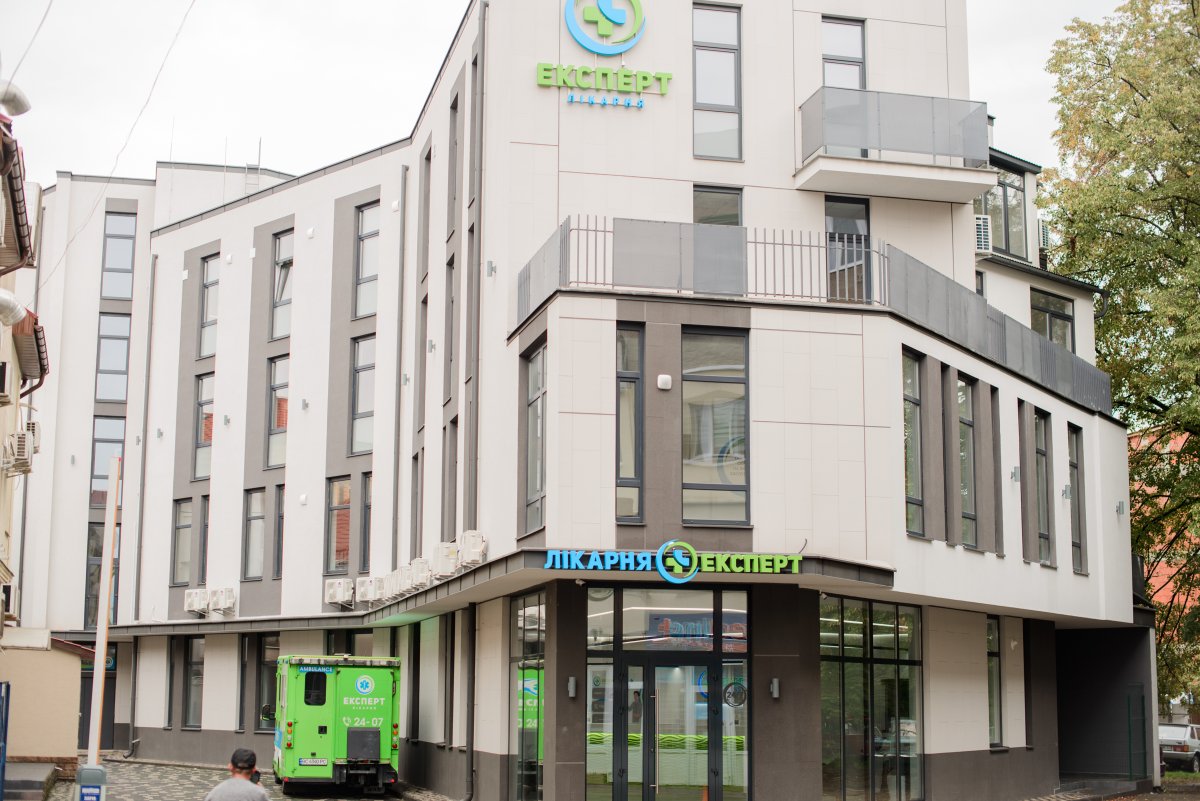
- Minimally invasive options: Expert Clinic in Uzhhorod focuses on specialized laparoscopy and rehabilitation.
Bookimed Expert Insight: Patient volume often signals diagnostic reliability in Ukraine. Dobrobut Medical Network serves over 330,000 patients annually, while Dievo Surgery Center maintains a high 4.9 rating. Choosing these high-traffic centers ensures access to experienced surgeons like Dr. Djuran Bogdan, who specializes in orchiectomy and reconstructive urology.
Patient Consensus: Patients emphasize the need for rapid evaluation at centers with on-site pathology. Since benign and malignant masses can look similar on scans, they recommend prioritizing hospitals that handle imaging and surgery in one place.
How long is recovery after benign testicular tumor removal?
Recovery after benign testicular tumor removal typically takes 2 to 3 weeks for returning to work. Initial healing requires avoiding heavy lifting for 6 weeks. Specialists like Dr. Bogdan Djuran at Dievo Surgery Center perform orchiectomy procedures with most patients feeling better daily.
- Daily activities: Patients usually resume light routines within 1 to 2 weeks.
- Physical restrictions: Avoid strenuous exercise or heavy lifting for at least 6 weeks.
- Wound healing: Stitches or clips are typically removed within 7 to 10 days.
- Scrotal support: Wearing a support garment for 48 hours reduces swelling and discomfort.
Bookimed Expert Insight: Clinics like Expert Clinic in Uzhhorod offer individualized recovery programs including home visits. This level of personalized follow-up is rare but helps manage the swelling and tightness many patients experience. Choosing a facility with a full care cycle ensures smoother transitions from surgery to rehabilitation.
Patient Consensus: Patients note that walking too much early on often increases swelling. Many emphasize that supportive underwear and ice packs are essential for managing the initial week of discomfort.