To homepage

How it works

We've transformed the clinic search process, making it simple, fast, and personal.
Answer a few questionsTake a short quiz to share your Dental Implant goals.
Get personalized offers3 clinics, handpicked based on your answers, provide tailored treatment plans and quotes.
Choose the best optionCompare offers and choose the clinic that suits you best.
You can also browse all 3 clinics below.
1M+ patients have got assistance since 2014
50 countries
1,500 clinics
6K+ reviews
3K+ qualified doctors

How Much Does Dental Implant Cost in Poland?

Dental implant procedures in Poland typically cost between $1,500 and $3,000. Total expenses depend on the chosen implant brand, crown material, and necessary preparatory surgeries. In the US, similar procedures cost around $4,100 on average. Patients save around 44% compared to US prices. Standard treatment usually includes the implant screw, abutment, and 3D diagnostics.

  • All-on-4 dental implants: $5,700 to $8,900 for full-arch restoration.
  • All-on-6 dental implants: $8,700 to $13,600 for maximum stability.
  • Installation of a dental implant with crown: $800 to $1,800 for a complete tooth.
  • Mini dental implant: $100 to $200 for smaller spaces.
  • Premium implant systems: Brands like Straumann or Nobel Biocare typically add 20-50% to costs.

Bookimed Expert Insight: Choosing a certified MaloClinic partner provides high-tier expertise at lower Polish rates. HALDENT Dental Clinic offers Nobel Biocare packages for approximately $2,600. These include 3D CT scans and Zirconia crowns. Major hubs like Krakow and Warsaw house clinics with over 99% success rates. Clinics like KCM Clinic hold ISO certifications, ensuring international safety standards for foreign patients.

Key Benefits
  • Get dental implants in Poland at 70-80% less than in the USA and UK.
  • Top implant options: Straumann®, Nobel Biocare™, and Dentsply Sirona®.
  • Free consultation with a specialist to determine the best implant type and procedure for you.
  • Warranty available on select offers.
  • Access exclusive deals from top Polish clinics from $2,557.
PolandTurkeyThe USA
Dental Implantfrom $1,500from $335from $2,700
Zygomatic implantfrom $3,000from $1,721from $15,000
Zygomatic All-on-6 implantsfrom $12,000from $4,750from $30,000
Zygomatic All-on-4 implantsfrom $15,000from $6,885from $25,000
Zygomatic All-on-2 implantsfrom $5,000from $4,000from $28,000
Data verified by Bookimed as of September 2026, based on patient requests and official quotes from 737 clinics worldwide. Median costs are based on real invoices (2025–2026) and updated monthly. Actual prices may vary.

Dental Implant Packages in Poland — September 2026

Procedure type
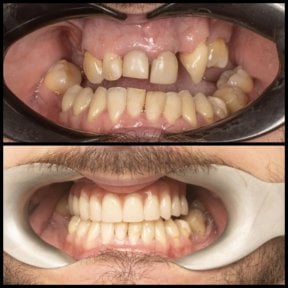
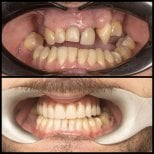
Before and after dental implant results at HALDENT Dental Clinic – full smile restoration
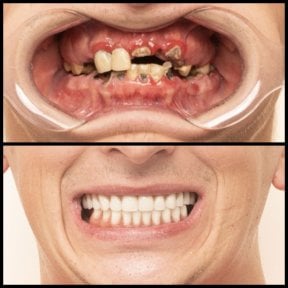
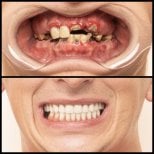
Before and after dental implant results at HALDENT Dental Clinic, restored smile transformation
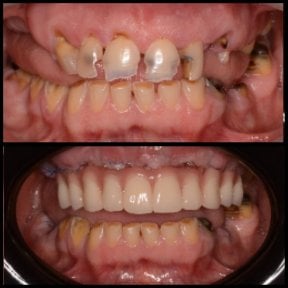
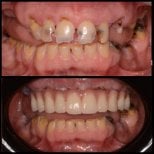
Before and after dental implant results at HALDENT Dental Clinic, improved smile restoration
4.7
(7 reviews)
18 years of experience

Nobel Biocare Implant with Zirconia Crown by All-on-4 Certified Expert

Dr. Hubert Trzepatowski, a certified Nobel Biocare All-on-4 trainer, performs the procedure at the Polish Association of Implantology-accredited HALDENT Dental Clinic. The package includes a Nobel Biocare implant, zirconium crown, and 3D CBCT scan for precise planning. It costs around $2,557 and the approach – open or closed healing – is chosen based on this scan. The clinic's on-site laboratory streamlines the process, and it maintains a 98% patient recommendation rate.

Discover the Best Dental Implant Clinics in Poland: 3 Verified Options and Prices

The Bookimed clinic ranking is based on data science algorithms, providing a trusted, transparent, and objective comparison. It takes into account patient demand, review scores (both positive and negative), the frequency of updates to treatment options and prices, response speed, and clinic certifications.
KCM Clinic
RIKOTA Dental Clinic
Dental Clinic Dynasty Stomatology in Krakow
Smile Dentica Clinic
You’ve viewed 5 of 39 clinics

Dental Implant in Poland: Your Travel Plan

Day 1: Arrival in Poland
  • Upon arrival in Poland, you should ensure you have all necessary documents. This includes your medical records and recent blood test results, especially vitamin D3 and LDL cholesterol levels. These are crucial for assessing your readiness for the dental implant procedure.
  • Check into your accommodation and rest after your journey. You need to be well-rested for your initial consultation the next day.
  • If you have any immediate concerns or questions, contact the clinic via phone or email. They are available to assist with any inquiries you might have.
Day 2: Initial Consultation and Diagnostics
  • You need to visit the clinic for your initial consultation. This will include a clinical evaluation and a Cone Beam Computed Tomography (CBCT) scan to assess your jawbone's condition and plan the implant placement accurately.
  • Discuss your treatment plan with the specialist. They will explain the procedures, expected outcomes, and any potential additional treatments, such as bone regeneration or vitamin infusions.
  • If you have opted for a biological dentistry approach, ensure all potential interference fields are discussed and addressed.
  • Undergo professional teeth cleaning to prepare your mouth for the surgery. This may include the removal of plaque and tartar, polishing, and fluoridation.
  • Review and confirm your treatment plan, including the type of implants to be used (e.g., zirconia or Straumann) and the timeline for the procedures.
Day 3: Surgery Day
  • Arrive at the clinic for your scheduled dental implant surgery. This may involve tooth extractions followed by immediate implantation of zirconia or Straumann implants, depending on your treatment plan.
  • Receive a vitamin infusion to support your immune system and promote healing.
  • Post-surgery, you may be provided with temporary crowns to maintain aesthetics and function while the implants integrate with your jawbone.
  • Follow all post-operative care instructions provided by the clinic, including medication schedules and dietary recommendations.
Day 4: Post-Surgery Check-Up
  • Return to the clinic for a post-surgery check-up. The dentist will assess the surgical site, ensure proper healing, and address any concerns you may have.
  • Engage in cold therapy and possibly receive another vitamin infusion to aid in recovery.
  • Discuss the potential for additional procedures such as hyperbaric chamber sessions or micro-needling with PRF to further enhance healing.
  • Receive instructions for ongoing care and schedule your follow-up visit in 6-7 months for the final restoration phase.
  • Before departure, ensure you have contact information for the clinic in case any issues arise once you return home.
6-7 Months Later: Final Restoration Visit
  • Return to Poland for the final restoration phase once the implants have properly integrated with your bone.
  • Undergo preparation for zirconia abutments and the fitting of full ceramic crowns or veneers, depending on your aesthetic goals.
  • If you choose, you can have additional veneers prepared to enhance your smile further.
  • Discuss any last-minute adjustments or preferences with your dental specialist to ensure satisfaction with the final outcome.
  • Consider staying for a week if additional adjustments are needed, or schedule a follow-up visit if you prefer to return home and come back later.
Final Steps: Returning Home
  • After completing your dental implant treatment, ensure you have all post-treatment care instructions and contact information for the clinic for any future inquiries.
  • Maintain regular dental hygiene practices and follow any specific recommendations provided by your dentist to ensure the longevity and success of your implants.
  • Schedule routine check-ups with your local dentist to monitor the condition of your implants and overall oral health.

Bookimed, a leading global medical tourism platform, is committed to helping clients looking for Dental Implant in Poland by offering expert assistance and trustworthy medical solutions for every situation. Smart automatic ranking system is used to compose transparent clinic listings, meticulously maintained by a data scientist using AI for accuracy. The platform guarantees authenticity by publishing reviews from real patients after their treatments. Bookimed offers comprehensive medical solutions, with updates from clinics to ensure trustworthiness. The content about Dental Implant in Poland, crafted by experienced medical authors and reviewed by specialists, adheres to Bookimed"s Editorial Guidelines, reflecting the platform"s commitment to delivering high-quality and clear health information. For more details or inquiries, feel free to contact us at marketing@bookimed.com or learn more about us and our mission here.

Our Trusted Doctors

View all Doctors
verified

Andrii Vodianytski

11 years of experience

Dr. Vodianytski specializes in dental implants, offering personalized care at RIKOTA Dental Clinic.

  • Expert in advanced implant techniques
  • Focuses on natural-looking and durable results
  • Provides comprehensive post-operative care
verified

Tetiana Pererva

16 years of experience

16 years specializing in orthodontics – Dr. Pererva focuses on achieving stable, functional results for dental implants at Dental Clinic Dynasty Stomatology.

  • Graduated from Donetsk National Medical University
  • Uses detailed diagnostics and photo protocols for each case
  • Specializes in bite correction and temporomandibular joint therapy
  • Combines aesthetic results with proper stomatognathic function
verified

Vadym Shemiakov

6 years of experience

Dr. Shemiakov specializes in dental implants at RIKOTA Dental Clinic, providing personalized care for each patient.

  • Experienced in various implant techniques
  • Focuses on patient comfort and satisfaction
  • Works with advanced dental technologies
verified

Dariusz Wilisowski

23 years of experience

Holds the European title of implantologist – Dr. Wilisowski specializes exclusively in dental implants at Luxdentica Implant and Cosmetic Dentistry.

  • Graduated from Jagiellonian University's dental faculty
  • Advanced studies at Johann Wolfgang Goethe University in Frankfurt
  • Member of implantology societies in Poland and Germany
  • Active in the American Spear Study Club of Aesthetics

Video Stories from Bookimed Patients

Igor
It was great! Transfers, accommodation, treatment—all included.
Procedure: Dental Implant
David
Who knew getting your teeth fixed could be a mini vacation?
Procedure: Installation of a dental implant with crown
Pavel
I recommend Bookimed's services to everyone - they made my life much easier.
Procedure: Zirconia crown installation

Reviews about Bookimed: Discover Patients' Insights

All reviews
Anonymous • Dental Implant
Poland
Aug 22, 2026
Verified review.
It immediately became clear that I was in reliable hands, and this feeling stayed with me throughout the entire process
I remember my first consultation with the surgeon. It immediately became clear that I was in reliable hands, and this feeling stayed with me throughout the entire process. The doctor took his time, explained the entire implantation process in detail and in an accessible manner, showed the digital treatment plan, and answered all my questions, even the most insignificant ones. The organizational support from Bookimed was at the appropriate level — all communications were fast and to the point. At the clinic itself, I was greeted by friendly staff. Everyone acted precisely and professionally, from the receptionist to the doctor's assistant, creating a calm atmosphere. The premises are clean, and the equipment is modern. The procedure itself went according to plan. Now the recovery period has begun. At this stage, everything is proceeding as agreed. I can’t note any negative aspects.
Craig Watson • All-on-4 Dental Implants
United Kingdom
Jun 8, 2025
Verified review.
I am glad that I chose Haldent to get mine
Admittedly, the thought of undergoing dental work is always daunting, especially if you're considering implants, and even more so if those implants are to be done in another country. However, I can say that I am glad I chose Haldent for my procedures. While it’s easy to be mesmerized by the beautiful buildings, the high-tech equipment, and to peek into the dental laboratory each time you pass by, it quickly becomes apparent that all of this is operated by highly skilled professionals, and they excel at what they do. Dr. Hubert Tszepatowski didn’t just build a dental clinic; he created a family, and when you are here, you feel like a part of it. From the way they collect you for surgery on a day off to how they drop you off, you are in the best hands. And if that doesn't ease your nerves, the massage beforehand will; it almost lulled me to sleep. After returning home and reflecting, I wish to thank everyone involved in this process for their long hours and late nights. I cannot express how grateful I am for the time given and all the extra efforts made. So to Medhat, Bartosz, Karolina, Pawel, and Karolina, thanks to you, Dr. Hubert Tszepatowski, and your entire team, I now have the smile I always dreamed of, and it’s all because of you.
Mark Müller • All-on-4 Dental Implants
Germany
Apr 14, 2025
Verified review.
I feel like a new person
I can only say very good things. Whether it was about appointments or the very friendly staff. Everyone took a lot of time for me. Yes, and above all the good qualified doctors that you don't find in Germany. Everything was just right. The clinic itself is a dream and looks really inviting. Top The result is absolutely beautiful. No problems I feel like a new person Thank you for everything I would be happy to come back at any time.
My new teeth on top
Sorry but I didn't have anything negative
About Bookimed service
Bookimed responded quickly was friendly and listened and recommended the best clinic for me

Dental Implant: Before & after photos

View all

Related Articles

View more

Share this content

Updated: 09/18/2026
Authored by
Anna Leonova
Anna Leonova
Head of Content Marketing Team
A certified medical writer with 10+ years of experience, developed Bookimed’s trusted content, backed by a Master’s in Philology and medical expert interviews worldwide.
Fahad Mawlood
Medical Editor & Data Scientist
General practitioner. Winner of 4 scientific awards. Served in Western Asia. Former Team Leader of a medical team supporting Arabic-speaking patients. Now responsible for data processing and medical content accuracy.
Fahad Mawlood Linkedin
This page may feature information relating to various medical conditions, treatments, and healthcare services available in different countries. Please be advised that the content is provided for informational purposes only and should not be construed as medical advice or guidance. Please consult with your doctor or a qualified medical professional before starting or changing medical treatment.

Our Dental Implant Techniques: What Suits You Best?

When considering Dental Implant, it’s important to understand the different techniques and which is best suited for you. Here’s a concise comparison of popular options:

All-on-4 Dental Implants

This procedure involves placing four strategically positioned implants to support a full arch of prosthetic teeth, offering a stable and long-lasting solution for tooth loss.

Pros: Requires fewer implants than All-on-6 while providing similar stability. High success rate of 95% for lower jaw implants. Suitable for patients with some bone loss, unlike traditional methods needing extensive bone grafting.
Cons: Not ideal for patients with severe bone loss, unlike zygomatic implants. May not offer the same level of support as All-on-6 for those with higher bite forces.
Effectiveness: 95% success rate for lower jaw.
Duration: 2-3 hours
Recovery: 1-2 weeks
Best for: Full arch replacement for patients with moderate bone density. Suitable for 4-6 missing teeth.
Prices: Cost of All-on-4 Dental Implants in Poland from $5,661

All-on-6 Dental Implants

All-on-6 dental implants involve placing six implants in the jawbone to support a full arch of teeth.

Pros: Offers enhanced stability and support compared to All-on-2 and All-on-4 options. Provides up to 30% more biting force than fewer implant configurations.
Cons: Requires more bone density and may involve additional procedures like bone grafting, which increases complexity. It takes longer than simpler implant solutions.
Effectiveness: Success rate of 95% for osseointegration.
Duration: 2-3 hours
Recovery: 3-6 months
Best for: Full arch restoration in patients with sufficient jawbone density. Suitable for those needing comprehensive dental prosthetics.
Prices: Cost of All-on-6 Dental Implants in Poland from $8,675

Installation of a Dental Implant with Crown

It involves placing a titanium post in the jawbone to support a crown, restoring a missing tooth.

Pros: Provides a natural look and feel, with a success rate of up to 98%. Offers a permanent solution compared to removable dentures, enhancing comfort and function.
Cons: Requires sufficient bone density, which may necessitate bone grafting. Longer treatment time compared to other options like All-on-4 implants.
Effectiveness: Success rate up to 98%.
Duration: 1-2 hours
Recovery: 3-6 months
Best for: Single missing tooth replacement, maintaining jawbone health, and improving oral function.
Prices: Cost of Installation of a dental implant with crown in Poland from $790

Zygomatic implant

Designed for patients with significant bone loss in the upper jaw, a zygomatic implant uses the zygomatic bone for support.

Pros: Provides a stable solution for patients with severe bone loss. Avoids the need for bone grafting, unlike traditional implants. High success rate, with over 95% reported in studies.
Cons: Requires complex oral surgery and specialized skills. Longer recovery time compared to other dental fixtures.
Effectiveness: 95%-98% success rate.
Duration: 2-3 hours
Recovery: 3-6 months
Best for: Patients with severe upper jaw bone loss who cannot have standard implants.

Straumann Dental Implants

Straumann Dental Implants are high-quality dental fixtures used for tooth replacement and oral restoration.

Pros: Exceptional osseointegration rate and durability. 98% success rate over 10 years. Superior to zygomatic or simple swiss implants in terms of longevity.
Cons: Requires good bone density, unlike zygomatic implants. More invasive than simpler implant with abutment procedures.
Effectiveness: 98% success rate
Duration: 1-2 hours
Recovery: 3-6 months
Best for: Single tooth replacement, multiple teeth restoration, and strong jawbone support.

All-on-2 Dental Implants

A dental fixture technique providing full arch rehabilitation with only two implants per arch, ensuring stability and function.

Pros: Minimal surgery with reduced recovery time. Suitable for patients with limited jawbone density, offering 20-30% less surgical intervention compared to All-on-4.
Cons: Limited support for full arch, increasing stress on implants, which can lead to 15% higher wear and tear risk than All-on-4.
Effectiveness: Success rate of 85-90% in suitable patients.
Duration: 1-2 hours
Recovery: 3-5 days
Best for: Patients with limited jawbone, requiring fewer implants for full arch restoration.

Dental Implant with Abutment

Tooth implant involves placing a titanium post into the jawbone, serving as a root for a dental prosthesis like a crown.

Pros: High success rate of 95% due to osseointegration. Provides a natural look and feel, unlike removable dentures.
Cons: Requires adequate bone density and health. Surgical procedure may lead to discomfort and swelling for a few days.
Effectiveness: 95% success rate for osseointegration.
Duration: 1-2 hours
Recovery: 3-6 months
Best for: Single tooth replacement, maintaining jawbone health, and providing stable dental prosthetics.
Prices: Cost of Dental Implant with Abutment in Poland from $1,434

Nobel Biocare Dental Implants

Tooth implants from Nobel Biocare provide a permanent solution for missing teeth through advanced osseointegration.

Pros: High success rate of up to 98%. Suitable for immediate function, unlike some other dental fixtures. Strong osseointegration with jawbone.
Cons: Requires sufficient bone density, unlike zygomatic implants which can bypass this limitation.
Effectiveness: 98% success rate
Duration: 1-2 hours
Recovery: 3-6 months
Best for: Single or multiple tooth replacement, addressing gaps in dental arch.

Simple Swiss Dental Implants

A straightforward dental restoration designed for replacing missing teeth with a focus on precision and durability.

Pros: High success rate of over 95%. Minimal bone grafting needed in most cases. Excellent osseointegration due to advanced technology.
Cons: Limited to individuals with adequate jawbone density. May require multiple visits for complete installation.
Effectiveness: Success rate over 95%.
Duration: 1-2 hours
Recovery: 1-2 weeks
Best for: Single or multiple missing teeth. Ideal for maintaining jawbone health and function.

All You Need to Know about Dental Implant in Poland

Medical Disclaimer: This article is for informational purposes only and is not medical advice. Always consult a qualified healthcare provider before any medical decisions. Results may vary. Read the full disclaimer

About 96 in every 100 dental implants are still in place 10 years after surgery. A dental implant in Poland is a staged treatment, not a single appointment. Getting it right means planning the trips around the healing, flying home at the right time and protecting the result for years. Here's how to stay in that group.

How Long Do Dental Implants in Poland Take?

Most patients can't finish dental implants in Poland in one short trip, and that's by design. The bone needs months to grip the titanium post before it can hold a permanent tooth. Your surgeon maps the full plan from a CBCT scan, a 3D X-ray of your jaw. That happens before anything is booked. Some patients qualify for same-day options, but most treatment is staged. The two-trip plan is the route Bookimed coordinates most often for Poland.

The two-trip plan

The safe route is usually two visits, known as the two-stage protocol, with the healing months in between.

  • Trip 1, about 3–5 days. The surgeon takes the scan, removes any failing teeth, does any grafting, and places the implant.
  • Healing at home, about 3–6 months. The jawbone slowly fuses to the post, and this is the part nobody can rush.
  • Trip 2, about 5–7 days. You come back for the connector and the permanent zirconia or porcelain crown.

Any temporary crown fitted in the meantime is there for looks only. It's kept out of your bite, so you never chew on a post that's still fusing.

When a graft adds a third trip

Sometimes the upper jaw has lost too much bone to hold an implant. A larger repair, like a sinus lift or block graft, heals on its own for about 4–6 months first. Only then does the implant go in. That turns the plan into three trips. Your surgeon can see from the CBCT scan whether this applies to you.

When a front tooth can be done in one visit

A single front tooth can sometimes be placed and given a temporary tooth in one visit. This works only in a narrow set of conditions. The front bone wall must be intact and the neighbouring teeth healthy. There must be no active infection, and the new post must be firmly stable. Implant specialists treat this as a complex case, so the surgeon confirms it from your scan on the day.

Are You a Good Candidate for a Dental Implant?

A dental implant suits most adults with healthy gums and enough jawbone. Suitability is the surgeon's call, made from your scan and health history. It's not a checklist you fill in yourself.

What a surgeon checks before treatment

The surgeon assesses three findings before planning treatment. Bone volume and quality come from your CBCT scan. Gum health and your general medical history complete the picture. This is why a proper plan starts with imaging, not with a booking.

Health factors that support healing

Four factors change how reliably an implant heals: smoking, diabetes control, untreated gum disease and night-time grinding. Each one has a straightforward fix:

  • Stop smoking at least 4 weeks before surgery, and stay smoke-free through the 3–6 month healing phase. Smoking slows healing and raises the chance of graft problems.
  • If you have diabetes, keep blood sugar well controlled, and have any active gum disease treated before surgery. Both support long-term implant success.
  • Wear a custom nightguard if you grind your teeth at night, which protects the implant while you sleep.

How to Keep Your Implants for Life

The strongest protection for an implant is a professional cleaning and check about every 6 months. Mild gum inflammation can appear around an implant over the years. This reversible condition is called peri-implant mucositis, and a dentist catches it early at those visits. Untreated, it can progress to peri-implantitis, the stage where the bone around the post is lost. A systematic review puts mucositis at about 43% of patients and peri-implantitis at about 22%, which is what the 6-month checks are for.

When Is It Safe to Fly Home?

Your treatment plan sets your return date, so it helps to know the flight rules in advance. The safe wait depends on which operation you had.

Why flying too soon is a problem

Cabin air is kept at the pressure you'd feel at about 5,000–8,000 feet, not at sea level. At that pressure, trapped gas expands by roughly 30% as the plane climbs and shrinks again as it lands.

A tiny air pocket under a fresh temporary crown or filling can expand the same way. It presses on the tooth, causing a sharp pressure pain that dentists call barodontalgia. After an upper-jaw graft or sinus lift, the thin sinus membrane is only about 0.3–0.8 mm across. This layer, called the Schneiderian membrane, is sensitive to pressure changes that can disturb fresh graft material. That's why sinus work needs the longest wait.

Safe waiting times before you fly

Minimum waits lengthen with how involved the surgery was. Research on flying after oral surgery gives a useful guide:

ProcedureEarliest safe flight
Single implant, no graftabout 72 hours
Surgical tooth extractionabout 72 hours
Bone graft without a sinus liftabout 72 hours
Sinus lift or large upper-jaw graftat least 2 weeks, up to 6 weeks for long-haul flights

Your surgeon knows whether you need a sinus lift before you travel. So book a flexible or later return flight if there's any chance of one. Confirm your own safe window with the surgeon before fixing your return flight.

Arranging Follow-Up Care at Home: Your Implant Passport

Once you're home, an implant needs little beyond good brushing and your normal check-ups. But a crown might one day need tightening, or a part might need servicing. A dentist near you has to know exactly what was placed. Ask the clinic for a written implant passport before you leave.

What to put in your implant passport

Your implant passport should record:

  • Which brand and system was used, meaning the manufacturer and product line.
  • The model number, and how the crown attaches to the post.
  • Exact diameter and length, in millimetres.
  • Your CBCT scan, treatment notes and warranty documents, kept together.

A dentist back home needs those exact details to order the matching parts and driver keys. That matters if anything is ever adjusted.

Why globally recognised brands matter

The brand of implant matters more than it first seems. An internationally established system such as Straumann or Nobel Biocare has compatible parts stocked around the world. So any qualified dentist can service it. Lesser-known systems are far harder to match parts for later. Your Bookimed coordinator stays in touch after you return and can help you reach the clinic with any questions. The Polish clinics Bookimed partners with keep these records and share them on request.

How to Keep Your Implant Warranty Valid

A warranty on your implants is only as strong as the conditions attached to it. Most of those conditions are about upkeep and paperwork. Knowing them from the start keeps your cover intact.

Conditions that usually keep a warranty valid:

  • A documented professional cleaning about every 6 months keeps the cover in force, so keep the invoices.
  • Leaving other missing teeth unrestored can overload the new implants, and some warranties shorten if that's left undone.

Common exclusions to expect:

  • Provisional crowns and bridges are usually not covered.
  • Age-related change in the jaw over time is a natural exclusion.
  • Smoking-related graft problems, and grinding damage unless you wear a custom nightguard.

Implant makers run their own warranty programmes too, and those also depend on genuine parts and proper documentation. Ask for the full warranty terms in writing before treatment, so you know what keeps your cover in force.

How to Check Your Polish Implantologist's Credentials

Every Polish clinic Bookimed partners with is licensed, and its implant surgeons are vetted before they join. You don't have to chase paperwork on your own. Here's what that assurance covers.

  • Your Bookimed coordinator can confirm a surgeon's licensing and training on request, before you commit.
  • The coordinator can also confirm implant-focused memberships like the ITI, ICOI, or PSI (the Polish Association of Implantology).
  • You can ask the clinic directly which implant systems the surgeon places most often.

These checks let you settle into trained, licensed hands without doing the digging yourself.
FAQ about Dental Implant in Poland

These FAQs come from real patients seeking medical assistance through Bookimed. Answers are given by experienced medical coordinators and trusted clinic representatives.

How long does the entire dental implant process take?

The dental implant process in Poland typically spans 3 to 9 months. Standard two-stage procedures require a 3–6 month healing period for osseointegration. Complex cases involving bone grafting may extend to 12 months, while immediate-load techniques can reduce the total timeline to under 3 months.

  • Initial consultation: Diagnostics using 3D CBCT scans usually take 1 to 2 days.
  • Implant surgery: Surgical placement of titanium posts requires a single 1–2 hour outpatient visit.
  • Osseointegration phase: Bone fuses with the implant over a period of 3 to 6 months.
  • Final restoration: Fabricating and fitting the custom crown takes approximately 2 weeks to complete.

Bookimed Expert Insight: Many Polish clinics like Dental Clinic Dynasty Stomatology offer on-site diagnostics that compress the initial phase. Patients can often combine extraction and implant placement in one visit to save 2 months of waiting. This approach is common in Krakow clinics serving high international volumes.

Patient Consensus: Travelers often complete the surgery in one trip and return months later for the crown. Most report they can return to normal eating by the fourth month if bone quality is good.

Is the dental implant procedure painful?

Dental implant surgery is virtually painless due to the use of local anesthesia or sedation. Patients typically report feeling only minor pressure during the procedure. Post-operative discomfort usually peaks within 48 to 72 hours and is easily managed with standard over-the-counter pain medication.

  • Sensation during surgery: Local anesthesia ensures zero pain, though patients may feel slight physical pressure.
  • Post-operative peak: Moderate soreness and swelling often occur between days 2 and 3 after treatment.
  • Anesthesia options: Clinics offer nitrous oxide or IV sedation for those with significant dental anxiety.
  • Recovery duration: Most patients return to light activities and normal eating within 1 to 2 weeks.

Bookimed Expert Insight: While many focus on the number of implants, the choice of technology often dictates the comfort level. Polish clinics like HALDENT and Dentrum utilize All-on-4 protocols and navigation systems that reduce surgical trauma compared to traditional methods. Choosing an All-on-4 certified expert can significantly streamline the healing process through more precise, less invasive placement techniques.

Patient Consensus: Patients describe the physical sensation as similar to a root canal, noting that the sound of the equipment is often more noticeable than any actual discomfort. Most agree that cold packs and ibuprofen are sufficient to handle the mild ache during the first week.

Is the quality of dental work in Poland as good as in Western countries?

Dental work in Poland meets or exceeds Western standards, utilizing identical premium brands like Straumann and Nobel Biocare within EU-regulated facilities. Polish dentists undergo rigorous 5-year university training and mandatory internships, often holding advanced certifications from prestigious institutions in Germany, Switzerland, or the United States.

  • Specialist training: Dentists complete 5-year degrees plus mandatory 1-year internships and periodic license renewals.
  • Advanced technology: Clinics utilize 3-D CBCT imaging, intraoral scanners, and CAD/CAM systems for precise placement.
  • EU-wide standards: Facilities follow strict Ministry of Health protocols and international ISO or TEMOS accreditations.
  • Faster healing: Advanced PRF-enhanced protocols can shorten implant osseointegration from 12 weeks to 6 weeks.

Bookimed Expert Insight: Poland has emerged as a hub for complex full-arch rehabilitations because its lead surgeons, such as those at HALDENT or Dentrum Clinic, often serve as international trainers for major implant brands. While a single implant in the US averages $4,100, specialized Polish clinics offer All-on-4 packages with certified experts for approximately $2,600. This price gap does not reflect lower quality but rather lower local labor and laboratory costs for Swiss-rivaling precision.

Patient Consensus: Patients frequently highlight the technical precision of Polish labs and the fluency of English-speaking staff in major hubs like Krakow. Many emphasize that the level of diagnostic detail, including mandatory 3-D scans, often surpasses what they experienced in their home countries.

Can I get a dental implant in just one day?

You can get a dental implant in one day in Poland through immediate loading protocols. Surgeons place the titanium post and attach a provisional crown during a single visit. This requires a bone torque test exceeding 35 Ncm to ensure immediate stability and successful osseointegration.

  • Bone density: Sufficient jawbone is required to stabilize the implant immediately without grafting.
  • Torque testing: Surgeons must confirm a 35 Ncm torque for same-day crown attachment.
  • Advanced imaging: Clinics use 3D CBCT scans to plan precise, guided implant placement.
  • Brand protocols: Systems like Nobel Biocare maintain 99% success rates for immediate loading.

Bookimed Expert Insight: Poland's leading centers, like HALDENT Dental Clinic, use surgeons who are certified trainers for Nobel Biocare. This expertise is why they can safely offer All-on-4 full-arch restorations in one day. While the implant is placed immediately, expect to return after 4–6 months for your final zirconia bridge.

Patient Consensus: Patients report that while the `new smile` is immediate, adhering to a strict soft-food diet for 8 weeks is vital. Many recommend getting 3D imaging done early to avoid mid-surgery surprises regarding bone density.

Do dentists in Poland speak English?

Most Polish dentists in urban centers speak fluent English. High-end private clinics in Warsaw and Krakow frequently treat international patients and employ bilingual staff. Younger practitioners and those with international certifications like ICOI or ITI typically maintain high English proficiency to assist foreign medical travelers.

  • Expertise levels: Younger dentists (under 50) usually possess high English fluency from modern education.
  • Major hubs: Clinics in Warsaw and Krakow cater heavily to English-speaking international dental patients.
  • Staff support: Specialized tourism clinics often provide English-speaking receptionists and assistants for full support.
  • Selection tip: Choose surgeons with international training as they almost always communicate effectively.

Bookimed Expert Insight: Data shows Krakow clinics like HALDENT and Smile Dentica successfully serve thousands of patients from the UK and USA annually. Our records indicate that clinics holding international accreditations, such as ICOI, prioritize English-speaking staff to maintain their high global rankings. Many specialists, like Dr. Daniel Ciapinski, actively train other doctors internationally, ensuring their communication skills meet professional global standards.

Patient Consensus: Patients report that major-city implant clinics almost always have fluent English-speaking dentists. They recommend emailing clinics beforehand and downloading an offline Polish translation pack as a practical backup for local pharmacies.

What should I verify before choosing a clinic?

Verify the surgeon dental chamber license, specific implant brands like Straumann or Nobel Biocare, and clinic certifications such as ISO or ICOI. Confirm the surgeon has placed over 1,000 implants. Ensure the facility provides 3D CBCT imaging and a written multi-year guarantee before proceeding.

  • Accreditation check: Look for International Congress of Oral Implantologists or ISO certifications to ensure safety.
  • Surgeon expertise: Choose doctors with European Master degrees or International Team for Implantology certificates.
  • Technology access: Ensure clinics have on-site cone beam computed tomography for precise 3D surgical planning.
  • Brand verification: Confirm the use of premium systems like Nobel Biocare with 99% success rates.

Bookimed Expert Insight: Look for clinics like HALDENT that serve over 1,500 international patients annually. High-volume centers often employ manufacturers' certified trainers, ensuring your surgeon teaches the very techniques they perform. This level of peer-recognized mastery typically correlates with lower revision rates in complex All-on-4 cases.

Patient Consensus: Patients recommend requesting a written treatment plan and verifying the surgeon’s Polish Dental Chamber license. Many suggest budgeting extra for potential follow-ups and choosing clinics in major hubs like Krakow for better service continuity.

Which cities are best for dental tourism in Poland?

Krakow and Warsaw are the primary hubs for dental tourism in Poland, followed by Gdansk and Wroclaw. These cities host JCI-accredited clinics offering advanced Nobel Biocare and Straumann implants. Patients typically save 44% compared to US costs while receiving care from European Board-certified specialists.

  • Krakow: Premier destination featuring clinics like HALDENT and INDEXMEDICA with competitive implant pricing.
  • Warsaw: The capital offers the highest density of specialized institutes for complex rehabilitations.
  • Gdansk: Preferred for seaside recovery and advanced lab technology for faster restorative procedures.
  • Wroclaw: A hub for medical innovation known for highly organized all-inclusive logistical packages.
  • Lodz: Often provides the most budget-friendly options for standard single-unit dental implant installations.

Bookimed Expert Insight: Krakow stands out because surgeons like Dr. Hubert Trzepatowski at HALDENT are certified All-on-4 trainers for Nobel Biocare. This high level of expertise draws 1,500+ annual patients to this city. High volume often leads to better clinical outcomes and more refined patient workflows.

Patient Consensus: Many travelers prioritize cities with direct flight access to avoid long drives post-surgery. Patients frequently mention that the seamless English communication in private Polish clinics reduces the stress of treatment.

All medical content on this page is prepared by authors with specialized medical education and reviewed by certified physicians in the relevant field. Medical review by Fahad Mawlood, Medical Editor & Data Scientist.

Last updated: 09/18/2026.

  • Statistics: Figures are based on Bookimed’s internal database September 2026, which includes analysis of 12,450 patient requests across 3 accredited clinics in Poland.
  • Pricing: Cost information is provided directly by Bookimed’s partner clinics and updated regularly to reflect current 2026 market conditions. Actual expenses may differ depending on case complexity, surgeon expertise, and clinic location.
  • Clinical Data: Treatment outcomes and patient satisfaction figures are collected from Bookimed’s verified clinic database and supported by data from peer-reviewed medical sources such as PubMed, The Lancet, JAMA, and NEJM (2023–2026).

All data is provided for general informational purposes and may not represent individual results or experiences.

Get a free consultation

Select the best way to contact you