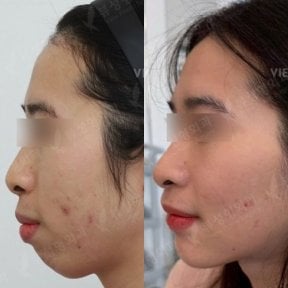
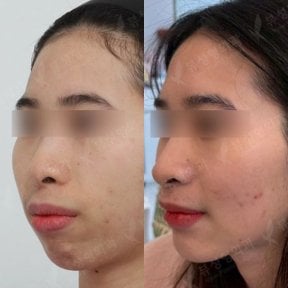
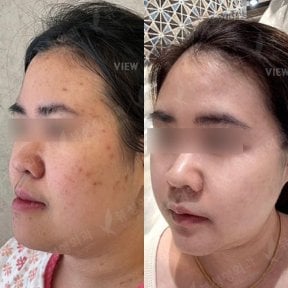
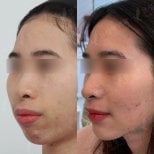
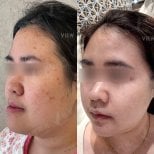
In a review of 65 studies and 6,482 jaw-surgery patients, 87.6% were satisfied with the result. If an orthodontist has told you that braces alone will not fix your bite, you have probably wondered what will. When the mismatch sits in the jawbone itself, moving teeth can only do so much. The sections below cover how surgeons decide surgery is needed. They show how to confirm who actually operates on you, and what the outcome data really means. And they cover how to plan your flight home and the braces that follow.
Do you need jaw surgery, or can braces fix it?
The answer depends on where the problem sits. If your teeth are crooked but your jaws meet correctly, braces alone can often fix it. When the jaws are the wrong size or position, surgery moves the bone into place.
What braces can and cannot correct
Braces move teeth. They can tip teeth to hide a small gap between the jaws, and for many people that is enough. When the difference is in the bone, tilting teeth only masks it. Orthognathic surgery repositions the jaw itself, which is the structural correction braces cannot make.
The measurable signs surgeons check
Surgeons and insurers rely on a few measurable signs. One is overjet – how far the upper front teeth sit ahead of the lower ones. A normal overjet is about 2 mm. Around 5 mm or more points toward surgery once jaw growth is complete.
| Sign | Normal | Points toward surgery |
|---|
| Overjet (upper teeth ahead of lower) | about 2 mm | 5 mm or more |
| Open bite (front teeth do not meet) | teeth meet | more than 2 mm |
| Facial or jaw asymmetry | even | more than 3 mm |
Certain problems also point toward surgery:
- trouble chewing or swallowing;
- unclear speech;
- ongoing jaw-joint pain;
- sleep apnea.
Recent patient requests to Bookimed about jaw surgery in Korea name a familiar set. The most common were an open bite, an asymmetric jaw, sleep apnea, and a recessed chin. US medical-necessity policies use these same thresholds to separate medically necessary jaw surgery from cosmetic treatment.
Some people need only one jaw corrected rather than both. If that is your case, single-jaw surgery, or mandibular osteotomy, is listed separately for Korea.
How to confirm your surgeon is the one who operates
You confirm it in writing and in person, before anesthesia. A few direct questions settle who will operate.
What to ask before anesthesia
Raise these with the clinic ahead of the day of surgery:
- Ask for a written consent form that names the specific surgeon who will perform your operation.
- Confirm that same surgeon in person before you are given anesthesia.
- Ask how the clinic records operations and how it releases the footage afterward.
- If a clinic shows only the start and end of an operation, ask about the whole procedure.
South Korea's Kwon Dae-hee Act now allows video recording in operating rooms for patients under general anesthesia. Hospitals keep the footage for a set period. That gives you a concrete way to check what happened.
Accreditation and a named surgeon
Recognized quality accreditations are a signal you can check before you travel. Among Korean hospitals known for orthognathic surgery, Severance Hospital and Gangnam Severance Hospital hold JCI accreditation.
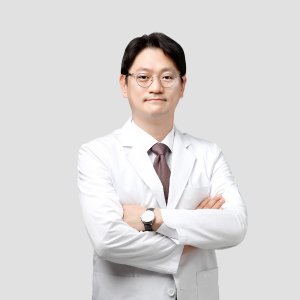
A named, credentialed surgeon you can look up beforehand is the other signal. Dr. Yun Chang Woon is a maxillofacial surgeon in Seoul. He is a member of the Korean Association for Cranio-Maxillofacial Surgery and the Korean Association for Maxillofacial Contouring Surgery.
Surgery-first or braces-first: which path fits you?
Two treatment sequences exist, and which fits depends on your bite rather than on a clinic's schedule. This comparison helps you see where you might land before you ask a surgeon.
| Path | How it works | Who it tends to suit |
|---|
| Braces-first (traditional) | 12–24 months of braces, then jaw surgery, then final braces | Complex bites that need careful alignment before surgery |
| Surgery-first | Jaw surgery first, then braces afterward | Milder crowding with a predictable bite |
The surgery-first path can remove the usual 12–24 months of pre-surgical braces. After the bone is cut, a temporary healing surge lets teeth move faster during the braces phase. Evidence reviews describe it as best suited to milder cases with a predictable bite. Ask your surgeon whether it fits your own case.
What the outcome data shows about recovery and stability
Most complications are minor and settle on their own. Here is what a review of 65 studies and 6,482 patients found:
- Nearly 96% had no major complication needing treatment.
- About 95% had no infection.
- About 91% had no bleeding complication during surgery.
- About 91% developed no new jaw-joint problem.
- About 97% needed no second operation.
Sensation and recovery
The most common after-effect is temporary numbness in the lower lip or chin. It happens while the inferior alveolar nerve, which runs through the lower jaw, settles after surgery. Feeling comes back for the large majority. About 93% of those affected regain normal sensation within a year.
Stability and what you can control
The corrected jaw stays stable for most patients. A small shift back is more likely after larger jaw movements, which the surgeon plans around. Across the same 65-study review, about 87% still held the corrected jaw position a year or more after surgery.
One thing you control makes a clear difference. Infection after jaw surgery is lower in non-smokers, so stopping well beforehand helps healing. Large Korean university hospitals provide that setting. Asan Medical Center performs more than 55,000 surgeries a year and is ISO-certified and KOIHA-accredited. Seoul National University Bundang Hospital uses a hospital-wide safety system and holds GHA accreditation.
Anesthesia safety: what to confirm before jaw surgery
Anesthesia for jaw surgery is safe in a properly staffed hospital. Two things are still worth confirming.
Why airway control matters here
In jaw surgery the breathing tube and the surgical area share the same small space. That makes a dedicated anesthesiologist watching you throughout the operation especially important here.
Two things to confirm before you travel
Malignant hyperthermia is an inherited reaction to general anesthesia that some people carry. Its specific treatment is a medicine called dantrolene, and a well-prepared clinic keeps enough of it on site. Two questions cover the preparedness you want:
- Ask whether the clinic has a full-time anesthesiologist and backup power for its monitoring equipment.
- Ask whether it keeps an on-site supply of dantrolene.
These are matters of standard preparedness you can simply confirm. Large Korean university hospitals provide full anesthesiology and intensive-care services alongside surgery, so this backup is routine at that level.
When can you fly home after jaw surgery?
Upper-jaw surgery opens into the sinus, the air space behind the cheeks. On a plane, the pressure change lets trapped air expand. That is why surgeons set a waiting period before you fly. Plan the return flight around your recovery window:
- After lower-jaw-only surgery, the wait before flying is shorter.
- After upper-jaw or two-jaw (double-jaw) surgery, a common guide is about 4–8 weeks.
- Ask your surgeon for a personal clearance-to-fly date, based on which jaw was operated on and how you are healing.
Standard jaw-surgery recovery takes several weeks. Plan your stay in Korea to match. A Korea package can cover the in-country time this window requires. One Seoul option, at View Plastic Surgery Hospital, bundles hospitalization with a follow-up hotel stay and airport transfers. Its aftercare includes hyperbaric-oxygen therapy, which uses pressurized oxygen to aid healing.
Planning your braces at home before you fly to Korea
The Korean surgeon repositions the bone. A local orthodontist at home then manages your braces for about 6–12 months to settle the bite. Some home orthodontists hesitate to continue a case started abroad. Line up that commitment before you travel.
- Confirm a home orthodontist will continue your treatment before you travel.
- Ask the Korean clinic for English-language copies of your 3D scans, surgical plan, and operative report. Include the details of any hardware used.
- Agree how follow-up will work: video check-ins, and who to contact if a stitch or screw needs attention.
Getting records you can hand to a home orthodontist is easier when the clinic works in English. Wonjin Plastic Surgery Clinic has English-speaking staff, and Seoul National University Hospital provides 24/7 interpreter services. A Bookimed coordinator can help you stay in touch with the clinic and communicate these requests as you plan.