To homepage

How it works

We've transformed the clinic search process, making it simple, fast, and personal.
Answer a few questionsTake a short quiz to share your Upper Eyelid Surgery goals.
Get personalized offers3 clinics, handpicked based on your answers, provide tailored treatment plans and quotes.
Choose the best optionCompare offers and choose the clinic that suits you best.
You can also browse all 3 clinics below.
820К+ patients have got assistance since 2014
50 countries
1,500 clinics
6K+ reviews
3K+ qualified doctors

How Much Does Upper Eyelid Surgery Cost in Republic of Korea?

Upper Eyelid Surgery in the Republic of Korea typically costs from $2,000 to $3,200. The final price depends on whether the patient requires functional ptosis correction or cosmetic double eyelid creation. In the US, similar procedures cost around $5,500 on average. Patients save around 53% compared to US prices. Standard packages often include preoperative tests, surgeon fees, and post-operative deswelling laser treatments.

  • Double eyelid surgery: Typically costs more than standard skin excision due to muscle anchoring.
  • Ptosis correction: Specialist techniques for droopy eyelids usually add a 15-25% premium.
  • Revision surgery: Correcting previous results often increases costs by 50% or more.
  • Seoul medical hubs: Clinics in Gangnam and Apgujeong neighborhoods often feature premium pricing.

Bookimed Expert Insight: Choosing established centers provides exceptional value through massive surgical volumes and specialized expertise. For example, JK Plastic Surgery Center boasts a 100% success rate across 85,000 procedures. While standard packages at clinics like Hivom start around $850, premium centers like JK or VG Plastic Surgery offer KAHF or KOIHA accredited safety. Look for clinics including multilingual staff and post-operative care for the best experience.

Data verified by Bookimed as of July 2026, based on patient requests and official quotes from 163 clinics worldwide. Median costs are based on real invoices (2025–2026) and updated monthly. Actual prices may vary.

Upper Eyelid Surgery Packages in Republic of Korea — July 2026

Procedure type
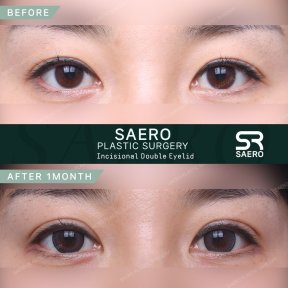
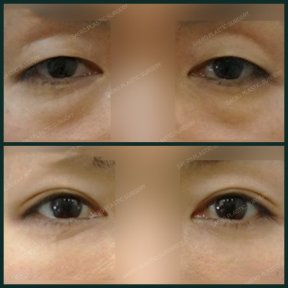
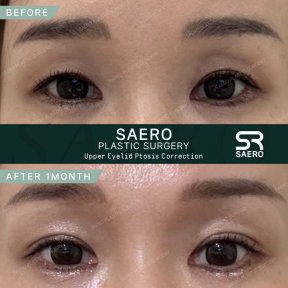
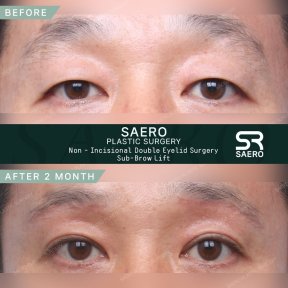
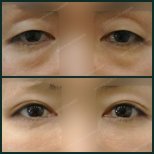
Before and after upper eyelid surgery results at SAERO Plastic Surgery, eyelid lift improvement
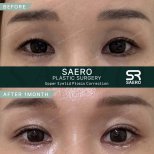
Before and after upper eyelid surgery results at SAERO Plastic Surgery, double eyelid creation
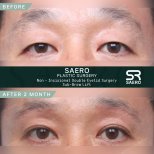
Before and after upper eyelid surgery results at SAERO Plastic Surgery, rejuvenated eye area
Upper eyelid surgery before and after results at SAERO Plastic Surgery, improved eye appearance
5.0
(29 reviews)
25 years of experience

Eyelid Correction (Incisional Method)

Dr. Park Young Kyu has performed 900+ blepharoplasty procedures over 24 years of practice. The upper eyelid surgery may cost around $1,973 – typically including the procedure and a plastic surgery consultation. Dr. Park trained summa cum laude at SoonChunHyang University and holds memberships with ISAPS and the American Society of Plastic Surgeons. SAERO Plastic Surgery maintains a 98% patient recommendation rate.

Discover the Best Upper Eyelid Surgery Clinics in Republic of Korea: 3 Verified Options and Prices

The Bookimed clinic ranking is based on data science algorithms, providing a trusted, transparent, and objective comparison. It takes into account patient demand, review scores (both positive and negative), the frequency of updates to treatment options and prices, response speed, and clinic certifications.
VG Plastic Surgery
Returning Plastic Surgery
Ad
AB Plastic Surgery
JK Plastic Surgery Center
Seoul Miz Hospital (서울미즈병원)
You’ve viewed 4 of 13 clinics

Upper Eyelid Surgery in Republic of Korea: Your Travel Plan

Day 1: Arrival in Republic of Korea
  • Upon landing, you should ensure you have all necessary documents, including your passport for the tax refund program.
  • Check into your accommodation and rest after your flight.
  • Prepare for your pre-surgery consultation by reviewing any questions or concerns you might have.
  • Ensure you have your medical insurance information and any required documentation ready.
Day 2: Pre-Surgery Consultation
  • You need to attend your scheduled in-person consultation with the surgeon.
  • Discuss the specifics of the upper eyelid surgery, including sub-brow excision and ptosis correction if applicable.
  • Confirm the details of the procedure, such as incision locations and expected outcomes.
  • Undergo any necessary preoperative laboratory tests.
  • Finalize your surgery date and time. Make any required payments or deposits.
  • Receive postoperative care instructions and medication prescriptions.
Day 3: Surgery Day
  • Arrive at the clinic on time for your upper eyelid surgery.
  • Undergo the procedure, which may include sub-brow excision (periosteum fixation) and reconstructive epicanthoplasty if necessary.
  • Post-surgery, you will be monitored by the medical team. Ensure you have an overnight caregiver if required.
  • Receive immediate postoperative instructions and care.
Day 4: Rest and Recovery
  • Focus on rest and recovery. Avoid strenuous activities.
  • Follow the clinic’s instructions regarding wound care and medication.
  • Use cold compresses to help reduce swelling and bruising.
  • Contact the clinic if you experience any unusual symptoms or have concerns.
Day 5: Follow-up Appointment
  • Attend a follow-up appointment for a check-up on your recovery progress.
  • Receive deswelling treatments such as deswelling laser or IV if provided.
  • Discuss any concerns with your surgeon and adjust postoperative care as needed.
Day 6: Continued Recovery
  • Continue following postoperative care instructions diligently.
  • Engage in light activities as advised by your surgeon.
  • Maintain a healthy diet to support healing.
  • Stay hydrated and get plenty of rest.
Day 7: Stitch Removal
  • Return to the clinic for stitch removal, which is typically scheduled around this time.
  • Receive additional postoperative care and advice from your surgeon.
  • Discuss any further follow-up appointments or care needed once you return home.
Day 8: Departure and Return Home
  • Ensure you have all postoperative care instructions and necessary medications for your return home.
  • Check out of your accommodation and head to the airport.
  • Keep in contact with the clinic for any follow-up questions or concerns after returning home.
  • Continue to monitor your recovery and follow any additional instructions provided by your surgeon.

Our Trusted Doctors

View all Doctors
verified

Park Young Kyu

25 years of experience

Dr. Park is a board-certified plastic surgeon specializing in eyelid surgery, recognized for his precision and academic excellence.

  • Awarded Top Resident by the Korean Society of Plastic and Reconstructive Surgeons
  • Full Member of the Korean Eyelid Surgery Research Society
  • Adjunct professor at Gangnam Sacred Heart Hospital
  • Published research on high-resolution ultrasonography in plastic surgery
verified

Yong Woo Kim

15 years of experience • 1000+ treatments performed

Board-certified plastic surgeon Yong Woo Kim combines Korean precision with American microsurgery training to enhance natural eye aesthetics.

  • Awarded 'Best Resident' and highest residency exam score in Korea
  • Trained at the American Society for Reconstructive Microsurgery
  • Received multiple Best Paper Awards from Korean plastic surgery societies
  • Former doctor at three leading Korean plastic surgery clinics
  • Active member of three major Korean plastic surgery associations
verified

Im Young Min

20 years of experience

Dr. Im Young Min is a board-certified plastic surgeon specializing in facial procedures, including upper eyelid surgery, at VG Plastic Surgery in Seoul.

  • Ph.D. in Plastic Surgery from The Catholic University of Korea
  • Associate Professor at St. Mary’s Hospital, training future surgeons
  • Recognized as one of Korea's 100 Good Doctors in 2022
  • Active member of the Korean Society for Aesthetic Plastic Surgery
  • Specializes in natural, aesthetically balanced results for facial procedures
verified

Tak Seung Wan

14 years of experience

Board Certified Plastic Surgeon specializing in eye and facial procedures – Dr. Tak is trained in minimally invasive techniques.

  • Member of the Korean Association of Oculoplastic Surgery
  • Experienced in delicate eyelid surgeries for natural-looking results
  • Holds multiple memberships in Korean plastic surgery associations
  • Uses advanced techniques for minimal scarring and fast recovery
  • Works exclusively in facial and eye plastic surgery

Video Stories from Bookimed Patients

Oksana
I have fulfilled my dream. Finally, I won't cry about my hair anymore.
Procedure: Hair transplant
Clinic: Dr. MED
Roman
Just 4 days in Turkey, and I'm already home with a new hair.
Procedure: Hair transplant
Clinic: Hair Clinic
Jamie
Bookimed made this medical trip a breeze.
Procedure: Sex reassignment surgery

Reviews about Bookimed: Discover Patients' Insights

All reviews
Michal • Blepharoplasty (Eyelid correction)
United Kingdom
May 16, 2026
Verified review.
The surgeon and staff were excellent throughout
My biggest worry going into this was how visible the scars would be after my lower eyelid correction. Even though I’m still in the early stages of healing, the traditional incision lines are already barely noticeable, which is a huge relief. The surgeon and staff were excellent throughout. Based on the care I received and the initial results, I am very pleased with my choice of clinic. Gia my coordinator was lovely and very helpful. Huge thank you to all the medical, nursing and admin staff. 🙏🙏🙏🫰🫰
Anonymous • Blepharoplasty (Eyelid correction)
Australia
Feb 8, 2024
Verified review.
Now two months after surgery, I am quite happy with the shape of my new eyelids
The medical team members are so friendly and helpful. Although I speak zero Korean, I can sense their passion and empathy, which dramatically reduced my anxiety to go through the surgery. They are very supportive from the right beginning to the end when I left Seoul. And big thanks to the assistance from Yena, who provides detailed before and after care instructions rather than just working as an interpreter. Now two months after surgery, I am quite happy with the shape of my new eyelids. They look much younger and alert.
About Bookimed service
Very friendly and supportive medical team although I don't understand Korean at all. Two months after surgery, I am quite happy with the result.
Anonymous • Blepharoplasty (Eyelid correction)
France
Apr 10, 2026
Verified review.
The support from the team and the surgeon has been unfailing
My biggest fear was that the result would look unnatural. Fortunately, that’s not the case at all. Even though it’s only been 15 days since the operation, my eyes look natural and smooth when I smile, which is very encouraging for the future. My biggest challenge at the moment is that the bruising isn’t fading as quickly as I’d imagined; patience is key. The support from the team and the surgeon has been unfailing. I really understand now why choosing a good surgeon is so important; it made all the difference to my confidence throughout the process.
The medical staff are very professional. They’re always there to listen to you.
I couldn’t find anything negative
Без имениElaine Aguiar • Blepharoplasty (Eyelid correction)
Japan
Jul 5, 2025
Verified review.
the translator Joanne was excellent and very attentive
t was a great experience, the doctor was good, but could have been more attentive. The staff are a little curt when it comes to customer service, but the translator Joanne was excellent and very attentive, there was also a very friendly older nurse. And there were also free therapeutic treatments that I really liked. Now I need to wait for the results to give a real assessment of whether the treatment was really good.
About Bookimed service
Bookimed helped me a lot to find a good hospital and surgeon, made me feel confident and gave me assistance all the time, thank you very much
losang m khangchen • Blepharoplasty (Eyelid correction)
United States of America
Apr 19, 2024
Verified review.
i strongly recommended them
Overall, I experience that this surgery center is in excellent choice for the future plastics surgery the the doctors and staff member are so caring for the patient and really nice and feel very comfortable to deal with them .i strongly recommended them.
About Bookimed service
The Bookimed they are a smartest choice of finding the best Medical surgeon in the world.
Дарья Эдуардовна • Blepharoplasty (Eyelid correction)
Russian Federation
Dec 5, 2018
Verified review.
"We will go with you and advise others !!!"
The high level and quality of medicine in the clinic Severence city of Korea. The clinic is huge, everything is beautiful, clean. Our doctor really liked, quickly and easily found a common language with her and came to a single solution to our problem. Thanks to the Bookimed website for the organization and a special thanks to the coordinator who quickly responded! We will go with you and advise others !!!
Paik Nay • Blepharoplasty (Eyelid correction)
United States of America
Sep 2, 2024
Verified review.
I could not be happier than I am
Doctor was clear and concise about intended outcome, and inquired as to my desired results while communicating options. Resulting in a very favorable outcome, I could not be happier than I am. Thank you Doctor!
About Bookimed service
They made my experience effortless. I appreciate their prompt and helpful responses.
Mina • Facelift
Morocco
Mar 2, 2024
Verified review.
I would recommend Doctor Im from VG Plastic Surgery to everyone
The surgeon is professional. The staff is kind and available. It was a great experience. I would recommend Doctor Im from VG Plastic Surgery to everyone
Everything
Not everybody speaks English
About Bookimed service
Rapid and efficient
Lyubov Logvinova • Blepharoplasty (Eyelid correction)
Kazakhstan
Apr 1, 2019
Verified review.
All was good
Anonymous • Rhinoplasty (nose job)
United States of America
Aug 14, 2019
Verified review.
The doctors were very honest and caring they really care about what isn’t the best for you!
Everything was very professional ! The doctors were very honest and caring they really care about what isn’t the best for you!
Ronald Lee • Blepharoplasty (Eyelid correction)
Russian Federation
Sep 20, 2019
Verified review.
Very high expectations were met
Very high expectations that were met, thanks for the treatment

Upper Eyelid Surgery: Before & after photos

View all

Share this content

Updated: 05/16/2026
Authored by
Anna Leonova
Anna Leonova
Head of Content Marketing Team
A certified medical writer with 10+ years of experience, developed Bookimed’s trusted content, backed by a Master’s in Philology and medical expert interviews worldwide.
Fahad Mawlood
Medical Editor & Data Scientist
General practitioner. Winner of 4 scientific awards. Served in Western Asia. Former Team Leader of a medical team supporting Arabic-speaking patients. Now responsible for data processing and medical content accuracy.
Fahad Mawlood Linkedin
This page may feature information relating to various medical conditions, treatments, and healthcare services available in different countries. Please be advised that the content is provided for informational purposes only and should not be construed as medical advice or guidance. Please consult with your doctor or a qualified medical professional before starting or changing medical treatment.

Fast Facts about Upper Eyelid Surgery

Upper Eyelid Surgery

An eyelid lift enhances the appearance of the upper eyelids by removing excess skin and fat.

Pros: Improves vision by eliminating droopy eyelids for up to 90% of patients. Less invasive than full eyelid surgery, reducing recovery time.
Cons: Addresses only the upper eyelid, not lower eyelid concerns like under-eye bags. May not be suitable for those seeking a complete periorbital rejuvenation.
Effectiveness: 95% success rate in achieving desired aesthetic results.
Duration: 1-2 hours
Recovery: 7-10 days
Best for: Excess skin on upper eyelids, droopy eyelids affecting vision, age-related changes in the periorbital area.
Prices: View costs of other techniques

FAQ about Upper Eyelid Surgery in Republic of Korea

These FAQs come from real patients seeking medical assistance through Bookimed. Answers are given by experienced medical coordinators and trusted clinic representatives.

What are the different surgical techniques used for upper eyelid surgery in Korea?

Upper eyelid surgery in Korea utilizes four primary techniques: non-incisional sutures, full incisional, partial incisional, and natural adhesion. Surgeons select these based on skin thickness and fat volume to create a natural double eyelid crease or correct ptosis by shortening the levator muscle.

  • Non-incisional method: Uses buried sutures through micro-punctures for thin skin without excess fat.
  • Full incisional: Removes skin, fat, and muscle for permanent results in heavy lids.
  • Natural adhesion: Advanced suture technique creating tissue bonding for a secure, natural-looking crease.
  • Subbrow lift: Excises skin below the eyebrow to lift sagging without altering creases.

Bookimed Expert Insight: While many patients request the non-incisional method for its 60-minute duration and minimal downtime, data from 2,000-patient clinics like Returning Plastic Surgery suggests a shift. Experienced surgeons often recommend combining blepharoplasty with levator muscle adjustment. This addressing of sleepy eyes produces more vibrant results than a skin-only crease.

Patient Consensus: Many patients suggest consulting multiple clinics to compare monolid results. While non-incisional is popular as a trial run, those with excess skin often regret not choosing the durable incisional method initially.

What is the typical recovery timeline after upper eyelid surgery?

Recovery from upper eyelid surgery in the Republic of Korea typically lasts 7 to 14 days for most social activities. Major swelling and bruising generally resolve within 5 to 7 days, while internal tissues continue to settle and refine for 1 to 3 months.

  • Stitch removal: Surgeons typically remove external sutures between day 5 and day 7 post-op.
  • Work return: Most patients return to desk work within 7 to 10 days safely.
  • Physical activity: Avoid strenuous exercise and swimming for 4 weeks to prevent incision strain.
  • Visual recovery: Blurry vision from antibiotic ointment usually clears within the first 3 days.

Bookimed Expert Insight: While many global clinics suggest a 2-week wait for social readiness, Korean specialists like those at JK Plastic Surgery Center achieve high-efficiency healing through specialized suture techniques. Data shows these outpatient procedures allow for same-day discharge, with many patients feeling comfortable in public by day 7.

Patient Consensus: Patients often emphasize that keeping the head elevated on multiple pillows during the first week is vital. They frequently mention that wearing dark sunglasses helps manage light sensitivity and maintains privacy during the initial healing phase.

What are the risks or side effects of upper eyelid surgery?

Upper eyelid surgery in South Korea is a safe procedure where risks like temporary swelling and bruising peak within 7 days. Potential complications include dry eyes, minor asymmetry, or difficulty closing lids. Specialized Korean techniques focus on conservative fat removal to prevent a hollowed appearance.

  • Recovery side effects: Swelling and bruising typically resolve within 7 to 14 days after surgery.
  • Vision changes: Temporary blurriness often occurs due to post-operative lubricating ointments or surgical trauma.
  • Eyelid function: Brief difficulty closing eyes completely, known as lagophthalmos, may require nighttime eye drops.
  • Surgical adjustments: Minor touch-ups for symmetry are needed in approximately 10 to 20% of cases.

Bookimed Expert Insight: Data from major Seoul clinics shows a high volume of revision cases, around 10–20%, often due to over-correction. Choosing a surgeon like Dr. Paik Hye-won, who has 25 years of specialized eye surgery experience, significantly reduces the risk of the unintended angry-eye look. High-volume centers like Returning Plastic Surgery serve 2,000 patients annually, maintaining low complication rates through specialized, repetitive expertise.

Patient Consensus: Many patients find that keeping dark sunglasses and preservative-free drops ready is essential for managing light sensitivity. Most suggest planning 2 weeks off work until the initial bruising can be easily covered by makeup.

Can upper eyelid surgery be combined with other procedures?

Upper eyelid surgery in the Republic of Korea is frequently combined with ptosis correction, canthoplasty, or brow lifts to achieve comprehensive facial rejuvenation. Korean surgeons often perform these integrated procedures in a single 3-hour session to ensure symmetrical results and balanced eye proportions.

  • Ptosis correction: Fixes muscle weakness while removing excess skin to prevent asymmetrical eyelid drooping.
  • Canthoplasty: Adjusts the eye corners (epicanthoplasty or lateral) to create a wider appearance.
  • Fat repositioning: Transfers fat to hollow areas, preventing a sunken look after tissue removal.
  • Sub-brow lift: Lifts sagging brows through an incision below the eyebrow for natural elevation.

Bookimed Expert Insight: While many global clinics offer simple blepharoplasty, Seoul-based centers like VG Plastic Surgery often bundle it with lateral canthoplasty. This specific combination is a regional specialty designed to elongate the eye shape rather than just removing skin. It provides a more transformative aesthetic result than isolated surgery.

Patient Consensus: Many patients suggest adding ptosis repair to their eyelid surgery to avoid a sleepy appearance. They recommend budgeting 14 days for swelling to subside when combining multiple eye procedures.

Why is South Korea considered a top destination for upper eyelid surgery?

South Korea dominates upper eyelid surgery through unmatched procedural volume and precision-focused innovations like 3D imaging and endoscopic methods. Board-certified surgeons in Seoul clinics often perform over 50 cases weekly, mastering complex techniques like supratarsal crease creation and parallel crease customization to ensure natural-looking facial harmony.

  • Surgical expertise: Surgeons at JK Plastic Surgery Center have completed over 85,000 total procedures.
  • Advanced technology: Clinics utilize 3D imaging and endoscopic tools to reduce swelling and scarring.
  • Affordable excellence: Procedures cost $2,000 to $3,200, saving patients approximately 53% versus US averages.
  • Specialized accreditation: Top-tier facilities like VG Plastic Surgery hold rigorous KOIHA accreditation for safety.

Bookimed Expert Insight: While many seek low prices, the real value in Korea is the sub-specialization. Doctors like Dr. Paik Hye-won at JK Plastic Surgery Center focus almost exclusively on oculoplastic surgery for decades. This volume-driven expertise allows Korean clinics to offer 0-day hospital stays and a remarkably fast 7-day mobile recovery timeline.

Patient Consensus: Patients emphasize bringing goal photos to consultations to ensure a subtle, natural crease. Many recommend visiting during off-peak months to avoid the high-season crowds in the Gangnam district.

Are there any risks involved in upper eyelid surgery in Korea?

Upper eyelid surgery in Korea involves standard surgical risks including asymmetry, dry eyes, and infection. Patients face specific regional concerns like ghost doctors and over-correction, which can result in a sunken appearance. Choosing board-certified surgeons in clinics with university-grade safety systems significantly reduces these potential complications.

  • Aesthetic asymmetry: Creases may appear uneven or loosen over time if fixation is too weak.
  • Tissue over-removal: Excessive skin or fat removal can lead to hollowed eyes or difficulty closing.
  • Ghost doctoring: Some clinics use substitute surgeons. Look for facilities with 24-hour CCTV monitoring.
  • Dry eye syndrome: Severe dryness often requires constant eye drops, especially when combined with ptosis correction.
  • Vision impairment: Temporary blurriness and excessive tearing often impair daily activities for the first week.

Bookimed Expert Insight: While many Gangnam clinics operate at high volumes, top-tier centres like AB Plastic Surgery maintain an anaesthesiology specialist ratio double the industry average. This focus on safety infrastructure, alongside 24-hour CCTV in operating theatres, is the most reliable way to avoid the unethical ghost doctor practices sometimes reported in smaller facilities.

Patient Consensus: Expect temporary blindness from swelling and tearing for several days. Explicitly tell the surgeon not to remove too much fat to avoid a sunken, aged look in the Republic of Korea.

How do I choose a clinic for upper eyelid surgery in Korea?

Choosing an upper eyelid surgery clinic in Korea requires prioritising board-certified specialists. They should have high procedural volumes in Seoul districts like Gangnam.

Patients should verify membership in the Korean Society of Plastic and Reconstructive Surgeons (KSPRS). They should also confirm the surgeon performs 900+ eyelid procedures annually.

  • Surgeon credentials: Confirm the doctor is a KSPRS member and possesses university-grade hospital training.
  • Clinical volume: Select centres like AB Plastic Surgery that treat over 24,000 patients every year.
  • Safety technology: Prioritise clinics using 3D-CT scans and 24-hour CCTV monitoring in operating theatres.
  • Specialised care: Opt for clinics like SAERO Plastic Surgery. There, a single specialist oversees every procedure.

Bookimed Expert Insight: While large hospitals serve high volumes, smaller boutique clinics often provide superior safety. They achieve this through “one-doctor” systems. Data shows centres like SAERO or Returning Plastic Surgery prevent “ghost surgeons”. They do this by having a single lead specialist manage every case from consultation through to theatre.

Patient Consensus: Patients in Seoul recommend bringing reference photos to bridge cultural beauty standards. They also advise booking consultations four months early. They found that smaller, specialised clinics often offer more personalised care. Patients also feel less pressure there than at large celebrity-focused hospitals.

Who is a good candidate for upper eyelid surgery in Korea?

Good candidates for upper eyelid surgery in Korea include adults with sagging skin, heavy fat deposits, or hooded eyelids. These conditions can create a tired appearance or obstructed vision. The procedure is also ideal for younger patients seeking double eyelid creation. It suits those needing ptosis correction to fix weak eye muscles.

  • Sagging skin: Excess tissue creates moderate folds or pushes eyelashes downward, causing persistent eye irritation.
  • Vision impairment: Drooping lids physically block the upper visual field, requiring a functional surgical correction.
  • Weak muscles: Ptosis correction addresses drooping caused by muscle weakness rather than just excess skin.
  • Healthy non-smokers: Candidates must be in good health. They need to avoid supplements like omega-3 before surgery.

Bookimed Expert Insight: Korean specialists frequently recommend a ptosis lift alongside standard skin removal. This gives a more natural look. Without addressing muscle weakness, patients often experience a heavy "sticker" eyelid appearance. Board-certified surgeons like Dr. Park Young Kyu at SAERO Plastic Surgery even include hyperbaric oxygen therapy. This accelerates recovery for international patients.

Patient Consensus: Eyelid surgery in Korea effectively addresses tired-looking eyes caused by fat or skin folds. Patients suggest defining aesthetic goals clearly during consultations. They also recommend allowing 3–4 months for results to look fully natural.

How long do the results of upper eyelid surgery in Korea last?

Upper eyelid surgery results in Korea generally last between 5 and 10 years for suture methods. Incisional techniques, however, are often considered permanent. The surgery removes excess tissue. However, natural aging continues to affect skin laxity and fat distribution over decades. Final results typically stabilise within 3 to 6 months.

  • Incisional technique: Creates a permanent crease by removing skin and fat for lifelong results.
  • Non-incisional method: Uses sutures to create folds, typically lasting 5 to 10 years.
  • Anatomy impact: Patients with thick or heavy eyelids may see results fade after 1–2 years.
  • Recovery phase: Swelling resolves in 3–6 months with subtle changes occurring up to one year.

Bookimed Expert Insight: Data from centres like HERSHE Plastic Surgery reveals a 94.3% success rate for eyelid procedures. Many seek the non-incisional method for fast recovery. However, surgeons like Dr Park Young Kyu often recommend the incisional approach for patients with thicker eyelids. This helps prevent the results from fading or loosening within the first 24 months.

Patient Consensus: Patients in Korea report that initial swelling hides the true shape. However, the crease looks completely natural after 6 months. Most feel the result is stable and integrated into their features by one year.

Can I get a natural-looking result from upper eyelid surgery in Korea?

Natural results for upper eyelid surgery in the Republic of Korea are achievable through specialised tailoring to individual eye anatomy. Korean surgeons prioritise subtle, refreshed appearances. They use non-incisional natural adhesion or precise incisional methods to create balanced creases. These creases avoid a surgical look while correcting droopy tissues.

  • Technique selection: Surgeons choose between suture or incisional methods based on skin thickness.
  • Ptosis correction: Specialists like Dr. Park Young Kyu often combine muscle correction for alertness.
  • Natural adhesion: Non-incisional paths use tiny holes to create folds without visible scarring.
  • Personalised designs: Fold height is tailored to fat distribution for a non-dramatic finish.

Bookimed Expert Insight: Many international patients, including Australians, choose Seoul clinics like HERSHE for their reported 94.3% success rates. The most natural outcomes appear when patients allow surgeons to choose the technique. Surgeons base this choice on eyelid tension, not on patients requesting specific incisional types.

Patient Consensus: Eyes typically look natural after 1 month, though final settling takes 3 months in Korea. Results feel balanced and refreshed without looking like a different person.

What is the difference between traditional upper blepharoplasty and Korean double eyelid surgery?

Traditional upper blepharoplasty removes excess skin, fat, and muscle to correct drooping or hooded lids. Korean double eyelid surgery specifically creates a supratarsal crease in eyelids that lack one, widening the eye. Both procedures are available at Seoul clinics from $2,000 to $3,200.

  • Primary goal: Blepharoplasty rejuvenates ageing eyes while double eyelid surgery creates an aesthetic crease.
  • Anatomical focus: Korean techniques account for monolids and lower-positioned fat common in Asian anatomy.
  • Surgical methods: Surgeons use incisional or non-incisional suture techniques depending on skin thickness.
  • Added procedures: Specialists often combine crease formation with ptosis correction to fix muscle weakness.

Bookimed Expert Insight: Price data reveals that incisional eyelid correction in Seoul often costs the same as non-incisional methods. The cost is roughly A$3,100. Non-incisional techniques leave no visible scar and offer quicker recovery. Therefore, they are becoming the standard for patients with thinner eyelid skin.

Patient Consensus: Eyelid surgery results take 3–6 months to stabilise fully in Republic of Korea. Most patients can navigate the city safely after 2–3 days of downtime. This is possible once initial swelling subsides.

Get a free consultation

Select the best way to contact you