Chemotherapy for lung cancer in Turkey — get 3 personalized clinic matches
Chemotherapy for lung cancer in Turkey costs $800 to $1,500, compared with about $23,000 in the US (Bookimed data, November 2026). Bookimed lists 4 chemotherapy for lung cancer clinics in Turkey, all in Istanbul, including JCI-accredited and ISO-certified clinics. These clinics are rated 4.5/5 in 1,101 verified patient reviews on Bookimed.


Medically reviewed by
Yesim Yildirim
How it works
How Much Does Chemotherapy for lung cancer Cost in Turkey?
Chemotherapy for lung cancer in Turkey typically costs from $800 to $1,500 per course. The total price depends on the specific drug regimen, number of cycles, and whether the patient requires immunotherapy or targeted therapy. In the US, similar treatments cost around $23,000 on average. Patients traveling to Turkey can expect savings of approximately 95%. Standard treatment plans usually cover medical consultations, drug administration, and basic diagnostic monitoring.
- Targeted therapy: Costs for specific EGFR or ALK mutation drugs add a significant premium.
- Immunotherapy: Advanced drugs like Keytruda or Opdivo typically increase the per-cycle cost.
- Diagnostic imaging: Costs include PET-CT or MRI scans required for staging and monitoring.
- Treatment location: Major medical hubs like Istanbul and Ankara host the most specialized oncology centers.
Bookimed Expert Insight: Choosing a center with international affiliations offers US-standard protocols at Turkish prices. Anadolu Medical Center is affiliated with Johns Hopkins Medicine, ensuring access to cutting-edge tumor biology research. Expert oncologists like Professor Seref Komurcu or Professor Bulent Karagoz often align treatments with ESMO standards. Patients can find high-value care in Istanbul clinics that hold both JCI and ESMO accreditations.
| Turkey | Austria | Spain | |
|---|---|---|---|
| Chemotherapy for lung cancer | from $800 | ≈ $4,500 | from $2,200 |
Discover the Best Chemotherapy for lung cancer Clinics in Turkey: 22 Verified Options and Prices



Hisar Hospital Intercontinental
Mustafa Solak



Memorial Ataşehir Hospital
Kamil Yalçın Polat


Memorial Ankara Hospital



Central Hospital

Chemotherapy for lung cancer Overview in Turkey
- Chemotherapy - from $1,000This therapy treats cancer by using drugs to destroy cancer cells and prevent their growth.
- Hyperthermic Intraperitoneal Chemotherapy (HIPEC) - from $18,000The operation heats chemotherapy drugs and applies them directly inside the belly to kill hidden cancer cells.
- Intraarterial chemotherapy - from $5,000This therapy delivers cancer-fighting drugs directly to the tumor, improving treatment effectiveness and reducing side effects.
- Chemotherapy for liver cancer - from $3,000This therapy targets and kills cancer cells in the liver, using drugs given by mouth or injection.
- Chemoembolization of the liver - from $10,500This therapy combines cancer-killing drugs and blockage of blood supply to shrink liver tumors rapidly and effectively.
- Chemotherapy for lung cancer - from $800This therapy utilizes drugs to kill lung cancer cells, often given via injection or oral tablet, enhancing survival rates.
- Chemotherapy for prostate cancer - from $1,500This therapy uses drugs to kill prostate cancer cells, delivered through veins or pills, enhancing survival rates.
- Chemotherapy for uterine cancer - from $3,000This therapy uses drugs to kill cancer cells in the uterus, effectively controlling disease progression.
- Chemotherapy for pancreatic cancer - from $1,500This therapy uses drugs to destroy pancreatic cancer cells, helping to shrink tumors and ease symptoms.
- Chemotherapy for breast cancer - from $4,700This therapy targets and destroys breast cancer cells, using powerful drugs, enhancing survival and recovery rates.
- Chemotherapy for ovarian cancer - from $1,700This therapy treats ovary tumors using drugs specific to kill cancer cells, enhancing survival rates.
- Chemotherapy for esophageal carcinoma - from $1,700This therapy uses potent drugs to kill esophageal cancer cells, preventing their spread and improving patient survival rates.
- Chemotherapy for Brain Tumor - from $1,000This therapy involves using drugs to shrink or kill brain cancer cells, providing an effective, non-surgical option.
- Lymphoma chemotherapy - from $3,300This therapy treats lymphoma by killing cancer cells, using powerful drugs through injection or pill form.
- Leukemia chemotherapy - from $14,600This therapy treats blood cancer using strong medicines, aiming to destroy harmful cells completely.
Day 1
- Arrive at the hospital for initial consultation.
- Meet with oncologists and pulmonologists.
- Undergo diagnostic tests like blood tests, CT scans.
Day 2
- Return for results and treatment plan discussion.
- Receive information about the chemotherapy process.
Day 3 - Treatment Day
- Arrive at the hospital for chemotherapy.
- Process begins with the placement of an IV line.
- Chemotherapy drugs are administered through IV.
- Process typically lasts from 1 to 3 hours.
- No anesthesia is needed for chemotherapy.
Day 4 - Post-Treatment
- Short rest period at the hospital may be recommended.
- Monitor for any immediate side effects of chemotherapy.
Week 1-2
- Monitor for side effects at home.
- Report any severe symptoms to the doctor immediately.
Week 3-4 - Rehabilitation
- Gradual return to normal activities is expected.
- Regular follow-up visits to monitor progress.
- Return to work may be possible by week 4.
Please note that the timeline and process might vary based on individual patient"s condition and response to treatment.
- Bookimed deposit: $200 or €200.
- Clinic deposit: Pay a set percentage in advance.
Our Trusted Doctors
View all Doctors
Bulent Karagoz
Dr. Bulent Karagoz is a medical oncologist at Anadolu Medical Center in Istanbul. He specializes in immunotherapy and targeted therapies for sarcoma, lymphoma, and lung cancer. Dr. Karagoz provides treatment at a facility affiliated with the prestigious Johns Hopkins Hospital.
- Authored over 40 research publications focusing on tumor biology and immunology.
- Former Head of Internal Diseases at Istanbul Okan University Faculty of Medicine.
- Held leadership roles in medical oncology at GATA Haydarpasa Training Hospital.
- Member of the Turkish Medical Oncology Association and European Head and Neck Society.

Prof. Sezer Sağlam
Prof. Sezer Sağlam specializes in medical oncology with extensive experience in gastrointestinal and lung cancer treatments at Gayrettepe Florence Nightingale Hospital.
- Professor of Medical Oncology since 2016
- Fellowship-trained at Istanbul University, one of Turkey's top medical schools
- Member of ESMO and ASCO – leading oncology associations
- Over 27 years in medical oncology practice

Sinan Karaaslan
Dr. Sinan Karaaslan is a medical oncologist at Anadolu Medical Center in Istanbul. He specializes in treating breast, colorectal, and urogenital system cancers. Dr. Karaaslan brings clinical expertise from major institutions, including Medical Park and Gülhane Military Medical Academy. He works at a hospital affiliated with the Johns Hopkins Hospital.
- Holds personal certification from the European Society for Medical Oncology.
- Treats complex conditions, including stage 4 colon and lung cancers.
- Member of the Turkish Medical Oncology and Turkish Lung Cancer societies.
- Performs systemic therapies such as immunotherapy, targeted therapy, and chemotherapy.
Mustafa Solak
Specializes in chemotherapy for lung cancer, with training at Hacettepe University Cancer Institute and MD Anderson Cancer Center.
- Residency at Istanbul Sisli Etfal Teaching and Research Hospital
- Experienced in treating various cancers, including lung cancer
- Fellowship training at one of the top cancer institutes
Video Stories from Bookimed Patients
Reviews about Bookimed: Discover Patients' Insights
All reviewsShare this content
 Anna Leonova

Fast Facts about Chemotherapy for lung cancer
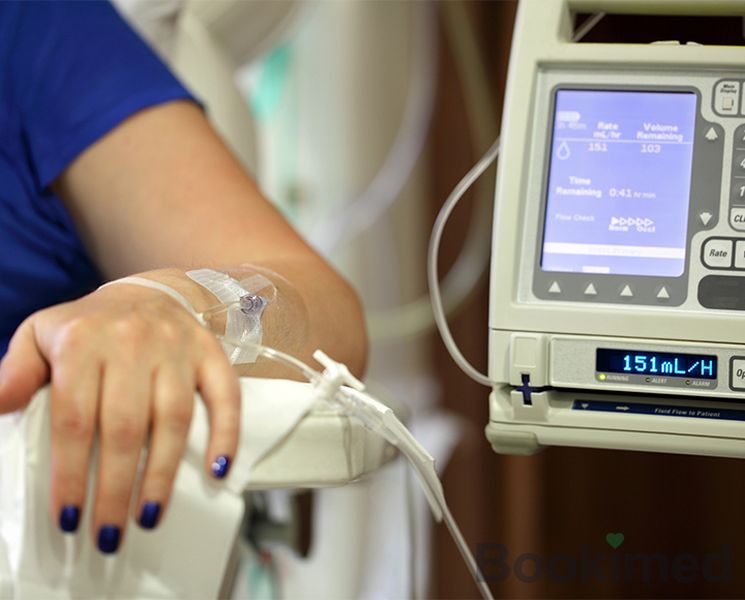
Chemotherapy for lung cancer
Chemo uses cancer drugs to kill or stop the growth of cancer cells in the lungs.
FAQ about Chemotherapy for lung cancer in Turkey
Is it safe to receive chemotherapy for lung cancer in Turkey?
Chemotherapy for lung cancer in Turkey is safe due to international accreditation standards and expert oncology protocols. Leading centers like Anadolu Medical Center collaborate with Johns Hopkins Medicine, ensuring patients receive care aligned with American Society of Clinical Oncology (ASCO) and European Society for Medical Oncology (ESMO) guidelines.
- Accreditation standards: Most top-tier oncology centers hold Joint Commission International (JCI) accreditation for safety.
- Expert credentials: Specialists like Professor Bulent Karagoz follow rigorous U.S.-aligned treatment protocols in Istanbul.
- Advanced diagnostics: Clinics utilize PET-CT and TrueBeam STx technology for precise tumor staging and monitoring.
- International coordination: Centers provide dedicated English-speaking coordinators and translators to manage complex medical logistics.
Bookimed Expert Insight: The safety profile in Turkey is uniquely reinforced by formal institutional partnerships. For instance, Anadolu Medical Center is the only Turkish facility affiliated with Johns Hopkins Medicine. This ensures that chemotherapy dosages and drug combinations are reviewed against the same safety benchmarks used in top United States cancer centers.
Patient Consensus: Patients emphasize the importance of choosing JCI-accredited facilities to ensure adherence to international protocols. Many recommend pre-arranging telehealth follow-ups with your home oncologist to manage post-treatment care effectively.
What qualifications do Turkish oncologists who treat lung cancer have?
Turkish oncologists treating lung cancer are medical specialists who complete 13 years of rigorous academic and clinical training. They must hold a 6-year medical degree, finish a 4-year internal medicine residency, and complete a 3-year sub-specialty fellowship in medical oncology to achieve Ministry of Health certification.
- Core education: Doctors must complete 6 years of medical school followed by mandatory state service.
- Specialized residency: Specialists pass competitive national exams for 4-year internal medicine and 3-year oncology training.
- International standards: Many oncologists hold European Society for Medical Oncology (ESMO) or American board certifications.
- Academic status: Titles like Professor or Associate Professor indicate extensive peer-reviewed research and teaching experience.
Bookimed Expert Insight: Choice of clinic significantly impacts the quality of oncological care. Anadolu Medical Center maintains a formal partnership with Johns Hopkins Medicine, ensuring all lung cancer protocols align strictly with US NCCN guidelines. This collaboration provides patients with access to Western-standard treatment paths and next-generation sequencing at local rates. Leading specialists like Professor Bulent Karagoz and Professor Yesim Yildirim often hold dual international fellowships. This cross-border expertise is vital for patients seeking advanced immunotherapy or targeted drug regimens not yet standard in all regions.
Patient Consensus: Patients frequently highlight the professional and attentive nature of the medical staff. Many recommend confirming ESMO or JCI accreditation and requesting English-speaking coordinators to manage complex clinical discussions smoothly.
What are the common risks and side effects of chemotherapy for lung cancer?
Common risks of chemotherapy for lung cancer include intense fatigue, nausea, and increased infection risk due to low white blood cell counts. Patients often experience temporary hair loss, mouth sores, and peripheral neuropathy, which causes tingling or numbness in the hands and feet from nerve damage.
- Digestive health: Nausea and vomiting affect 80% of patients but are manageable with anti-emetics.
- Blood cell counts: Low counts (neutropenia) increase infection risks, often requiring weekly blood monitoring.
- Neurological effects: Peripheral neuropathy from drugs like paclitaxel may take 1 year to resolve.
- Cognitive changes: Chemo brain causes memory or concentration issues that can persist for months.
- Organ monitoring: Specific drugs like cisplatin require IV hydration to protect kidney and heart function.
Bookimed Expert Insight: Turkish oncology centers like Anadolu Medical Center follow strict Johns Hopkins protocols to mitigate side effects. Some clinics offer advanced scalp cooling (ice caps) during infusions. This technology significantly reduces hair loss, which patients often fixate on more than clinical risks.
Patient Consensus: Many patients report that intense fatigue can leave you bedridden for weeks after a cycle. They recommend scheduling zero chores and securing a support team before starting treatment in Turkey.
What kind of results or survival rates can I expect from chemotherapy?
Lung cancer chemotherapy results in Turkey vary by subtype, with non-small cell lung cancer (NSCLC) showing a 23% 5-year survival rate compared to 6% for small cell lung cancer (SCLC). Outcomes improve significantly when combining systemic chemotherapy with immunotherapy or targeted agents for specific genetic mutations.
- Treatment protocols: Clinics utilize Carboplatin, Pemetrexed, and FOLFIRINOX-based regimens alongside Johns Hopkins protocols.
- Advanced combinations: Adding immunotherapy like Keytruda can increase 5-year survival to 25% for high PD-L1 cases.
- Expert oversight: Surgeons and oncologists at Anadolu Medical Center maintain ESMO and JCI accreditations.
- Monitoring standards: Patients undergo diagnostic scans every 3 months to track tumor response and progression.
Bookimed Expert Insight: Turkish oncology centers like Anadolu Medical Center bridge the gap between cost and clinical quality through strategic affiliations with Johns Hopkins Medicine. By using identical U.S. protocols for lung cancer, these facilities provide access to complex chemo-immunotherapy combinations that are often restricted by insurance or high costs in other regions.
Patient Consensus: Patients emphasize the importance of genomic profiling before starting treatment, as matching chemotherapy with targeted add-ons significantly improves the practical response. While chemo in advanced cases is primarily palliative, many report stable progression-free survival for 12 months or longer.
How long is the chemotherapy regimen, and what does the recovery timeline look like?
Standard chemotherapy for lung cancer in Turkey typically lasts 12 to 18 weeks, spanning 3 to 6 months. Patients generally undergo 4 to 6 cycles every 3 weeks. Full recovery to pre-treatment energy levels usually takes 6 to 12 months after the final dose.
- Treatment cycles: Most regimens repeat every 21 days to allow healthy cell recovery.
- Acute phase: Fatigue typically peaks 2 to 4 weeks after each treatment cycle ends.
- Intermediate recovery: Patients often regain 80% of their baseline energy within 3 months post-chemo.
- Long-term effects: Peripheral neuropathy or lingering cough may persist for 12 months or longer.
Bookimed Expert Insight: Data from leading Istanbul centers like Anadolu Medical Center shows a shift toward combining chemotherapy with immunotherapy. While these regimens can extend to 1 year, they often reduce the number of intensive chemo cycles. This approach can shorten the acute recovery phase and help patients return to daily activities faster.
Patient Consensus: Many patients find that while nausea resolves quickly, the mental fatigue lingers longer than expected. Those receiving care in Turkish facilities often highlight that aggressive hydration protocols during infusions significantly help manage early side effects.
Am I a suitable candidate for chemotherapy, or do I need specific biomarker tests?
Suitability for chemotherapy depends on your lung cancer subtype, stage, and performance status. Biomarker testing for EGFR, ALK, KRAS, and PD-L1 is mandatory before starting treatment. These results determine if you qualify for targeted therapies or immunotherapy, which often prove more effective than standard chemotherapy.
- Biomarker necessity: Testing is the standard clinical protocol for all non-small cell lung cancers.
- Clinical fitness: Doctors use ECOG scales to ensure your heart and kidneys tolerate systemic drugs.
- Therapeutic goals: Chemotherapy may shrink tumors before surgery or eliminate microscopic cells afterward.
- Treatment timeline: Precision results typically take 2 to 4 weeks to guide therapy selection.
Bookimed Expert Insight: Anadolu Medical Center maintains a strategic affiliation with Johns Hopkins Medicine, ensuring Turkish patients receive U.S. standard molecular profiling. While basic chemotherapy starts at around $800 in Turkey, high-volume centers often integrate advanced genomic testing into the initial diagnostic phase. This prevents patients from undergoing unnecessary chemotherapy when targeted oral medications would be more effective.
Patient Consensus: Patients emphasize that performance status and organ function are the primary gatekeepers for treatment. Many recommend insisting on written reports for specific mutations like EGFR and ALK before agreeing to any infusion plan.
What documents, clothing, or logistical items should I bring for chemotherapy in Turkey?
Patients traveling to Turkey for lung cancer chemotherapy must bring original passports, printed biopsy reports, and previous treatment summaries. Essential items include loose-fitting button-up shirts for port access, a 2-week supply of specific medications, and a European Type F power adapter for long infusion sessions.
- Travel documents: Pack a passport valid for 6 months and a printed Turkish e-visa.
- Medical records: Bring physical copies of PET-CT scans, biopsy results, and current medication lists.
- Clothing: Wear layers and button-down tops to allow easy chest port or IV access.
- Personal care: Include hypoallergenic lotions and ginger candies to manage skin dryness and nausea.
Bookimed Expert Insight: While top centers like Anadolu Medical Center follow Johns Hopkins protocols, pharmacy brands in Turkey often differ from those in the US or UK. Always bring a 14-day backup of your specific anti-nausea drugs. This prevents treatment delays if the hospital pharmacy needs to source an exact match for your protocol.
Patient Consensus: Many travelers recommend bringing a high-capacity power bank and downloaded entertainment. Hospital WiFi can be unreliable during 8-hour infusions, and comfortable, non-slip socks are vital for navigating clinical floors.