How much does FUE hair transplant in Thailand cost?
Hair restoration procedures in Thailand offer significant cost savings, with procedures averaging $2.30 per graft compared to $5.44 per graft in the USA and $3.22 per graft in the UK—representing savings of 58–75%. For a typical 2,500-graft procedure, patients can expect to pay approximately $5,700 in Thailand versus $13,600 in the USA or $8,200 in the UK.
Leading clinics offer comprehensive packages, such as ID Clinic Bangkok's Premium Hair Transplant package (2,500 grafts for $3,500 USD with transfer included) performed by Dr. Phatcharasak Kraisornphongsakul, while others charge only the cost per graft. Thailand features 137 specialized clinics offering FUE hair transplant procedures, with Bookimed serving over 11,000 patient requests for Thai facilities.
The cost of hair transplantation usually depends on:
Before going to the chosen clinic, specify what the FUE hair transplant cost in Thailand includes.
FUE Success Rates and Safety
FUE hair transplant procedures demonstrate high success rates when performed by qualified surgeons. Clinical studies show that 85% of patients achieve graft survival rates exceeding 95% at 12-month follow-up, with over 90% of hair follicles surviving the transplantation process.
The procedure is highly successful, with overall success rates reaching 99% in large-scale studies. Most patients experience excellent outcomes, with only minor, temporary effects such as:
- Temporary swelling (affecting 40–50% of patients)
- Sterile folliculitis (occurring in 10.96–23.29% of cases)
- Minor scarring at the donor site (15% of patients)
These statistics reflect outcomes when procedures are performed by ISHRS-certified surgeons following established protocols. The International Society of Hair Restoration Surgery maintains standards across 1,200+ members in 80 countries worldwide.
A patient from Australia who received treatment at ID Clinic Bangkok shared positive feedback about their experience, noting no complications during their recovery process.
Understanding the FUE Procedure
FUE (Follicular Unit Extraction) involves harvesting individual hair follicles using 0.8–1.0 mm micro-punches, avoiding the linear scarring associated with strip harvesting methods. The procedure requires precise extraction at the correct angle to preserve follicle integrity, with graft survival rates ranging from 53.9% to 85.2% depending on surgeon technique and experience.
Each follicular unit contains 1–4 hairs and must be carefully handled to minimize out-of-body time, as prolonged exposure reduces viability. Modern FUE techniques include direct implantation methods where grafts are placed immediately after extraction, reducing trauma and improving survival rates compared to traditional pre-made recipient site approaches.
FUE Recovery Timeline
FUE hair transplant recovery follows a predictable timeline with specific milestones:
- Days 1–3: Minor swelling and scabbing around graft sites, with most patients returning to light work within 2–3 days
- Days 4–7: Scabs begin falling off naturally, and swelling typically resolves by day 7
- Days 10–14: All crusts should be gone, and transplanted hair may begin to shed (normal shock loss)
- Months 2–3: Hair follicles enter resting phase with minimal visible growth
- Months 4–6: New hair growth becomes visible, initially fine and sparse
- Months 6–12: Continued thickening and maturation, with 60–70% of final results visible by 6 months
- Months 12–18: Final results achieved, particularly for crown transplants which mature more slowly than frontal areas
Most patients can resume normal activities within 7–10 days, with full exercise clearance typically given at the one-month mark.
How to get a FUE hair transplant in Thailand?
- Research top-rated hair restoration clinics in Thailand, including Wansiri Hospital (5.0/5 rating), ID Clinic Bangkok (4.4/5 rating), and Intrarat Hospital (4.7/5 rating, ISO 9001:2015 certified).
- Compare costs and verified patient reviews from multiple facilities.
- Verify the surgeon's credentials through the International Society of Hair Restoration Surgery database or look for American Board of Hair Restoration Surgery (ABHRS) certification.
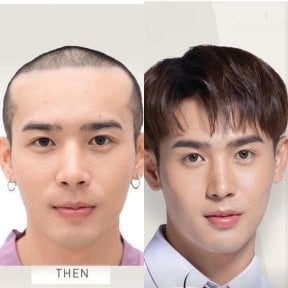
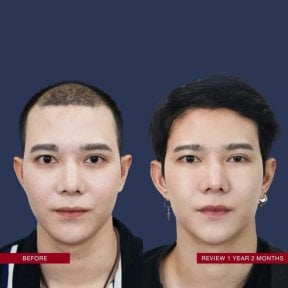
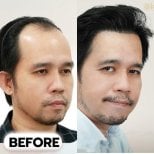
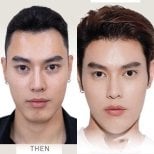
- Request to see before-and-after photos of previous patients with similar hair loss patterns, and confirm the surgeon personally performs the extraction and implantation phases.
- Submit a request to get a personalized cost estimate from the chosen clinic, ensuring they provide detailed cost breakdowns and comprehensive aftercare protocols.
Thailand's medical tourism market, valued at $100.37 million in 2023 and growing at 12.9% annually, includes numerous JCI-accredited facilities with board-certified surgeons including Dr. Rushapol Sdawat at Intrarat Hospital, who is a member of ISAPS and American Society of Plastic Surgeons.