Radioembolization for Liver Cancer in Spain — Get 3 Top Clinic Matches with Costs


Medically reviewed by
Yesim Yildirim
How Much Does Radioembolization for liver cancer Cost in Spain?
Radioembolization for liver cancer in Spain costs from $24,000 to $33,000. Pricing depends on tumor complexity, number of lobes treated, and the specific hospital facility. People save about 54% compared to the US, where costs average $62,500. The price typically includes PET/CT imaging, Yttrium-90 microspheres, and a short hospital stay.
- Unilobar treatment: $24,000 to $33,000 for treating a single liver lobe.
- Bilobar treatment: Typically costs significantly more when both liver lobes require radiation delivery.
- Metropolitan hubs: Prices in Madrid and Barcelona often start 10-15% higher than regional centers.
- Ancillary services: Costs cover specialized oncology consultations, nursing care, and post-procedure monitoring.
Bookimed Expert Insight: Spain offers elite oncology care at a fraction of North American prices. Clinica Universidad de Navarra is a standout choice for international patients. It is accredited by Joint Commission International (JCI). It was also named among the World's Best Hospitals by Newsweek. Choosing such a high-volume center ensures access to 440 expert doctors. This provides a balance of clinical excellence and cost efficiency.
| Turkey | Austria | Spain | |
|---|---|---|---|
| Radioembolization for liver cancer | from $23,000 | ≈ $35,000 | ≈ $24,000 |
Your Benefits and Guarantees with Bookimed
Transparent Prices & Flexible Installments
No hidden fees – just official clinic prices. Pay at the clinic for Radioembolization for liver cancer upon arrival and use a flexible installment plan if needed.
Verified Clinics & Doctors Only
Bookimed is committed to your safety. We only work with medical institutions that maintain high international standards in Radioembolization for liver cancer and have the necessary licenses to serve international patients worldwide.
Free 24/7 Assistance
Bookimed offers free expert assistance. A personal medical coordinator supports you before, during, and after your treatment, solving any issues. You're never alone on your Radioembolization for liver cancer journey.

Your personal Bookimed medical coordinator
- Supports you at every stage
- Helps choose the right clinic and doctor
- Ensures quick and convenient access to information
Discover the Best Radioembolization for liver cancer Clinics in Spain: 2 Verified Options and Prices









Radioembolization for liver cancer Overview in Spain
- Radiotherapy - from $5,000This therapy uses high-energy waves to destroy cancer cells, providing a non-surgical treatment with few side effects.
- Stereotaxic radiosurgery - from $13,500This therapy targets tumors with precise radiation, avoiding damage to surrounding tissues.
- Radiosurgery of a brain tumor - from $15,000This therapy selectively targets brain tumors, using precise radiation to eliminate cells while sparing surrounding tissue.
- Radiation therapy for colorectal cancer - from $10,000This procedure uses high-energy rays to destroy colorectal cancer cells, an effective and targeted treatment method.
- Radiation therapy for brain tumor - from $12,000This therapy aims to destroy brain tumors using high-energy rays, reducing symptoms and improving survival rates.
- Radiotherapy for throat cancer - from $18,000This therapy aims to destroy throat cancer cells using high-energy radiation, improving survival and symptom control.
- Radiotherapy for prostate cancer - from $17,700This therapy targets prostate tumors with radiation, annihilating cancer cells while preserving healthy tissue.
- Radiotherapy for lung cancer - from $8,000This therapy aims to kill cancer cells in the lungs using high-energy x-rays.
- Radiotherapy for breast cancer - from $15,000This therapy aims to eliminate cancer cells in the breast using controlled radiation.
- Radiotherapy for uterine cancer - from $18,000This therapy targets damaging uterine cancer cells, involving multiple sessions of radiation, often resulting in high success rates.
- Radiotherapy for cervical cancer - from $18,000A non-invasive procedure uses high-energy beams to destroy cervical cancer cells.
- Radiation therapy for stomach cancer - from $17,000This therapy kills stomach cancer cells using high-energy rays, offering a targeted, non-surgical treatment option.
- Radiation therapy for testicular cancer - from $4,000This therapy targets cancer cells in testicles using high-energy beams, destroying them while sparing healthy tissue.
- Radiation therapy for kidney cancer - from $6,000This therapy uses high-energy rays to destruct kidney cancer cells, providing a non-surgical, targeted treatment option.
- Radiation therapy for esophageal carcinoma - from $6,000This therapy targets esophageal cancer cells with high-energy rays, destroying them while sparing healthy tissues.
- Radiation therapy for bowel cancer - from $5,000This therapy targets harmful cells in the bowel, eliminating them with precise, high-energy rays to combat cancer.
- Radiation therapy for ovarian cancer - from $9,000The therapy uses high-energy rays to destroy cancer cells, targeting only the ovaries, thus minimizing side effects.
- Radiation Therapy for Sarcomas - from $12,000This therapy targets and destroys sarcoma cells, using controlled radiation, preserving surrounding tissue, for effective, non-invasive treatment.
- Radiation therapy for Brain Tumor - from $7,000This therapy uses high-energy rays to destroy or shrink malignant cells, sparing healthy brain tissue.
Day 1: Arrival
- You will check into the hospital.
- The medical team will review your medical history.
- You"ll have blood tests and imaging studies.
Day 2: Pre-operation
- You will meet with the radiologist and oncologist.
- The team will explain the Radioembolization procedure.
- You"ll receive instructions for pre-operative preparation.
Day 3: Radioembolization
- You will be sedated with local anesthesia.
- The procedure will take about 2-3 hours.
- Radioactive beads will be delivered to the liver tumor.
Day 4: Post-operation
- You"ll be monitored in the hospital for any complications.
- Expect mild pain which will be managed by medication.
- You will be discharged if your condition is stable.
Week 1: Rehabilitation
- Regular blood tests and imaging studies will be scheduled.
- Follow a balanced diet and take prescribed medications.
- Gradually resume light physical activities.
Week 2 to 4: Rehabilitation
- Continue with follow-up appointments with your oncologist.
- You can return to work if your strength allows.
- By week 4, you can resume moderate physical activities.
Please note that each patient"s journey to recovery may vary depending on their overall health, the size and location of the tumor, and their body"s response to the treatment.
- Bookimed deposit: $200 or €200.
- Clinic deposit: Pay a set percentage in advance.
Our Doctors
View all Doctors
Dr. Jose Ignacio Bilbao
Dr. Jose Ignacio Bilbao is the Head of Vascular and Interventional Radiology at Clinica Universidad de Navarra. He specializes in interventional oncology and lung cancer treatment. Dr. Bilbao works at a hospital ranked among the World's Best Hospitals by Newsweek. The clinic holds JCI accreditation.
- Leads the vascular and interventional radiology department.
- Treats oncology cases using minimally invasive radiological techniques.
- Works at a center recognized by the European Society for Medical Oncology.
- Practices in a facility that treats over 140,000 patients annually.
Video Stories from Bookimed Patients
Reviews about Bookimed: Discover Patients' Insights
All reviews


Share this content
 Anna Leonova
FAQ about Radioembolization for liver cancer in Spain
Is Radioembolization a Cure for Liver Cancer?
Radioembolization is primarily a management tool rather than a guaranteed cure for liver cancer. This targeted therapy delivers high-dose Yttrium-90 radiation directly to tumors to shrink or stabilize them. While it effectively extends life, it usually serves as a bridge to curative surgery or transplant.
- Bridge to transplant: Shrinks tumors to meet criteria for curative liver transplantation or surgical resection.
- Local control therapy: Limits disease progression for unresectable hepatocellular carcinoma and metastatic colorectal cancer.
- Success assessment: Final outcomes are typically confirmed via diagnostic scans 3 months after treatment.
- Combined modalities: Some protocols integrate yttrium-90 with drug-eluting bead chemoembolization for enhanced local control.
Bookimed Expert Insight: Spain represents a unique value proposition where JCI-accredited facilities like Clinica Universidad de Navarra provide advanced oncology care for $24,000 to $33,000. This is significant because the same procedure averages $62,500 in the US. The 54% cost reduction allows patients to access multidisciplinary tumor boards at top-tier centers like Hospital Ruber Internacional without sacrificing clinical technology.
Patient Consensus: Many patients emphasize that Y-90 is a vital tool for staying stable while awaiting a transplant. They often report that achieving cancer-free status requires combining this therapy with other surgical or systemic treatments.
What is Radioembolization (Y90) for Liver Cancer?
Radioembolization (Y90) is a targeted treatment for liver cancer delivering high-dose radiation through Yttrium-90 microspheres. This minimally invasive interventional radiology procedure blocks tumor blood supply while sparing healthy tissue. It treats primary hepatocellular carcinoma and metastatic colorectal cancer in JCI-accredited Spanish centers.
- Procedure mechanism: Radioactive glass or resin beads lodge directly inside tumor-feeding blood vessels.
- Treatment eligibility: Used for inoperable tumors or as bridging therapy before liver transplantation.
- Recovery timeline: Patients require 1 week of rest with results assessed after 3 months.
- Clinical precision: Radiation travels less than 0.5 inches to protect adjacent healthy liver cells.
Bookimed Expert Insight: Spain ranks second globally for radioembolization requests due to high-tier academic centers like Clinica Universidad de Navarra. This facility was Spain's first JCI-accredited hospital and maintains specialized oncology expertise. Choosing these high-volume centers is vital because Y90 is typically limited to 2 sessions per patient.
Patient Consensus: Expect significant fatigue and liver pain during the first week. Patients emphasize that tumor necrosis takes time, so patience is necessary during the 3-month wait for follow-up scans.
What Does the Procedure Involve?
Radioembolization for liver cancer in Spain involves delivering radioactive Yttrium-90 (Y-90) beads directly to tumors through a catheter. This minimally invasive approach utilizes the dual blood supply of the liver. It targets tumors via the hepatic artery while protecting healthy tissue supported by the portal vein.
- Pre-treatment mapping: Essential scans identify tumor blood supply and ensure safe radioactive dosage levels.
- Lung shunt test: Required protocol prevents radioactive beads from migrating and causing potential lung complications.
- Catheter delivery: Specialists insert a catheter through the femoral artery using precise digital imaging.
- Sedation protocol: Patients undergo the outpatient procedure under twilight sedation utilizing medications like fentanyl.
Bookimed Expert Insight: Spain hosts top-tier facilities like Clinica Universidad de Navarra, the first JCI-accredited hospital there. Data shows Spanish oncology centers often combine radioembolization with systemic therapies like lenvatinib. This multimodal approach aims to arrest tumor growth through central necrosis rather than just shrinkage. Patients benefit from experienced teams performing thousands of specialized vascular interventions yearly.
Patient Consensus: Many find the outpatient nature of the procedure surprisingly manageable compared to major surgery. Most experience only mild fatigue or flu-like symptoms for about 1 week after treatment.
What are the Best Hospitals for Radioembolization in Spain?
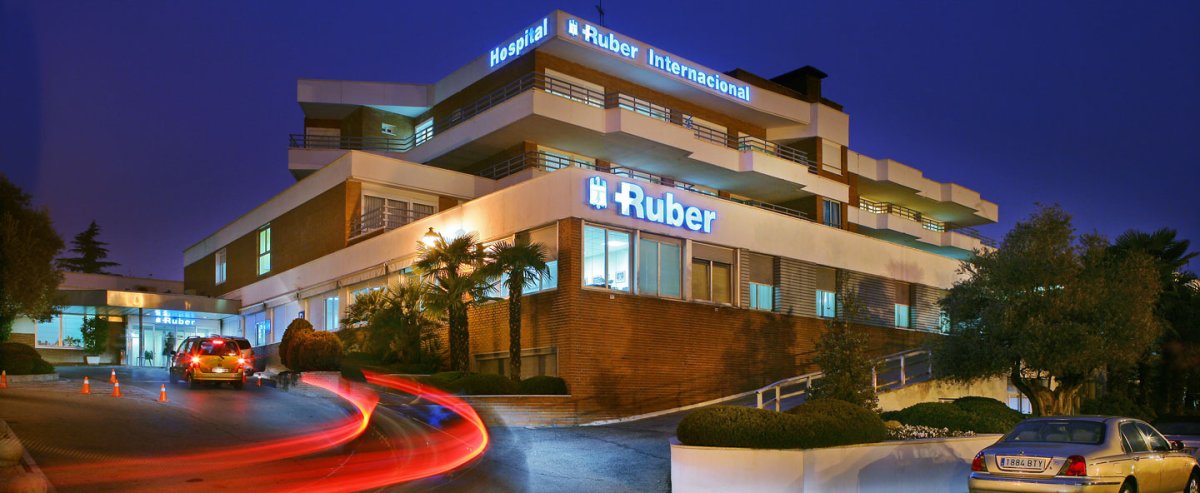
Spain hosts premier centers for radioembolization (TARE/SIRT), primarily in Madrid and Pamplona. Leading facilities include Clínica Universidad de Navarra, an ESMO-accredited oncology center, and Hospital Ruber Internacional. These JCI-accredited hospitals utilize multidisciplinary teams of interventional radiologists and nuclear medicine specialists for advanced liver cancer treatment.
- Navarra Hospital: Accredited by the European Society for Medical Oncology for integrated care.
- Hospital Ruber Internacional: Ranked among the top 6 Spanish hospitals by Forbes magazine.
- Specialized technology: Centers utilize advanced imaging and 3-Tesla MRI for precise tumor mapping.
- High patient volume: Navarra serves 140,000 patients annually with a focus on oncology.
Bookimed Expert Insight: Spain ranks 2nd globally for patient requests in our network. This high volume concentrates expert surgeons in specialized hubs like Madrid and Pamplona. Choosing JCI-accredited centers in these cities ensures access to multidisciplinary teams often missing in smaller clinics. Experience counts here as SIRT requires precise coordination between oncology and radiology.
Patient Consensus: Many patients recommend verifying specific eligibility with an oncologist before traveling. Seeking a second opinion is often encouraged for this highly specialized therapy.
Are There Advantages to Having This Procedure in Spain?
Spain offers high-level radioembolization for liver cancer using Yttrium-90 (Y-90) techniques performed in Joint Commission International (JCI)-accredited facilities. Patients access advanced focal treatment strategies that average $24,000 to $33,000, significantly less than the $62,500 typical in the United States.
- Cost savings: Patients typically save up to 54% compared to US medical costs.
- Clinical excellence: Clinica Universidad de Navarra was the first JCI-certified hospital in Spain.
- Advanced technology: Facilities like Hospital Ruber Internacional utilize Gamma Knife ICON and 3-Tesla MRI.
- Integrated care: Top centers hold European Society for Medical Oncology accreditations for specialized liver oncology.
Bookimed Expert Insight: Spain ranks second globally on Bookimed for complex oncology requests due to institutional expertise. Clinica Universidad de Navarra serves 140,000 patients annually and consistently ranks in Newsweek’s Best World Hospitals. Choosing these high-volume centers ensures access to specialists familiar with various hepatocellular carcinoma protocols.
Patient Consensus: Patients emphasize utilizing Y-90 primarily for tumor stabilization when other therapies fail. Researching hospital-specific outcome reports and finding doctors specializing in neuroendocrine tumor protocols is highly recommended.