Radiation therapy for colorectal cancer in Spain — get 3 personalized clinic matches


Medically reviewed by
Fahad Mawlood
How it works
How Much Does Radiation therapy for colorectal cancer Cost in Spain?
Radiation therapy for colorectal cancer in Spain typically costs from $7,500 to $11,000. The final price depends on the radiotherapy technique, number of sessions, and clinic location. In the US, similar procedures cost around $38,000 on average. Spain offers savings of around 76%. Quotes generally include treatment planning, imaging, and specialist consultations.
- Intensity-modulated radiotherapy (IMRT): This precise technique typically carries a 20-30% premium over standard protocols.
- Advanced technologies: Systems like Tomotherapy or CyberKnife often increase costs due to specialized equipment.
- Regional variations: Main medical hubs for oncology include Barcelona, Madrid, Marbella, and Torrevieja.
- Medical facility tier: Private JCI-accredited hospitals in major cities may charge 15-20% more.
Bookimed Expert Insight: Choosing a clinic like Centro Médico Teknon or Hospital Quiron Barcelona provides access to top-tier expertise. These centers hold Joint Commission International (JCI) accreditation and feature world-renowned specialists like Dr. Raimon Miralbell. Patients benefit from advanced technologies, including image-guided radiotherapy (IGRT) and GammaKnife. Many high-volume centers in Spain offer comprehensive oncology services that integrate American-standard protocols through international collaborations.
| Turkey | Austria | Spain | |
|---|---|---|---|
| Radiation therapy for colorectal cancer | from $5,000 | from $6,700 | from $7,500 |
Discover the Best Radiation therapy for colorectal cancer Clinics in Spain: 9 Verified Options and Prices









Hospital Quiron Barcelona
Josep Tabernero















Hospital HM Nou Delfos
Joan Albanell Mestres




GenesisCare Clinics
Radiation therapy for colorectal cancer Overview in Spain
- Radiotherapy - from $5,000This therapy uses high-energy waves to destroy cancer cells, providing a non-surgical treatment with few side effects.
- Stereotaxic radiosurgery - from $7,500This therapy targets tumors with precise radiation, avoiding damage to surrounding tissues.
- Radiosurgery of a brain tumor - from $12,000This therapy selectively targets brain tumors, using precise radiation to eliminate cells while sparing surrounding tissue.
- Radiation therapy for colorectal cancer - from $7,500This procedure uses high-energy rays to destroy colorectal cancer cells, an effective and targeted treatment method.
- Radiation therapy for brain tumor - from $9,500This therapy aims to destroy brain tumors using high-energy rays, reducing symptoms and improving survival rates.
- Radiotherapy for throat cancer - from $14,000This therapy aims to destroy throat cancer cells using high-energy radiation, improving survival and symptom control.
- Radiotherapy for prostate cancer - from $6,500This therapy targets prostate tumors with radiation, annihilating cancer cells while preserving healthy tissue.
- Radiotherapy for lung cancer - from $10,000This therapy aims to kill cancer cells in the lungs using high-energy x-rays.
- Radiotherapy for breast cancer - from $5,500This therapy aims to eliminate cancer cells in the breast using controlled radiation.
- Radiotherapy for uterine cancer - from $6,500This therapy targets damaging uterine cancer cells, involving multiple sessions of radiation, often resulting in high success rates.
- Radiotherapy for cervical cancer - from $13,500A non-invasive procedure uses high-energy beams to destroy cervical cancer cells.
- Radiation therapy for stomach cancer - from $11,500This therapy kills stomach cancer cells using high-energy rays, offering a targeted, non-surgical treatment option.
- Radiation therapy for testicular cancer - from $4,000This therapy targets cancer cells in testicles using high-energy beams, destroying them while sparing healthy tissue.
- Radiation therapy for kidney cancer - from $6,000This therapy uses high-energy rays to destruct kidney cancer cells, providing a non-surgical, targeted treatment option.
- Radiation therapy for esophageal carcinoma - from $6,000This therapy targets esophageal cancer cells with high-energy rays, destroying them while sparing healthy tissues.
- Radiation therapy for bowel cancer - from $5,000This therapy targets harmful cells in the bowel, eliminating them with precise, high-energy rays to combat cancer.
- Radiation therapy for ovarian cancer - from $9,000The therapy uses high-energy rays to destroy cancer cells, targeting only the ovaries, thus minimizing side effects.
- Radiation Therapy for Sarcomas - from $9,000This therapy targets and destroys sarcoma cells, using controlled radiation, preserving surrounding tissue, for effective, non-invasive treatment.
- Radiation therapy for Brain Tumor - from $7,000This therapy uses high-energy rays to destroy or shrink malignant cells, sparing healthy brain tissue.
Day 1
- Arrival at the hospital for initial consultation.
- Meeting with oncology specialist for treatment planning.
Day 2-3
- Undergoing necessary medical tests including an audiometry test.
- Consultation with radiologists to discuss test results.
Day 4-5
- Preparation for radiation therapy, including marking treatment areas.
- Possible additional procedures based on individual needs.
Day 6
- Start of Radiation therapy sessions for colorectal cancer.
- Each session may last around 15 to 30 minutes.
Week 2-6
- Continuation of daily radiation therapy sessions, except weekends.
- Regular check-ins with specialists to monitor progress.
Week 7
- Final session of radiation therapy.
- Post-operation processing and recovery in the hospital.
Week 8
- Patient can return to work with light duties.
- Follow-up consultation with oncologist and radiologists.
Week 12
- Rehabilitation continues with regular check-ups.
- Patient can progressively return to regular activities.
Week 16
- Final results of treatment are typically seen.
- Patient can return to full activity, including sports.
Please note that this is a general timeline and each patient"s case is unique. The duration and specifics of treatment and recovery may vary.
- Bookimed deposit: $200 or €200.
- Clinic deposit: Pay a set percentage in advance.
Our Doctors
View all Doctors
Raimon Miralbell
Professor Miralbell specializes in focused radiosurgery techniques like Gammaknife and Cyberknife. He collaborates with CERN and has directed radiation oncology at Centro Médico Teknon.
- Head of Radiation Oncology since 1999
- Trained at Harvard Cyclotron Laboratory and Royal Marsden Hospital
- Over 100 scientific publications in radiation oncology
- Recipient of Varian Award for excellence in radiation therapy

Luis Madero
Dr. Luis Madero is the Head of Pediatric Hemato-Oncology at Quironsalud Madrid University Hospital. He specializes in treating complex blood disorders and performing bone marrow transplants. Dr. Madero serves as a Professor of Pediatrics at the Autonomous University of Madrid. He works at Quironsalud Madrid, which Newsweek ranked among the World's Best Hospitals.
- Edited 14 books and contributed to 75 book chapters on pediatric oncology.
- Treats leukemia, lymphoma, multiple myeloma, and sickle cell disease.
- Member of the Spanish Association of Pediatric Hematology and Oncology.
- Former Head of Oncology at the Sanitas Group and Nino Jesus Hospital.
Josep Tabernero
Dr. Josep Tabernero is a medical oncologist at Hospital Quirónsalud Barcelona. Forbes magazine recognized him among the five most influential cancer care leaders in Spain. He specializes in molecular targeted therapies and personalized medicine for digestive tumors. Dr. Tabernero directs the Vall d’Hebron Institute of Oncology.
- Served as a former President of the European Society for Medical Oncology.
- Acts as an advisor to the Spanish Ministry of Health.
- Recipient of the Cancer Care Award from the American Society of Clinical Oncology.
- Authored over 70 scientific papers on innovative cancer treatment techniques.
Joan Albanell Mestres
Dr. Joan Albanell Mestres is a leading oncologist at Hospital HM Nou Delfos in Barcelona. He heads the breast cancer program at HM Delfos. Dr. Albanell Mestres also directs oncology services at Mar Health Park. He conducted oncology research on telomerase in New York. His work is cited more than 9,000 times in medical literature.
- Published 120 articles in reputable scientific journals.
- Prominent member of GEICAM, CIBERONC, and the Spanish Society of Medical Oncology.
- Uses targeted therapy, immunotherapy, and hormone therapy for breast cancer.
- Practices at an EFQM-accredited clinic, a European standard for quality management.
Video Stories from Bookimed Patients
Reviews about Bookimed: Discover Patients' Insights
All reviews


Share this content
 Anna Leonova

Fast Facts about Radiation therapy for colorectal cancer
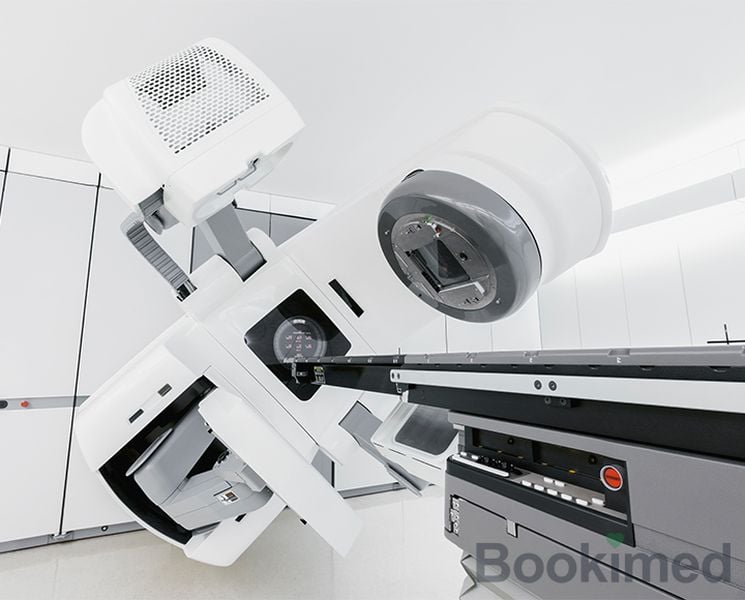
Radiation Therapy for Colorectal Cancer
Involves using high-energy rays to target and destroy cancer cells in the colon or rectum.
FAQ about Radiation therapy for colorectal cancer in Spain
Will I be radioactive during or after radiation therapy?
Radioactivity levels depend entirely on the delivery method used during your colorectal cancer treatment in Spain. External beam radiation therapy (EBRT) never makes you radioactive. However, rare internal treatments like brachytherapy or selective internal radiation therapy (SIRT) involve temporary radioactive sources that require short-term safety precautions until the material naturally decays.
- External radiation: You are not radioactive during or after sessions. Physical contact is completely safe.
- Brachytherapy/SIRT protocols: Internal sources may emit low radiation levels temporarily. Specialists provide specific isolation guidelines.
- Treatment cessation: Radiation from machines stops instantly when turned off. No residual material remains inside.
- Colorectal standards: Most Spanish clinics use external techniques like IMRT. These pose zero risk to others.
Bookimed Expert Insight: While external radiation is standard, Spain is a leader in advanced delivery systems like SIRT for liver-metastasized colorectal cancer. At centers like Centro Médico Teknon, experts like Prof. Dr. Raimon Miralbell utilize specific internal isotopes. If your plan includes these, you might stay in the hospital for 24 hours. This is for monitoring, not just safety. Most patients return home the next day with very few restrictions.
Patient Consensus: Patients emphasize that side effects like fatigue are biological healing responses. They are not signs of carrying radiation. Most feel relieved discovering they can safely hug family immediately after sessions.
Are there side effects, and how are they managed in Spain?
Radiation therapy for colorectal cancer in Spain commonly causes fatigue, bowel urgency, and localized skin irritation. Spanish oncology centers manage these through multidisciplinary teams, utilizing advanced techniques like Intensity-Modulated Radiation Therapy (IMRT) to limit damage to healthy tissue and provide proactive pharmaceutical support.
- Recovery timeline: Side effects peak 10–14 days post-treatment and usually persist for 4 weeks.
- Bowel management: Specialists prescribe specialized foams or high-strength medications for radiation-induced proctitis and diarrhea.
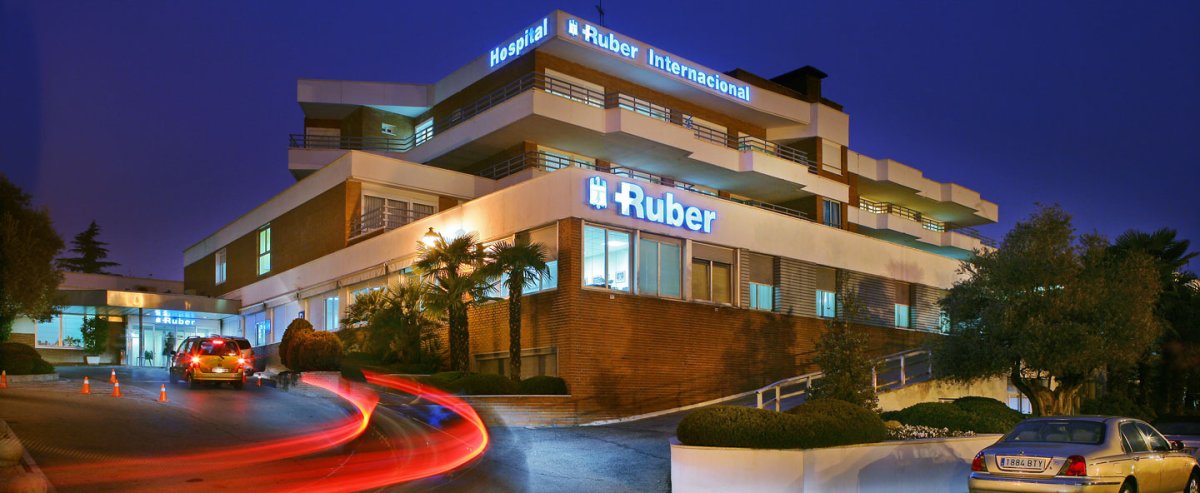
- Advanced precision: Facilities like Hospital Ruber Internacional use CyberKnife to minimize radiation exposure to organs.
- Clinical monitoring: Centers like Clinica Universidad de Navarra provide ESMO-accredited oversight for managing late-onset effects.
Bookimed Expert Insight: Spanish oncology centers like Centro Médico Teknon often prioritize IMRT and Image-guided radiotherapy to reduce rectal toxicity. Data shows these clinics integrate physicists directly into treatment planning. This high-precision approach explains why patients often report fewer long-term bladder or sexual health complications compared to standard radiotherapy.
Patient Consensus: Patients emphasize preparing for internal sunburn sensations and severe fatigue that accumulates after sessions end. Many suggest using donut cushions and specialized dietary changes to manage the painful Passing shards of glass feeling common during recovery.
What modern radiation techniques are available for colorectal cancer in Spain?
Modern radiation for colorectal cancer in Spain utilizes high-precision techniques including Intensity-Modulated Radiation Therapy (IMRT), Selective Internal Radiation Therapy (SIRT), and proton therapy. Top facilities like Centro Médico Teknon and Hospital Ruber Internacional employ these technologies to target pelvic tumors while sparing surrounding healthy tissue.
- Targeting precision: IMRT and IGRT adjust for rectal movement to protect organs.
- Advanced radiosurgery: CyberKnife and Gamma Knife treat oligometastases in liver or lungs.
- Internal radiotherapy: HDR Brachytherapy and SIRT deliver radiation directly to tumor sites.
- Specialized care: Proton therapy centers in Madrid provide ultra-precise targeting for complex cases.
Bookimed Expert Insight: Spain’s oncology market ranking as 6th globally reflects a high concentration of JCI-accredited technology. While many clinics offer standard radiotherapy, centers like Hospital Ruber Internacional integrate CyberKnife with 3-Tesla MRI. This combination allows for superior visualization of colorectal tumors, potentially reducing the number of required treatment sessions.
Patient Consensus: Patients recommend verifying MRI-guided radiotherapy availability for abdominal treatments. Many emphasize consulting directly with department heads at major clinics to confirm specific modern protocols.
How long does radiation therapy for colorectal cancer usually last?
Radiation therapy for colorectal cancer usually lasts between 1 and 6 weeks. Treatment sessions generally occur daily from Monday to Friday as an outpatient procedure. While specific radiation delivery takes under 5 minutes, each daily clinic visit typically requires 15 to 20 minutes.
- Long-course regimen: Standard external beam radiation often lasts 5 to 6 weeks for rectal cases.
- Short-course therapy: Intensive preoperative radiation may be completed in 1 week before surgical intervention.
- Brachytherapy option: Internal radiation might require only 2 short overnight hospital stays for localized treatment.
- Post-treatment gap: Patients typically wait at least 6 weeks after radiation before undergoing colorectal surgery.
Bookimed Expert Insight: Data suggests Spain is a premier oncology hub with over 80 specialized clinics like Centro Médico Teknon. Leading specialists like Prof. Dr. Raimon Miralbell integrate research from CERN into treatment. High-volume centers often offer advanced CyberKnife or Gamma Knife ICON technologies alongside standard radiotherapy.
Patient Consensus: Many patients find that fatigue peaks around the third week of daily treatment. Relief of symptoms is common, but recovery from treatment-related tiredness can persist for several months afterward.
Which hospitals in Spain are considered best for colorectal cancer radiation?
Clinica Universidad de Navarra, Centro Medico Teknon, and Hospital Quiron Barcelona are premier institutions for colorectal cancer radiation in Spain. These facilities hold Joint Commission International accreditation and utilize advanced technologies like SIRT, IMRT, and proton therapy to deliver precision oncological care.
- Top-rated hospital: Clinica Universidad de Navarra is ranked among the World's Best Hospitals by Newsweek.
- Specialized technology: Centro Medico Teknon offers Cyberknife and Gammaknife for non-surgical rectal cancer treatment.
- Multidisciplinary approach: Hospital Quiron Barcelona provides robotized surgeries and integrated PET-CT for accurate tumor staging.
- Expert leadership: Prof. Dr. Raimon Miralbell at Teknon brings international experience from Harvard and CERN.
Bookimed Expert Insight: Spain displays a unique concentration of Joint Commission International accredited facilities in Barcelona and Madrid. Clinica Universidad de Navarra stands out as the first Spanish hospital to achieve this gold standard. Patients should note that high-volume centers like HM Nou Delfos, which serves 400,000 patients annually, often have more experience with complex colorectal cases than smaller regional clinics.
Patient Consensus: Patients emphasize the importance of genetic tumor profiling before starting radiation to ensure it is the most effective path. Many travelers recommend using medical coordinators to compare specialized oncology centers and confirm multidisciplinary care teams are in place.
Can I continue to work or drive during treatment?
Most patients in Spain can continue working and driving during radiation for colorectal cancer, though fatigue and side effects often require a modified schedule. JCI-accredited clinics in Madrid and Barcelona recommend planning sessions late in the week to allow for weekend recovery.
- Professional capacity: Desk jobs are often manageable, while physical labor usually requires temporary medical leave.
- Commuting safety: Drive only if free from fatigue, dizziness, or sudden bowel urgency side effects.
- Treatment timing: Afternoon appointments help minimize workday disruptions and allow for post-session rest cycles.
- Surgical recovery: Stop driving and working for 4 weeks after major abdominal colorectal surgery.
Bookimed Expert Insight: While basic radiotherapy costs $5,000, choosing advanced techniques like CyberKnife at Hospital Ruber Internacional can reduce sessions. Fewer visits mean less travel and more days available for work compared to traditional 5-week schedules.
Patient Consensus: Many feel capable of working part-time, but energy levels vary significantly between treatment cycles. Safety remains the priority, especially when managing unexpected side effects like blurry vision or sudden exhaustion during a commute.