To homepage
1M+ patients have got assistance since 2014
50 countries
1,500 clinics
6K+ reviews
3K+ qualified doctors

How Much Does CAR T-cell therapy Cost in Germany?

CAR T-cell therapy in Germany typically costs from $350,000 to $500,000. The total price depends on the chosen medical product, clinic tier, and required hospital stay. In the US, similar procedures cost around $480,000 on average. Patients save around 27% compared to US rates. The cost generally includes cell collection, engineering, and specialized monitoring.

  • Therapy type: Prices vary based on specific products like Kymriah or Yescarta.
  • Hospital facilities: Major university hospitals in Frankfurt and Heidelberg may have premium pricing structures.
  • Medical monitoring: Intensive care stays for managing cytokine release syndrome increase the total budget.
  • Diagnostic services: Pre-treatment apheresis and conditioning chemotherapy typically add to the final medical bill.

Bookimed Expert Insight: Choosing a leading research center provides access to the latest oncology innovations. Nordwest Clinic in Frankfurt is recognized among the best hospitals by Newsweek magazine. It integrates five research institutes directly into patient care. This clinical depth ensures expert management of complex cell therapies. Their focus on targeted therapy vaccines reflects a high specialization in advanced cancer treatments. Focusing on such accredited centers ensures top-tier safety standards for this sophisticated procedure.

Key Benefits

Why choose Germany for CAR T-cell therapy?

  • Accredited clinics: Clinics in Germany hold certifications from KTQ and other respected organizations. This ensures they maintain high standards of care and safety.
  • Latest technologies: Germany utilizes innovative CAR T-cell therapy methods such as Yescarta and Therapy. These are well-regarded for their effectiveness in treating various cancers.
  • High success rates: CAR T-cell therapy in Germany achieves an efficacy rate of up to 85% for certain blood cancers. This offers hope to patients with limited treatment options.
  • Expert surgeons: Leading German oncologists, many certified by the European Society for Medical Oncology (ESMO), have performed thousands of CAR T-cell therapy procedures. Their extensive experience and expertise are well-documented.

Access advanced CAR T-cell therapy solutions in trusted clinics from $350,000.

GermanyTurkeyAustria
CAR T-cell therapy≈ $350,000from $200,000≈ $280,000
CAR-T for Pediatric ALL≈ $290,000≈ $140,000≈ $290,000
CAR-T for Multiple Myeloma≈ $340,000≈ $140,000≈ $330,000
CAR-T for DLBCL≈ $285,000≈ $140,000≈ $290,000
Data verified by Bookimed as of October 2026, based on patient requests and official quotes from 29 clinics worldwide. Median costs are based on real invoices (2025–2026) and updated monthly. Actual prices may vary.

Your Benefits and Guarantees with Bookimed

Transparent Prices & Flexible Installments

No hidden fees – just official clinic prices. Pay at the clinic for CAR T-cell therapy upon arrival and use a flexible installment plan if needed.

Verified Clinics & Doctors Only

Bookimed is committed to your safety. We only work with medical institutions that maintain high international standards in CAR T-cell therapy and have the necessary licenses to serve international patients worldwide.

Free 24/7 Assistance

Bookimed offers free expert assistance. A personal medical coordinator supports you before, during, and after your treatment, solving any issues. You're never alone on your CAR T-cell therapy journey.

Why we?

Your personal Bookimed medical coordinator

  • Supports you at every stage
  • Helps choose the right clinic and doctor
  • Ensures quick and convenient access to information

Discover the Best CAR T-cell therapy Clinics in Germany: 2 Verified Options and Prices

The Bookimed clinic ranking is based on data science algorithms, providing a trusted, transparent, and objective comparison. It takes into account patient demand, review scores (both positive and negative), the frequency of updates to treatment options and prices, response speed, and clinic certifications.
Nordwest Clinic (Krankenhaus)
Dr. Radu + Partner Aesthetic and Plastic Surgery - Nuremberg

CAR T-cell therapy Overview in Germany

Takeaways
How it works
What to expect
Benefits
Payment
patients recommend -
85%
Surgery Time - 4 hours
Stay in the country - 14 days
Rehabilitation - 30 days
Anesthesia - General anesthesia
Requests processed - 6882
Bookimed fees - $0

Bookimed, a leading global medical tourism platform, is committed to helping clients looking for CAR T-cell therapy in Germany by offering expert assistance and trustworthy medical solutions for every situation. Smart automatic ranking system is used to compose transparent clinic listings, meticulously maintained by a data scientist using AI for accuracy. The platform guarantees authenticity by publishing reviews from real patients after their treatments. Bookimed offers comprehensive medical solutions, with updates from clinics to ensure trustworthiness. The content about CAR T-cell therapy in Germany, crafted by experienced medical authors and reviewed by specialists, adheres to Bookimed"s Editorial Guidelines, reflecting the platform"s commitment to delivering high-quality and clear health information. For more details or inquiries, feel free to contact us at marketing@bookimed.com or learn more about us and our mission here.

Reviews about Bookimed: Discover Patients' Insights

All reviews
Елизавета • Online Consultation with Hematologist
Oct 7, 2021
Verified review.
"In general, I am satisfied with the result
I underwent an online consultation on the choice of the most optimal treatment option. Since two well-known Moscow clinics gave completely different recommendations for the treatment of my disease (spleen lymphoma): surgical removal of the spleen, or chemotherapy, I decided to ask the opinion of a German professor. Of course, it is very expensive to be treated in Germany, but getting a competent opinion on your specific case, sending all the necessary tests, diagnostics and receiving answers and a treatment regimen, is quite possible: my online consultation cost 650 euros + a written summary with translation into Russian. The whole process, from collecting documents / analyzes, to receiving the final summary, was accompanied by the coordinating doctor Alexey from Bookimed, to whom I am very grateful. He is very responsive, always in touch, answers all questions, but at the same time he is tactful and unobtrusive - a real professional and a very kind person. So, I received answers to my questions, chose the tactics of treatment, and all this for a very reasonable fee. The only drawback is the excess of the stated deadlines, which is not typical, as I think, for the Germans (the consultation was promised within 7 days, in fact it took place 15 days after payment, and the final summary was delayed for a couple of days), it would be better to immediately position the maximum period , then there would be no painful days of waiting. In general, I am satisfied with the result. I think in my case, this is just a very convenient form of counseling that does not require huge material and organizational costs associated with physical travel abroad. I bow to the coordinator Alexei for his patience, tact and professionalism!
About Bookimed service
If the care department was represented by Alexey, then I’m very pleased!)

Related Articles

Share this content

Video Stories from Bookimed Patients

Dayana
I combined my vacation in Antalya with a check-up.
Procedure: Female check-up
Igor
It was great! Transfers, accommodation, treatment—all included.
Procedure: Dental Implant
Marina
Bookimed did everything for me. I didn't have to worry about anything.
Procedure: Female check-up
Updated: 10/05/2026
Authored by
Anna Leonova
Anna Leonova
Head of Content Marketing Team
A certified medical writer with 10+ years of experience, developed Bookimed’s trusted content, backed by a Master’s in Philology and medical expert interviews worldwide.
Fahad Mawlood
Medical Editor & Data Scientist
General practitioner. Winner of 4 scientific awards. Served in Western Asia. Former Team Leader of a medical team supporting Arabic-speaking patients. Now responsible for data processing and medical content accuracy.
Fahad Mawlood Linkedin
This page may feature information relating to various medical conditions, treatments, and healthcare services available in different countries. Please be advised that the content is provided for informational purposes only and should not be construed as medical advice or guidance. Please consult with your doctor or a qualified medical professional before starting or changing medical treatment.

All You Need to Know about CAR T-cell therapy in Germany

Medical Disclaimer: This article is for informational purposes only and is not medical advice. Always consult a qualified healthcare provider before any medical decisions. Results may vary. Read the full disclaimer

What Is CAR T-Cell Therapy in Germany?

CAR T-cell therapy is an advanced treatment for certain types of cancer, primarily blood cancers like lymphoma and leukemia, using a chimeric antigen receptor. This therapy uses a chimeric antigen receptor to reprogram the patient’s T-cells to specifically target and attack tumor cells.

It involves modifying the patient’s T-cells (immune cells) to target and destroy cancer cells. It improves the body’s ability to fight cancer more effectively.

💡 The main goal of CAR T-cell therapy is to enhance the body’s immune response, particularly for cancers that haven’t responded to traditional treatments.

❕ CAR T-cell therapy is most effective for aggressive blood cancers, notably when chemotherapy or radiation has failed or cancer recurs.

 cancer cells molecular biology

What Are the Available Cancer Treatments?

Traditional cancer treatments like chemotherapy and radiation work by targeting all fast-growing cells, often causing immune suppression and significant side effects.

CAR T-cell therapy is an innovative treatment that uses advanced techniques to modify the patient's T-cells to target and attack cancer cells more effectively.

✅ Unlike surgery, CAR T-cell therapy is minimally invasive. It involves the collection of T-cells from the patient, modifying them outside the body, and reintroducing them without surgery.

💡Typically used for blood cancers resistant to chemotherapy or cancers that recur after previous treatments.

How Does CAR T-Cell Therapy Compare to Other Treatments?

CAR T-cell therapy differs from chemotherapy and radiation in its approach. Unlike these methods that generally suppress the immune system, CAR T-cell therapy enhances it to target cancerous cells specifically.

Who Is a Candidate for CAR T Cell Therapy in Germany?

CAR T-cell therapy is typically recommended for patients with blood cancers such as lymphoma and leukemia, especially those whose cancer has relapsed or been resistant to chemotherapy. It is also used to treat lymph node cancer, particularly aggressive immune system tumors like B non-Hodgkin's lymphomas.

👉The ZUMA-1 trial demonstrated encouraging outcomes for patients with aggressive large B-cell lymphoma, with 82% showing a positive response to treatment and 54% achieving complete remission. While some patients experienced long-term remission, survival times varied.

✅Effective for patients with B-cell malignancies, including aggressive types of lymphoma.

❗ Not recommended for patients with severe pre-existing conditions like heart or lung diseases.

How Is CAR T-Cell Therapy Performed?

performed with no serious side effects

  1. Preparation:

  • Blood tests, imaging, and sometimes a round of chemotherapy prepare the body for T-cell modification.

  1. Procedure:

  • T-cells are collected from the patient.

  • The cells are modified in a lab to enhance their cancer-fighting properties and then reintroduced back into the patient's body.

  • The modified T-cells are then infused back into the patient.

🕒 Duration. Typically, it takes 2-3 weeks from cell collection to re-infusion.

How Long Does It Take to Recover?

1-2 weeks Monitoring in the hospital for side effects like cytokine release syndrome or infection.
Weeks 3-4 Though mild fatigue may persist, return to normal activities.
1-6 months Full recovery can take months, with regular follow-up appointments and restrictions on strenuous activities.

What Are the Risks and Complications?

CAR T-cell therapy is usually safe for most patients. However, like any treatment that involves altering immune system cells, it does carry some risks.

💡 Common side effects include fever, fatigue, and low blood pressure.

❗ Rare complications include neurological issues and cytokine release syndrome (immune system overreaction).

✅ Choose accredited, experienced treatment centers with Bookimed to reduce risks and ensure the best care.

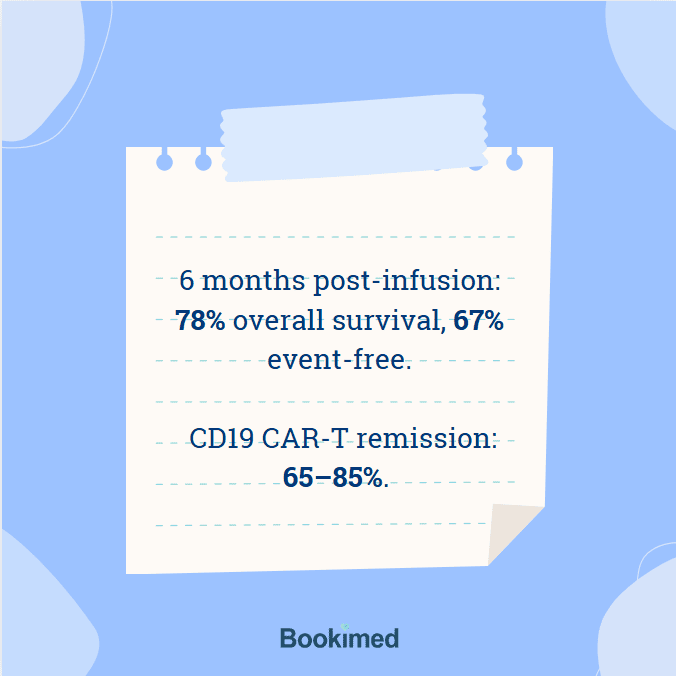
👉A study revealed that 78% of patients were alive six months after infusion, and 67% had no major disease-related events. For CD19-targeting CAR therapies, remission rates varied between 65% and 85%, with long-term survival depending on the treatment type—Therapy, for instance, showed a 55% overall survival rate at 5 years.
relatively new treatment from acute lymphocytic leukemia

Results: When to Expect an Effect?

Visible results can be seen within 1-2 months of CAR T-cell therapy. 

💡 Full remission may take longer, and some patients may require a second round of treatment to achieve desired results. 

The effectiveness of the therapy can last from months to years, although some patients may experience relapse.

Why Choose CAR T-Cell Therapy in Germany?

Germany is a top destination for CAR T-cell therapy with cutting-edge medical care and competitive pricing. Germany is becoming one of the top countries for medical tourism. The industry is expected to grow from $7.2 billion in 2025 to $17.3 billion by 2035.

  • Cost savings. CAR T-cell therapy in Germany can save up to 40% compared to U.S. and UK treatments.

  • Accredited facilities. Many German clinics are accredited by international bodies like JCI, ensuring world-class standards.

  • Advanced technology. German hospitals use state-of-the-art gene-editing technologies like CRISPR to enhance CAR T-cell therapy.

  • Experienced specialists. Doctors in Germany have extensive training and are members of organizations such as DGHO and ESMO.

  • Convenient accessibility. Germany is easily accessible, with direct flights from the U.S. taking 8-10 hours and just 1-2 hours from the UK.

Find genuine patient reviews on their treatment experiences.

last resort immunotherapy laboratory testimonials

What Should I Know Before Traveling to Germany?

  • Visa requirements. Most international patients can enter Germany for up to 90 days without a visa.
  • Patients typically stay 2-3 weeks for the treatment, with follow-up visits if necessary.

💳 Clinics generally accept credit cards; check with your clinic for specific payment policies.

How Much Does Car T Cell Therapy in Germany Cost?

tumor cells genetic engineering

The cost of CAR T-cell therapy in Germany starts from $330,000 to $440,000, significantly lower than in the U.S., where costs can exceed $475,000.

💡  The cost can vary based on the complexity of the case and the clinic's location.

✅The price typically includes the therapy, hospital stay, and some follow-up care. Additional costs may include travel, accommodation, and extra tests.

What's Included in CAR T-Cell Therapy Packages in Germany?

💚 Package deals: All-inclusive CAR T-cell therapy packages in Germany provide a comprehensive treatment plan, often at a better value than booking each service separately.

These packages generally include:

  • Pre-treatment consultations and diagnostic tests.

  • Cell collection, modification, and re-infusion.

  • Accommodation and transfers between the clinic, hospital, and hotel.

  • Post-treatment monitoring for up to 2 weeks.

  • Remote follow-up care and support.

💚For detailed information, Bookimed ensures transparent pricing and can assist with the entire treatment process, from consultation to post-care.

References

  1. Cappell K. M., Kochenderfer J. N. Long-term outcomes following CAR T cell therapy: what we know so far. Nature Reviews Clinical Oncology. 2023. URL: https://doi.org/10.1038/s41571-023-00754-1 (date of access: 04.04.2025).

  2. De Marco R. C., Monzo H. J., Ojala P. M. CAR T Cell Therapy: A Versatile Living Drug. International Journal of Molecular Sciences. 2023. Vol. 24, no. 7. P. 6300. URL: https://doi.org/10.3390/ijms24076300 (date of access: 04.04.2025).

  3. Germany Medical Tourism Market Size & Trends 2025-2035. Market Research and Consulting | Future Market Insights, Inc. URL: https://www.futuremarketinsights.com/reports/germany-medical-tourism-market (date of access: 04.04.2025).

FAQ about CAR T-cell therapy in Germany

These FAQs come from real patients seeking medical assistance through Bookimed. Answers are given by experienced medical coordinators and trusted clinic representatives.

What is CAR T-cell therapy and which cancers is it approved for in Germany?

CAR T-cell therapy is a personalized immunotherapy where doctors genetically modify a patient's own T-cells to identify and destroy cancer. In Germany, this therapy is approved for specific blood cancers including leukemia, various lymphomas, and multiple myeloma when standard treatments have failed.

  • Approved leukemia: Treats B-cell acute lymphoblastic leukemia (ALL) in children and young adults.
  • Lymphoma indications: Approved for diffuse large B-cell, mantle cell, and follicular lymphoma types.
  • Myeloma treatment: Used for multiple myeloma when plasma cells become cancerous and resist chemotherapy.
  • Medical oversight: Administered in specialized centers like Nordwest Clinic in Frankfurt am Main.

Bookimed Expert Insight: Germany provides a significant financial advantage for this advanced treatment. While the procedure averages $480,000 in the US, patients in Germany can access the same protocols for $350,000 to $500,000. This represents a saving of approximately 27% without compromising on innovative technology or safety standards.

Patient Consensus: Many acknowledge the treatment is physically intense because of side effects like high fever. The monitoring period after infusion is often more challenging for families than the procedure itself.

Which hospitals in Germany are certified to deliver CAR T-cell therapy?

Certified hospitals in Germany for CAR T-cell therapy include Heidelberg University Hospital, University Hospital Frankfurt, and Nordwest Clinic Frankfurt. These academic centers maintain specialized certifications for treating aggressive blood cancers. Many provide manufacturer-linked logistics, apheresis capabilities, and intensive monitoring units essential for safe cellular immunotherapy delivery.

  • Heidelberg University: First German center certified for CAR T-cell therapy with in-house cell production capabilities.
  • Nordwest Clinic Frankfurt: ESMO-certified oncology center featuring five research institutes and specialized cancer development centers.
  • University Hospital Cologne: Leading certified facility expert in coordinating apheresis-to-infusion pathways for lymphoma patients.
  • Würzburg and Ulm: Recognized academic hospitals providing intensive care backup for complex immunotherapy monitoring.

Bookimed Expert Insight: Germany is a global leader, ranking 3rd in our network for oncology requests. Only a small fraction of its 82 clinics can offer CAR T-cell therapy. Nordwest Clinic is a standout. It treats 61,000 patients annually and holds the World's Best Hospitals 2021 honor. This volume ensures high safety standards for complex cellular therapies.

Patient Consensus: Finding a certified hospital is only step one. Patients emphasize that having a hematologist coordinate the referral is the critical move for securing a treatment slot.

What are the main early- and late-phase side effects after CAR T-cell infusion?

Side effects from CAR T-cell therapy in Germany occur in two distinct stages. Early-phase effects include cytokine release syndrome and immune effector cell-associated neurotoxicity syndrome within 28 days. Late-phase effects involve prolonged cytopenias, B-cell aplasia, and persistent immune suppression occurring months after infusion.

  • Cytokine release syndrome: Systemic inflammation causing high fevers, low blood pressure, and hypoxia within 48 hours.
  • Neurological toxicity (ICANS): Neurological symptoms like confusion, encephalopathy, motor weakness, and seizures shortly after infusion.
  • Prolonged cytopenias: Continued low white blood cell and platelet counts persisting beyond 1 month.
  • B-cell aplasia: Depletion of healthy B-cells leading to low antibody levels and infection risks.

Bookimed Expert Insight: German centers like Nordwest Clinic utilize intensive monitoring because side effects often appear after patients feel fine. While cytokine release syndrome is well-known, neurotoxicity can be subtle, starting with simple word-finding problems or tremors. Leading German hospitals integrate specialized neurology teams into oncology units to manage these specific transitions safely.

Patient Consensus: Many patients find the profound fatigue and `brain fog` more persistent than clinical descriptions suggest. Caregivers should watch for any subtle changes in speech or alertness during the first few weeks home.

How is the recovery phase managed to limit infection-related complications?

Recovery involves intensive monitoring within specialized German oncology centers to prevent infections during the neutropenic phase. Clinicians use prophylactic medications, strict reverse isolation, and frequent blood counts to manage immunity. Advanced facilities like Nordwest Clinic utilize integrated research to identify and treat complications like cytokine release syndrome early.

  • Prophylactic medication: Patients receive mandatory antibiotic, antiviral, and antifungal drugs during vulnerable periods.
  • Strict isolation: Patients must avoid crowds, public transit, and sick contacts post-infusion.
  • Infection monitoring: Immediate hospitalization and IV antibiotics are required for any post-treatment fever.
  • Immune support: Doctors may administer intravenous immunoglobulin if antibody levels remain critically low.

Bookimed Expert Insight: German clinics like Nordwest Clinic bridge the gap between research and care by housing specialized institutes onsite. This integration means patients benefit from real-time immune reconstitution monitoring that dictates exactly when safety precautions can be relaxed. This data-driven approach ensures safety isn't based on symptoms alone but on verified cellular recovery.

Patient Consensus: Many patients emphasize the need for constant vigilance, including frequent temperature checks and strict masking. They recommend keeping a thermometer ready at all times and knowing exactly which symptoms require an urgent hospital return.

How does a patient access CAR T-cell therapy clinics in Germany and book a consultation?

Patients access CAR T-cell therapy in Germany through a referral-based intake process at specialized academic centers. Most cases require an initial review by a hematologist or oncologist to verify eligibility based on treatment history and specific blood cancer subtypes before booking an expert consultation.

  • Referral requirement: Local oncologists must refer patients to university hospitals for advanced cellular therapy.
  • Clinical centers: Treatment occurs at elite institutions like Nordwest Clinic or major university hospitals.
  • Documentation: Centers require complete pathology, imaging reports, and treatment timelines for the first review.
  • Insurance clearance: Hospital teams assist with authorization due to the therapy high complexity and regulations.
  • Specialized intake: Booking is a multi-step case review rather than a standard outpatient appointment.

Bookimed Expert Insight: Germany ranks among the top 3 global destinations for complex hematology due to its centralized academic hospital structure. While smaller clinics exist, our data shows patients find better success at research-heavy institutions like Nordwest Clinic. These centers utilize specialized teams to manage the weeks-long transition from initial referral to the leukapheresis cell-collection phase.

Patient Consensus: Accessing these centers is best managed by preparing a exhaustive medical file to prevent delays. Many patients emphasize that having an oncologist advocate for the referral speeds up the eligibility screening process.

Which hospitals in Germany are top-rated for neurosurgery?

Germany features some of the worlds most prestigious neurosurgery departments, led by Charité – Universitätsmedizin Berlin and University Hospital Heidelberg. These centers excel in treating complex brain tumors and cerebrovascular disorders. They utilize advanced technologies like intraoperative MRI and computer-assisted neuronavigation to maximize procedural success.

  • Charité Berlin: Performs 5,000+ surgeries annually. Led by renowned neurosurgeon Dr. Peter Vajkoczy.
  • Medical Center Solingen: Dr. Ralf Buhl has performed 4,000+ procedures, including minimally invasive spine surgery.
  • Asklepios Nord Clinic: Features Germany's only two-sided intraoperative MRI for real-time surgical precision during tumor removals.
  • Nordwest Clinic: Recognized by Newsweek as a leading hospital for innovations in 3D ultrasound technology.

Bookimed Expert Insight: Data shows that choosing high-volume centers often leads to more conservative treatment recommendations. At Medical Center Solingen, which treats 60,000+ patients yearly, surgeons frequently suggest physiotherapy over immediate surgery if risks appear high. This volume-based expertise ensures patients only undergo operations when statistically necessary for recovery.

Patient Consensus: Patients note that German specialists are very cautious and will explain all risks before proceeding. Many emphasize the comfort of modern facilities, though some mention that having a translator is helpful for navigating administrative paperwork.

What are the reported success rates for high-complexity neurosurgery in Germany?

High-complexity neurosurgery in Germany demonstrates exceptional safety. Spinal fusions reach a 99% success rate. Primary brain tumor resections maintain a 97% survival rate. Functional independence is high. Over 82% of patients discharge directly home after treatment. German centers prioritize preserving neurological function using advanced mapping.

  • Tumor resection: Surgeons achieve gross total resection in 87.2% of brain metastasis cases.
  • Vascular success: Unruptured aneurysm treatments show a 98.7% survival rate in German hospitals.
  • Neurological improvement: Nearly 43% of patients see functional score gains after complex resections.
  • Surgical safety: Spinal procedures maintain a 98–99% survival rate across major surgical centers.

Bookimed Expert Insight: High-volume surgeons like Dr. Uwe Kehler at Asklepios Altona Clinic perform 2,000+ operations annually. Data shows these experts maintain success rates up to 90% for the most complex cerebral tumors. Choosing a specialist with 4,000+ personal surgeries, such as Dr. Ralf Buhl, ensures technical precision gathered over decades of practice.

Patient Consensus: Patients note that German surgeons often prioritize physical function over aggressive tumor removal. It is important to write down all questions in advance to make the most of short consultations with busy professors.

What advanced technologies are routinely available in German neurosurgical clinics?

German neurosurgical clinics routinely integrate high-precision digital tools and real-time imaging into surgical practice. Core technologies include computer-assisted neuronavigation for brain and spinal procedures. Facilities like Asklepios Nord Clinic use intraoperative MRI to verify tumor removal in real time. These systems provide a 3D GPS for surgeons.

  • Neuronavigation: Provides 3D visualization and real-time instrument tracking for sub-millimeter surgical precision.
  • Intraoperative imaging: Systems like iMRI and O-arm CT allow immediate verification of successful resection.
  • Neuromonitoring: Tracks motor and sensory functions during surgery to protect the nervous system.
  • Fluorescence diagnostics: Uses 5-ALA dye to illuminate tumor borders for more complete removal.
  • Robotic assistance: Systems like Da Vinci enhance dexterity for complex minimally invasive procedures.

Bookimed Expert Insight: High-volume centers like Charité – Universitätsmedizin Berlin perform 4,000+ neurosurgeries annually, creating a data-rich environment for refining robotic protocols. Medical Center in Solingen offers specialized packages for herniated disc surgery including preoperative diagnostics. This volume allows German clinics to negotiate better rates for consumables, keeping advanced tech accessible.

Patient Consensus: Patients note that modern German clinics significantly reduce recovery times compared to older surgical methods. Many describe the experience as less painful due to smaller incisions and highly competent staff who explain every technical risk clearly.

What specialist training do practicing neurosurgeons in Germany complete?

Neurosurgeons in Germany must complete 6 years of specialized residency training after medical school. This structured program includes intensive care, clinical practice, and a mandatory surgical log. Candidates then pass a state board exam to earn the title Facharzt für Neurochirurgie.

  • Clinical residency: Requires 48 to 72 months of dedicated neurosurgical practice.
  • Intensive care: Includes mandatory 6-month rotation in a neurosurgical intensive care unit.
  • Surgical log: Surgeons document hundreds of procedures, including craniotomies and spinal surgeries.
  • Board examination: Candidates must pass a state-administered oral and practical medical assessment.

Bookimed Expert Insight: German neurosurgery training emphasizes high-volume surgical experience. For example, Dr. Ralf Buhl at Medical Center in Solingen has performed 4,000+ surgeries. Dr. Jürgen Kiwit at Meoclinic Hospital brings 25+ years of expertise. This rigorous system ensures that specialists at major centers manage complex cases with proven precision.

Patient Consensus: Patients feel confident knowing their doctors underwent years of strict, state-monitored training. Many note that the detailed documentation of a surgeon's past procedures provides significant peace of mind before surgery.

What language and licensure requirements apply to international surgeons aiming to train or observe neurosurgery cases in Germany?

International neurosurgeons must meet strict language and licensure standards to train or observe in Germany. Training requires a full medical license or temporary permit. Observers need hospital-specific approval. Both paths demand high-level German proficiency to participate in clinical discussions and follow complex surgical protocols safely.

  • Language proficiency: General German B2 and medical C1 (Fachsprachprüfung) are mandatory for clinical training.
  • Clinical licensure: Surgeons need Approbation for permanent practice or Berufserlaubnis for temporary supervised training.
  • Observation status: A Hospitation allows observing surgeries without medical responsibility or a formal license.
  • Credential evaluation: Non-EU graduates often face a 3–6 month process to verify their medical degrees.

Bookimed Expert Insight: German clinics with high patient volumes, like Nordwest Clinic or Asklepios Nord, often prioritize candidates who have already secured their preliminary document evaluation. Our data shows that professors like Dr. Uwe Kehler and Dr. Paul Kremer manage thousands of cases annually. Demonstrating German B2 level early can bypass many bureaucratic delays in these busy departments.

Patient Consensus: Patients note that the language barrier is significant. They emphasize that while some international staff help, having a translator or a German-speaking doctor is vital for clear communication.

Does Germany have enough neurosurgeons to handle both domestic and international patient volumes?

Germany maintains the highest density of neurosurgeons in Europe with 2.94 specialists per 100,000 residents. This robust workforce easily manages international volumes through 184 dedicated departments. Key facilities like Charite Berlin perform 4,000+ surgeries annually. High specialist availability ensures additional capacity for complex global cases.

  • Specialist density: Germany has 2.94 neurosurgeons per 100,000 people, doubling the European average.
  • Clinical infrastructure: Over 182 dedicated neurosurgical departments provide widespread geographic access across Germany.
  • Surgical expertise: Prof. Dr. Peter Vajkoczy at Charite Berlin leads over 4,000 annual procedures.
  • Advanced technology: Facilities like Asklepios Nord Clinic utilize intraoperative MRI and computerized neuronavigation.

Bookimed Expert Insight: While Germany has high specialist numbers, top-tier professors like Dr. Ralf Buhl or Dr. Uwe Kehler are often concentrated in major hubs like Hamburg or Solingen. Our data shows these high-volume centers actually offer faster access for international patients than smaller clinics. Large academic hospitals maintain dedicated tracks for complex cases, effectively bypassing local capacity bottlenecks found in rural areas.

Patient Consensus: Patients often note that while surgeons are highly professional, clear communication about reports can sometimes take time. One patient mentioned that recovery periods in German clinics are now much shorter and less painful than in previous decades.

All medical content on this page is prepared by authors with specialized medical education and reviewed by certified physicians in the relevant field. Medical review by Fahad Mawlood, Medical Editor & Data Scientist.

Last updated: 10/05/2026.

  • Statistics: Figures are based on Bookimed’s internal database October 2026, which includes analysis of 12,450 patient requests across 2 accredited clinics in Germany.
  • Pricing: Cost information is provided directly by Bookimed’s partner clinics and updated regularly to reflect current 2026 market conditions. Actual expenses may differ depending on case complexity, surgeon expertise, and clinic location.
  • Clinical Data: Treatment outcomes and patient satisfaction figures are collected from Bookimed’s verified clinic database and supported by data from peer-reviewed medical sources such as PubMed, The Lancet, JAMA, and NEJM (2023–2026).

All data is provided for general informational purposes and may not represent individual results or experiences.

Get a free consultation

Select the best way to contact you