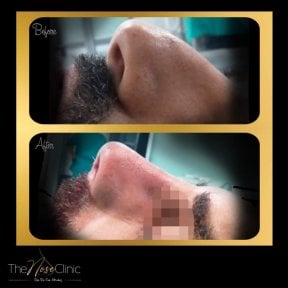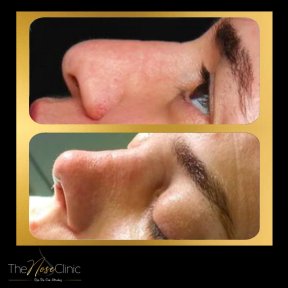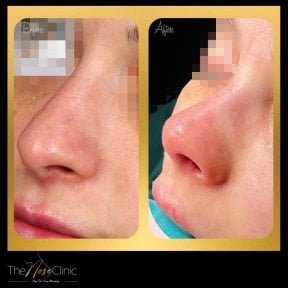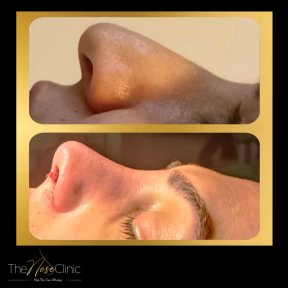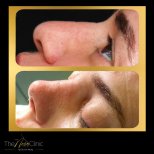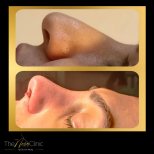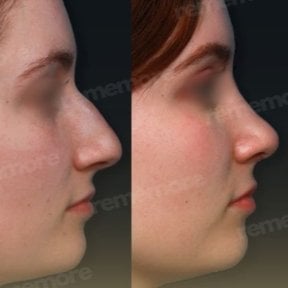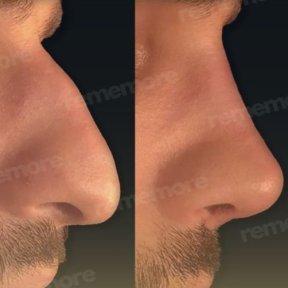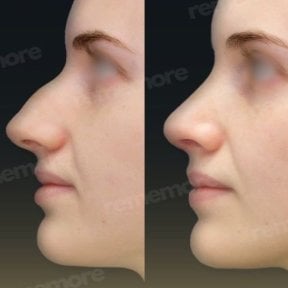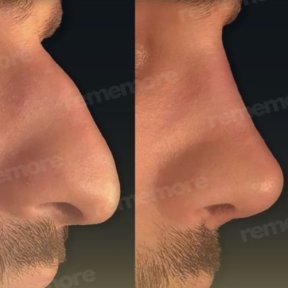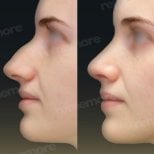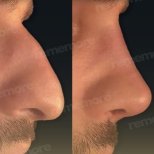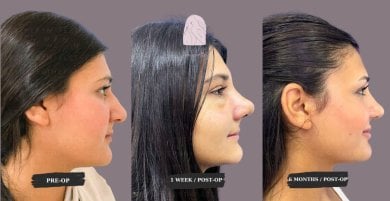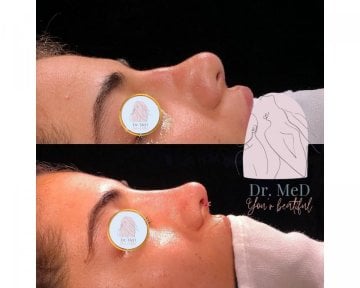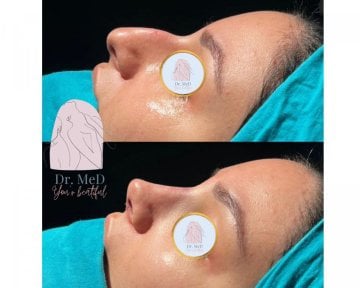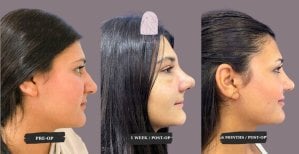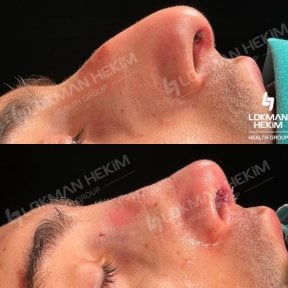
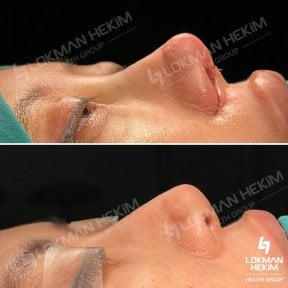
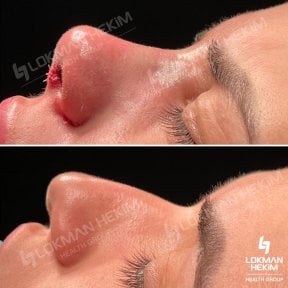
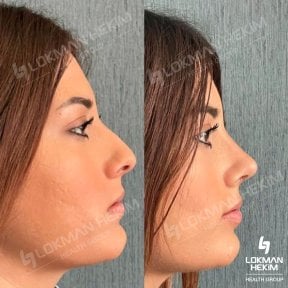
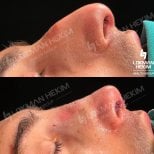
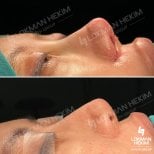
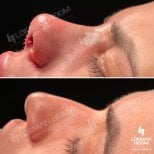
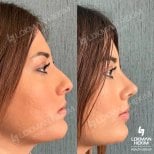

Performed by award-winning plastic surgeon Dr. Ergin Er, who has completed over 1,100 rhinoplasties, this all-inclusive package costs around $4,303. The 8-night stay includes 7 nights in a 4-star hotel with breakfast and VIP airport transfers. Dr. Er provides a one-hour pre-op consultation plus an anesthesiologist review before the procedure. Istanbul Aesthetic Plastic Surgery Center handles over 4,000 aesthetic procedures yearly and maintains a 4.8/5 rating from patient reviews.
Rhinoplasty in Turkey attracts over 5 million patient requests through Bookimed alone – and for good reason: prices run from $2,800 to $7,100, roughly 65%–75% below US costs of $10,000–$22,000. Bookimed works only with verified partner clinics – every surgeon profile on the platform shows board certifications, real patient reviews, and facility accreditations, so you are comparing credentialed options, not anonymous listings. But saving money on the surgery itself is only part of the decision. Before you book, there are four things every international patient should understand that most clinic listings never cover: realistic revision rates, who actually qualifies for surgery, how to fly home safely, and what to do if a complication develops after you're back.
Rhinoplasty Revision Rates in Turkey: What Clinical Studies Actually Show
Clinic pages routinely advertise satisfaction rates of 95% or higher. The peer-reviewed data offers a more precise baseline for planning.
A PubMed study of 252 open rhinoplasty cases found an overall revision rate of 10.8%. The top three anatomical reasons patients required a second procedure were: insufficient nasal tip rotation (37.7%), hanging columella (30.2%), and supratip deformity (28.6%), according to the study published on PubMed. A separate PubMed analysis of 369 cosmetic rhinoplasties recorded a 7.9% complication rate and 15.4% patient dissatisfaction – driven largely by failure to address the nasal tip and prior nasal trauma.
Two clinical factors significantly raise individual risk:
- Age over 40: a 6.8-fold increased risk of developing a hanging columella compared to younger patients;
- Strut graft technique vs. tongue-in-groove: a 5.3-fold higher risk of inadequate tip rotation and a 2.2-fold higher risk of supratip deformity.
Statistically, approximately 1 in 10 patients will undergo revision surgery – a realistic benchmark backed by peer-reviewed data, not marketing estimates. On Bookimed, revision rhinoplasty in Turkey runs from $4,700 to $5,500. Factor this into your total budget, and discuss your technique preferences and age-related risk profile with your surgeon during the consultation.
Who Is a Good Candidate for Rhinoplasty in Turkey?
Eligibility criteria for rhinoplasty are medical, not cosmetic. Booking with a disqualifying condition – and discovering it only after arriving in Istanbul – wastes time, money, and creates genuine medical risk. Here is what authoritative sources, including the Mayo Clinic, recommend you confirm before booking a flight.
Medical prerequisites
You should be in good general health and free from the following before proceeding:
- Active cardiac conditions or uncontrolled high blood pressure – both disqualify patients from safe surgery under general anesthesia;
- Bleeding disorders such as hemophilia – absolute contraindication;
- Incomplete facial skeletal development – typically means being 18 or older (slightly later for males);
- Nicotine use – stop smoking or vaping completely at least 4–6 weeks before surgery. Nicotine constricts blood vessels and sharply raises the risk of tissue death, delayed wound healing, and severe infection.
Medications to stop before surgery
Discuss these with your surgeon during your pre-operative consultation, but as a general rule:
- Stop 2 weeks before surgery: aspirin, ibuprofen, and other anti-inflammatory medications;
- Stop 2 weeks before surgery: herbal supplements including fish oil, vitamin E, and ginkgo – all significantly increase intraoperative bleeding risk;
- Nicotine – any form, any delivery method – must be stopped 4–6 weeks before. This is non-negotiable.
A realistic outlook matters too: rhinoplasty improves proportion and function based on your existing anatomy. It does not produce an identical copy of a celebrity nose or guarantee a specific aesthetic result – a competent surgeon will say this openly during consultation, and it is a reassuring sign, not a red flag.
Flying Home After Rhinoplasty: Safety Guidelines and Aviation Physiology
Most patients need 5–7 days minimum before flying home after rhinoplasty in Turkey – here is what the physiology explains and what to do on the flight. Most clinic itineraries show "Day 8: departure" with no further context. That brevity misses a set of real physiological risks that deserve a full explanation.
Why flying too soon is medically dangerous
The American Society of Plastic Surgeons (ASPS) recommends waiting a minimum of 5–7 days before boarding a flight after facial surgery. The reasoning is specific:
- DVT and pulmonary embolism risk: surgery combined with a long-haul flight significantly elevates the risk of deep vein thrombosis and, in severe cases, fatal pulmonary embolism, according to ASPS guidelines;
- Cabin humidity at 12%: aircraft cabins operate at roughly 12% relative humidity – lower than most deserts. This severely dries out healing nasal passages and sharply raises the risk of spontaneous mid-flight nosebleeds;
- Cabin pressure drops: decreased cabin air pressure exacerbates postoperative facial swelling, strains healing blood vessels, and worsens bruising;
- No overhead bin lifting: for at least two weeks post-surgery. Sudden exertion spikes facial blood pressure and can trigger internal bleeding or hematomas.
If you had rib cartilage harvested for augmentation, your surgeon may recommend waiting 10–14 days – the chest wall needs time to heal from where the cartilage was collected.
Your in-flight safety protocol
- Saline nasal spray every 2 hours throughout the flight to counteract the low-humidity environment.
- Skip the salty airplane food – sodium triggers rebound swelling that compounds the pressure-related puffiness.
- Walk the aisle every 45 minutes – DVT prevention requires movement, not just compression socks (though wear those too, for the entire flight).
- Skip the overhead bin entirely – ask a flight attendant or fellow passenger to stow your carry-on.
- Carry your surgeon's contact details on you, not only on your phone, in case you need to reach them for guidance during a stopover.
Bookimed packages with 5-night and 7-night hotel stays built in – like the packages available through The Nose Aesthetic Clinic ($4,100) and Istanbul Aesthetics Plastic Surgery Center ($4,300) – make it straightforward to reach the recommended minimum recovery window before flying.
Post-Surgery Follow-Up: What Happens When You Return Home
Packages reliably advertise "24/7 remote support." What they rarely address is what happens when a US or UK patient develops a minor complication three weeks after landing – and calls their local plastic surgeon for help.
Why local doctors may decline your care
The ASPS formally documents what many medical tourists discover only after returning home: local board-certified plastic surgeons frequently decline to provide routine postoperative care or treat complications from surgeries performed abroad. The reasons are structural, not personal:
- medical liability – they are accepting responsibility for a procedure they did not perform;
- unknown surgical technique – without operative notes, they cannot assess what was done or how;
- unknown materials – without graft specifications, they cannot safely plan corrective intervention.
This is manageable with preparation. Spend 30 minutes before your return flight securing the documentation below – and any surgeon worldwide can treat you with confidence.
Your pre-departure document checklist
- Translated operative notes – the full surgical record of what was done, in English;
- Anesthesia records – required by any anesthesiologist who might treat you later;
- Graft and material specifications – exact description of any cartilage used (rib, ear, septum) or synthetic material implanted;
- Revision and complication policy in writing – what the clinic will do and how to reach them if something goes wrong;
- Your Turkish surgeon's direct emergency number – not the general clinic line.
Bookimed coordinators are trained to facilitate this process. During your follow-up support period, your coordinator can help request translated records from the clinic on your behalf and maintain a communication channel with your surgeon for overseas questions.
How to Choose a Qualified Rhinoplasty Surgeon in Turkey
Bookimed verifies credentials for every clinic and surgeon listed on the platform before publication. Understanding what those credentials mean helps you ask the right questions during your consultation.
Surgeon verification checklist
- TSPRAS membership: Turkish Society of Plastic Reconstructive and Aesthetic Surgeons board certification requires 6 years of medical school, 4–5 years of specialty residency, and a board examination. Bookimed verifies and displays board certification status on each surgeon profile before listing.
- Turkish Medical Association registration: active registration confirms the doctor is currently licensed to practice in Turkey – not only historically trained there.
- Ministry of Health authorization: only facilities holding an International Health Tourism Authorization Certificate from the Turkish Ministry of Health can legally treat foreign patients. Bookimed partners hold this certificate.
- JCI accreditation (for hospital-based procedures): Joint Commission International accreditation verifies facility safety standards independently. Bookimed shows accreditation status on each clinic profile.
- MD Anesthesiologist on-site: Turkish law requires that only a medical doctor administers and continuously monitors general anesthesia throughout the procedure. Confirm this during your consultation – not after you arrive.
What Bookimed-listed clinics provide
Three of the top-listed Istanbul clinics hold JCI accreditation: Memorial Şişli Hospital (4.6/5 from 302 reviews, first hospital in Turkey to earn JCI accreditation, 252 beds, 13 operating rooms, full ICU), Lokman Hekim Istanbul Hospital (4.8/5, 148 reviews, TÜV NORD ISO certified, on-site translation confirmed by patient reviews), and Memorial Bahçelievler Hospital (4.6/5, JCI and ISO).
For rhinoplasty-specific expertise, The Nose Aesthetic Clinic (4.8/5, 80 reviews) holds a Health Tourism Facility Certificate from the Turkish Ministry of Health and is led by Dr. Cem Altındağ – a member of the European Rhinoplasty Society with 25+ years of experience and over 5,000 procedures performed.
The technical credentials are equally strong across the top-rated surgeons. At Istanbul Aesthetic Plastic Surgery Center, Dr. Gürhan Özcan holds EBOPRAS (European Board of Plastic, Reconstructive and Aesthetic Surgery) certification and has been awarded by the American Society for Plastic Surgery – among the most rigorous international credentials available.
Pricing across these clinics runs from $2,800 to $7,100 for primary rhinoplasty – 65%–75% below US costs of $10,000–$22,000. With Bookimed's 390 verified rhinoplasty clinics in Turkey, the decision often comes down to choosing the right surgeon for your anatomy and technique preferences, not whether Turkey is the right country.